In the industrial display sector, newer technologies like OLED and high-resolution TFT-LCDs often dominate the headlines. However, for many B2B applications, the classic alphanumeric character display remains a fundamental component. Among the various alphanumeric configurations, the 40x2 lcd display remains a staple for systems requiring clear, high-contrast, text-based data visualization.
Industrial equipment, telecommunication systems, and medical devices require highly stable display solutions that can operate for decades without failure. Manufacturers like Chuanhang Display continue to support these legacy and modern systems by producing robust character modules that withstand harsh operational environments.
This article analyzes the technical structure, material compositions, integration practices, and procurement variables that engineering and purchasing departments must evaluate when sourcing these display modules.
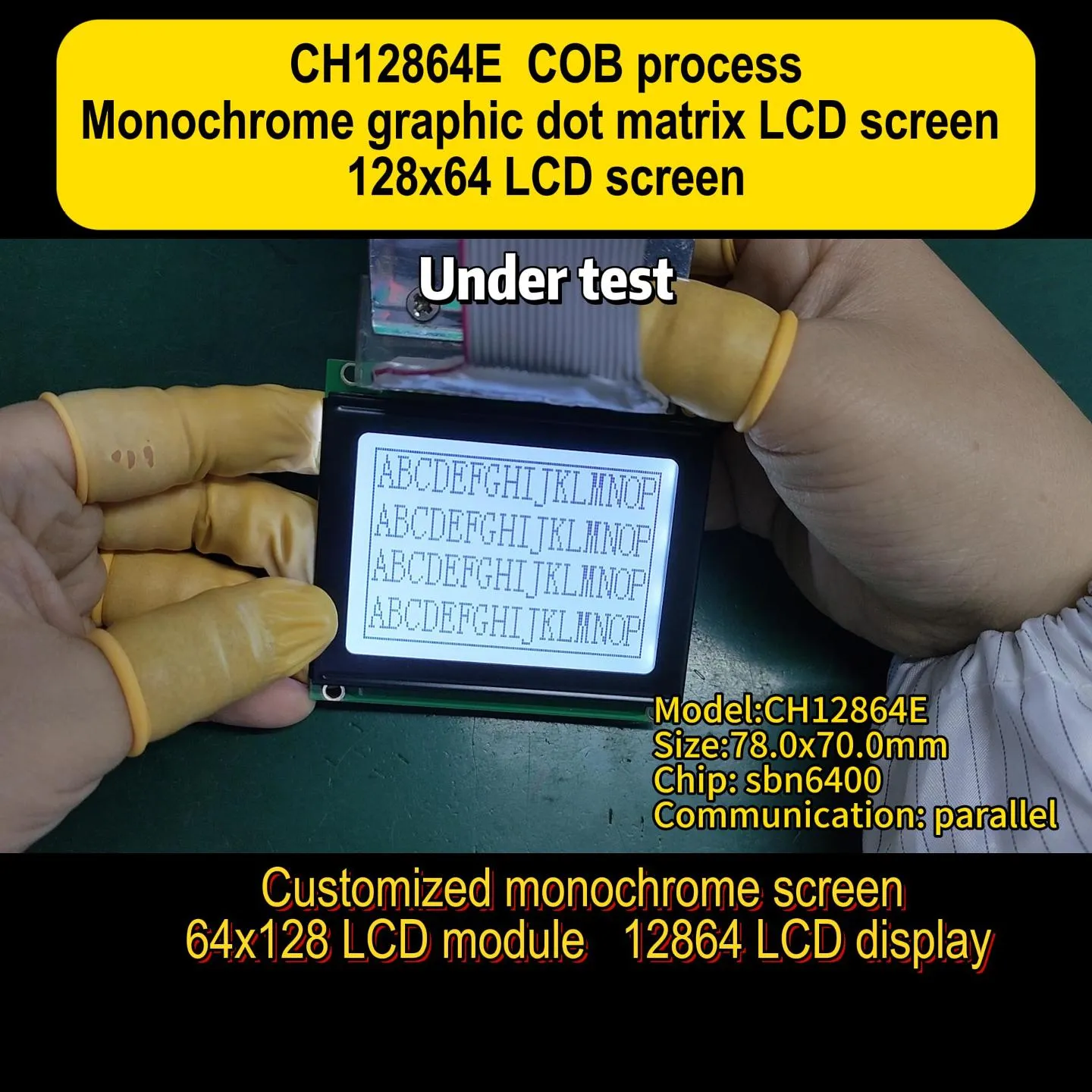
The 40x2 alphanumeric display is designed to show two rows of text, with each row containing up to 40 characters. This configuration is particularly useful for displaying detailed diagnostic messages, status updates, or multi-parameter sensor readings simultaneously without the need for scrolling menus.
Each character on the display is typically formed by a 5x8 dot matrix (though some variations use a 5x11 matrix for custom fonts or descenders).
Character Dimensions: A standard character size is approximately 3.2 mm x 5.55 mm, though minor variations exist depending on the bezel design.Pitch and Gap: The spacing between individual dots (dot pitch) and characters (character pitch) is tightly controlled to prevent visual crowding, ensuring legibility from a distance.Address Mapping: The onboard controller maps these characters to specific internal RAM addresses. Line 1 usually maps from address 0x00 to 0x27, while Line 2 maps from 0x40 to 0x67.
The vast majority of character displays utilize the industry-standard HD44780-compliant controller or equivalent integrated circuits (ICs) such as the Sitronix ST7066U or AiP31066. These controllers contain:
Character Generator ROM (CGROM): Contains the font patterns for standard alphanumeric symbols and characters (typically supporting English, European, or Japanese character sets).Character Generator RAM (CGRAM): Allows developers to define up to 8 custom symbols or icons, which is useful for displaying custom progress bars, battery levels, or custom measurement units.Display Data RAM (DDRAM): Stores the character codes currently visible on the screen.
Designers typically have two options when interfacing a 40x2 lcd display with a microcontroller (MCU) or industrial computer:
Parallel Interface (8-bit or 4-bit): The standard connection uses a 14-pin or 16-pin (with backlight) header. In 8-bit mode, eight data lines (DB0-DB7) transfer data in a single clock cycle. In 4-bit mode, data is sent in two consecutive nibbles using only four lines (DB4-DB7), saving valuable I/O pins on the controller.Serial Interface (I2C/SPI): For modern systems where pin count is limited, a bridge IC (such as the PCF8574 for I2C) is often mounted onto the back of the module. This reduces the connection requirement to just two data wires (SDA and SCL) plus power and ground.
Selecting the appropriate display module requires a thorough understanding of liquid crystal chemistry and optical layers. The choice of these materials directly influences the operating temperature range, viewing angles, and power consumption.
+-------------------------------------------------------------+
|                     Polarizer Layer                         |
+-------------------------------------------------------------+
|                     Glass Substrate                         |
+-------------------------------------------------------------+
|             Liquid Crystal Layer (TN / STN / FSTN)          |
+-------------------------------------------------------------+
|                     Glass Substrate                         |
+-------------------------------------------------------------+
|              Reflective / Transflective Layer               |
+-------------------------------------------------------------+The liquid crystal formulation determines the response time and optical contrast under varying thermal conditions:
TN (Twisted Nematic): The most cost-efficient option. TN displays offer a 90-degree twist angle for liquid crystal molecules. They provide standard contrast and a narrower viewing angle, making them suitable for hand-held, indoor test equipment where the operator is positioned directly in front of the screen.STN (Super-Twisted Nematic): STN displays use a higher twist angle (typically 180 to 270 degrees), which significantly improves the contrast ratio and widens the viewing angles. STN modules are available in yellow-green, gray, or blue backgrounds.FSTN (Film-compensated Super-Twisted Nematic): By adding a compensation film to the STN structure, FSTN neutralizes the inherent color shift of STN. This results in sharp, high-contrast black characters on a light gray or white background, offering superior readability under complex industrial lighting.
The physical environment dictates how the display must interact with ambient light:
Reflective Polarizer: This configuration relies entirely on external ambient light. It does not contain a backlight, which makes it incredibly energy-efficient. It is highly readable under direct sunlight but unusable in dark environments.Transmissive Polarizer: This mode requires the backlight to be constantly active to read the characters. It is excellent for dark or low-light environments, such as server racks or control rooms.Transflective Polarizer: Combining the advantages of both modes, transflective displays reflect ambient light in bright conditions and transmit backlighting in dark environments. This provides consistent legibility across all lighting environments.
Implementing a character display module in industrial-grade applications involves addressing environmental and electrical challenges. Below are common pain points faced by system integrators and the corresponding engineering solutions.
In factories, heavy machinery can generate significant electromagnetic noise. If a display module is poorly shielded, electrostatic discharge can corrupt the internal DDRAM registers of the display controller, leading to garbled text or system freezes.
Solution: Ensure the display frame (bezel) is properly grounded to the chassis. Opt for modules with built-in ESD protection diodes on the data lines. Using a low-pass filter on the Enable (E) pin can also prevent noise from triggering false clock cycles.
Liquid crystal viscosity changes with temperature. At very low temperatures (-20°C or below), the response time slows down, and the contrast drops. At high temperatures (+70°C), the contrast can fade completely.
Solution: Use displays equipped with built-in temperature compensation circuitry. This circuit dynamically adjusts the driving voltage (VEEVEE or V0V0) to maintain a stable contrast ratio regardless of thermal shifts.
Many industrial products have lifespans exceeding 15 years. If a component manufacturer suddenly discontinues a display model, redesigning the printed circuit board (PCB) and the enclosure can be extremely expensive.
Solution: Source modules from reliable manufacturers that guarantee long-term availability. Suppliers like Chuanhang Display focus on industrial-grade longevity, maintaining the same physical form factor, pinout, and controller compatibility for years to minimize redesign costs.
When purchasing a 40x2 lcd display in volume, the unit price is determined by several custom variables rather than a simple flat rate. Understanding these drivers helps procurement teams negotiate effectively.
| Customization Option | Cost Impact | Primary Benefit |
| Wide Temperature Range | Moderate (+10% to +20%) | Reliable operation from -20°C to +70°C |
| FSTN Liquid Crystal | Moderate (+15%) | Higher contrast and wider viewing angles |
| FPC/FFC Connector Modification | Low to Moderate (depends on NRE) | Simplified plug-and-play assembly |
| Custom LED Backlight Color | Low | Aligns with corporate branding or system aesthetic |
To ensure a smooth Request for Proposal (RFP) process, specify the following parameters to potential vendors:
Dimensions: Confirm external dimensions (typically around 182.0 mm x 33.5 mm) and active viewing area matches the enclosure cutout.Voltage requirements: Clarify if your system runs on 5.0V or 3.3V logic, as applying 5V to a 3.3V module can permanently damage the controller.Connection Method: Choose between pin headers, flexible printed cables (FPC), or screw terminal blocks.Backlight Lifetime: Verify the MTBF (Mean Time Between Failures) of the LED backlight. Industrial designs should target at least 50,000 hours of continuous operation.
Sourcing standard parts is straightforward, but many applications require subtle modifications. For instance, high-vibration automotive or defense systems may require specialized header pins or conformal coatings to protect the PCB from moisture and dust.
Collaborating with specialized manufacturers like Chuanhang Display allows design engineers to request modifications such as customized cable lengths, specific backlight brightness levels (measured in nits) for outdoor readability, or custom bezels. A reliable supplier will provide comprehensive technical datasheets, 3D CAD files for mechanical clearance checks, and responsive engineering support during the initial prototyping phase.
Q1: Can a 40x2 lcd display be operated directly at 3.3V instead of 5V?
A1: Many standard legacy modules require a 5V power supply to achieve adequate contrast. However, modern versions are manufactured with internal charge pumps or specific 3.3V-compatible controllers. You must specify the 3.3V requirement during the sourcing phase to ensure the correct internal hardware is provided.
Q2: What is the difference between STN and FSTN in a 40x2 lcd display?
A2: STN (Super-Twisted Nematic) typically features a yellow-green or blue background with dark blue or white text, offering moderate contrast. FSTN (Film-compensated STN) adds an optical layer that removes the color tint, providing a high-contrast black-and-white display that is much easier to read under ambient light.
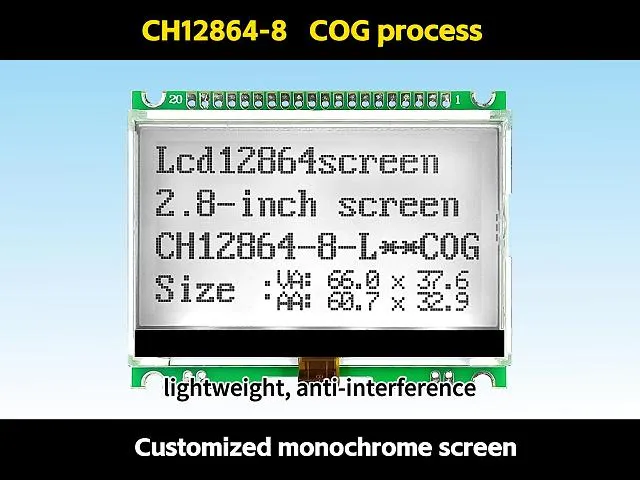
Q3: What is the difference between COB and COG construction for a 40x2 lcd display?
A3: COB (Chip-on-Board) is the traditional and most common construction method for this format, where the controller IC is mounted directly onto the module's PCB and protected by an epoxy bead. This design offers excellent mechanical stability, high resistance to vibration, and easier integration of mounting holes. In contrast, COG (Chip-on-Glass) mounts the controller IC directly onto the edge of the glass substrate. While COG produces a much thinner and lighter profile, it is typically more vulnerable to physical impact and is less common for large character displays like the 40x2 lcd display, where structural rigidity is preferred.
Q4: Is it possible to display non-English characters on this display?
A4: Yes. The standard CGROM on the embedded controller usually includes common symbols and characters for European languages or Katakana. If your application requires Cyrillic, Chinese, or custom graphics, you will need a graphical LCD module instead of a character display, or you must load custom characters into the 8 available CGRAM slots.
Q5: What is the typical lifetime of the LED backlight in these modules?
A5: LED backlights are highly durable, with a typical operating lifetime ranging from 50,000 to 100,000 hours before brightness drops to 50% of its original value. Operating the backlight at lower current levels can significantly extend this lifespan.
If you are developing a new control interface or looking to secure a stable supply chain for an existing product line, our engineering team is ready to assist.
Contact Chuanhang Display today to receive detailed technical datasheets, request product samples, or discuss custom optical and connection requirements for your industrial applications.