When an application requires more than two lines of alphanumeric data but cannot justify a full graphic LCD, the lcd 16x4 format offers a practical middle ground. This module presents four lines of 16 characters each – 64 total character positions – providing sufficient real estate for status reporting, menu systems, or multi-parameter monitoring without exceeding modest power and interface budgets.
In this guide, we examine the internal architecture, common controllers, optical parameters, and integration pain points of lcd 16x4 modules. You will also find practical advice on qualifying suppliers and estimating landed costs for volume procurement.
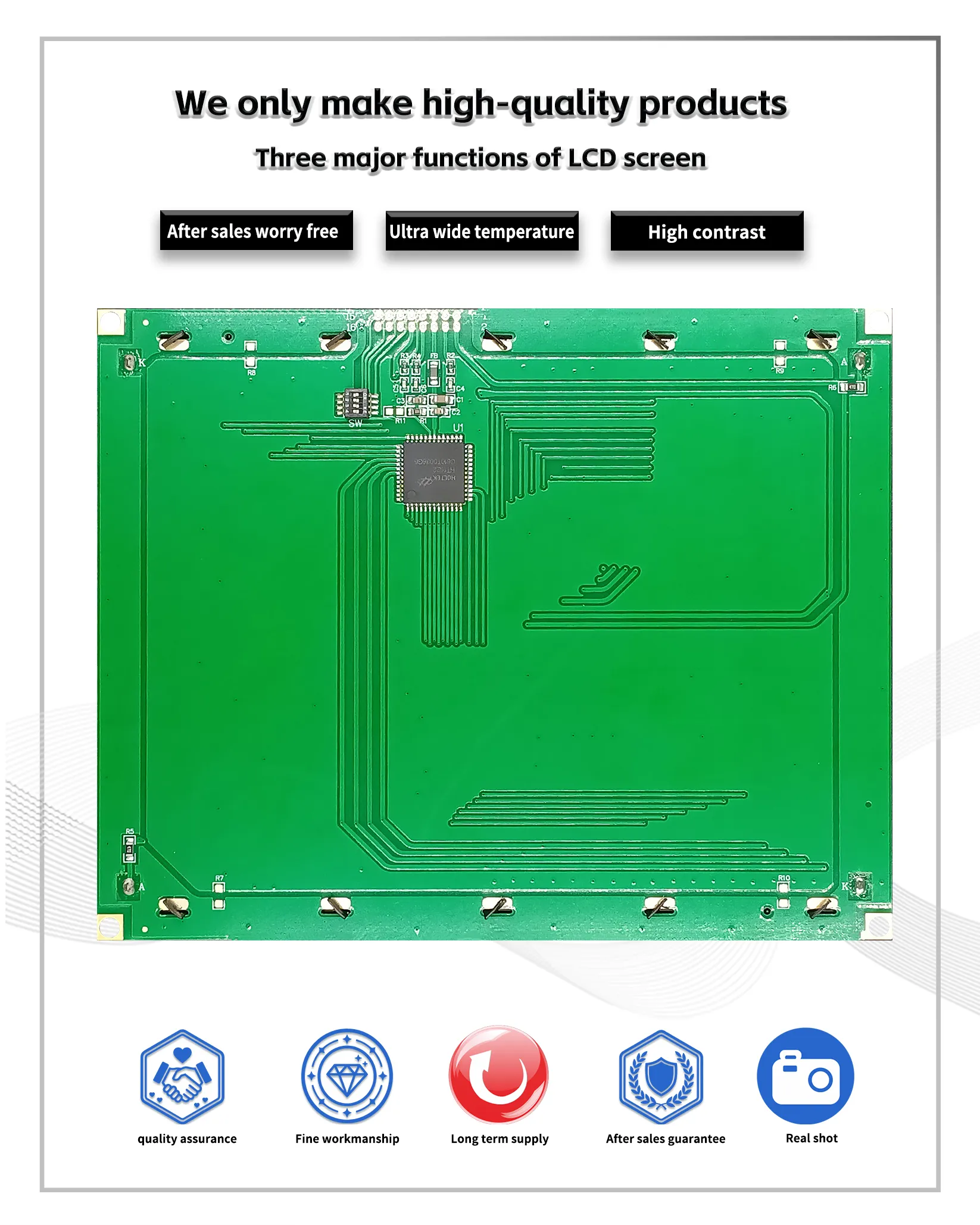
Designers selecting character LCDs typically compare 16x2, 20x4, and 16x4 variants. The 16x4 configuration occupies a unique position:
Common applications include medical device user interfaces, laboratory analyzers, industrial timers, vending machine control panels, and HVAC service terminals. In each case, the lcd 16x4 delivers readable text without requiring a framebuffer or complex graphics library.
Most lcd 16x4 modules are built around two independent controllers, each driving two lines. Typically, one controller manages line 1 and line 3, while the second controls line 2 and line 4. This arrangement affects memory addressing – developers must understand the command sequences for moving the cursor across line boundaries.
Writing to line 3 often requires the same initial address (0xC0) as line 2 on a 16x2 module, but the internal RAM mapping shifts after 16 characters. Verify the datasheet’s DDRAM address table – many lcd 16x4 modules map line 1: 0x00-0x0F, line 2: 0x40-0x4F, line 3: 0x10-0x1F, line 4: 0x50-0x5F.
The perceived quality of an lcd 16x4 depends heavily on polarizer type, backlight color, and operating temperature range. When sourcing, evaluate the following parameters:
| Mode | Background | Characters | Contrast | Viewing Angle | Power |
|---|---|---|---|---|---|
| Reflective (no backlight) | Silver/gray | Dark | Low | Narrow | None |
| Transflective | Light gray | Dark | Medium | Moderate | Low |
| Transmissive | Dark | Light (negative) | High | Wide | Higher |
For indoor equipment with ambient lighting, transflective is the safest choice. For outdoor or bright environments, consider a reflective lcd 16x4 – but note that the absence of backlight reduces readability in dim conditions.
Many low-cost lcd 16x4 modules are only rated for commercial temperature. For industrial B2B applications, always request the high-temperature variant – it typically uses wider-gap fluid and different sealing materials.
Engineers integrating an lcd 16x4 module often encounter the same recurring issues. Addressing these early saves development time.
The Vo pin (pin 3) requires a voltage between Vdd and Vss – typically a 10kΩ potentiometer from Vdd to ground. Many designers forget that contrast varies with temperature and supply voltage. For production units, use a fixed resistor divider calculated for the nominal supply, or include a digital potentiometer controlled by firmware.
Slow response (≥250ms) causes ghosting when scrolling fast. High-quality lcd 16x4 modules specify response time ≤150ms. If your interface requires rapid updates (e.g., live sensor data), request modules with low-viscosity fluid.
LED backlights often draw 80-150mA at 5V – significant for battery devices. Consider a PWM dimming circuit or specify a low-backlight variant (e.g., 30mA). Some suppliers like Chuanhang Display offer backlight driver ICs integrated into the module to reduce external components.
PCB hole positions and bezel cutouts are not standardized across vendors. Always obtain a 2D drawing before placing volume orders. The most common mounting options are:
While graphic displays have become cheaper, character modules remain preferred in certain B2B sectors due to simplicity and low software overhead.
Floor scales and bench scales often show net/gross weight, unit price, total price, and a stability indicator. Four lines fit this data perfectly. The lcd 16x4 provides a large character size (typically 5x8 dots per character, ~3-4mm tall) for readability from 1-2 meters.
Infusion pump interfaces display rate, volume infused, remaining volume, and occlusion pressure. Battery life is critical – a transflective lcd 16x4 with backlight activated only during user interaction can run for weeks on a single charge.
Centrifuge panels show setpoint RPM, actual RPM, timer, and temperature. The operator needs to see all four parameters simultaneously while wearing gloves. A 16x4 layout with high-contrast STN (super-twisted nematic) fluid meets this need.
Digital readouts on manual milling machines and lathes display X, Y, Z coordinates and tool offset. An lcd 16x4 with negative blue mode and white LED backlight offers excellent visibility in oily, vibrating environments.
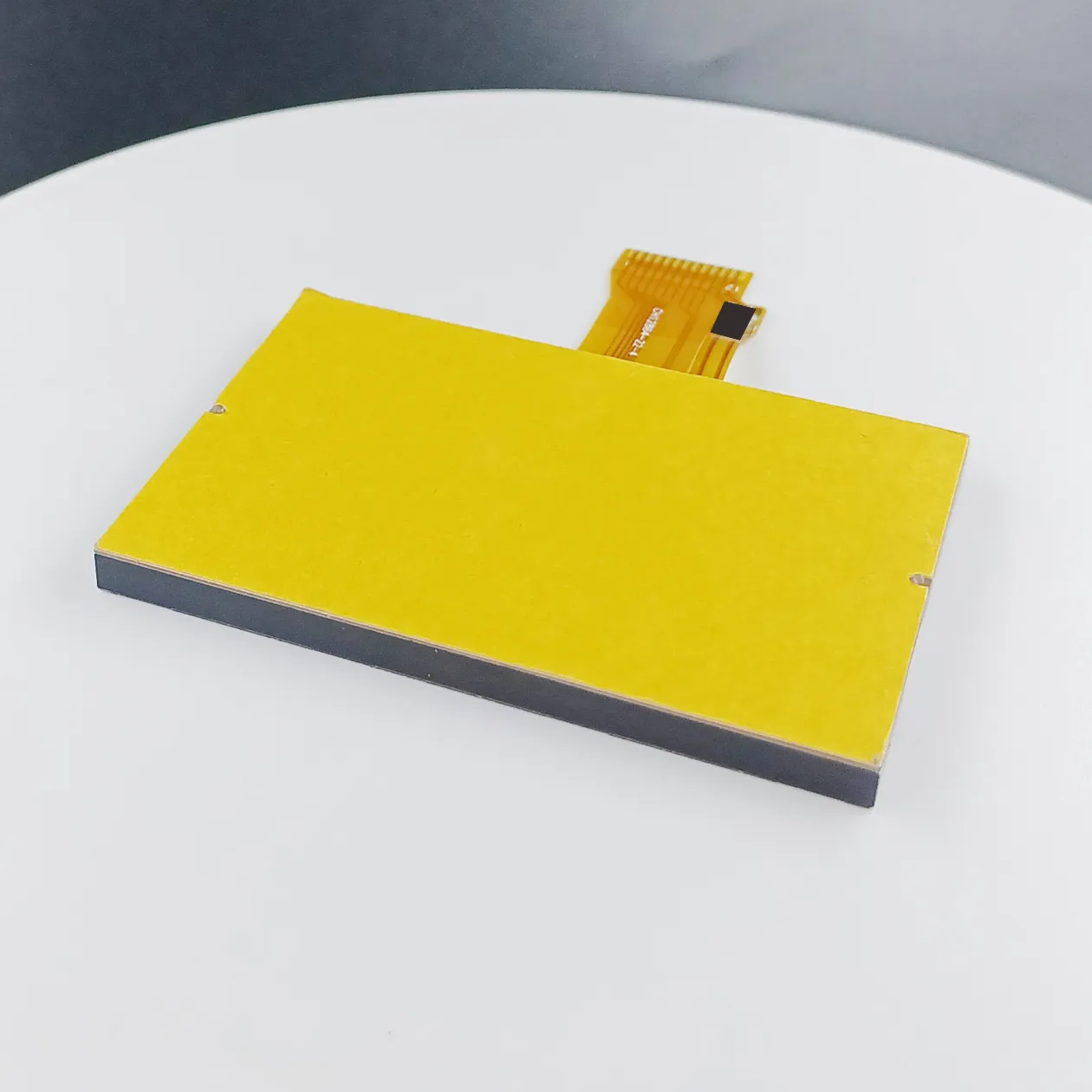
Procuring lcd 16x4 modules for production volumes differs significantly from buying samples. Here is a practical framework.
Pricing depends on backlight type, temperature grade, and whether the supplier holds HD44780-compatible glass in stock. Custom designs (e.g., specific character font, negative voltage generator on board) add NRE (Non-Recurring Engineering) fees of $800 – $3000.
Ask every potential supplier these questions before issuing a PO:
Chuanhang Display, for example, provides a standard 12-month warranty and optional 72-hour aging test for all lcd 16x4 modules bound for continuous-operation equipment. Their industrial-grade parts undergo -30°C to +80°C thermal cycling.
Standard lcd 16x4 modules use the HD44780 instruction set. However, volume buyers can request custom modifications that simplify integration.
The controller includes RAM for up to 8 user-defined characters (5x8 pixels). Pre-loading these patterns at the factory saves one firmware step. Common custom characters include:
Standard modules require an external potentiometer. For high-volume products, manufacturers can laser-trim a fixed resistor divider on the module’s PCB, eliminating the potentiometer and reducing BOM count.
Most lcd 16x4 modules are designed for 5V logic. When operating at 3.3V, the LCD’s contrast control may need a negative voltage (-1V to -3V) generated internally. Some suppliers integrate a charge pump – always confirm 3.3V compatibility before designing a board.
Industrial B2B products have lifecycles of 5-10 years. Ensure your lcd 16x4 supplier can guarantee the same form, fit, and function for that duration.
Many Chinese manufacturers, including Chuanhang Display, maintain test reports from third-party labs such as SGS or TÜV. Always request the report number and verify its validity.
Graphic OLEDs and TFT panels are dropping in price. However, character LCDs retain three advantages:
For new designs requiring a simple terminal interface, the lcd 16x4 remains a valid choice. If you need color, animation, or high-resolution graphics, migrate to TFT. But for alphanumeric-only industrial controls, the 16x4 format offers the best price-to-function ratio.
To conclude this technical overview, follow these steps when specifying an lcd 16x4:
Q1: Can I replace a 16x2 LCD with an LCD 16x4 without changing the PCB footprint?
A1: Not directly. While both may share the same 16-pin interface, the physical dimensions differ. A standard 16x2 module measures approximately 80x36mm, whereas an lcd 16x4 is typically 87x60mm. The mounting holes and bezel cutout also differ. You would need a new PCB layout or an adapter board.
Q2: What is the typical character height of an LCD 16x4 module?
A2: Most modules use a 5x8 dot matrix per character, with character sizes ranging from 2.95mm to 4.75mm in height. Common standards are 3.0mm (small outline) or 4.0mm (readable from 2 meters). Always check the “character height” parameter in the datasheet.
Q3: How do I fix a flickering backlight on an LCD 16x4?
A3: Flickering usually results from insufficient or noisy backlight supply voltage. Measure the voltage across the backlight LED (typically 4.2V for white LEDs). Add a 100µF electrolytic capacitor near the module’s backlight pin. If using PWM dimming, increase the PWM frequency above 120Hz – below this, human eyes perceive flicker.
Q4: Does Chuanhang Display offer an LCD 16x4 with I²C interface pre-installed?
A4: Yes, as a value-added service, Chuanhang Display can integrate a PCF8574-based I²C backpack on request. The module then operates with only SDA, SCL, Vcc, and GND lines. Specify the I²C address (default 0x27 or 0x3F) at the time of ordering.
Q5: What is the maximum cable length between the microcontroller and an LCD 16x4?
A5: For parallel 4-bit/8-bit mode, keep cable length under 50cm to avoid signal reflection and crosstalk. For longer distances (up to 5 meters), use a serial backpack (I²C or RS485). Active drivers or shielded ribbon cables can extend parallel range to 1 meter, but firmware timing must account for propagation delay.
Sourcing character LCDs for production requires matching electrical, optical, and mechanical parameters to your specific application. Whether you need standard transflective modules for indoor instruments or industrial-grade parts with extended temperature range, reliable suppliers provide full datasheets, sample testing, and volume pricing.
For technical datasheets, custom firmware options, or a quotation on lcd 16x4 modules in production quantities, contact the engineering sales team at Chuanhang Display. Include your target monthly volume, operating temperature range, and backlight preference – they respond within 24 hours with a detailed proposal and CAD drawings.
Submit your inquiry now to receive a sample kit and volume pricing table tailored to your project.