For decades, the lcd character display has remained a workhorse component in industrial equipment, medical devices, and consumer electronics. Unlike graphic displays that render pixels individually, character LCD modules are optimized for showing alphanumeric text, symbols, and custom characters with minimal processing overhead. Their HD44780-compatible controller architecture has created a de facto standard that engineers rely on for low-complexity, high-reliability human-machine interfaces.
This guide examines the internal construction, selection criteria, application-specific challenges, material trade-offs, and procurement strategies surrounding these modules. Whether you are designing a new control panel or sourcing replacement units for legacy systems, the following information will help you make data-driven decisions.
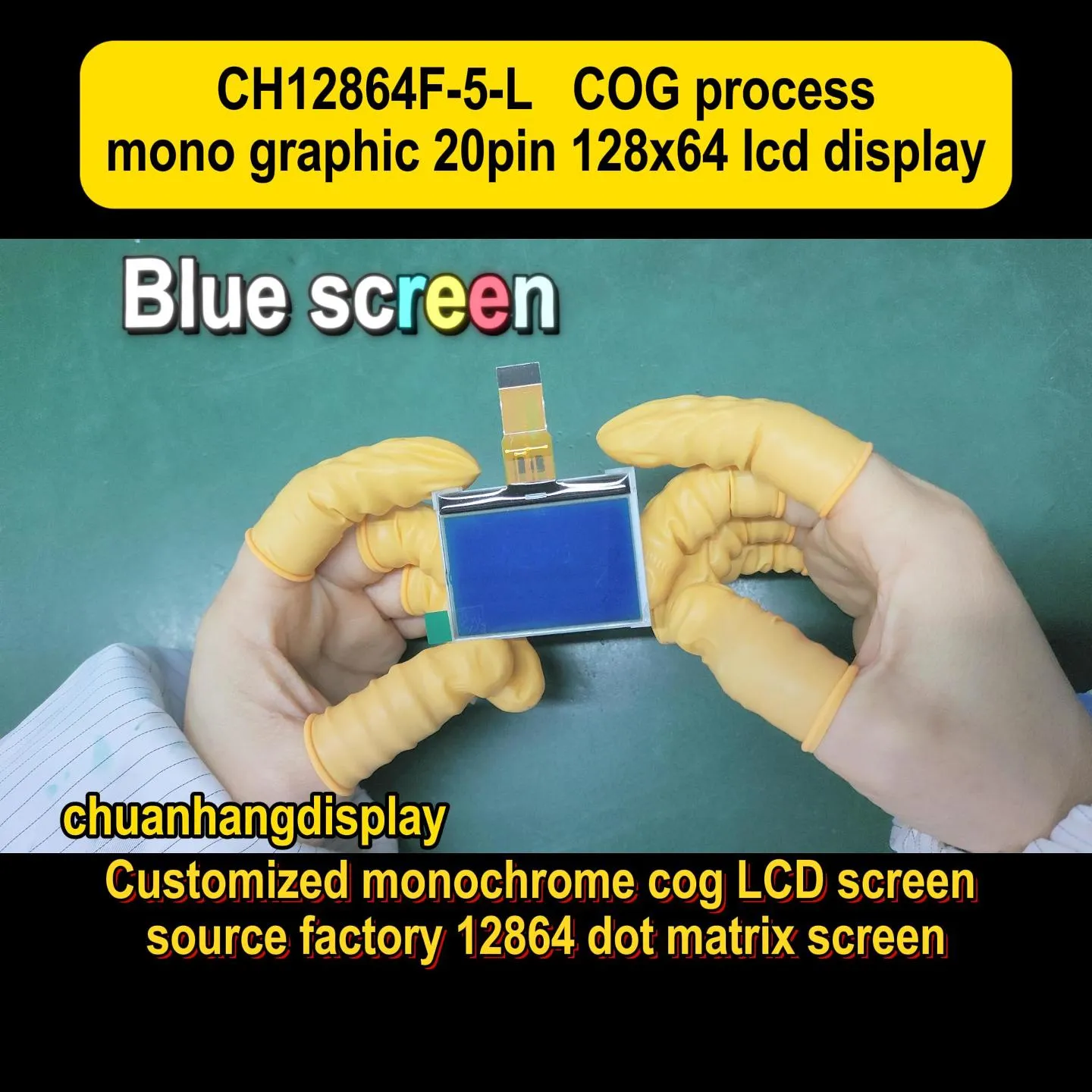
A typical lcd character display consists of a liquid crystal panel, a controller/driver IC, a PCB with conductive traces, and a backlight system. The most common controller family originates from the Hitachi HD44780, which has been cloned or licensed by numerous manufacturers. This controller handles character generation, cursor control, and parallel interface communication.
The liquid crystal layer sits between two glass substrates. Polarizing films determine the optical mode: positive (dark characters on light background) or negative (light characters on dark background). Within positive mode, engineers choose between:
STN (Super Twisted Nematic) and FSTN (Film-compensated STN) are the prevailing LCD technologies for character modules. FSTN offers deeper black characters and wider viewing angles than standard STN, though at a slightly higher cost.
Nearly every lcd character display on the market today follows the HD44780 command set. This compatibility means firmware written for one 16x2 module will generally work on another from a different supplier, provided the pinout and voltage match. The controller handles:
For space-constrained designs, some modules integrate a smaller controller or use I2C/SPI backpacks, but the core command set remains backward-compatible.
Standard modules display a fixed matrix of 5x8 or 5x11 dots per character. The 5x8 format allows eight custom characters stored in CGRAM; the 5x11 version reduces custom character capacity to four. Engineers frequently program custom glyphs for unit indicators (Ω, μ, °), progress bars, or simple icons. Each custom character requires 8 bytes of RAM (for 5x8) – a modest resource that adds significant interface value without upgrading to a graphic display.
When specifying an lcd character display, the following parameters directly impact system performance and longevity.
| Parameter | Typical Range | Selection Guidance |
|---|---|---|
| Character format | 8x1, 16x1, 16x2, 20x2, 20x4, 40x2 | 16x2 is most common; 20x4 fits more data per screen |
| Module dimensions | Vary by format (e.g., 80x36mm for 16x2) | Check mechanical drawings for enclosure fit |
| Viewing area | Slightly smaller than module size | Ensure enough border for gaskets or bezels |
| Operating voltage | 3.3V or 5V | Match your logic level; 5V modules often work at 3.3V with slower timing |
| Backlight | LED (yellow-green, blue, white, red, RGB) | Yellow-green offers best readability under sunlight; white for modern aesthetic |
| Interface | 14/16-pin parallel (standard), I2C/SPI (optional) | Parallel is universal; serial reduces wire count |
| Operating temperature | 0°C to +50°C (commercial) or -20°C to +70°C (industrial) | Industrial range is mandatory for outdoor or factory floor use |
| Viewing direction | 6 o’clock, 12 o’clock, or wide | 6 o’clock (view from below) is typical for mounted panels |
Beyond these basics, consider the backlight current consumption (typically 20-40 mA per LED segment), contrast adjustment via external potentiometer or PWM, and the type of connector (pin header, FPC, or zebra strip).
The lcd character display excels in scenarios where simple, reliable text output is required. Graphic displays would be overkill and power-inefficient in these environments.
Patient monitors, infusion pumps, and laboratory analyzers often use 16x2 or 20x2 character modules to show numeric values, error codes, and menu options. The requirement for long service life (10+ years) and predictable obsolescence makes standardized character displays preferable to custom TFT panels. Many medical designs still use transflective displays with yellow-green LED backlighting for low glare in operating rooms.
Programmable logic controllers (PLCs), human-machine interface (HMI) terminals, and motor drives frequently integrate small character displays for local diagnostics. An operator can read a fault code or adjust a setpoint without connecting a laptop. Wide temperature range (-20°C to +70°C) and vibration resistance are critical. Modules with COB (Chip-on-Board) construction offer better ruggedness than COG (Chip-on-Glass) for high-shock applications.
Older POS terminals, kitchen display systems, and electronic cash drawers use 20x4 or 40x2 modules to show transaction details, item names, and totals. The low refresh rate requirement and instant power-on (no boot time) are advantages over graphic displays.
Bus destination signs, fuel pump displays, and forklift dashboards often employ character LCDs with extended temperature range and UV-resistant polarizers. Negative-mode displays with bright yellow or red characters on black background are chosen for high daytime visibility.
High-end coffee machines, microwave ovens, and thermostats use compact 8x1 or 16x1 modules to display timers, temperatures, and settings. Cost sensitivity drives the selection of simple reflective displays without backlight in battery-powered devices.
The longevity of an lcd character display depends heavily on material choices made during manufacturing. As a procurement professional or design engineer, you should evaluate these aspects.
Standard soda-lime glass is adequate for indoor use. However, for humid or chemically harsh environments (e.g., food processing, chemical plants), ask for chemically strengthened glass or a conformal coating on the PCB. Polarizer films degrade under UV exposure; outdoor or automotive applications require UV-stable polarizers to prevent yellowing and contrast loss after two to three years.
Commodity-grade modules use LC fluid with a clearing point around 70°C. Industrial-grade fluid extends the upper limit to 80°C and lower limit to -20°C. For cold storage or outdoor winter operation, choose modules rated to -30°C. Storage temperature (non-operating) is typically wider, but repeated thermal cycling can cause bond failure between the elastomeric connector and glass. Opt for modules with soldered pin headers rather than zebra strips if the product sees frequent temperature swings.
LED backlights are rated for 50,000 to 100,000 hours (roughly 6-11 years of continuous operation). The actual failure mode is gradual brightness reduction, not abrupt failure. For mission-critical applications, consider redundant backlight segments or external illumination. Cold cathode fluorescent (CCFL) backlights are obsolete in new designs due to higher voltage requirements and limited availability.
Character modules are susceptible to electrostatic discharge through the exposed pins or glass edge. Industrial designs should include TVS diodes on the data lines and a grounded metal bezel. For EMI-sensitive environments (medical, radio equipment), request modules with an integrated EMI shield or specify a ferrite bead on the backlight power line.
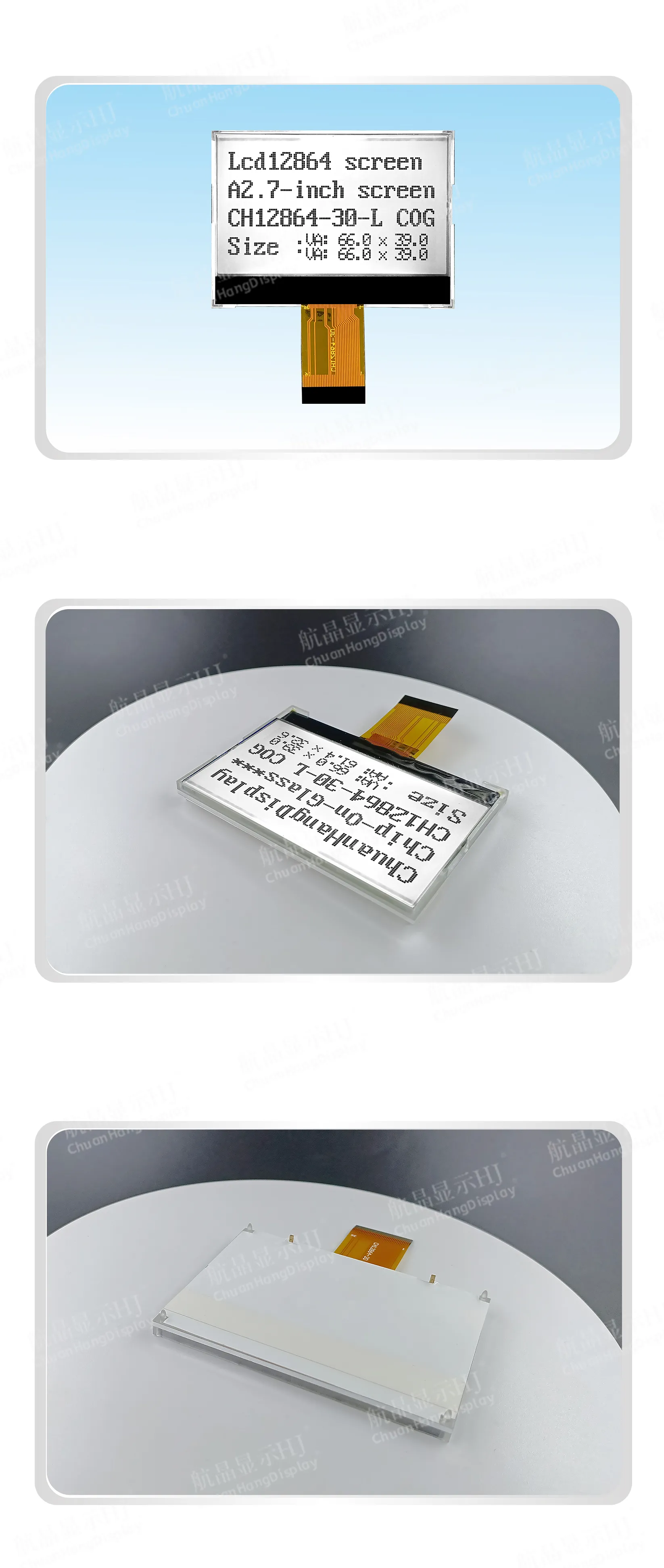
Finding a reliable supplier for lcd character display modules requires balancing price, lead time, quality control, and customization options. Chuanhang Display has built a reputation for consistent manufacturing of HD44780-compatible modules with industrial temperature options. Their product line covers 8x1, 16x2, 20x4, and 40x2 formats, with custom character mask ROM available for volumes above 2,000 units.
| Factor | Impact on Unit Price |
|---|---|
| Quantity (1-100 vs 10k+) | 50-70% reduction at high volume |
| Backlight color (yellow-green vs white) | White typically adds $0.30-0.50 |
| Industrial temperature range | Adds 15-25% over commercial grade |
| Custom CGRAM or character set | One-time mask fee ($300-800) |
| COG vs COB | COG saves 10-15% but less rugged |
Genuine HD44780-based modules use standard command sequences. Counterfeits often have poorly documented timing variations or missing CGRAM functionality. Always order directly from a known manufacturer or authorized distributor. Chuanhang Display provides traceable batch codes and test reports for every production run.
Despite their simplicity, character LCDs can fail in predictable ways. Understanding these helps in designing fault-tolerant systems.
Q1: What is the difference between an LCD character display and a graphic LCD module?
A1: A character display contains a built-in HD44780 or compatible controller that generates fixed-size characters (typically 5x8 or 5x11 dots) from a built-in ROM. You send ASCII codes, and the hardware draws each character. A graphic LCD (e.g., 128x64) lets you control every pixel individually, requiring a framebuffer and more complex software. Character modules are simpler, lower cost, and use less microcontroller memory.
Q2: Can I use a 5V LCD character display with a 3.3V microcontroller?
A2: Yes, but with precautions. Most 5V-rated modules recognize 3.3V logic as a logic high (V_IH is typically 0.7*Vcc = 3.5V, so 3.3V is marginal). Use a level shifter on data lines, or select a module specifically rated for 3.3V operation. The backlight voltage is independent; 3.3V can power some LED backlights but at reduced brightness.
Q3: How do I add custom characters to my LCD character display?
A3: Write to the CGRAM (Character Generator RAM) address from 0x00 to 0x07 (or 0x00-0x03 for 5x11 fonts). Each custom character requires 8 bytes of data defining which pixels are on. After writing, you can display the character by sending the corresponding code (0x00 through 0x07) as if it were a standard ASCII character. The character remains in RAM until power is cycled or you overwrite it.
Q4: What is the typical lifespan of an LCD character display with LED backlight?
A4: The LCD fluid itself lasts 10-15 years if stored within temperature limits. The LED backlight has a rated lifetime of 50,000 to 100,000 hours (continuous operation). In real-world intermittent use, this translates to 10+ years. The polarizer film may yellow after 5-7 years under UV exposure or high heat. For long-life industrial products (15+ years), stock spare modules or choose designs with replaceable backlights.
Q5: Does Chuanhang Display offer custom character masks or extended temperature LCD character displays?
A5: Yes, Chuanhang Display provides full customization including mask ROM with your specific character set (e.g., Cyrillic, Greek, custom symbols), industrial temperature range from -30°C to +80°C, and various polarizer options (reflective, transflective, transmissive). Minimum order quantities for custom masks start at 2,000 units. Contact their engineering team for a design review and quotation.
Selecting the right lcd character display involves more than matching pin counts. Consider operating environment, backlight lifetime, controller compatibility, and supplier quality control. For standard modules or fully customized solutions, Chuanhang Display offers engineering support, competitive pricing for volumes from samples to mass production, and documented reliability data.
Send your inquiry with your target character format (e.g., 16x2, 20x4), required temperature range, backlight color preference, and estimated annual quantity. Request samples for validation – most configurations ship within one week. Click below to start the conversation.
[Send Inquiry to Chuanhang Display]