The endurance of the monochrome lcd display in the industrial sector is a testament to its operational efficiency and readability. While high-definition color panels dominate the consumer electronics market, professional-grade equipment requires different priorities: power economy, high contrast ratio, and longevity. In fields ranging from medical diagnostics to automotive instrumentation, these displays provide a reliable human-machine interface that can withstand harsh environments where other technologies fail.
For engineers and procurement specialists, selecting the right display involves more than just choosing a screen size. It requires a deep understanding of liquid crystal chemistry, drive waveforms, and optical bonding techniques to ensure the final product performs consistently over a lifecycle that often spans a decade or more.
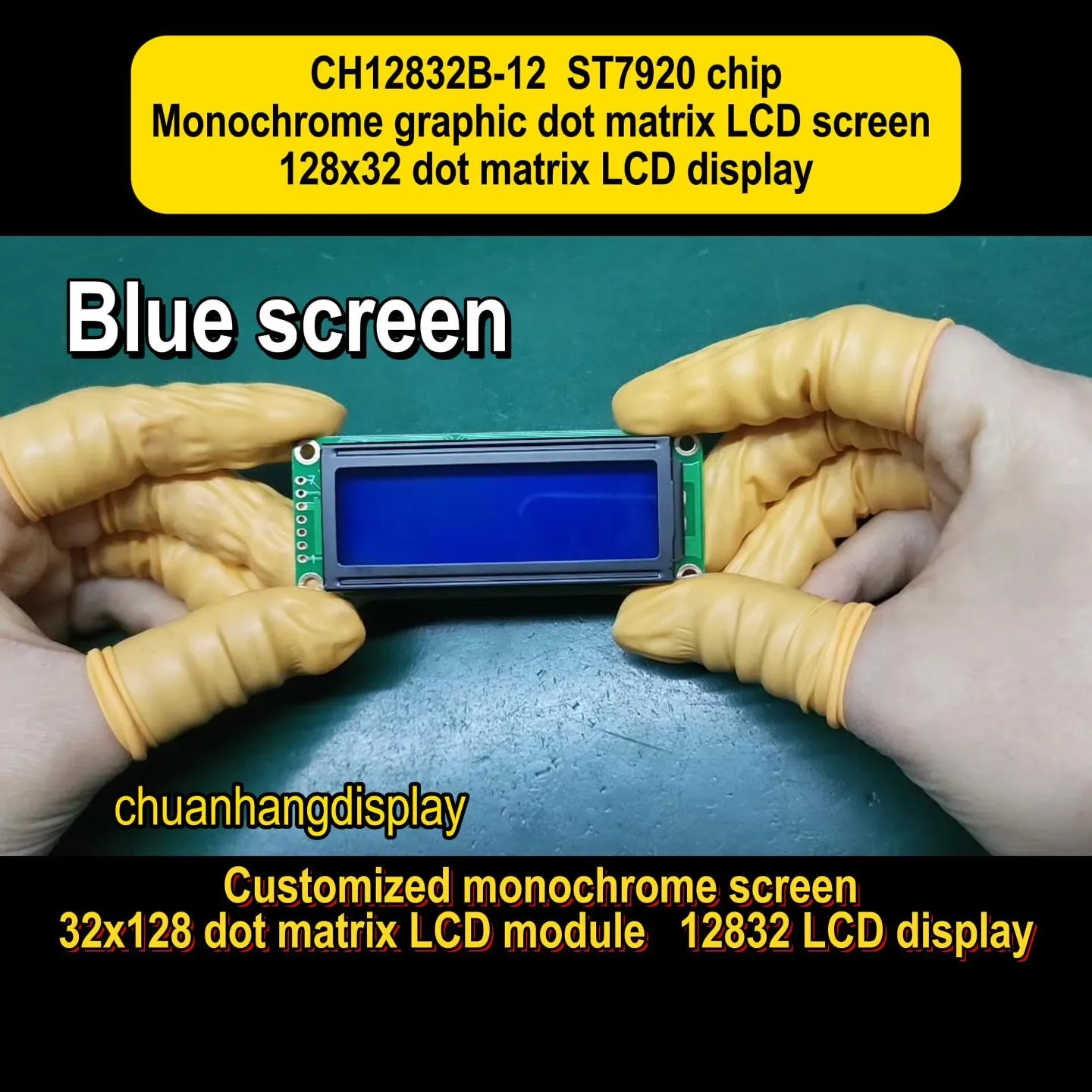
The performance of a monochrome lcd display is primarily determined by the orientation and "twist" of the liquid crystal molecules within the glass cell. Each mode offers a distinct balance of cost and visual performance.
TN panels are the foundation of monochrome technology. The liquid crystal molecules twist 90 degrees between the two glass substrates. These displays are prized for their low driving voltage and rapid response times. They are most effective in simple segment-based applications, such as digital watches or basic thermometers, where cost-efficiency is the primary objective.
To achieve higher information density, STN technology utilizes a twist angle of 180 to 270 degrees. This steeper twist results in a more pronounced electro-optical response curve, allowing for higher multiplexing rates. This is particularly useful for dot-matrix displays that need to show complex characters or graphics.
FSTN (Film-compensated STN): By adding a compensation film, the yellow-green or blue-white tint of standard STN is neutralized, resulting in a high-contrast black-and-white image.DFSTN (Double Film STN): This utilizes two layers of film to achieve a deep black background, making it ideal for high-end medical devices where clarity is a safety requirement.VA (Vertical Alignment): VA technology represents the peak of monochrome contrast. The molecules are aligned vertically to the substrate, blocking light almost entirely in the "off" state. This creates a true black background with viewing angles that far exceed TN or STN modes.
The mechanical integration of a monochrome lcd display into a product’s PCB (Printed Circuit Board) is a vital design consideration. The choice between COG, COB, and SMT impacts the overall footprint and durability of the module.
In COG architecture, the LCD driver IC is bonded directly onto the extended lip of the glass substrate. This significantly reduces the size of the module because it eliminates the need for a separate PCB for the controller.
Advantages: Compact profile, lower cost in high-volume production, and high reliability due to fewer solder joints.Applications: Handheld instruments, smart meters, and mobile medical devices.
COB involves mounting the driver IC onto a PCB, which is then connected to the LCD glass via a bezel and zebra strips or pins.
Advantages: Higher mechanical robustness and easier mounting via screw holes. It also allows for the integration of peripheral circuits, such as voltage regulators or backlight control, directly on the display’s PCB.Trade-offs: Increased thickness and a larger footprint compared to COG designs.
Environmental factors such as ambient light and temperature extremes dictate the selection of polarizers and liquid crystal fluids. A high-performance monochrome lcd display must remain legible whether it is in a dark laboratory or under direct noon sunlight.
Reflective: Uses a mirror-like layer to reflect ambient light. These consume the least amount of power as they do not require a backlight.Transmissive: Requires a backlight to function. These offer the best clarity in low-light environments but are difficult to read in bright sunlight.Transflective: The hybrid solution. It reflects ambient light while allowing the backlight to pass through. For B2B industrial applications, this is often the default choice due to its versatility.
Standard liquid crystals begin to lose their properties outside the 0°C to 50°C range. For outdoor infrastructure or aerospace applications, manufacturers like [Chuanhang Display] utilize "Wide Temperature" fluids that remain stable from -30°C up to +80°C. Furthermore, heaters can be integrated into the glass stack-up to ensure rapid refresh rates in sub-zero conditions.
Modern monochrome modules have moved beyond simple parallel interfaces. The choice of communication protocol affects the complexity of the MCU firmware and the susceptibility to electromagnetic interference (EMI).
I2C (Inter-Integrated Circuit): Uses only two wires (SDA/SCL), making it perfect for space-constrained designs where pin count on the microcontroller is limited.SPI (Serial Peripheral Interface): Offers faster data transfer rates than I2C. This is preferred for graphic displays where screen updates need to be instantaneous.Parallel (8080/6800): Provides the highest bandwidth but requires a large number of GPIO pins. This is becoming less common in new designs but remains a staple for legacy industrial systems.
In the B2B sector, the cost of a display failure in the field far outweighs the initial purchase price of the component. Therefore, rigorous testing protocols are mandatory.
High-quality displays must undergo:
High Temp / High Humidity (THB): Typically 60°C and 90% relative humidity for 500 hours.Thermal Shock: Rapidly cycling between -40°C and +85°C to test the integrity of the seals and interconnects.Vibration and Drop Tests: To simulate the rigors of industrial environments or portable use.
[Chuanhang Display] integrates these quality control measures at every stage of production, ensuring that each monochrome lcd display meets the strict tolerances required by international ISO standards. This focus on consistency is why monochrome technology remains the preferred choice for infrastructure projects with 10-year or 20-year service lives.
When找寻ing a supplier for a monochrome lcd display, price is only one part of the equation. B2B buyers must evaluate the vendor's ability to provide technical support and ensure long-term availability.
Most industrial projects require a custom glass layout to include specific icons, units (kg, PSI, °C), or brand logos. This involves a Non-Recurring Engineering (NRE) fee. A transparent supplier will provide a detailed CAD drawing for approval before any tooling is created.
The unit price is influenced by:
Glass Grade: Automotive-grade glass is more expensive than commercial-grade glass due to the purity and strength requirements.Backlight Brightness: High-NIT backlights for sunlight readability require more LEDs and better thermal management.Connector Type: Gold-plated pins vs. carbon heat-seal connectors.
[Chuanhang Display] works closely with engineering teams to optimize these variables, ensuring the display meets the application's technical requirements without unnecessary over-engineering that inflates costs.

One of the biggest challenges in the electronics industry is the "End of Life" (EOL) notice. Many TFT and OLED panels have short production runs. Monochrome glass, however, is remarkably stable. By choosing a partner that controls the glass cutting and ITO (Indium Tin Oxide) coating process, OEMs can secure a supply chain that remains active for decades.
Despite the availability of full-color alternatives, the monochrome lcd display is not a legacy technology. It is a specialized tool. With the rise of the Internet of Things (IoT), there is an increasing demand for low-power, "always-on" displays that can run for years on a single button-cell battery. Innovations in ultra-low-power driver ICs and higher-reflectivity polarizers continue to push the boundaries of what these displays can achieve.
In conclusion, the successful implementation of a monochrome solution depends on a holistic approach to design. By balancing the liquid crystal mode, the mechanical packaging, and the environmental protections, engineers can create interfaces that are both functional and incredibly durable.
For technical consultations or to request a quote for your specific project requirements, we invite you to reach out to our engineering department. Our team is ready to provide the expertise needed to bring your industrial HMI vision to life.
Q1: What is the typical power consumption of a monochrome lcd display?
A1: Without a backlight, a standard reflective TN or STN display consumes only micro-amps of current. This makes them significantly more efficient than even the lowest-power color TFTs, which require constant pixel refreshing and backlighting.
Q2: Can I use a monochrome LCD in direct sunlight?
A2: Yes, provided you choose a Reflective or Transflective polarizer. These configurations use the ambient sunlight to illuminate the display, meaning the brighter the sun, the clearer the display becomes.
Q3: What is the difference between a character LCD and a graphic LCD?
A3: A character LCD has pre-defined internal fonts and can only display specific alphanumeric characters in fixed positions (e.g., 16x2 characters). A graphic LCD is a grid of pixels (e.g., 128x64) that allows you to draw any shape, icon, or font via software.
Q4: How do I adjust the contrast of the display if it looks too faint?
A4: Contrast is controlled by the Operating Voltage (Vop). This can usually be adjusted via a potentiometer in the hardware or by modifying the contrast register settings in the driver IC’s firmware.
Q5: Why is FSTN more expensive than standard STN?
A5: FSTN requires an additional optical compensation film that must be precisely laminated to the glass. This extra material and the added complexity in the manufacturing process increase the total cost but provide a much higher contrast ratio.
Q6: Are monochrome LCDs compatible with modern 3.3V microcontrollers?
A6: Yes, most modern driver ICs for COG and COB modules are designed to operate at 3.3V or even lower voltages, making them directly compatible with ARM, ESP32, and other contemporary MCUs.
For professional inquiries and custom display solutions, please submit an inquiry through our contact portal. Our technical team will provide a comprehensive assessment within 24 hours.