In an era dominated by high-resolution color TFT panels and OLED technologies, the monochrome LCD display continues to hold a distinct position across multiple industrial sectors. While consumer electronics have largely transitioned to color displays, engineering teams in medical instrumentation, automotive dashboards, industrial control systems, and outdoor equipment consistently specify monochrome LCD displays for their superior sunlight readability, extended temperature range, and power efficiency.
The global market for monochrome LCD displays remains steady, with annual shipment volumes exceeding 400 million units as of 2025. This persistence is not driven by cost alone—though pricing remains a factor—but by fundamental technical advantages that color technologies struggle to match in specific operating conditions. For procurement professionals and design engineers, understanding the nuances of monochrome LCD display selection directly impacts product reliability, user interface performance, and total cost of ownership.
This article provides a comprehensive examination of monochrome LCD display technologies, covering panel architectures, material science, application-specific requirements, supplier evaluation criteria, and current pricing benchmarks. The content is structured to support informed decision-making for B2B procurement and engineering design cycles.
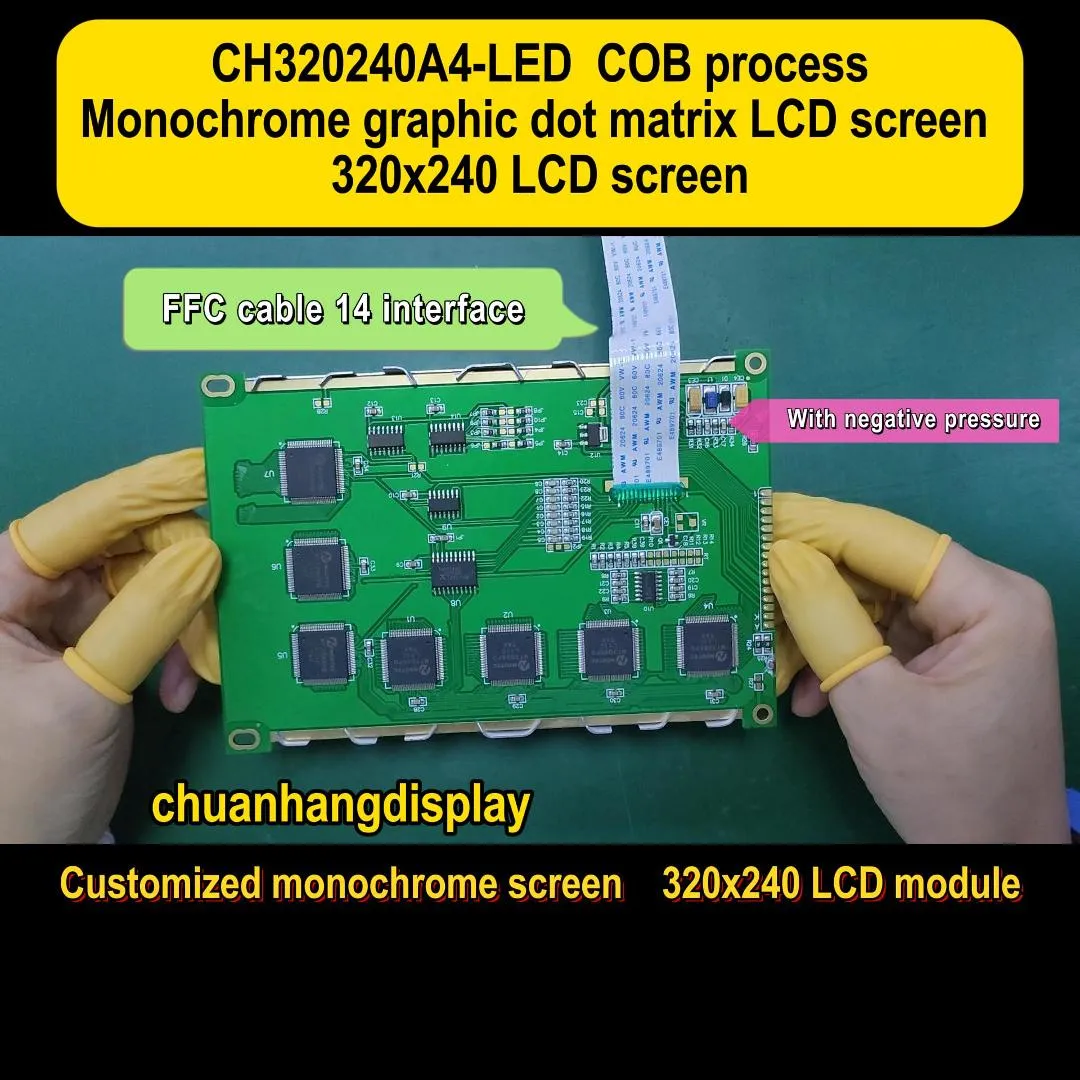
A monochrome LCD display operates on the principle of light modulation through liquid crystal molecules. Unlike color displays that require color filters and sub-pixel arrangements, monochrome displays utilize a single pixel structure, resulting in higher aperture ratios and improved optical efficiency. The primary display modes include:
The pixel structure of a monochrome LCD display directly influences information density and readability. Common resolutions range from simple segmented displays (used in digital clocks and multimeters) to high-density dot-matrix configurations reaching 640×480 pixels or higher. Engineering teams must consider the trade-off between resolution and display size—higher pixel densities require finer manufacturing tolerances and increase per-unit costs.
For character-based applications, the standard 5×8 dot matrix remains prevalent, supporting alphanumeric and limited graphical content. Graphic monochrome LCD displays, offering full pixel addressability, enable custom icon design, waveform visualization, and multilingual character sets. These displays typically interface through parallel or SPI communication protocols, with controller ICs such as the NT7534 or UC1701 providing built-in display RAM and timing generation.
Industrial environments demand displays that operate reliably across wide temperature ranges (−20°C to +70°C or broader) and withstand vibration, dust, and humidity. Monochrome LCD displays excel in these conditions due to their simple construction and absence of backlight-induced thermal management challenges. Common applications include:
In these settings, the high contrast ratio of FSTN monochrome LCD displays ensures legibility even under direct factory lighting, while the low power consumption reduces heat buildup within sealed enclosures.
Medical device manufacturers specify monochrome LCD display panels for patient monitors, infusion pumps, ventilator interfaces, and portable diagnostic tools. Regulatory requirements for medical displays include compliance with IEC 60601-1 for electrical safety and ISO 13485 for quality management. Key selection criteria include:
Chuanhang Display has supplied monochrome LCD displays for several Class II medical devices, with panel lifetimes exceeding 100,000 hours and operating temperature ranges validated to +85°C for sterilization cycles.
While premium vehicles feature full-color instrument clusters, monochrome LCD displays remain widely used in commercial vehicles, agricultural equipment, and aftermarket telematics. The automotive grade specification (AEC-Q100) imposes stringent reliability requirements:
Transflective monochrome LCD displays combine reflective and transmissive modes, enabling daylight readability without constant backlight operation—a feature that reduces battery drain in electric vehicles and portable diagnostic tools.
The optical performance and durability of a monochrome LCD display depend heavily on substrate material selection. Two primary options exist:
Manufacturing processes include photolithography for pixel electrode patterning, alignment layer deposition, and liquid crystal filling. The cell gap tolerance—typically ±0.1 μm—directly influences contrast uniformity across the display area. Advanced production lines at facilities like those operated by Chuanhang Display achieve cell gap variation below 0.05 μm through precision spacer technology.
Most monochrome LCD displays require backlighting for indoor and low-light applications. Backlight options include:
Optical films—including diffusers, prism sheets, and reflective polarizers—enhance luminance uniformity and brightness. For medical displays requiring grayscale accuracy, the backlight unit must maintain color temperature stability within ±200 K over the operating temperature range.
Engineering procurement specialists should request comprehensive documentation when evaluating monochrome LCD display suppliers. Critical documents include:
Suppliers capable of providing full IEC 60068 environmental test data demonstrate manufacturing maturity and quality system rigor. For medical and automotive applications, production part approval process (PPAP) documentation is essential.
When qualifying a monochrome LCD display manufacturer, procurement teams should assess:
Chuanhang Display operates ISO 9001 and IATF 16949 certified production lines, with in-house tooling design and glass thinning capabilities. This vertical integration reduces lead times and ensures control over critical quality parameters.
Industrial and medical equipment often require display availability for 7–15 years. Procurement specialists must evaluate supplier continuity plans, including:
Contractual agreements should include lifecycle management clauses specifying minimum order quantities (MOQs) and reorder lead times to avoid production stoppages.
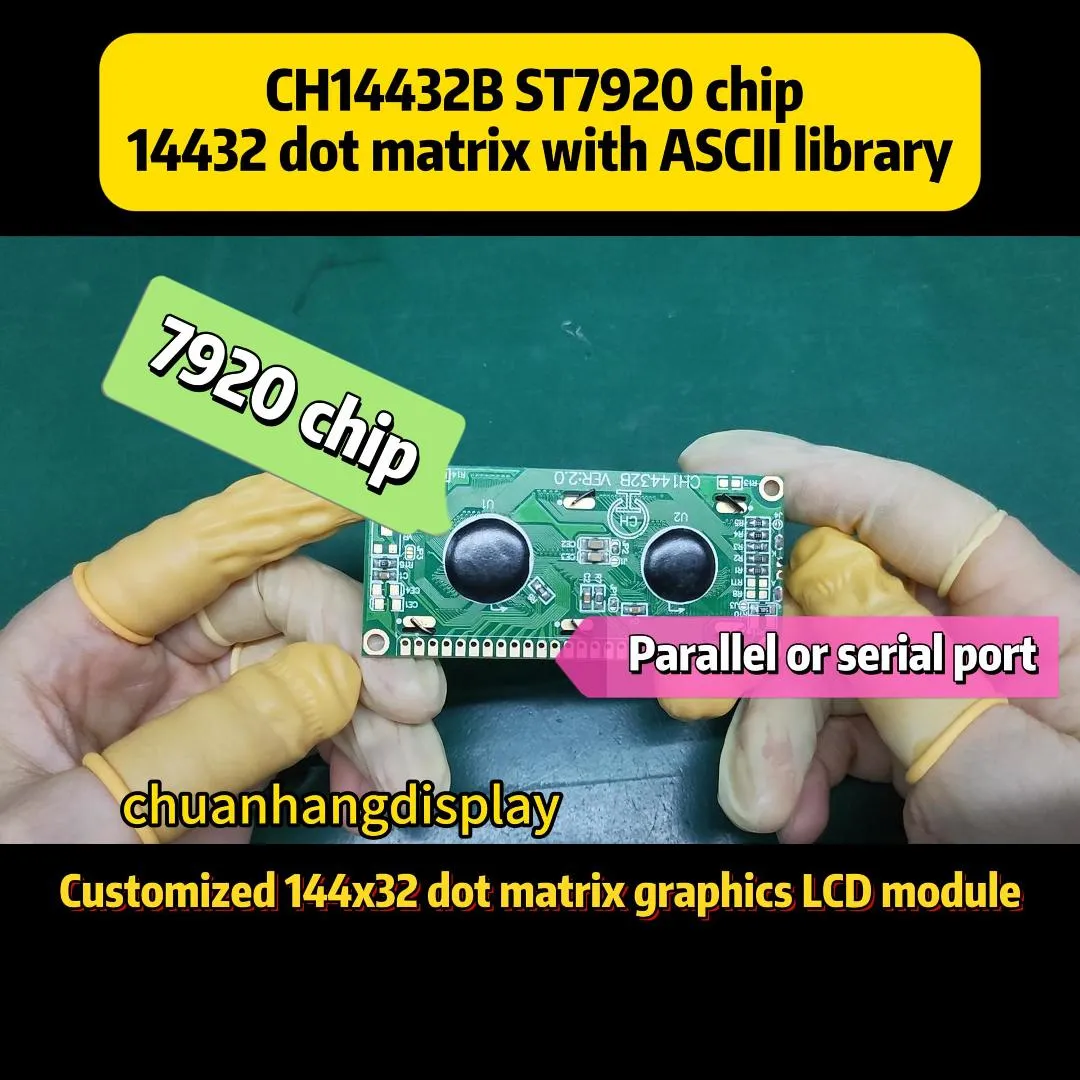
Pricing for monochrome LCD displays varies significantly based on specifications. Key cost drivers include:
Typical per-unit pricing for monochrome LCD displays in 2026 ranges from USD 2.50 to USD 45.00, depending on resolution and grade. High-reliability medical-grade panels with FSTN technology and integrated touch sensors may reach USD 60–80 per unit in low-volume orders.
Procurement strategies should align order quantities with supplier MOQ thresholds to achieve optimal unit pricing. Typical pricing tiers for a standard 128×64 graphic monochrome LCD display:
Tooling and NRE (non-recurring engineering) costs for custom configurations—including bezel designs, FPC layouts, and viewing area modifications—typically range from USD 2,000 to USD 8,000, amortized over the production lifetime.
Despite the proliferation of color displays, the monochrome LCD display market continues to evolve. Emerging developments include:
According to industry forecasts, the monochrome LCD display market will maintain a compound annual growth rate (CAGR) of 2.8% through 2030, with strongest growth in medical and industrial segments. Manufacturers investing in flexible substrate processing and ultra-narrow bezel designs are well-positioned to capture emerging opportunities in portable diagnostics and human-machine interface (HMI) applications.
Chuanhang Display continues to develop next-generation monochrome LCD displays with integrated backlight dimming and temperature compensation circuits, addressing the growing demand for smart display solutions in industrial IoT (IIoT) gateways and remote terminal units.
Selecting the right monochrome LCD display requires balancing technical specifications, environmental robustness, supply chain reliability, and total cost of ownership. Engineering teams should prioritize optical performance parameters—contrast ratio, viewing angle, and reflectance—that directly affect end-user experience, while procurement specialists must evaluate supplier production capability, quality systems, and lifecycle management practices.
The technical depth provided in this guide serves as a foundation for supplier qualification and design decision-making. For organizations developing industrial, medical, or transportation equipment, the monochrome LCD display remains a reliable, cost-effective solution that consistently meets stringent operational requirements.
For application-specific recommendations, sample evaluation, or volume pricing inquiries, engineering and procurement professionals are invited to contact Chuanhang Display's technical sales team. Our engineering support staff provides design review, customization consultation, and qualification testing services to streamline the integration process.
Q1: What is the typical operating temperature range for a monochrome LCD display?
A1: Standard commercial-grade monochrome LCD displays operate from 0°C to +50°C. Industrial-grade panels extend this range to −20°C to +70°C, while automotive-grade and military-specification displays achieve −40°C to +85°C. The temperature range is determined by the liquid crystal material's clearing point and the alignment layer's thermal stability. Suppliers provide detailed temperature-performance curves in their technical data sheets.
Q2: How do I select between TN, STN, FSTN, and VA display modes for my application?
A2: Choose TN for cost-sensitive applications with fixed viewing angles and simple character display needs. Select STN when wider viewing angles are required but budget constraints preclude FSTN. FSTN is the preferred choice for medical and professional instrumentation where true black-and-white appearance and high contrast are essential. VA mode offers the highest contrast and dark-state performance for premium automotive and avionics applications—expect a 15–30% price premium over FSTN.
Q3: What is the lifespan of a monochrome LCD display, and how is it measured?
A3: The operational lifespan is typically specified as the time to 50% reduction in luminance (for backlit units) or the time to contrast ratio degradation (for reflective and transflective types). Standard LED-backlit monochrome LCD displays achieve 50,000–70,000 hours at room temperature. High-reliability medical and industrial panels are rated for 100,000+ hours. Lifespan testing follows IEC 62715 standards, with accelerated life testing conducted at elevated temperatures (typically +85°C) to extrapolate room-temperature performance.
Q4: Can monochrome LCD displays display grayscale images or only black-and-white?
A4: Yes, most dot-matrix monochrome LCD displays support grayscale rendering through pulse-width modulation (PWM) of the pixel driving voltage. Standard controllers support 4–16 grayscale levels, while advanced drivers enable 64-level grayscale for medical waveform applications. The effective grayscale resolution depends on the controller IC and the LCD panel's response time—faster response times enable smoother grayscale transitions without flicker artifacts.
Q5: What are the minimum order quantities (MOQ) for custom monochrome LCD displays?
A5: Custom MOQs vary by supplier and panel complexity. For standard glass sizes and common resolutions, MOQs typically range from 1,000 to 3,000 units. Highly customized designs—including non-standard viewing areas, special FPC layouts, or integrated touch sensors—may require MOQs of 5,000–10,000 units. Prototype quantities (50–100 units) are usually available at a premium price, with tooling and NRE costs amortized separately. Chuanhang Display offers flexible MOQs starting at 500 units for qualified engineering projects.
Q6: How do I evaluate the sunlight readability of a monochrome LCD display for outdoor applications?
A6: Sunlight readability is quantified by the display's reflectance (for reflective and transflective modes) and contrast ratio under high ambient illumination. A transflective monochrome LCD display with ≥8% reflectance and a contrast ratio ≥10:1 at 100,000 lux provides adequate outdoor visibility. Optical bonding to the cover glass reduces internal reflections and improves contrast by 30–40%. Request reflectance measurements and outdoor simulation test data from the supplier before finalizing the selection.
Q7: What is the typical lead time for monochrome LCD display production orders?
A7: Standard production lead times range from 4–6 weeks for existing tooling and standard specifications. Custom designs requiring new photomasks and tooling extend lead times to 8–12 weeks. Procurement planning should account for additional time for first-article inspections (FAI) and production validation testing, typically 1–2 weeks. Suppliers with vertically integrated operations, such as Chuanhang Display, often reduce lead times by 10–15% compared to outsourced manufacturing models.
For detailed technical specifications, sample procurement, or customized monochrome LCD display solutions tailored to your application requirements, contact Chuanhang Display's engineering team. Our specialists provide design consultation, optical simulation support, and reliability testing services to ensure seamless integration into your product development cycle. Submit your inquiry with display size, resolution, temperature range, and interface requirements to receive a comprehensive proposal within 48 hours.
Inquiry Contact: Technical Sales Department, Chuanhang Display — engineering support, volume pricing, and custom design services available.