In an era dominated by high-resolution TFT panels and OLED screens, the 7 segment LCD display remains a workhorse for numeric information presentation. Its simplicity, low power consumption, and exceptional sunlight readability make it irreplaceable in applications ranging from industrial meters to medical infusion pumps. However, sourcing a reliable 7 segment LCD display involves more than comparing price per unit—it requires a deep understanding of glass types, polarizer grades, duty cycles, and interface protocols. This article cuts through the marketing noise to deliver a procurement-focused analysis, helping engineering and purchasing teams make informed decisions.
Whether you are specifying a custom segment display for a new energy meter or qualifying a second source for an existing product line, the nuances of LCD chemistry directly affect product reliability and end-user satisfaction. We will examine why certain 7 segment LCD display configurations fail in high-humidity environments, how drive schemes impact contrast, and what genuine cost differences exist between commodity and engineered solutions.
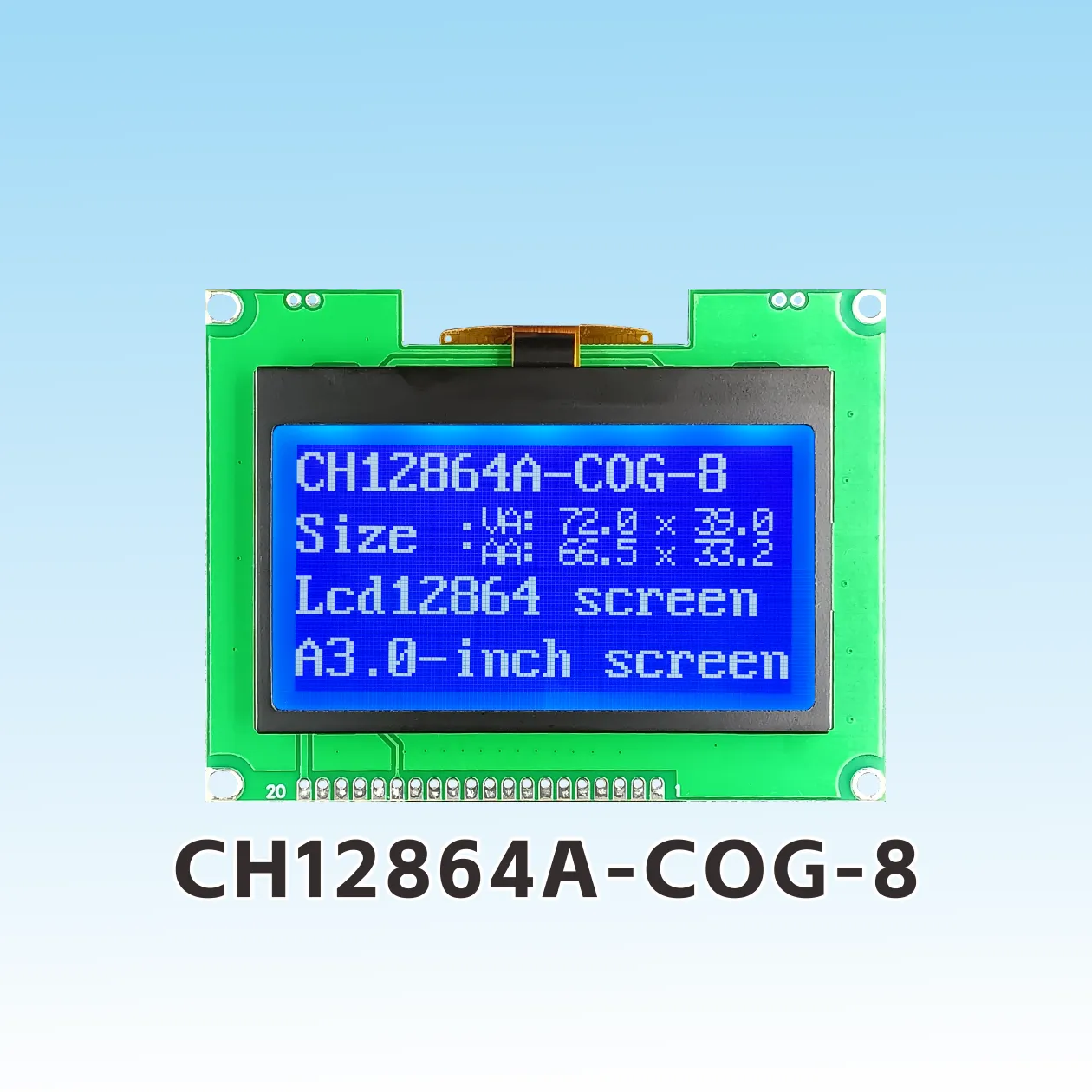
The foundation of any 7 segment LCD display is the glass sandwich—typically alkali-free borosilicate or soda-lime glass with an indium tin oxide (ITO) patterned layer. The choice of liquid crystal mixture determines the operating temperature range and response time. Most standard 7 segment LCD display modules use TN (Twisted Nematic) fluid, which offers a acceptable contrast ratio of 10:1 at 25°C. For outdoor equipment or automotive dashboards, VA (Vertical Alignment) or STN (Super Twisted Nematic) fluids extend the temperature window from -30°C to +85°C, though at a higher material cost.
For a custom segment display requiring wide viewing angles, engineers often specify negative-mode STN with a black mask, which increases contrast in direct sunlight. This modification impacts the polarizer selection—normally a standard transmission polarizer with 45% efficiency is replaced by a compensated film that reduces color shift. These material upgrades can add 15–20% to the glass cost but are non-negotiable for outdoor point-of-sale terminals or forklift instrument clusters.
Each digit in a 7 segment LCD display consists of seven independently addressable bars plus a decimal point. The electrode routing on the ITO layer must balance resistance (typically < 100Ω/sq) with transparency (> 85%). For multi-digit displays (e.g., 8 digits with colon and symbols), the number of common and segment pins increases, directly affecting the COB (Chip-on-Board) or COG (Chip-on-Glass) bonding complexity. A well-designed 7 segment LCD display uses a 1/4 or 1/8 duty cycle to minimize pin count, but this requires a corresponding boost in the driving voltage (VLCD) to maintain contrast.
When procuring a custom segment display, buyers must provide a detailed segment truth table and pin assignment map. Without this, the factory may default to a generic mapping that forces firmware changes downstream. Leading suppliers like Chuanhang Display offer design review services to catch these mismatches before tooling begins—a step that can save 4–6 weeks of development time.
The polarizer stack is often overlooked but critically affects both optical performance and durability. Standard 7 segment LCD display modules use a silver-gray reflective polarizer for low-cost applications. For backlit versions, a transmissive polarizer with anti-glare coating is mandatory. Industrial-grade displays additionally incorporate a retardation film (quarter-wave plate) to reduce the rainbow effect caused by mechanical stress—a common failure mode in handheld devices that undergo drop tests.
For a custom segment display destined for medical use (e.g., patient monitors), the polarizer must meet IEC 60601-1-2 EMC requirements, which typically means a conductive anti-static layer is added. This adds $0.30–$0.50 per unit but is essential for regulatory approval. Suppliers who stock FDA-compliant materials can shorten the certification cycle significantly.
Contrast ratio (CR) for a 7 segment LCD display is measured as the luminance ratio between an activated and inactive segment at a specific viewing angle. The specification table usually quotes CR ≥ 10 at 12 o'clock, but real-world performance degrades when the viewing angle exceeds ±30° horizontally. For a custom segment display installed in a tilted dashboard, the optical design must compensate through a combination of LC alignment and compensation films. Requesting a full 3D contrast polar plot from the supplier is a best practice—many vendors only provide typical values, not worst-case bounds.
Thermal shock testing (e.g., -40°C ↔ +85°C, 100 cycles) reveals weak points in the seal adhesive and the ITO layer. A 7 segment LCD display that passes initial QC may still develop "mura" (non-uniformity) or segment dropout after thermal cycling. Reputable manufacturers conduct accelerated lifetime tests per MIL-STD-810H. When sourcing a custom segment display, insist on reliability test reports covering at least 500 hours at 60°C/90% RH. Chuanhang Display, for instance, includes these test results as part of their standard validation package for industrial-grade products.
The operating voltage (VLCD) typically ranges from 3V to 5V for portable devices and up to 18V for high-contrast automotive displays. The recommended VLCD is not a fixed number—it changes with temperature due to the LC fluid's dielectric anisotropy. A well-engineered 7 segment LCD display will specify both the optimal VLCD at 25°C and the compensation curve for -20°C to +70°C. Most MCU-based designs use a PWM-driven voltage booster or a dedicated LCD driver IC (e.g., HT1621 or BU9795) to maintain stable contrast.
For large-scale deployments, a custom segment display can be optimized to match the native voltage of your system (e.g., 3.3V logic), eliminating the need for an external charge pump. This reduces BOM cost and improves EMI performance. However, this optimization requires the supplier to adjust the cell gap and LC mixture—a modification that has a 6–8 week lead time but pays back in high-volume production.
In factory automation, the 7 segment LCD display is used for real-time process variables: temperature, pressure, flow rate, and count values. These environments often have high electrical noise and fluctuating ambient light. Therefore, a custom segment display with enhanced ESD protection (≥ 8kV HBM) and a wide operating temperature range is mandatory. Additionally, the display must be compatible with 24V DC industrial buses, which often require isolated power supplies to avoid ground loops.
Common failure modes in industrial settings include contact degradation from vibration and condensation inside the glass sandwich. To mitigate this, suppliers like Chuanhang Display offer optional epoxy-edge sealing and gold-plated terminal pins. These add about 8% to the unit cost but extend the mean time between failures (MTBF) from 50,000 to over 200,000 hours.
Medical applications demand the highest level of reliability and traceability. A 7 segment LCD display used in a defibrillator or anesthesia machine must meet ISO 13485 quality management standards. The custom segment display often includes special symbols (e.g., heart rate icon, battery indicator) alongside numeric digits, requiring custom tooling for the ITO mask. Biocompatibility of the front polarizer and adhesive is also required for devices that have patient contact.
From a procurement perspective, medical-grade displays require full lot traceability and a change notification period of at least 6 months. The cost per unit can be 2–3× higher than commercial grade, but the liability reduction justifies the premium. We recommend a dual-source strategy, but note that qualification costs for a second custom segment display vendor can exceed $15,000—a significant barrier for smaller OEMs.
Automotive instrument clusters and climate control units use 7 segment LCD displays with robust mechanical mounting and glare reduction. The operating temperature range is -40°C to +85°C, with stringent vibration specs (10–500 Hz at 5G). A custom segment display for this sector typically uses a ruggedized glass thickness of 1.1 mm (vs. 0.7 mm for consumer) and a UV-stable polarizer that resists yellowing after 5+ years of sun exposure.
The trend toward partial dimming and local backlight control is also appearing in high-end automotive displays. While OLED alternatives exist, the 7 segment LCD display remains the preferred choice for its predictable failure mode—segments fade gradually rather than failing catastrophically—which aligns with functional safety standards (ISO 26262).
One of the largest upfront costs for a custom segment display is the tooling for the ITO photomask and the glass scribing/layout. For a simple 4-digit 7 segment LCD display with a colon and three symbols, the NRE (Non-Recurring Engineering) fee ranges from $1,200 to $3,500, depending on the complexity of the segment pattern and the number of common electrodes. This tooling cost is amortized over the production volume—at 10,000 units, it adds $0.12–$0.35 per piece; at 100,000 units, the impact drops below $0.04.
However, many suppliers offer to waive NRE if the initial order exceeds 5,000 pieces, but this often locks the buyer into a higher per-unit price. A transparent cost breakdown should separate glass, polarizer, driver IC (if COG), assembly, and testing. Chuanhang Display provides an itemized quotation that helps procurement teams benchmark against other suppliers.
In-house yield rate is a critical but seldom-discussed cost factor. A supplier with a 92% yield vs. 98% yield for a 7 segment LCD display will have a 6% higher scrap cost, which they pass on to the buyer. More importantly, lower yields correlate with higher field failure rates due to micro-cracks or poor seal integrity. When evaluating a custom segment display manufacturer, ask for their average yield over the last 12 months and their corrective action process for out-of-spec batches.
Automated optical inspection (AOI) and electrical testing (each segment verified at three voltage levels) are standard in tier-1 factories. Budget suppliers may skip the full electrical test, relying instead on a visual spot-check—a practice that leads to intermittent "ghosting" segments in the field. We strongly advise including a 100% electrical test clause in the purchase agreement, even if it adds $0.05–$0.08 per unit.
Most 7 segment LCD display production is concentrated in East Asia (China, Taiwan, and Japan). Lead times for standard modules are 10–14 days, while a custom segment display typically requires 28–35 days for tooling and first-article inspection. Shipping by sea adds 20–25 days, so total procurement lead time can exceed 8 weeks for non-stock items. To mitigate supply chain risks, many B2B buyers maintain a safety stock of 4–6 weeks' consumption, especially for critical medical or aerospace programs.
Customs classification under HS code 8531.20 (indicating numeric display panels) requires careful declaration of the LCD type and driver IC presence—misclassification can lead to duty rate differences of up to 6%. Working with a logistics partner experienced in display imports can reduce these administrative headaches.
To streamline the quotation process for a custom segment display, prepare a technical specification package containing the following documents:
Experienced suppliers will respond with a detailed proposal including the glass type, polarizer grade, adhesive, and recommended driver IC. They should also provide a dimensional check sheet and an optical test report for the first-article samples. Avoid suppliers who ask for full payment before sample approval—a standard practice is 30% deposit, 50% before shipment, and 20% after final inspection.
Q1: What is the typical lifespan of a 7 segment LCD display in continuous use?
A1: Under normal indoor conditions (25°C, 60% RH), a well-designed 7 segment LCD display has a lifespan of 50,000–100,000 hours, limited mainly by the polarizer's UV degradation and the LC fluid's chemical stability. At elevated temperatures (e.g., 60°C), the lifespan can drop to 20,000 hours due to faster ion migration. For industrial applications, we recommend replacing the display as part of a preventive maintenance schedule every 5 years.
Q2: Can I drive a 7 segment LCD display directly from an Arduino/ESP32 GPIO?
A2: Direct GPIO drive is not recommended because LCD segments require an AC waveform to prevent DC polarization (which causes electro-chemical degradation). You need an LCD driver IC (e.g., HT1621, PCF8576) that generates a balanced signal. Some microcontrollers have built-in LCD controllers with adjustable bias voltage—check your MCU's datasheet. For a custom segment display, we can optimize the pin count to match your driver's capability.
Q3: What are the main differences between TN, STN, and VA types for a 7 segment display?
A3: TN (Twisted Nematic) is the lowest cost, with a narrow viewing angle (±30°) and moderate contrast. STN (Super Twisted Nematic) offers wider viewing angles (±60°) and better contrast but requires higher drive voltage and has a slower response time (≈150ms). VA (Vertical Alignment) provides the best contrast (> 50:1) and wide viewing angles but is more expensive and sensitive to mechanical stress. For most industrial applications, STN is the sweet spot unless you require extreme temperature performance.
Q4: How do I choose between reflective, transmissive, and transflective 7 segment LCD displays?
A4: Reflective displays use ambient light and require no backlight—ideal for battery-powered devices in well-lit areas. Transmissive displays must have a backlight (LED or EL) and offer the best contrast in low-light conditions. Transflective combines both: it reflects ambient light when the backlight is off and transmits backlight when needed. For outdoor handhelds, transflective is preferred. For indoor equipment with a constant power supply, transmissive is more common.
Q5: What certification marks should a medical-grade custom segment display carry?
A5: Medical-grade displays should have ISO 13485 for manufacturing quality, and the final product must comply with IEC 60601-1 (safety) and IEC 60601-1-2 (EMC). Additionally, the display's materials must be RoHS and REACH compliant. Some applications also require UL recognition for fire safety. Always request a certificate of compliance from the supplier, and verify that the custom segment display is manufactured in a facility that undergoes regular FDA or MDSAP audits.
Q6: How much does a custom tooling setup cost for a 7 segment display?
A6: Tooling costs typically range from $1,200 to $4,500, depending on the number of segments, glass size, and number of commons. This includes the photomask set and the printing screens for the seal adhesive. Some suppliers will amortize this cost over the first production order—if your volume exceeds 10,000 pieces, many will waive the tooling fee in exchange for a longer-term supply agreement. Always clarify the ownership of the tooling; some factories keep the tooling, making it difficult to switch suppliers later.
Q7: What is the recommended storage condition for 7 segment LCD panels?
A7: Store unused panels in a clean, dry environment at 15–30°C with relative humidity below 60%. Avoid direct sunlight and sources of ozone (e.g., motors, corona treaters). The recommended shelf life is 12 months from the date of manufacture. If stored longer, the polarizer adhesive may degrade, leading to delamination. For a custom segment display that requires long-term inventory, request a packaging upgrade with desiccant and a vapor-barrier bag.
The 7 segment LCD display continues to be a cost-effective, reliable solution for numeric readouts across diverse industries. However, its apparent simplicity masks a complex interplay of materials science, electrical engineering, and manufacturing precision. Whether you are developing a new product or optimizing an existing one, the decision to use a custom segment display should be based on a holistic assessment of application requirements, total cost of ownership, and supplier capability.
We have covered the key technical parameters—glass and LC types, polarizer selection, drive schemes, and environmental robustness—as well as the commercial factors such as NRE, yield rates, and logistics. By following the specification checklist and the qualification framework outlined above, you can avoid common pitfalls like mismatched VLCD, inadequate temperature range, or poor contrast in your end environment.
For over a decade, Chuanhang Display has engineered and manufactured 7 segment LCD displays and custom segment display solutions for global clients in industrial automation, medical technology, and automotive sectors. Our engineering team provides full design support, from segment mapping to driver selection, and our factory maintains ISO 9001 and IATF 16949 certifications. We offer a complete validation package including thermal shock, humidity, and ESD test reports for every custom design.
Ready to move from specification to production? Send your outline drawing and electrical requirements to our technical sales team. We will respond within 24 hours with a preliminary design review, cost estimate, and sample schedule. For volume orders above 5,000 units, we provide on-site factory audits and first-article inspection services to ensure your custom segment display meets every performance target. Click here to submit your RFQ and receive a comprehensive quotation within two business days—including tooling amortization options and a detailed delivery timeline.
Let our expertise in 7 segment LCD technology work for your next project. We are ready to support you from concept to mass production with transparent communication and reliable quality.