For industrial equipment, medical instruments, and automotive dashboards, the custom segment display remains a preferred choice over full-dot-matrix panels when clear, high-contrast numeric or alphanumeric readouts are required. Unlike graphical displays that consume significant processing power and memory, a well-engineered custom segment display delivers instantaneous readability, ultra-low power consumption, and a proven lifespan exceeding 100,000 hours in continuous operation. This guide examines the technical underpinnings, material trade-offs, application-specific design rules, and procurement strategies that separate a durable custom segment display from a compromised alternative.
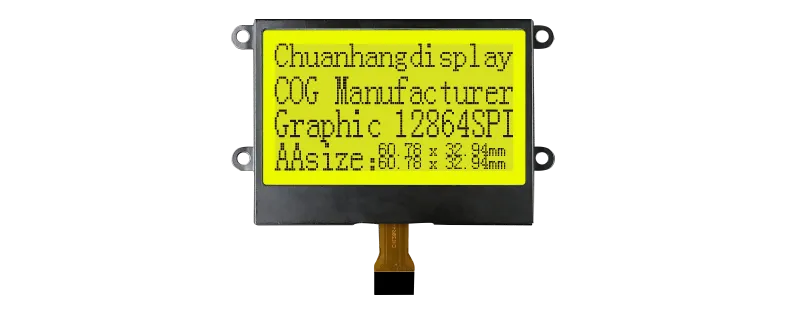
A custom segment display is constructed from a set of individually addressable electrodes patterned on glass substrates, with a liquid crystal, OLED, or electrophoretic medium sandwiched between them. Each segment—whether a numeric digit, an annunciator icon, or a progress bar—connects to a dedicated driver output. The segment count directly influences the number of driver pins, the complexity of the glass routing, and the overall tooling cost. For example, a 4-digit 7-segment counter uses 28 segments plus decimal points, while a dashboard cluster may combine 60–80 segments including warning symbols and battery indicators. The defining characteristic of a custom segment display is that the segment shapes, sizes, and positions are tailored to the end-user's industrial design, not constrained by pre-defined character boxes. This freedom allows optical engineers to optimize stroke width, gap spacing, and viewing angles for specific ambient light conditions.
The foundation of any liquid-crystal-based custom segment display is the soda-lime or borosilicate glass coated with Indium Tin Oxide (ITO). The ITO layer is etched using photolithography to define the segment electrodes. For high-volume production, the tooling cost for the photomasks ranges between $1,200 and $3,500 depending on the complexity and number of segments. The sheet resistance of the ITO (typically 10–30 Ω/□) determines the response time and uniformity, especially for large-area segment displays. Suppliers like Chuanhang Display often offer optimization services to reduce ITO resistance for low-temperature applications where carrier mobility drops. For customer-specific projects, the glass thickness (0.55 mm, 0.7 mm, or 1.1 mm) and edge sealing material must be matched to the environmental profile. A thicker glass improves mechanical robustness in handheld devices, while thinner glass enables lighter displays for portable medical monitors.
The material system defines the optical performance, power budget, and lifetime of the custom segment display. Each technology addresses distinct application clusters.
TN-LCD remains the most cost-effective solution for simple numeric custom segment displays. The contrast ratio typically reaches 10:1 with a 12 o'clock viewing direction, and the operating temperature range spans -20°C to +70°C. STN-LCD offers a wider viewing cone (up to 90 degrees) and better contrast (15:1 to 20:1) at a 30–40% higher material cost. For outdoor equipment, a custom segment display with STN and a yellow-green or gray polarizer provides superior sunlight readability. The LC mixture itself is formulated with chiral dopants and viscosity modifiers to optimize the threshold voltage (Vth) and steepness. When the ambient temperature drops below -10°C, the response time can increase from 30 ms to over 200 ms unless the supplier uses a low-viscosity LC formulation. Chuanhang Display provides a material selection matrix that correlates LC grade with operating temperature range, helping design engineers avoid field failures in refrigeration or desert environments.
Organic Light-Emitting Diode (OLED) technology enables a custom segment display with self-emitting pixels, eliminating the need for a backlight. Each segment is an OLED stack of hole-transport and emissive layers. The contrast ratio reaches infinity (true black), and the viewing angle extends to 178 degrees. However, the lifetime of blue OLED materials remains the bottleneck—typical LT50 (time to 50% initial luminance) is 10,000–15,000 hours for blue, while red and green exceed 30,000 hours. For automotive interior applications, a custom segment display using OLED must include a pixel compensation algorithm to mitigate burn-in. The driver IC must support constant-current driving with PWM dimming, which increases the BOM cost by approximately $1.20–$2.50 per display compared to a passive LCD. Given the higher unit cost, OLED segment displays are primarily specified for premium consumer devices, aviation cockpit panels, and high-end test equipment where viewing angle and color gamut are paramount.
For battery-powered IoT sensors and shelf labels, an e-paper custom segment display offers bi-stability—the image remains without power consumption. The microcapsules contain charged titanium dioxide particles in a hydrocarbon fluid. The driving waveform requires a bipolar voltage sequence (typically ±15V) to move particles, and the update time ranges from 300 ms to 2 seconds depending on the temperature. The segment count in an e-paper display is limited by the number of source drivers, as each segment needs an independent connection. The advantages include sunlight readability (reflectivity >40%) and ultra-low standby current (<1 µA). However, the operating temperature is usually restricted to 0°C to +50°C, making e-paper unsuitable for outdoor industrial control panels exposed to freezing conditions.
An effective custom segment display design begins with a clear operational profile. The following parameters must be quantified before generating the artwork file.
In direct sunlight, a transflective custom segment display with a silvered reflector and a high-contrast polarizer yields better readability than a transmissive variant. The reflectance value (R %) should exceed 30% for outdoor use. For indoor instrumentation with controlled lighting, a transmissive display with an LED backlight offers consistent brightness. The viewing angle requirements—6 o'clock, 12 o'clock, or wide-angle—directly influence the rubbing direction of the alignment layer and the LC twist angle. Many design failures stem from specifying a standard TN display for a 9 o'clock viewing direction, resulting in negative contrast inversion. A professional custom segment display supplier will simulate the contrast ratio versus viewing angle using optical modeling software (e.g., TechWiz or LCD Master) before committing to mask tooling.
LED backlights for custom segment displays are available in edge-lit (light guide plate) and direct-lit (LED array) configurations. Edge-lit backlights are thinner (2.0–3.5 mm) and consume 20–30% less power, but the light uniformity degrades as the display area exceeds 100 mm × 100 mm. Direct-lit backlights provide superior uniformity and allow local dimming, but the additional LEDs and diffusion layers add $0.80–$1.50 to the assembly cost. For a medical patient monitor, a custom segment display with a white LED backlight and a red-free filter preserves night-vision compatibility. Color options include amber, green, blue, and RGB tunable backlights, but each color changes the luminous efficacy and the overall thermal budget.
The physical footprint of a custom segment display includes the active area, the seal width (typically 0.8–1.2 mm), and the bezel overlap. For handheld devices, the thickness of the entire stack (cover glass + display + backlight + PCB) must remain under 6 mm. The interconnection method is equally critical. Elastomeric connectors (zebra strips) are suitable for low-volume prototypes but suffer from contact oxidation in humid environments. For high-volume production, heat-seal connectors (ACF—Anisotropic Conductive Film) or flex cables (FPC) provide reliable attachment. ACF bonding requires precise temperature and pressure parameters (150°C, 3 MPa, 8 seconds) that only qualified assembly lines can execute. An experienced custom segment display manufacturer will provide a recommended landing pattern and stencil design to ensure first-pass yields above 98%.
Procuring a custom segment display involves a multi-stage process that spans 8 to 16 weeks depending on the technology and complexity. The following phases represent the standard industry workflow.
The customer provides a 2D CAD drawing or a DXF file defining each segment's geometry, gap width, and alignment marks. The display supplier converts this into a photomask set—typically 3 to 5 masks for the front and rear glass patterns. The mask writing time is 2–3 days, and the inspection with an automated optical inspection (AOI) system adds another 2 days. For a complex custom segment display with over 100 segments, the mask cost can reach $4,800. Multiple design iterations during this phase are costly, so it is advisable to request a "design rule check" (DRC) report from the supplier to verify minimum line width, spacing, and via-hole clearance.
After mask fabrication, the supplier produces 50–100 engineering samples. These samples are tested for segment continuity, leakage current (should be < 0.1 µA per segment), and optical response. The drive voltage is swept from 2 V to 6 V to determine the threshold and saturation voltages. At this stage, the customer should perform a mechanical fit check and a thermal shock test (e.g., -40°C to +85°C, 100 cycles) to validate the seal integrity. Any discrepancy in the segment shape or position is flagged and corrected. A reliable custom segment display partner will document all pilot-run deviations and incorporate corrective actions before proceeding to volume tooling.
Once the pilot run is approved, the supplier ramps up to full production. The typical yield for a mature custom segment display process is 90–94% after final inspection. The primary defect modes include missing segments (due to ITO etching shorts), mura (non-uniform cell gap), and contamination particles causing bright spots. In-line automatic inspection systems with machine vision detect these defects at the array, cell, and module stages. For high-reliability applications (e.g., avionics or medical life-support), an additional 100% burn-in test at 60°C for 48 hours is recommended. Chuanhang Display implements a statistical process control (SPC) system that tracks key parameters—cell gap, pretilt angle, and driver IC output voltage—to maintain a defect rate below 1,200 ppm.
The per-unit price of a custom segment display is determined by a combination of non-recurring engineering (NRE) charges and recurring material costs. Understanding these components enables purchasing managers to negotiate effectively.
The upfront NRE for a new custom segment display typically ranges from $2,500 to $8,000. This includes photomask fabrication, cell assembly tooling, and the development of a test fixture. For OLED segment displays, the NRE is higher (up to $15,000) because the fine metal mask (FMM) for evaporation requires a separate manufacturing process. Some suppliers amortize NRE over the first production order, while others charge it as a line item. A transparent quotation should specify the NRE breakdown and any recurring royalty fees. For projects with a total volume under 5,000 units, the NRE can dominate the unit cost, making it economically favorable to select a standard segment display variant with minimal customization.
The recurring bill of materials for a custom segment display includes the ITO glass (15–25% of total cost), the LC mixture (8–12%), the polarizer film (5–8%), the backlight assembly (20–30%), and the driver IC (15–20%). The driver IC choice is particularly consequential—a SPI/I²C interface offers lower pin count but requires a microcontroller with available GPIOs, while a parallel interface enables faster update rates for dynamic content. The assembly labor and overhead contribute 18–22% of the final price. For high-volume orders (100,000+ units annually), the per-unit price can drop below $2.50 for a simple 4-digit TN display, whereas a complex STN display with 80 segments and a color backlight may cost $12–$18 per unit.
A cheaper custom segment display from an unqualified supplier often results in higher field failure rates, increased warranty claims, and production line stoppages. The TCO should factor in the mean time between failures (MTBF), the cost of field replacement, and the logistics of managing an RMA process. Investing in a robust display with elevated temperature range and enhanced ESD protection (HBM ≥ 4 kV) typically adds $0.50–$1.20 to the unit price but reduces the 5-year failure rate from 3.5% to under 0.8%. For industrial automation equipment, the cost of a single unplanned downtime event (lost production, technician dispatch) can exceed the entire display budget for the project.
Durability is not a side-effect; it is engineered through a series of standardized stress tests. The following protocols are essential for any custom segment display intended for professional use.
Temperature cycling from -40°C to +85°C with a ramp rate of 5°C/min for 200 cycles evaluates the seal adhesion and the LC alignment stability. Damp heat testing (85°C / 85% RH for 500 hours) exposes the susceptibility of the ITO electrodes to corrosion. For automotive applications, the custom segment display must pass the ISO 16750 standard, which includes salt spray and mixed flowing gas (MFG) tests. A display that exhibits a shift in the threshold voltage of more than 0.2 V after environmental exposure is considered degraded.
Handheld and vehicle-mounted displays face significant shock loads. The MIL-STD-810G drop test (1.2 m onto concrete) is often specified for portable equipment. During vibration testing (5–500 Hz, 2 g RMS), the FPC connector should maintain contact resistance below 1 Ω. The seal width and the use of corner fillets play a crucial role in preventing glass fracture. Some suppliers, including Chuanhang Display, offer optional mechanical reinforcement—a steel frame or a silicone damping layer—that adds $1.80 per unit but substantially improves shock survivability.
The driver IC's input/output pins must withstand electrostatic discharge events. The human body model (HBM) rating should be at least ±4 kV, and the charged device model (CDM) should be ±1 kV. For a custom segment display connected to a long cable harness (e.g., in a control cabinet), additional transient voltage suppression (TVS) diodes on the segment lines are recommended to clamp voltage spikes from inductive loads. The display controller should incorporate a power-on reset (POR) circuit to prevent false segment activation during power-up.
The driver IC translates the digital data from the host microcontroller into the analog waveforms that activate the segments. The selection directly impacts the display performance and system complexity.
Static drivers allocate one dedicated output per segment, providing the highest contrast and fastest response. However, for a custom segment display with more than 40 segments, a multiplexed (MUX) driver is more economical. A 1/4 MUX scheme drives 4 times the number of segments with the same pin count, but it requires a higher operating voltage (typically 5 V) and reduces the contrast margin. The choice of MUX ratio—1/2, 1/3, 1/4, or 1/8—should be based on the required refresh rate and the temperature extremes. In low-temperature environments, a higher MUX ratio leads to a noticeable flicker because the LC response time becomes slower than the refresh period.
Modern segment display drivers support serial interfaces that reduce the PCB trace count. I²C is suitable for low-speed applications (≤ 400 kHz) where the data update occurs every 100 ms. SPI enables faster throughput (up to 10 MHz) and is preferred for custom segment displays displaying real-time measurement data. Parallel interfaces, while requiring 8 to 16 data lines, offer the lowest latency and are still used in automotive clusters. The driver's frame memory (RAM) should be sufficiently large to buffer the entire segment map—typically 1 to 4 kilobytes. Some advanced drivers include built-in dimming control via PWM and generate the base frequency for the LC excitation, eliminating the need for an external oscillator.
While dot-matrix displays gain popularity, the custom segment display continues to evolve with innovations in materials and manufacturing processes.
With the advent of polyimide (PI) substrates, flexible custom segment displays are now entering the market for wearable devices and curved dashboards. The bending radius can be as low as 5 mm, and the weight is reduced by 60% compared to glass-based displays. The main challenge is the adhesion of the ITO layer to the PI film during repeated flexing. Manufacturers are developing hybrid structures with a protective hard coat to extend the flex life beyond 50,000 cycles.
Segment displays can be augmented with capacitive touch sensors embedded in the same glass layer. This eliminates the need for a separate touch panel, reducing the overall thickness. The touch electrodes are routed on the top glass, and the driver IC includes a capacitive measurement engine. For medical devices, this integration enables a clean, sealed front surface that resists disinfectants. The additional touch function adds $0.90–$1.60 to the display module cost, but it simplifies the mechanical assembly and reduces the component count.
Machine learning algorithms are now used to classify defect types during the production of custom segment displays. Convolutional neural networks (CNNs) trained on thousands of microscopic images can detect pin-hole defects and line shorts with 99.7% accuracy, surpassing human inspectors. This automated quality control reduces the number of escapes to the customer and shortens the release cycle by 2–3 days. Leading suppliers are investing in AI-based real-time process control to adjust the etching time and alignment layer thickness on the fly, maintaining tight tolerances even as the production line drifts.

The success of a custom segment display project hinges on a collaborative relationship between the design team and the display manufacturer. Early engagement—during the concept phase—allows the supplier to provide feedback on segment width, gap spacing, and routing feasibility. It also enables the supplier to recommend the most cost-effective technology and MUX architecture. Requesting a design review meeting and a sample kit (including different polarizer options and backlight colors) before finalizing the specification can prevent costly revisions later. The ideal partner will have in-house glass processing, cell assembly, and driver IC bonding capabilities, ensuring seamless communication and shorter lead times. Chuanhang Display offers comprehensive support from artwork optimization to post-production failure analysis, with a dedicated engineering team that handles over 500 custom segment display projects annually across industrial, medical, and automotive sectors.
When you are ready to move from concept to production, prepare a detailed requirement document that includes: segment count and layout, optical preferences (transmissive/reflective/transflective), operating temperature range, interface protocol, mechanical envelope, and target price. Share this document with multiple suppliers, compare their NRE quotation and sample lead time, and request a DFM (Design for Manufacturability) report. A responsive supplier will provide a preliminary simulation of the contrast ratio and current consumption within 48 hours. With the right technical preparation and a trusted manufacturing partner, your custom segment display will deliver reliable, readable information for the lifetime of your product.
For a tailored quotation and engineering consultation on your custom segment display project, please contact our technical sales team. We provide free design reviews, optical simulations, and sample prototyping services for qualified OEM customers. Send your display specifications to our engineering department, and we will respond with a detailed proposal within one business day.
Q1: What is the minimum order quantity (MOQ) for a custom segment display?
A1: The MOQ varies by technology and complexity. For a standard TN-LCD custom segment display with a simple segment count, the MOQ is typically 1,000–3,000 units. For STN or OLED variants, the MOQ may be higher (5,000+ units) due to the specialized material handling. Some suppliers offer a low-volume prototyping service (100–500 units) at a higher per-unit price, which allows you to qualify the design before committing to volume production. Always clarify the MOQ and the associated NRE amortization terms during the initial quotation phase.
Q2: How long does it take to produce the first samples of a custom segment display?
A2: The sample lead time depends on the complexity of the artwork and the availability of the glass and LC materials. For a conventional TN display, the typical sampling cycle is 6–8 weeks from artwork approval. If the design includes a custom backlight color or a non-standard viewing angle, the timeline may extend to 10–12 weeks. Expedited service (4 weeks) is sometimes available for an additional fee, but it is not recommended for first-time designs because it compresses the design rule verification and pilot testing phases.
Q3: Can a custom segment display be designed to operate in sub-zero temperatures?
A3: Yes, but it requires a specialized LC mixture with a low viscosity and a wide nematic range. Standard TN displays are rated for -10°C to +60°C. For operation down to -40°C, the supplier must use a low-temperature LC formulation and a heating element (ITO heater) integrated into the glass. The heater consumes additional power (typically 1–2 W) and adds $2.00–$3.50 to the module cost. Verify that the driver IC can deliver the higher operating voltage needed to switch the LC at low temperatures.
Q4: What is the difference between a custom segment display and a custom dot-matrix display?
A4: A custom segment display has fixed, pre-defined shapes for each character or symbol. The segments are permanently patterned in the glass, and each segment connects to a dedicated driver output. This results in faster update times, lower power consumption, and better contrast for simple numeric data. A dot-matrix display uses a grid of pixels that can form arbitrary characters and graphics. It offers greater flexibility but requires a frame buffer, a higher clock speed, and more complex driving waveforms. For applications that only display digits, bar graphs, and fixed icons, the custom segment display is more economical and power-efficient.
Q5: How do I verify the reliability of a custom segment display from a new supplier?
A5: Request the supplier's reliability test report, which should include data from thermal cycling, damp heat, vibration, and ESD tests per industry standards (e.g., JIS, MIL-STD, or IEC). Additionally, ask for a sample batch of 50 units and perform your own qualification tests—focus on the display's performance after the environmental stresses. Check the supplier's in-process quality control (IPQC) records and visit their factory if possible. A reputable supplier will share the failure rate data from their last 10 production lots and provide a warranty period of at least 12 months.
Q6: Can I integrate a capacitive touch function into my custom segment display?
A6: Yes, many suppliers now offer a "touch-on-glass" option where the touch electrodes are patterned on the outer surface of the cover glass. This is compatible with both LCD and OLED segment displays. The touch controller communicates via I²C or SPI and can report multi-touch or proximity events. The integration adds approximately 1.0 mm to the total thickness and increases the cost by $1.20–$2.00 per unit. For hygienic applications (e.g., medical panels), a touch-enabled segment display allows operators to interact without physical buttons, simplifying cleaning protocols.
Q7: What factors cause the price of a custom segment display to vary significantly between suppliers?
A7: The primary price drivers include the glass grade (soda-lime vs. low-alkali), the LC purity (higher purity improves contrast but increases cost), the polarizer type (elliptical vs. linear, with or without anti-glare coating), and the backlight LED binning. Labor cost, yield rate, and overhead also contribute. Some suppliers quote a lower base price but add surcharges for engineering changes, re-sampling, or expedited shipping. Always request a complete quote that itemizes the NRE, tooling, unit price, and any variable charges. The most competitive quote may not be the best when you factor in reliability and technical support.
For expert guidance on your custom segment display project, including material selection, driver IC compatibility, and cost optimization, contact the engineering team at Chuanhang Display. We offer a rapid response to technical inquiries and a free design review for qualified projects.