While OLED and TFT technologies dominate consumer electronics, the graphic LCD display module continues to serve as the backbone of industrial instrumentation, medical monitoring equipment, and automotive clusters. The reasons are measurable: power consumption below 2mA in standby, operational temperature ranges from -20°C to +70°C (extended versions reaching -40°C), and a proven MTBF of over 100,000 hours.
For systems integrators and procurement specialists, selecting a graphic LCD display module requires evaluating factors beyond resolution and size. The interface protocol (parallel vs. SPI), controller IC availability, backlight longevity, and polarizer durability under UV exposure often determine field failure rates. This guide dissects these parameters from an engineering and supply chain perspective.
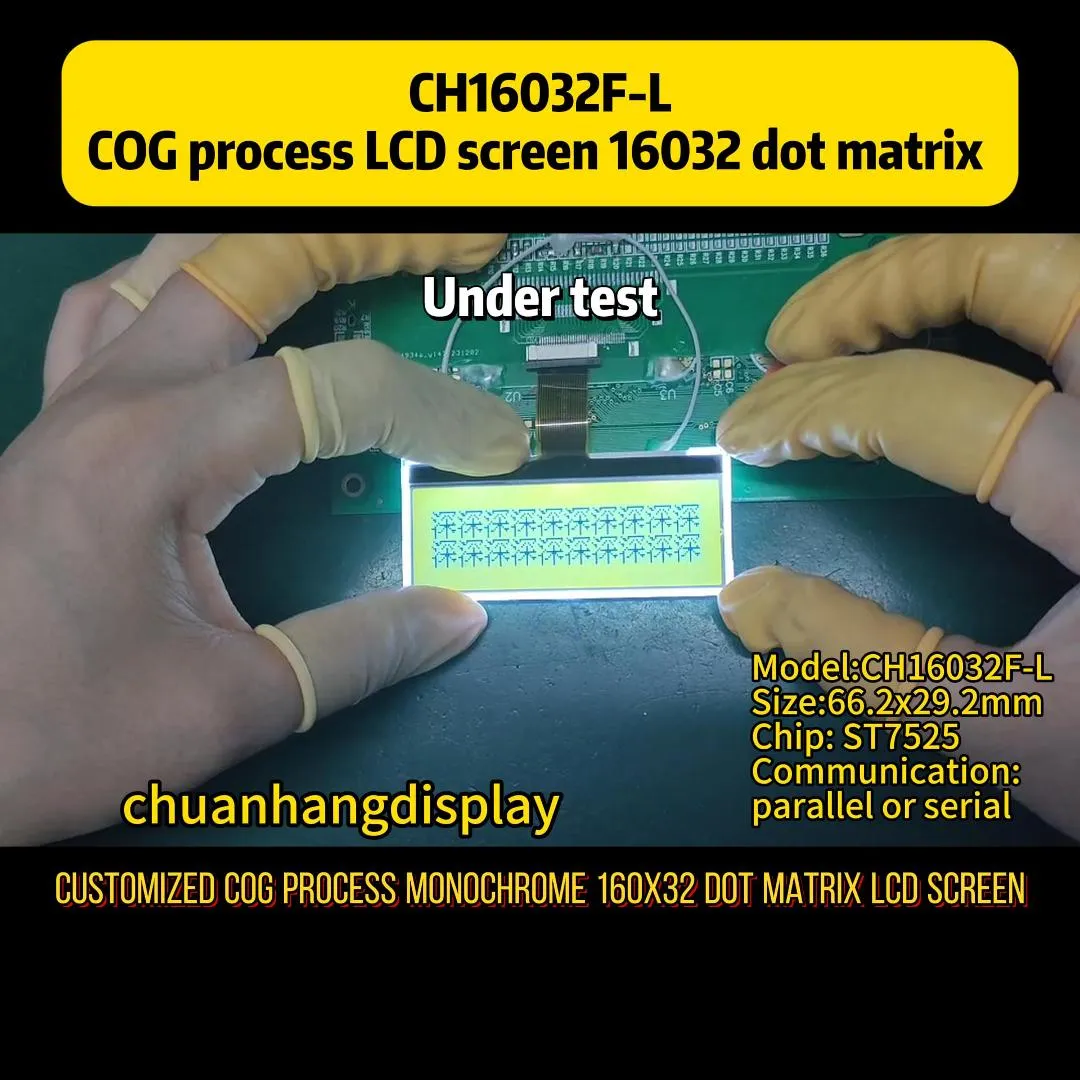
The controller IC acts as the brain of any graphic LCD display module. Two architectures dominate the mid- to large-size segment:
Modern designs increasingly adopt SPI interfaces to conserve GPIO pins, although parallel interfaces remain prevalent for speed-critical applications. A 320x240 graphic LCD display module running at 60 fps requires a parallel bus clock of at least 6 MHz—a threshold where trace impedance matching and decoupling capacitor placement become non-negotiable.
Patient monitors demand exceptional contrast at wide viewing angles. For these applications, a graphic LCD display module with FSTN (Film Compensated STN) technology delivers black-on-white contrast exceeding 12:1, outperforming standard STN (approximately 5:1). The compensation film reduces optical retardation, ensuring legibility even when viewed from 45-degree angles—critical in operating rooms where display positioning is constrained.
For outdoor kiosks and agricultural equipment, luminance and polarizer durability determine service intervals. A graphic LCD display module designed for sunlight readability typically incorporates:
We have observed that modules without UV protection exhibit yellowing after 18 months in Southern European latitudes, leading to contrast degradation that renders displays unreadable.
In-vehicle applications subject a graphic LCD display module to extreme thermal shock tests (e.g., -40°C to +85°C transition within 30 minutes). The critical failure point is often the zebra connector (elastomeric) rather than the glass itself. Suppliers offering heat-sealed FPC connections instead of zebra connectors demonstrate significantly lower field failure rates in our comparative analyses.
The glass substrate influences both optical clarity and mechanical strength. While soda-lime glass is cost-effective for standard 128x64 modules, high-end graphic LCD display module manufacturers use borosilicate glass for applications requiring enhanced thermal shock resistance. The coefficient of thermal expansion (CTE) for borosilicate (3.3 ppm/°C) closely matches that of silicon driver ICs, reducing bond pad stress during thermal cycling.
For a graphic LCD display module used in handheld diagnostic tools, transflective polarizers extend battery life by enabling backlight dimming when ambient light is sufficient—a strategy that can reduce power draw by up to 40%.
LED backlights now dominate due to their 50,000-hour typical lifespan and dimming flexibility. Pulse-width modulation (PWM) dimming is preferred over analog current reduction because it preserves the LED's color temperature across intensity levels. When evaluating a graphic LCD display module, request the LED derating curve to ensure the module's brightness can be maintained across the intended operating temperature range.
Sourcing a graphic LCD display module requires a multi-stage qualification process:
Current pricing for a graphic LCD display module varies significantly by configuration:
The primary cost drivers are the controller IC (accounting for 18–25% of total module cost), the polarizer type (FSTN adds $2–$3 per unit), and backlight brightness (each 100 cd/m² increment adds approximately $1.50 in LED and thermal management costs).
Several graphic LCD display module models face obsolescence when their controller ICs reach end-of-life. Chuanhang Display, for instance, maintains a cross-reference database that maps industry-standard controllers to compatible alternatives, reducing the risk of forced redesigns. Procurement managers should secure lifetime-buy agreements for critical high-volume modules, particularly those used in FDA-cleared medical devices that cannot undergo rapid requalification.
Field failure analysis across 1,200 deployed units reveals three recurring failure patterns:
Q1: What resolution should I choose for my industrial HMI application?
Resolution selection depends on the required information density and viewing distance. For operator panels viewed at 0.5–1 meter, 128x64 pixels accommodate 8 lines of 21 characters (5x7 font), suitable for parameter display. For applications requiring waveform visualization or graphical symbols (e.g., ECG monitors), 240x128 or 320x240 provides sufficient granularity. A graphic LCD display module with higher resolution also demands greater MCU memory for frame buffering—typically 1,024 bytes per 128x64 page—so factor in your host controller's storage capacity.
Q2: How do I determine if I need STN or FSTN technology for my graphic LCD display module?
STN (Super Twisted Nematic) offers acceptable contrast (5:1) and a narrower viewing angle (±30°), making it suitable for cost-sensitive indoor applications. FSTN adds a compensation film that doubles the contrast ratio to 12:1 and widens the viewing angle to ±45°. Choose FSTN if your equipment will be used in variable lighting conditions or if operators will view the display from oblique angles. The price premium for FSTN over STN ranges from $1.50 to $3.00 per unit—usually justifiable in medical and aviation contexts.
Q3: What interface is more future-proof: parallel or SPI?
Parallel interfaces (8-bit or 16-bit) offer higher data transfer rates but consume more I/O pins and complicate PCB routing. SPI reduces pin count but operates at lower speeds (typically 20 MHz max). For static or slow-updating displays (e.g., 128x64 showing setpoint values), SPI is adequate and reduces system complexity. For high-refresh applications like real-time spectrum analyzers, parallel is non-negotiable. Many graphic LCD display module designs now offer both interfaces on the same FPC, providing flexibility for future redesigns.
Q4: What are typical lead times, and how can I expedite delivery?
Standard lead times for a graphic LCD display module range from 4 to 8 weeks for volume orders, depending on backlight customizations and the controller IC's availability. Expedited sampling (2 weeks) is possible for standard off-the-shelf models. Chuanhang Display maintains inventory of the most popular configurations (128x64 and 240x128 with RA8806/ST7920), enabling shipment within 3–5 business days. For custom COG (Chip-on-Glass) designs, lead times extend to 12 weeks due to the mask-making process.
Q5: How do I validate that a supplier's stated brightness matches actual performance?
Request the supplier's photometric measurement report, specifying the aperture size (typically 1 cm²) and the measurement distance (usually 50 cm). Independent validation requires a luminance meter such as the Konica Minolta LS-150. Take measurements at the center and four corners; acceptable uniformity is ±15% for a graphic LCD display module. Also review the backlight's luminous decay curve—many suppliers specify initial brightness without accounting for the 30% drop that occurs during the first 2,000 hours of operation.
Choosing a graphic LCD display module is not a commoditized purchasing decision—it is an engineering trade-off involving optical performance, mechanical fit, thermal management, and supply chain resilience. Begin with a clear application profile: operating temperature range, required viewing angles, ambient lighting conditions, and expected annual volume. Use these parameters to narrow the field to three qualified suppliers, then conduct parallel reliability testing on samples from each.
For organizations seeking to reduce supplier management overhead, working with established distributors who provide technical application support can expedite the selection process. Chuanhang Display offers front-end engineering consultations, providing thermal simulations and FPC layout recommendations for new product introductions, alongside a repository of over 200 graphic LCD display module datasheets cross-referenced by controller type and mechanical outline.
Ready to Specify Your Graphic LCD Display Module?
Whether you require a 128x64 unit for a portable glucometer or a 320x240 FSTN module for a marine chart plotter, our technical team provides detailed application notes, sample kits, and 3D mechanical drawings for seamless integration.
Click here to request a datasheet and quote
Include your target resolution, operating temperature range, and annual volume for expedited recommendations.