Finding the right manufacturing partner is often the most critical step in bringing a display-based product to market. Whether you are designing a medical device, an industrial control panel, or a consumer wearable, the quality of the screen defines the user experience. Many procurement managers and engineers struggle with the decision to buy from a distributor or go direct to the source.
Sourcing directly from an LCD factory offers distinct advantages in price and communication, but it requires a deeper understanding of the manufacturing process. This article breaks down how to evaluate manufacturers, understand cost structures, and choose the right display technology for your specific application.
Understanding the Modern LCD Factory Environment
The manufacturing of Liquid Crystal Displays (LCDs) is a high-precision industry. It is not enough for a facility to simply assemble parts; they must control the environment to microscopic standards. When you visit or audit a potential partner, the first thing to look for is their clean room standards.
A reputable LCD factory operates Class 100 or Class 1000 clean rooms for the bonding and assembly stages. Dust is the enemy of display manufacturing. Even a single particle can cause a dead pixel or a visual defect that renders a batch unusable.
Modern facilities are divided into three main process stages: the Array process (creating the transistors on glass), the Cell process (filling liquid crystal and sealing), and the Module Assembly process (attaching the backlight, driver ICs, and bezel). Most buyers dealing with custom displays will interface with factories specializing in Module Assembly. This is where the customization happens, and where your specific requirements for brightness, interfaces, and touch panels are implemented.
Differentiating Display Technologies
Not all factories produce every type of screen. Understanding the technology limitations of a specific LCD factory is vital before sending a Request for Quotation (RFQ).
Twisted Nematic (TN) Panels
These are the most cost-effective options. They are widely used in digital meters, simple industrial instruments, and budget-friendly devices. A factory specializing in TN panels usually focuses on high volume and low cost. The viewing angles are limited, but the refresh rates are fast.
In-Plane Switching (IPS) Panels
IPS technology is the standard for color accuracy and wide viewing angles. If your product is a handheld device or a dashboard that will be viewed from the side, you need a manufacturer with strong IPS supply chain capabilities. These screens are more expensive to produce but offer superior visual performance.
Transflective vs. Transmissive
For outdoor applications, standard screens wash out under sunlight. A specialized LCD factory can produce transflective displays, which use sunlight to boost visibility. Alternatively, they can achieve high brightness (1000+ nits) through powerful backlights. Asking a standard indoor display manufacturer to build an outdoor-readable screen often leads to overheating issues and poor longevity.
The Role of Interface Selection in Manufacturing
One of the most technical discussions you will have with an LCD factory engineer involves the interface. The interface dictates how your motherboard communicates with the screen.
MCU and SPI Interfaces
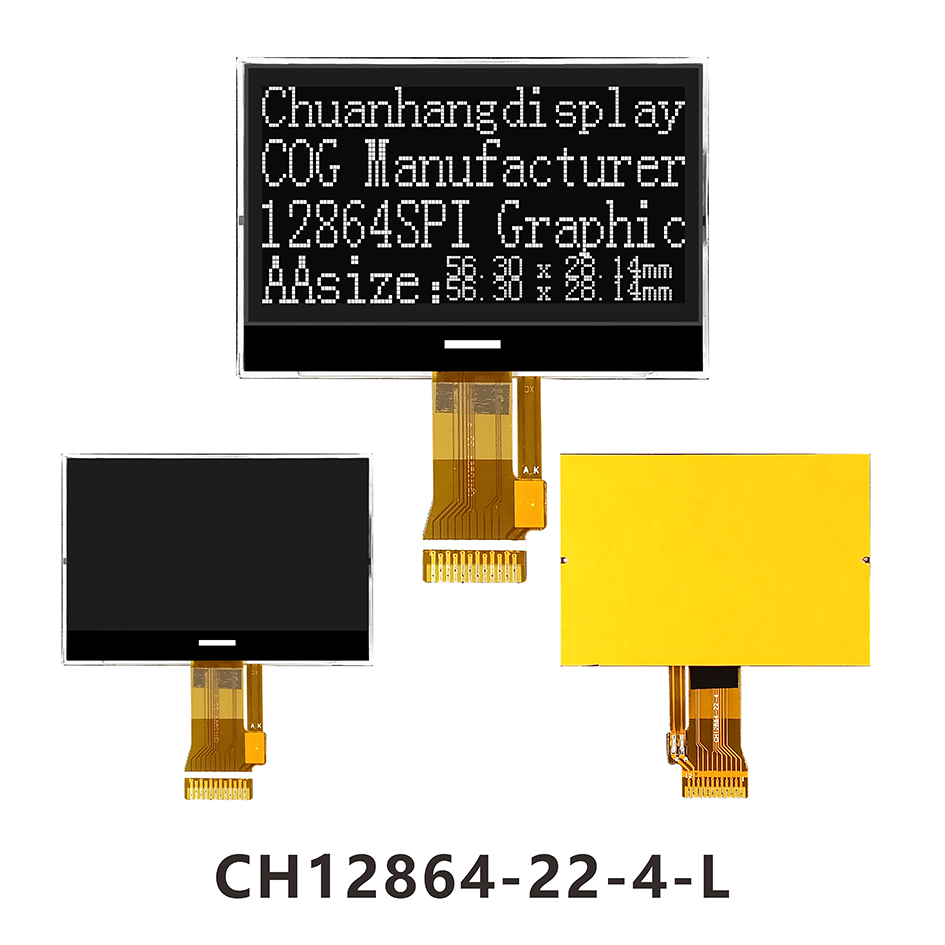
These are common for smaller, lower-resolution screens. They are easy to program and require less processing power. Factories often suggest these for simple control panels or smart home thermostats.
RGB and LVDS
As resolution increases, data transfer speeds must increase. RGB is common for medium-sized screens without internal controllers. LVDS (Low-Voltage Differential Signaling) is the industry standard for larger industrial panels, offering good noise immunity over longer cable runs.
MIPI (Mobile Industry Processor Interface)
High-resolution, smartphone-grade displays use MIPI. This requires high-speed layout design on your PCB. Not every LCD factory has the testing equipment to troubleshoot MIPI signal integrity issues, so verify their engineering capabilities if you plan to use high-density displays.
Customization Capabilities: Beyond the Standard Screen
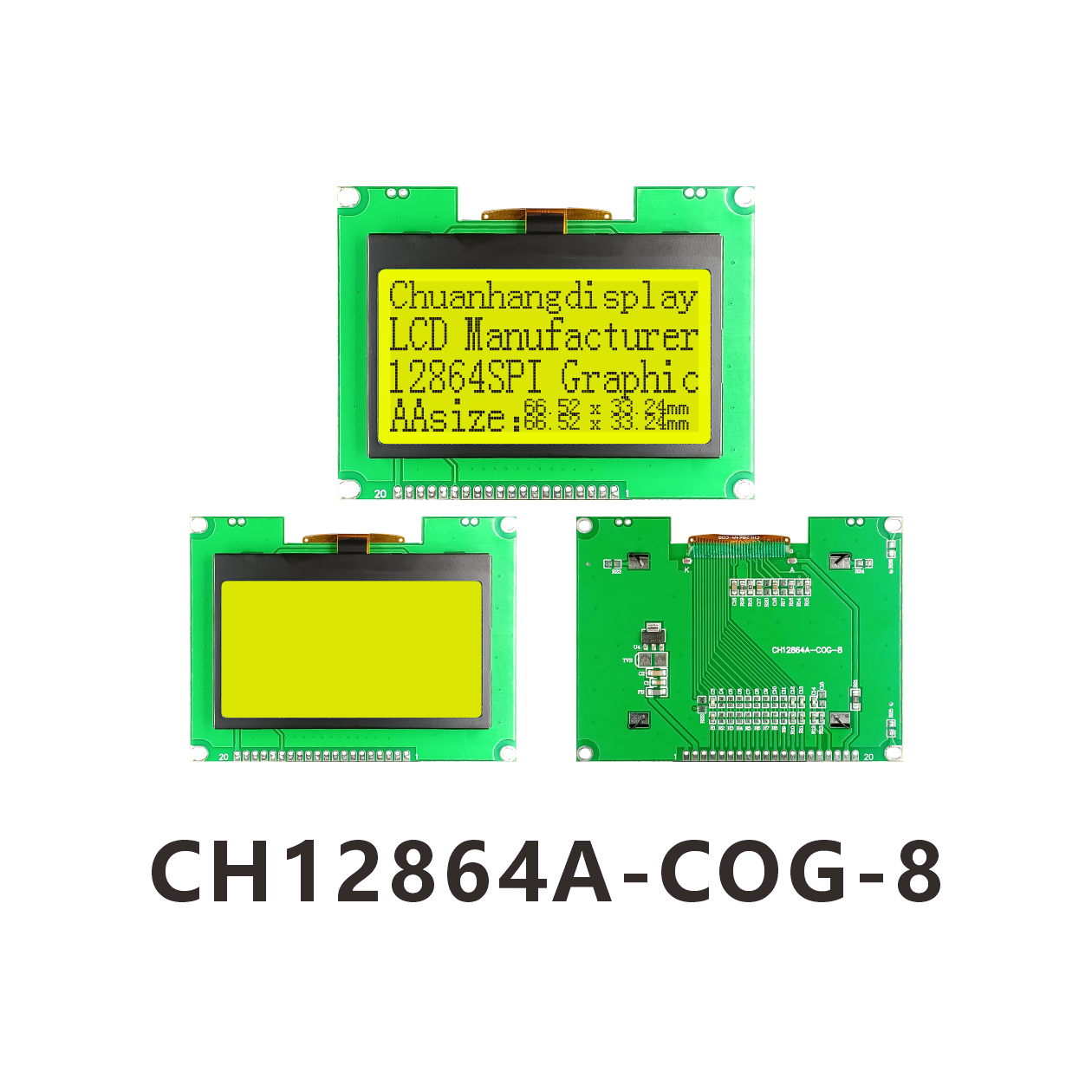
Off-the-shelf modules rarely fit a new product design perfectly. The shape of the PCB, the location of the connector, or the thickness of the backlight often needs adjustment. This is where a partner like Chuanhang Display adds value compared to a rigid catalog distributor.
Flexible Printed Circuits (FPC)
The FPC connects the display to your device. Customizing the shape, length, and pinout of the FPC is the most common modification. It allows your mechanical engineers to place the connector exactly where it fits best in the housing.
Cover Lens and Touch Integration
Modern displays usually require a capacitive touch panel. The "stack up" (how the touch sensor is bonded to the display) matters. Air bonding is cheaper but creates reflections. Optical bonding (using resin to glue the layers) improves contrast and ruggedness. A capable LCD factory should offer in-house optical bonding services to reduce logistics costs and defect risks.
Quality Control and Certification
A low price is meaningless if the defect rate is high. When evaluating a supplier, ask for their quality roadmap.
ISO and IATF Certifications
ISO 9001 is the baseline requirement. However, if you are in the automotive sector, the factory must be IATF 16949 certified. This standard ensures strict traceability. If a screen fails in the field three years later, the factory must be able to trace the exact batch of raw materials used.
Reliability Testing
Before a display leaves the LCD factory, it should undergo a series of stress tests.
High/Low-Temperature Storage: Can the display survive in a shipping container at 60°C or a warehouse at -20°C?
Vibration Testing: Simulates transport and usage in industrial machinery.
ESD Testing: Ensures static electricity doesn't kill the driver IC.
Requesting the internal reliability reports for a similar product is a good way to verify a supplier’s honesty.
Cost Drivers and Pricing Structures
Understanding what drives the price helps you negotiate better. The Bill of Materials (BOM) for an LCD module is dominated by the LCD glass (the cell) and the Driver IC.
Glass Substrate Fluctuations
The price of the glass panel fluctuates based on global supply and demand, similar to memory chips. A well-connected LCD factory has long-term contracts with glass manufacturers to stabilize prices for their clients.
Yield Rates
Complex customizations, such as irregular shapes or difficult optical bonding, lower the yield rate. If a factory has a 90% yield, 10% of the production is waste, and that cost is built into the unit price. Experienced manufacturers like Chuanhang Display focus on process optimization to keep yield rates high and prices competitive.
NRE (Non-Recurring Engineering) Fees
Customization requires tooling. This might include masks for the touch panel or molds for the backlight frame. These are one-time costs. Be wary of factories offering "free tooling" for low volumes, as they often amortize this cost into a higher unit price.
Supply Chain and Lead Times
In the post-pandemic era, supply chain stability is a major concern. The lead time for a standard LCD module is typically 4 to 6 weeks. However, shortages in Driver ICs can extend this to 12 weeks or more.
A proactive LCD factory will keep a buffer stock of critical components for their recurring clients. When discussing terms, ask about their inventory policy. Do they hold stock of the specific controller IC your design uses? If not, are they willing to bond stock for you?
Why Choose Chuanhang Display?
Navigating the complexities of display manufacturing requires a partner who understands both the technology and the business needs of international clients. Chuanhang Display has established itself as a reliable LCD factory that bridges the gap between concept and mass production.
We specialize in small-to-medium-sized LCD modules, offering full customization from the FPC design to the backlight brightness. Unlike massive factories that ignore orders under 100k units, Chuanhang Display supports flexible MOQs to help businesses grow. Our engineering team speaks your language, providing technical support from the datasheet stage to the final integration.
By controlling the manufacturing process in-house, we ensure that every module meets strict industrial standards. Whether you need a sunlight-readable display for a marine navigation system or a high-contrast IPS screen for a medical monitor, our facility is equipped to deliver
Sourcing directly from an LCD factory gives you control over your product’s lifecycle, cost, and quality. It moves you away from the limitations of standard distribution parts and allows for innovation in your device design. However, success depends on vetting the supplier’s technical capabilities, quality control processes, and financial stability.
By focusing on clear communication and technical alignment, you can build a long-term partnership that scales with your business. If you are looking for a partner that combines technical expertise with flexible manufacturing service, Chuanhang Display is ready to support your next project.
Frequently Asked Questions
Q1: What is the typical Minimum Order Quantity (MOQ) when buying directly from an LCD factory?
A1: MOQs vary significantly by manufacturer. Large Tier-1 factories often require 10,000 to 50,000 units. However, flexible manufacturers like Chuanhang Display often support MOQs as low as 500 or 1,000 units per lot, and even smaller batches for initial prototype runs, to support small and medium-sized businesses.
Q2: How long does it take to develop a custom LCD module?
A2: The timeline usually involves 3 to 5 days for drawing confirmation, 2 to 3 weeks for tooling and sample production, and another week for customer verification. In total, you should plan for about 4 to 6 weeks from the initial idea to having a working sample in your hands.
Q3: What is the difference between OCR and OCA bonding?
A3: OCA (Optically Clear Adhesive) uses a dry sheet of adhesive to bond the touch panel to the LCD, which is cleaner and good for standard flat screens. OCR (Optically Clear Resin) uses liquid glue. OCR is often better for uneven surfaces or specialized rugged applications but requires more complex curing equipment at the LCD factory.
Q4: Can I customize the brightness of the display without changing the LCD panel?
A4: Yes. The brightness is primarily determined by the backlight unit, not the LCD glass itself. A factory can modify the backlight by changing the LEDs to more efficient ones or adding more LED rails to increase brightness for outdoor readability without needing to create a new LCD glass mask.
Q5: What happens if a component, like the Driver IC, becomes obsolete?
A5: A responsible factory will issue an EOL (End of Life) notice usually 3 to 6 months in advance. They should propose a "Last Time Buy" option or suggest a compatible replacement IC. At Chuanhang Display, our engineering team works to modify the FPC or software initialization code to make the new IC work with your existing motherboard, minimizing disruption.