Liquid crystal display architectures have expanded to include ultra-dense OLEDs and high-refresh-rate TFT matrices, yet the custom segment lcd display remains the industry standard for mission-critical, low-power user interfaces. From portable medical diagnostics and industrial metering to automotive instrument clusters and smart home infrastructure, segment displays provide ultra-low operating currents, instantaneous boot cycles, superior direct-sunlight visibility, and long-term production stability spanning 10 to 15 years.
Designing a custom segment LCD requires an understanding of fluid chemistry, drive multiplexing, optical stacks, and interconnect mechanics. This technical guide analyzes the design variables hardware engineers and procurement managers must evaluate when commissioning a custom segment LCD from an OEM manufacturing partner like Chuanhang Display.
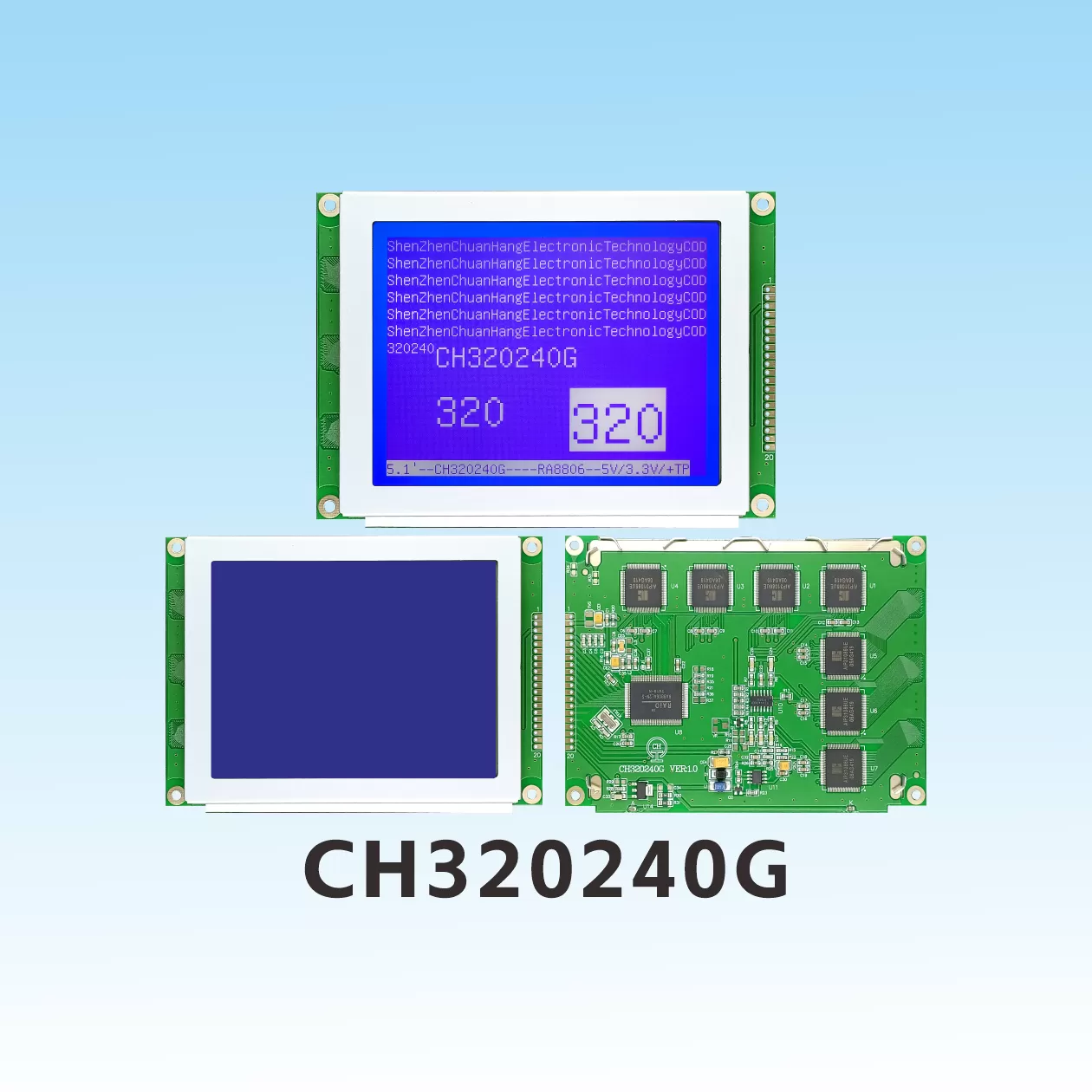
Unlike full-graphic TFTs that require continuous frame-buffer refreshes, complex driver ICs, and high-current backlighting, a custom segment LCD uses patterned Indium Tin Oxide (ITO) layers on glass substrates. Each numeric stroke, icon, or bar-graph indicator corresponds to an etched electrode segment controlled directly or via low-duty multiplexing.
Power Consumption: A static segment LCD panel consumes microamperes (µA) of current without a backlight, running uninterrupted on a standard CR2032 coin cell for 3 to 5 years. Active-matrix displays demand tens to hundreds of milliamperes (mA).
Firmware Overhead: Segment displays operate with basic 8-bit or 16-bit microcontrollers using minimal code overhead. No graphic libraries (e.g., LVGL), external flash memory, or dedicated display controllers are required.
Operating Lifespan: Without the organic degradation inherent to OLEDs or the thermal stress found in high-luminance TFT backlights, liquid crystal segment fluids resist degradation, operating reliably across decades.
Choosing the correct liquid crystal chemistry determines the operating temperature limits, contrast ratio, and viewing cone. When configuring a custom segment LCD display, engineers must match the fluid type to their mechanical layout and environmental operating profiles.
Twisted Nematic (TN): The most cost-effective option. Offers fast response times (~20-30ms at 25°C) and low drive voltage (3.0V–5.0V), but features a narrower viewing cone. Ideal for direct-view instruments such as multimeters, blood pressure monitors, and utility meters.
High Twisted Nematic (HTN): Employs a molecular twist between 100° and 120°. Provides wider viewing angles and higher contrast than standard TN at a marginal price increase. Ideal for consumer white goods and handheld testing equipment.
Super Twisted Nematic (STN): Features a molecular twist of 180° to 240°. The steep electro-optical threshold curve allows for higher multiplexing rates without significant contrast loss. Commonly produced in yellow-green or blue modes.
Film-Compensated STN (FSTN): Uses an optical retardation film to neutralize the inherent coloration of STN displays, producing high-contrast, true black-and-white characters. Recommended for outdoor medical devices, high-end automotive sub-displays, and rugged industrial controllers.
Vertical Alignment (VA): Delivers an ultra-black background with exceptionally high static contrast ratios (up to 1000:1). Best suited for negative-mode, transmissive displays paired with multi-color LED backlighting in automotive consoles and high-end audio gear.
The optical stack defines how the display manages ambient light. Specifying the wrong polarizer configuration can render a display unreadable under direct sunlight or cause excessive power consumption in battery-powered devices.
Reflective: Uses a 100% opaque mirror backing behind the rear glass. It relies entirely on ambient light, eliminating backlight power requirements. Outstanding performance under direct sunlight; unreadable in total darkness.
Transmissive: Requires a continuous backlight source to be readable. Primarily used in negative display modes (bright segments on a dark background) where high visual appeal and indoor low-light visibility are priorities.
Transflective: Combines reflective and transmissive properties. The rear polarizer reflects ambient sunlight while allowing backlight illumination to pass through in dark environments. This is the optimal configuration for field instruments requiring 24/7 readability.
Electrical engineers must carefully evaluate the trade-off between microcontroller I/O pin allocation and display optical performance.
In a static display, every individual segment connects to a dedicated MCU driver pin, sharing a single backplane (COM) electrode. Because the drive voltage is applied at 100% duty cycle, static drive delivers optimal contrast, zero ghosting, and the widest possible viewing angles. However, pin count scales linearly: a 4-digit 7-segment display requires 28 segment pins plus 1 COM pin (29 pins total). This configuration is best suited for low segment counts (<40 segments) where maximum optical contrast is mandatory.
Multiplexing organizes segments across multiple common (COM) backplanes and segment (SEG) drive lines. Common configurations include 1/2 duty (2 COMs), 1/4 duty (4 COMs), and 1/8 duty (8 COMs), paired with appropriate bias voltage ratios (e.g., 1/3 bias). Multiplexing drastically reduces interconnect lines. For instance, a 1/4 duty drive with 80 segments requires only 4 COM pins and 20 SEG pins (24 total pins).
Engineering Trade-off: Increasing the multiplexing duty reduces the difference between the root-mean-square ON-voltage ($V_{on}$) and OFF-voltage ($V_{off}$). Consequently, higher multiplex rates (e.g., 1/8 or 1/16 duty) exhibit lower optical contrast, narrower viewing cones, and higher sensitivity to temperature-induced ghosting. Chuanhang Display assists clients in running discrimination ratio calculations ($D = \sqrt{(N+\sqrt{N}-1)/(N-\sqrt{N}+1)}$) to ensure that the chosen multiplex parameters maintain crisp contrast across target operating temperatures.
Selecting the right interconnect method directly impacts PCB real estate, assembly costs, vibration tolerance, and enclosure sealing:
Metal Through-Hole PINs: Tin-plated brass pins permanently clipped and epoxied to the glass edge. They insert directly into PCB through-holes for wave or hand soldering. Extremely rugged and vibration-resistant, though limited to a minimum pitch of ~1.27mm to 2.54mm.
Elastomeric Connectors (Zebra Strips): Alternating conductive carbon-filled and non-conductive silicone layers. The display glass and PCB compress the strip between them using a rigid bezel or mechanical chassis. Zebra connectors eliminate soldering, support tight contact pitches (<0.5mm), and resist thermal expansion stresses, but require strict mechanical tolerance controls.
Heat Seal / Flexible Printed Circuit (FPC): Anisotropic Conductive Film (ACF) bonds a flexible polyimide ribbon cable directly to the glass ITO pads via thermo-compression. Enables ultra-thin product profiles and flexible PCB routing, making it ideal for compact handheld devices and medical pens.
Deploying a custom segment LCD display requires a Non-Recurring Engineering (NRE) investment for tooling. Compared to custom TFT panels—which can require tens of thousands of dollars in photolithography tooling—segment LCD NRE costs are significantly lower, making custom glass accessible even for low-to-mid-volume production runs.
Step 1: Segment Layout & Mechanical Blueprinting: The OEM client provides an active-area layout, icon requirements, boundary dimensions, and viewing direction (6 o'clock for bottom-view or 12 o'clock for top-view). Chuanhang Display produces a 1:1 CAD engineering drawing defining electrode mappings, drive ratios, and glass tolerances.
Step 2: Photomask Fabrication: Precision chrome-on-glass photolithography masks are generated for the top glass ITO, bottom glass ITO, insulation layers, and polarizer cutting profiles.
Step 3: Sample Prototyping: Initial sample units (typically 5 to 10 pieces) are produced within 15 to 20 business days for client electrical verification, contrast validation, and firmware calibration.
Step 4: Mass Production: Following sample approval, production scales up with short lead times, supported by automated scribing, liquid crystal vacuum injection, rubbing, and high-speed polarizer lamination.
To avoid engineering change orders (ECOs) and design respins, verify the following parameters before finalizing display requirements:
Viewing Direction: 6:00 (optimum when viewed from below, e.g., handheld devices) vs. 12:00 (optimum when viewed from above, e.g., desktop meters or stove tops).
Operating Voltage: Typically 3.0V or 3.3V for modern low-power microcontrollers; 5.0V for legacy automotive/industrial platforms.
Temperature Limits: Standard (0°C to +50°C), Wide (-20°C to +70°C), or Ultra-Wide/Automotive (-30°C to +80°C). Wider ranges require fluid doping to prevent crystallization at low temperatures and clearing at high temperatures.
Backlight Integration: Edge-lit or bottom-lit LED array; white, blue, amber, or tri-color RGB options; requirement for constant-current ballast circuits.
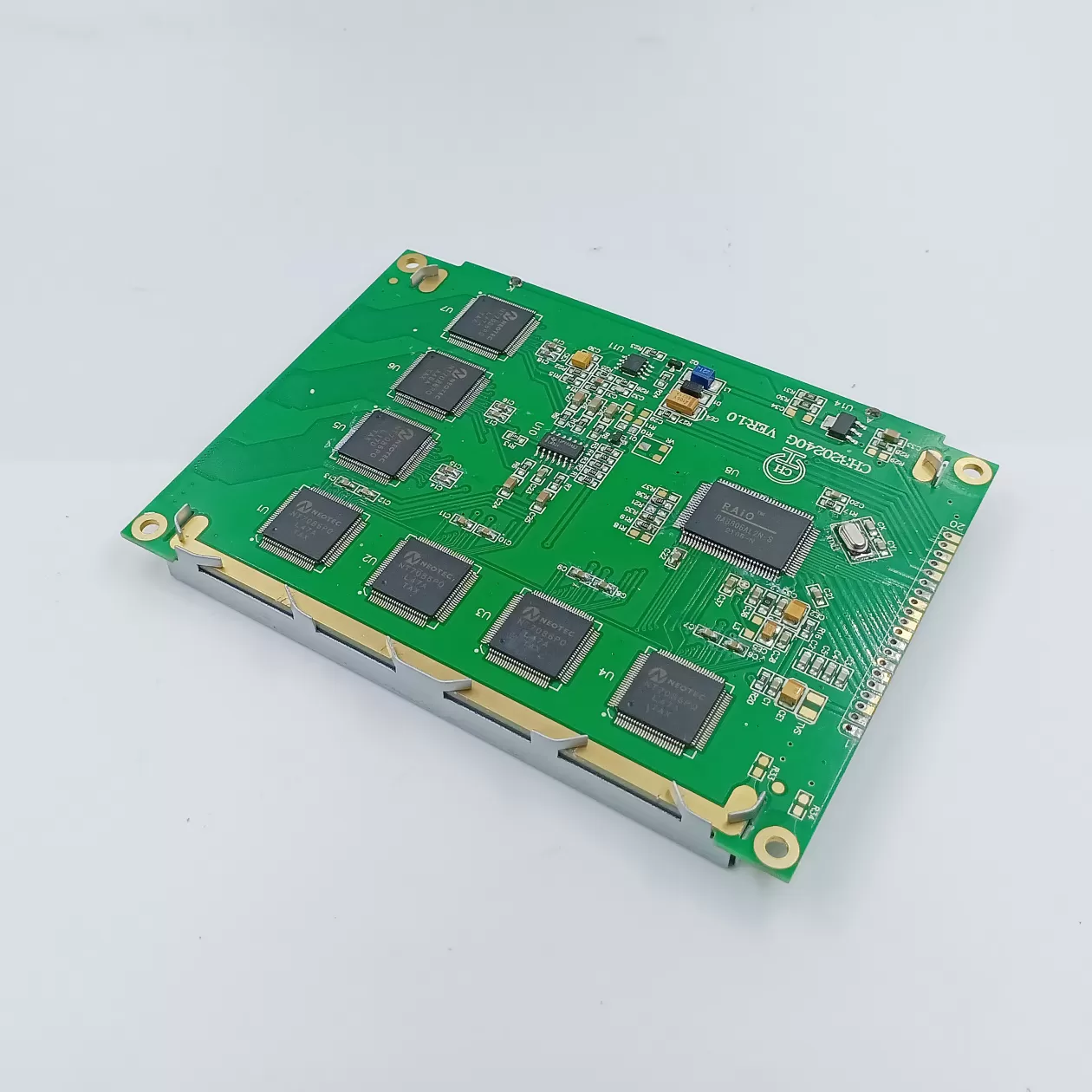
Ghosting occurs when non-energized segments turn partially visible. In multiplexed designs, this is caused by improper drive bias voltages where the root-mean-square OFF-voltage ($V_{off}$) exceeds the threshold voltage ($V_{th}$) of the liquid crystal fluid. Solutions include adjusting the bias voltage ratio, selecting a fluid with a steeper optical transfer curve (e.g., STN instead of TN), or implementing temperature-compensation circuits on the driver supply line.
Yes. Any shape, logo, custom font, or discrete metric indicator that can be drafted in 2D CAD can be etched into the conductive ITO layer. Unlike dot-matrix displays that construct graphics out of individual pixels, custom segments provide sharp, continuous line geometry without pixelation.
Depending on complexity, fluid type (TN vs. FSTN), and connector choice, NRE tooling costs typically range between $800 and $2,500 USD. Prototype samples are delivered within 15 to 25 days following engineering drawing sign-off.
At sub-zero temperatures, liquid crystal fluid viscosity increases, which slows down optical response times (rise and fall times can exceed 500ms). At high temperatures, the fluid approaches its clearing point, which reduces contrast. Specifying an extended-temperature or automotive-grade fluid profile ensures reliable response rates and stable contrast from -30°C to +80°C.
Yes. While segment LCDs cannot render video or arbitrary graphics, multi-frame status icons—such as spinning fan blades, battery charge level bars, wireless signal strength indicators, and progressive loading rings—are animated by cycling the drive state of successive segment electrodes via microcontroller firmware.
Developing a dependable, cost-efficient custom segment lcd display requires tight collaboration between system architects and manufacturing engineers. Chuanhang Display provides end-to-end OEM and ODM display manufacturing services, offering responsive engineering reviews, low tooling costs, and daily manufacturing capacities of up to 50,000 panels. Whether you require an ultra-low-power TN glass panel for a smart water meter or a high-contrast, wide-temperature FSTN module for an industrial controller, our engineering team will optimize your design for long-term reliability and cost efficiency.
Ready to optimize your product's display interface? Contact the engineering team at Chuanhang Display today to submit your mechanical mock-up or request an initial DFM (Design for Manufacturing) review and quote.