The global display industry continues to evolve rapidly, yet liquid crystal display (LCD) technology remains the backbone of industrial, medical, automotive, and commercial applications. For procurement managers and engineering teams, identifying a reliable LCD module factory involves far more than comparing price quotes. The decision impacts product performance, supply chain resilience, and time-to-market.
This guide examines the technical criteria, manufacturing processes, and supplier evaluation frameworks that distinguish capable LCD module manufacturers from those that cannot meet rigorous B2B requirements.
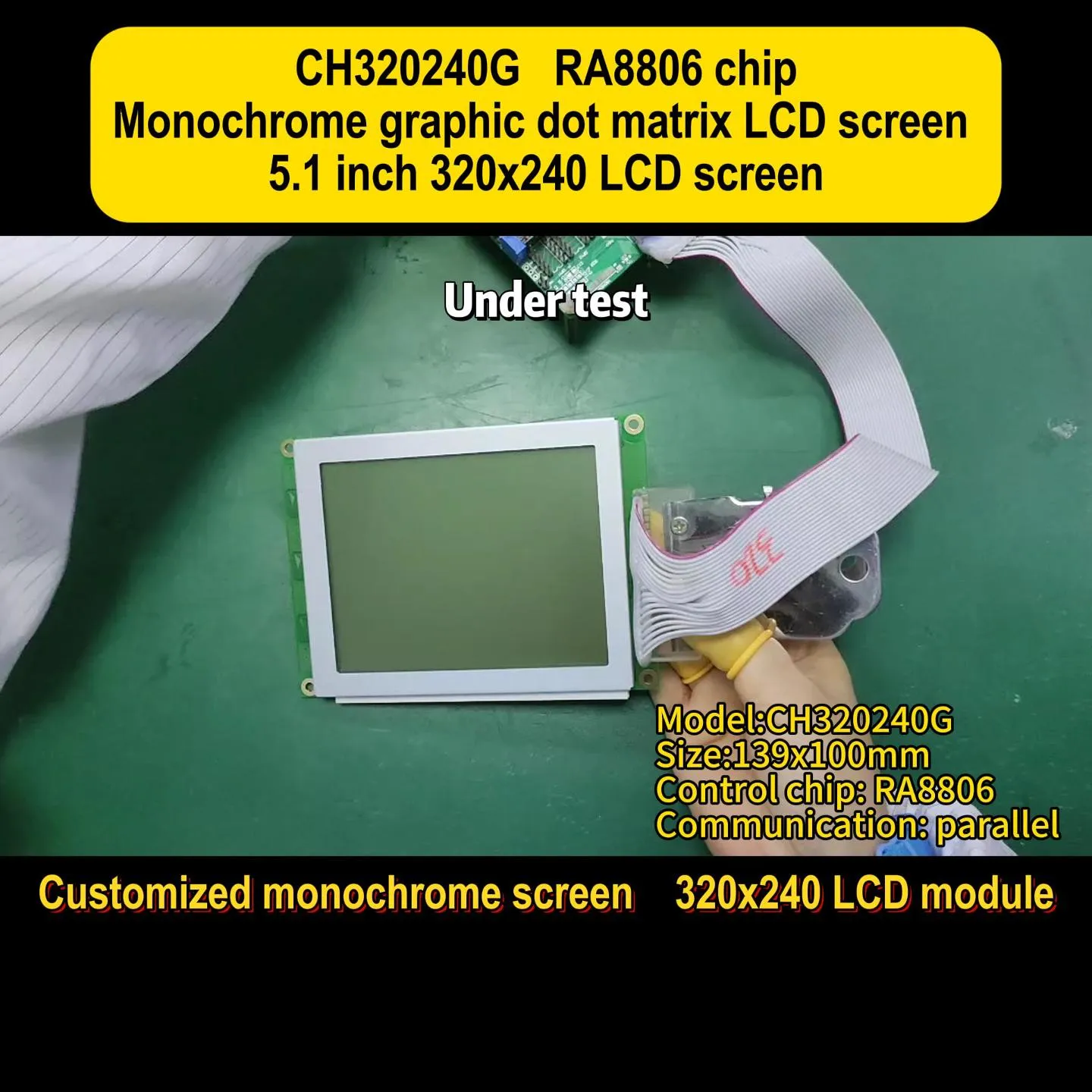
A professional LCD module factory operates through several interconnected production stages. The front-end array process involves deposition, photolithography, and etching on glass substrates to create thin-film transistor (TFT) arrays. The cell process aligns the TFT substrate with a color filter substrate, injects liquid crystal material, and seals the panel. The module assembly stage attaches driver ICs, backlight units, touch panels (where specified), and flexible printed circuits (FPC).
Each stage demands specific environmental controls. Class 100 cleanroom standards apply to array and cell processes, while module assembly typically operates in Class 1000 to Class 10000 environments. When auditing a potential LCD module factory, verify their cleanroom classifications and particle count monitoring records.
Modern LCD module factories support multiple panel technologies:
The material selection directly affects optical performance and durability. Key considerations include:
A sophisticated LCD module factory maintains material qualification programs and provides optical measurement reports (luminance, contrast ratio, color gamut, viewing angle data) for each production batch.
Industry-standard certifications indicate a factory's commitment to quality. Beyond ISO 9001 and ISO 14001, look for:
Request statistical process control (SPC) data and yield reports for recent production runs. A transparent LCD module factory shares defect Pareto charts and corrective action records.
Technical support capabilities distinguish exceptional LCD module factories from commodity suppliers. Evaluate:
Supply chain stability requires understanding factory capacity. Inquire about:
A well-managed LCD module factory maintains 4-6 weeks of safety stock for long-lead components and communicates supply risks proactively.
Industrial applications demand robust modules with extended temperature ranges, vibration resistance, and long product lifecycles. Requirements typically include:
Medical applications impose stringent performance and regulatory requirements:
Automotive displays require AEC-Q100 qualification for driver ICs and extended reliability testing:
Understanding the cost drivers helps procurement teams negotiate effectively:
Price per unit represents only part of the total cost equation. Consider:
LCD module manufacturing depends on stable access to:
The best LCD module factory maintains dual sourcing for critical components and actively monitors supplier financial health.
Industrial and medical clients require 5-10 year product availability. Verify that the factory:
For procurement professionals seeking a manufacturing partner with demonstrated technical depth, Chuanhang Display operates as a vertically integrated LCD module factory with expertise across TN, IPS, and VA technologies. Their engineering team provides thermal simulation, optical bonding, and custom FPC design services. Chuanhang Display maintains IATF 16949 and ISO 13485 certifications, supporting automotive and medical applications. Their supply chain team secures long-lead components and offers consignment inventory programs for volume customers. Chuanhang Display provides full optical measurement reports and reliability test documentation with every shipment.
When qualifying a new LCD module factory, inspect:
Before committing to volume production:
While OLED technology advances, LCD remains dominant for applications requiring long product lifecycles, high brightness, and cost efficiency. Emerging trends include:
Forward-looking LCD module factories invest in these technologies while maintaining backward compatibility for legacy applications.
Q1: What certifications should I look for when selecting an LCD module factory?
At minimum, verify ISO 9001 and ISO 14001 certifications. For automotive applications, IATF 16949 is essential. Medical applications require ISO 13485. Additionally, check IECQ QC 080000 for hazardous substance compliance. Request copies of current certifications and verify their validity through the issuing registrars.
Q2: What is the typical lead time for custom LCD modules from a factory?
Standard off-the-shelf modules typically ship within 2-4 weeks. Custom modules with mechanical modifications require 6-8 weeks for engineering samples and 10-12 weeks for volume production after sample approval. Lead times extend by 2-4 weeks during industry-wide component shortages. Always confirm current lead times during procurement discussions.
Q3: How do I verify an LCD module factory's quality control processes?
Request documented quality metrics including first-pass yield, defect rates by failure mode, and corrective action records. Audit the factory's incoming inspection, in-process monitoring, and final test procedures. Review their calibration schedules for test equipment. Independent audits or customer audit reports provide additional validation.
Q4: Can an LCD module factory support both small-batch prototyping and high-volume production?
Many factories accommodate prototype quantities (10-100 units) using existing production lines, but per-unit costs are significantly higher for small batches. Some factories maintain dedicated prototype lines or quick-turn services. Verify that your chosen factory supports your full volume range and discuss any minimum order quantity (MOQ) requirements upfront.
Q5: What documentation should I expect from an LCD module factory for each shipment?
Comprehensive factories provide lot-specific documentation including optical measurement reports (luminance, contrast, color coordinates), mechanical dimension inspection reports, bond-pull test results (where applicable), and reliability test summaries. Additionally, request material declarations (RoHS, REACH, conflict mineral reports) and a certificate of conformance.
Q6: How do I assess an LCD module factory's long-term supply stability?
Examine their component sourcing strategy—do they maintain dual or multi-source agreements for glass, driver ICs, and backlight LEDs? Ask about their historical component allocation during shortages. Review their financial stability through public records or credit reports. Long-term agreements (LTAs) with component suppliers indicate supply chain maturity.
Q7: What are the cost differences between TN, IPS, and VA panels from an LCD module factory?
TN panels are the most cost-effective, typically priced 30-50% below IPS equivalents. IPS panels cost 20-40% more than TN due to additional processing steps and material requirements. VA panels fall between TN and IPS in cost. The price gap narrows at higher volumes. Request firm quotes for your specific specifications across panel technologies.
Selecting the right LCD module factory involves balancing technical capability, quality systems, cost, and supply chain stability. Whether you need standard modules or fully custom designs, working with an experienced partner ensures product success.
Contact Chuanhang Display to discuss your application specifications, request samples, or arrange a factory audit. Their technical team provides application engineering support and competitive volume pricing.
Reach out today for a technical consultation and quote.