Selecting the right LCD display factory is a strategic decision that directly impacts product performance, supply chain stability, and total cost of ownership. For engineering managers, procurement specialists, and product developers, the evaluation process extends far beyond comparing price quotes. It requires a systematic assessment of manufacturing capabilities, quality management systems, material sourcing practices, and technical support infrastructure. This guide provides a framework for conducting thorough due diligence on potential LCD display factory partners, with emphasis on verifiable metrics and industry-standard benchmarks.
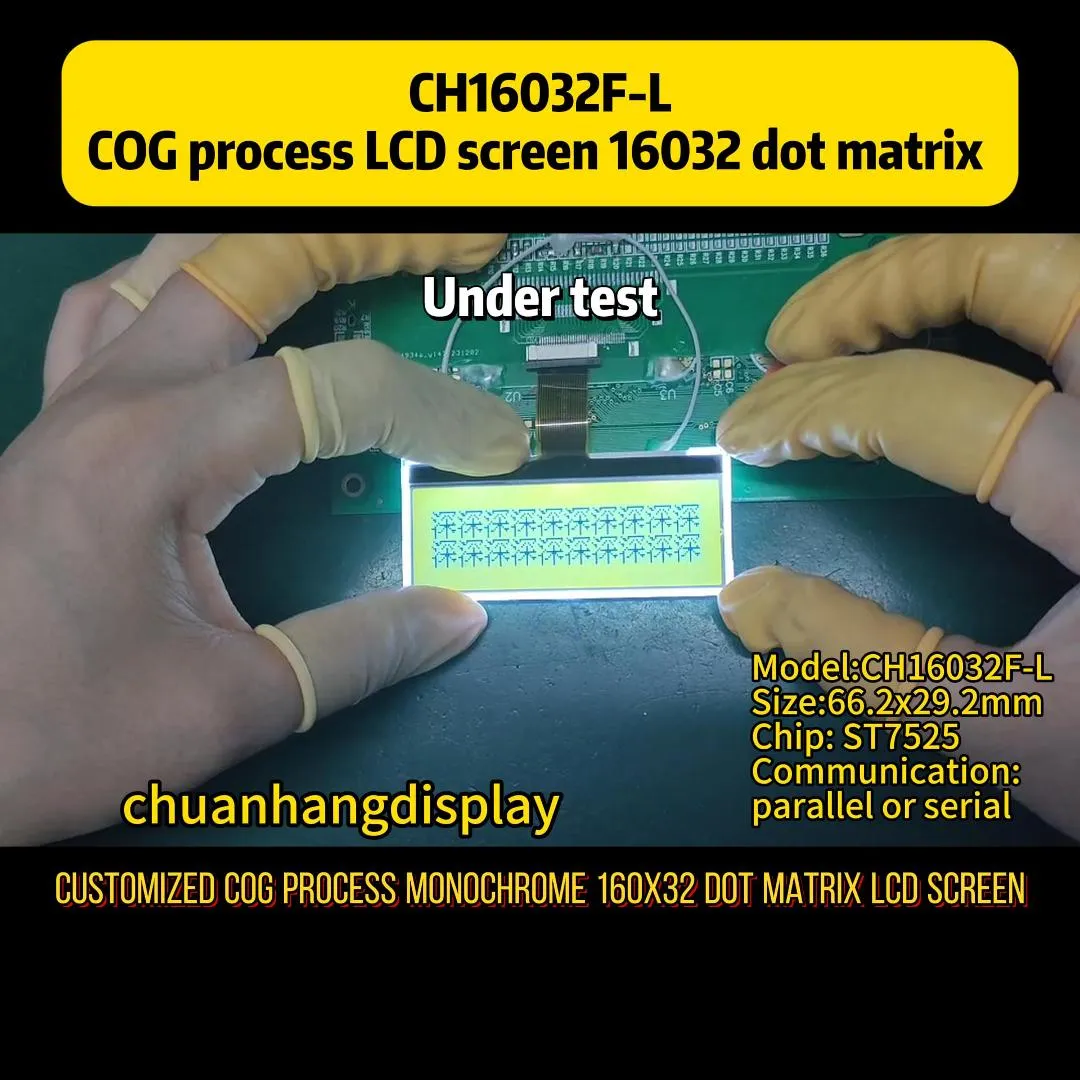
A competent LCD display factory must demonstrate proficiency across multiple display technologies and manufacturing processes. The foundation lies in panel technology selection—whether the factory specializes in TN (Twisted Nematic), STN (Super-Twisted Nematic), TFT (Thin-Film Transistor), or IPS (In-Plane Switching) panels. Each technology serves distinct market segments, and a factory's expertise in a particular type directly influences yield rates, optical performance, and cost efficiency.
When visiting or auditing a potential LCD display factory, request process capability indices (Cpk) for critical parameters such as cell gap uniformity, photo alignment accuracy, and sealant dispensing consistency. A factory with Cpk values above 1.33 demonstrates statistical process control maturity.
The end-use application dictates the technical requirements that an LCD display factory must satisfy. Different verticals impose unique constraints on display design, reliability testing, and regulatory compliance.
Industrial applications require ruggedized displays with extended temperature ranges, anti-glare treatments, and high resistance to vibration and shock. An LCD display factory serving this segment should offer optional optical bonding (to reduce reflections and improve readability), cover glass with anti-fingerprint coatings, and wide viewing angle technologies. Additionally, industrial displays often need long-term availability—typically 5 to 7 years of production continuity—which requires the factory to maintain buffer stocks of critical components like driver ICs and backlight LEDs.
Automotive-grade LCD displays must comply with AEC-Q100 and AEC-Q200 standards for active and passive components, respectively. The factory must implement IATF 16949 quality management systems and conduct rigorous reliability tests including thermal cycling (1000 cycles at -40°C to +105°C), humidity exposure (85°C/85% RH for 1000 hours), and mechanical shock testing. For curved dashboard displays, the LCD display factory needs specialized bending and lamination equipment to achieve radius curvatures as tight as 800 mm without introducing optical distortion.
Medical-grade displays demand grayscale consistency, high luminance stability (within ±5% over 10,000 hours), and compliance with DICOM Part 14 standards. An LCD display factory targeting the medical sector must provide calibration data for each panel, with documented luminance uniformity exceeding 80% across the active area. Cleanroom manufacturing (Class 1000 or better) is essential to minimize particle contamination that could create dead pixels or surface defects.
For consumer applications, the emphasis shifts to thin profile, narrow bezels, and power efficiency. The LCD display factory should demonstrate capability in integrating touch sensors (capacitive or resistive) with the display module, implementing low-power backlight drivers, and achieving high transmittance (typically >85%) through optimized color filter and polarizer stacks. Manufacturing volumes in this segment often exceed 1 million units per month, requiring highly automated assembly lines with in-line optical inspection stations.
Supply chain disruptions, inconsistent quality, and undocumented design changes represent the most frequent complaints from display buyers. A well-managed LCD display factory mitigates these risks through systematic approaches.
Leading factories maintain dual sourcing for key materials including glass substrates (from Corning, AGC, or NEG), polarizers (from Nitto Denko or Sumitomo), and driver ICs (from Novatek, Himax, or ILITEK). They also carry safety stock equivalent to 4–6 weeks of production requirements. When evaluating an LCD display factory, request their material shortage contingency plans and lead time variability data for the past 12 months.
Many quality issues originate from design files that are not manufacturable or that deviate from the factory's standard process capabilities. Reputable factories employ design-for-manufacturing (DFM) review teams that analyze customer specifications before production release. They use tools such as DFM Pro or Valor to identify potential issues related to line/space ratios, via placement, and component spacing. This proactive approach reduces engineering change orders by 30–40% according to industry benchmarks.
Variation in color coordinates, luminance, and mechanical dimensions often plagues lower-tier suppliers. A qualified LCD display factory implements Statistical Process Control (SPC) with real-time data collection at every station—from array deposition to cell assembly to module integration. Automated optical inspection (AOI) systems using 5-megapixel or higher cameras detect defects at 5 μm resolution, while coordinate measurement machines (CMM) verify mechanical tolerances to ±0.05 mm. Regular gauge repeatability and reproducibility (GR&R) studies ensure measurement systems remain accurate and precise.
The choice of materials directly affects optical performance, mechanical durability, and unit cost. A transparent LCD display factory should be able to articulate its material selection rationale and provide specifications for each component.
Glass substrates serve as the foundation for TFT arrays and color filters. Common options include: - Alkali-free borosilicate glass (e.g., Corning Eagle XG, AGC AN100) offering low thermal expansion and high strain point for high-temperature processing. - Ultra-thin glass (0.3 mm to 0.5 mm thickness) for weight-sensitive applications, though handling requires specialized equipment to avoid breakage. - Chemically strengthened glass for touch panels and cover lenses, providing surface hardness of 6H or higher. The factory's ability to process thin glass substrates without edge chipping or warpage indicates advanced handling and cutting capabilities.
Polarizers consist of polyvinyl alcohol (PVA) layers stretched to achieve desired polarization efficiency. Premium factories specify polarizer type based on application: - High-transmittance polarizers (up to 44% transmittance) for battery-powered devices. - Anti-reflection polarizers with surface treatments to reduce ambient light reflection by 85–90%. - Wide-viewing-angle polarizers incorporating compensation films (e.g., A-plate, C-plate) to minimize color shift at oblique angles.
Backlight units (BLUs) significantly influence power consumption, thickness, and luminance uniformity. An experienced LCD display factory evaluates multiple LED chip vendors (Nichia, Osram, Lumileds) based on color binning (less than 3-step MacAdam ellipse), luminous efficacy (100–150 lm/W), and lifetime (50,000 to 100,000 hours to 50% brightness degradation). Diffusion plates and prism sheets are selected to achieve uniformity exceeding 75% using 13-point or 25-point measurement grids.
The factory must provide a range of interface options including: - MIPI DSI for mobile and automotive applications - LVDS for industrial and medical displays (resolutions up to 4K) - RGB parallel interfaces for legacy systems - eDP for high-refresh-rate gaming and professional monitors Validation of signal integrity and electromagnetic compatibility (EMC) should be part of the factory's standard testing protocol. Chuanhang Display, for example, conducts full-channel impedance testing and EMC pre-compliance measurements for all driver board assemblies before shipment.
Moving from a candidate list to a preferred supplier requires a structured evaluation process. The following framework is based on procurement best practices used by leading OEMs in automotive, industrial, and medical sectors.
Request the following documents from each LCD display factory candidate: - Process flow diagrams for array, cell, and module assembly - Quality manual and ISO 9001 / IATF 16949 certificates - Environmental compliance certifications (RoHS, REACH, Conflict Minerals) - Equipment list with model numbers and age profile - Defect density data (particles per square meter at each process node) - Customer audit reports and corrective action records (redacted for confidentiality) Analyze these documents for consistency and completeness. Incomplete responses or frequent revisions to the quality manual often signal weak documentation systems.
During the audit, focus on these areas: - Cleanroom classification and monitoring: Verify that particle counts are maintained at ISO Class 7 or better for photolithography areas. - Equipment calibration: Check that inspection tools (AOI, microscope, spectroradiometer) have valid calibration certificates traceable to national standards. - Workstation organization: Observe material handling practices and ESD protection measures (wrist straps, ionizers, conductive flooring). - Lot traceability: Assess the factory's ability to trace every component back to its raw material batch and forward to the final assembled module.
Request engineering samples (minimum 5 units per variant) and conduct independent testing: - Optical measurements: Use a calibrated spectroradiometer to measure luminance, chromaticity coordinates (u'v'), and contrast ratio at multiple positions. - Environmental testing: Subject samples to your specified temperature/humidity cycle profile for 200–500 hours, measuring optical performance before and after. - Mechanical testing: Conduct drop tests, vibration sweeps, and torque tests on connector interfaces to verify assembly robustness. - Lifetime estimation: Monitor luminance decay at elevated temperature (typically 60°C) and extrapolate to normal operating conditions using Arrhenius models.
Compare results across candidates using a weighted scoring matrix that accounts for your specific application requirements. A factory that consistently delivers samples within ±3% of target specifications across all parameters is preferable to one with wider variation.
Quality control at an LCD display factory extends from incoming material inspection to outgoing final audit. Each stage employs specific tools and metrics.
Upon material receipt, the factory inspects: - Glass substrates: warp, thickness variation, surface defects - Polarizer films: optical axis angle deviation, scratch density - Driver ICs: electrical characteristics, pin coplanarity - LED chips: forward voltage, luminous flux, color bin distribution Acceptance criteria are defined by MIL-STD-105E or ANSI/ASQ Z1.4 sampling plans, with AQL levels typically set at 0.65% for major defects and 1.5% for minor defects.
At each manufacturing step—array deposition, cell alignment, LC filling, polarizer attachment, module assembly—in-process inspections are performed. Critical checkpoints include: - Photoresist coating thickness (measured by ellipsometry) - Exposure alignment accuracy (to ±0.5 μm) - Sealant dispensing width and continuousness - Press bonding temperature and pressure profiles - Backlight assembly brightness uniformity (13-point measurement) An LCD display factory with advanced quality systems will implement real-time fault detection and classification (FDC) to catch parameter drifts before they generate non-conforming product. Chuanhang Display uses FDC across all lithography and bonding stations, with automated alerts when process variables deviate beyond two sigma.
Each completed display module undergoes: - Visual inspection: A 30-second manual check under 2x magnification for cosmetic defects, conducted under standardized lighting conditions. - Optical inspection: Automated measurement of luminance, color, and uniformity at 9 or 13 points. - Electrical testing: Verification of power consumption, interface signaling, and backlight driver function. - Leakage current test: Ensuring no current leakage exceeds specified limits (typically <10 μA at rated voltage).
Defective units are categorized and root-cause analysis performed using 8D reports. Trend analysis of defect Pareto charts guides continuous improvement activities.
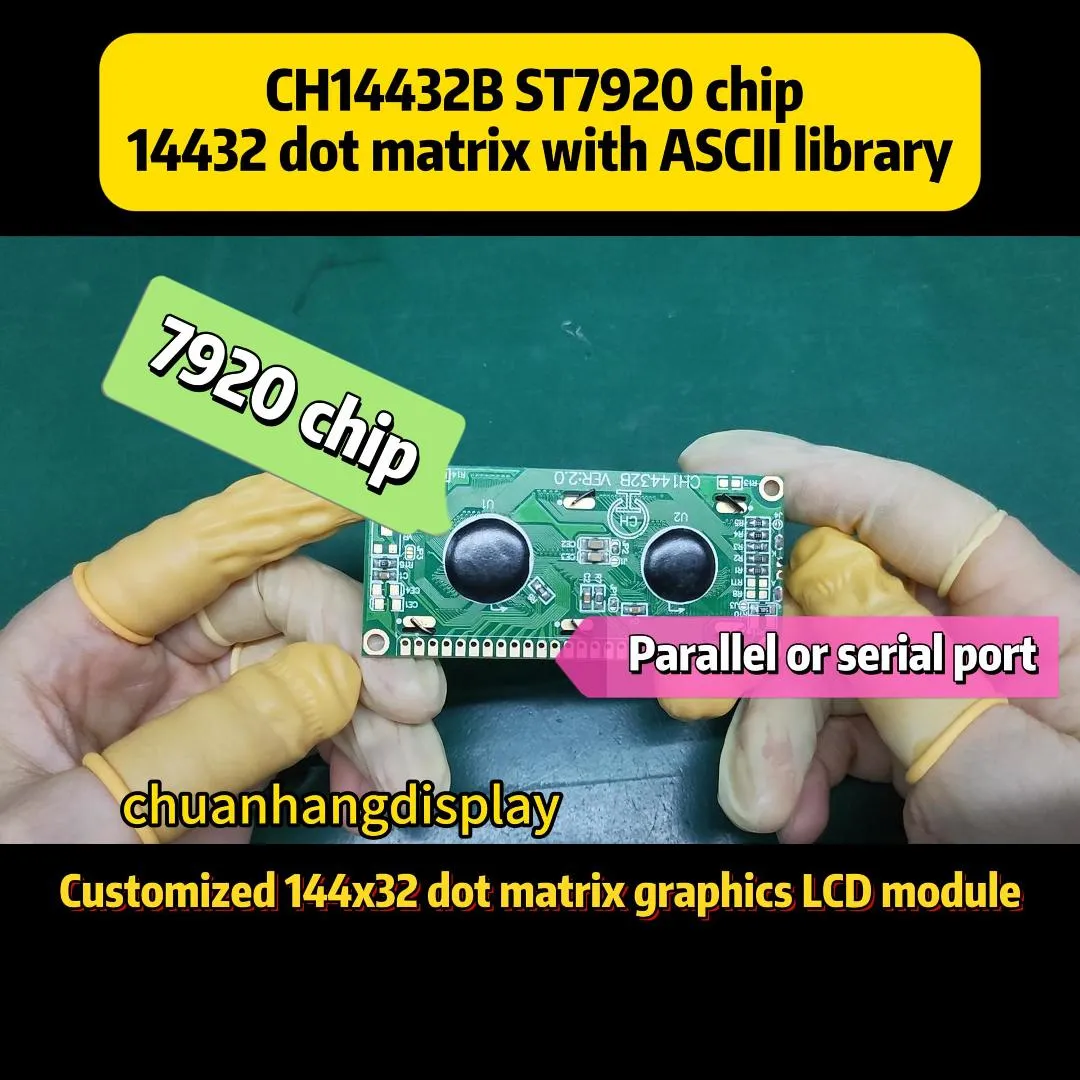
Understanding how an LCD display factory quotes pricing helps buyers negotiate better terms and forecast total procurement costs accurately.
Typically, panel cost comprises: - Glass substrate (15–20% of BOM) - Color filter and black matrix materials (10–15%) - Polarizer films (8–12%) - Driver ICs and PCB substrate (20–25%) - Backlight LEDs and optical films (15–20%) - Labor and overhead (10–15%) - Packaging and logistics (2–5%)
Ask the factory for a detailed BOM breakdown with suppliers and unit prices. This transparency enables benchmarking against market data and identifies potential cost-reduction opportunities through alternative component selection.
Most factories offer tiered pricing based on annual volume commitments. Typical breakpoints are: - 1,000–5,000 units: development pricing (includes NRE amortization) - 5,000–50,000 units: production pricing with moderate discounts - 50,000–500,000 units: high-volume pricing with tooling amortized - 500,000+ units: strategic pricing with dedicated line allocation
Request pricing for each tier along with the associated lead times. Also inquire about consignment programs where you provide certain materials (e.g., custom polarizers or cover glass) to reduce factory margins on those items.
Selecting a qualified LCD display factory demands rigorous technical evaluation, transparent communication, and systematic verification of quality systems. By understanding the interplay between panel materials, application requirements, and manufacturing capabilities, buyers can make informed decisions that balance performance, reliability, and cost. The evaluation process should encompass technology audits, sample testing, supply chain assessments, and quality management reviews, each contributing to a comprehensive risk assessment. Factories such as Chuanhang Display that maintain detailed documentation, invest in automated inspection systems, and demonstrate statistical process control maturity represent lower-risk partners for long-term procurement programs. A well-chosen LCD display factory not only delivers consistent product quality but also serves as a collaborative partner in product development and cost optimization, ultimately strengthening the buyer's competitive position in their respective markets. For buyers new to display sourcing, investing time in factory audits and technical evaluations upfront significantly reduces downstream quality issues and supply interruptions.
A1: Minimum certifications include ISO 9001 (quality management) and ISO 14001 (environmental management). For automotive applications, IATF 16949 is mandatory. Medical displays require ISO 13485. Additionally, check for product-specific certifications like UL listing, TÜV Rheinland approval, or RoHS/REACH compliance statements. A factory that holds multiple industry certifications demonstrates a commitment to quality and regulatory compliance beyond minimum requirements.
A2: The complete qualification cycle—from initial contact to production release—typically spans 12 to 24 weeks. This includes document review (2 weeks), on-site audit (1 week), sample procurement and testing (6–8 weeks), reliability testing (4–6 weeks), and pilot production runs (2–3 weeks). For time-sensitive projects, some buyers accelerate by using pre-qualified factories or conducting virtual audits. However, accelerating reliability testing should be done with caution as it may not capture long-term degradation mechanisms.
A3: Yes, most factories offer customization of LED configurations to achieve specific luminance levels (e.g., 300 cd/m², 1000 cd/m²) and correlated color temperatures (CCT) ranging from 2700K (warm) to 6500K (cool). The factory adjusts the number and arrangement of LEDs, selects specific LED bins, and modifies the diffuser stack to meet your target. Customization typically extends lead time by 2–4 weeks and may require additional NRE fees depending on the degree of deviation from standard offerings.
A4: MOQ varies widely based on panel size and technology. For standard 7-inch TFT panels, MOQs often range from 500 to 2,000 units. Larger panels (15–21 inches) may have MOQs of 200–500 units due to higher glass substrate costs. For highly customized displays (e.g., unusual aspect ratios, special cover glass, integrated touch), MOQs may be as low as 100 units but with significantly higher unit pricing. Some factories, including Chuanhang Display, offer sample quantities as low as 5–10 units for initial evaluation purposes, with MOQ negotiated upon transition to volume production.
A5: Request the factory's color management and binning strategy. Premium factories maintain tight control over LED color bins (typically 3-step MacAdam or tighter), calibrate their photometers regularly against NIST-traceable standards, and implement automatic color adjustment systems during module assembly. Additionally, ask for the factory's specification of acceptable color coordinate tolerance (e.g., Δu'v' ≤ 0.003) and luminance variation (e.g., ≤±5% from nominal). Regular lot-to-lot correlation studies and statistical process control charting help ensure consistency over time.
A6: Prototype lead times range from 2 to 4 weeks for standard designs, extending to 6–8 weeks for custom backlights or interface boards. Production lead times typically range from 6 to 10 weeks after design finalization and material procurement, depending on the complexity and volume. For high-volume contracts (exceeding 100,000 units), some factories offer dedicated production lines that reduce lead time to 4–5 weeks. Always verify the factory's current backlog and material availability, as these factors can double standard lead times during peak demand periods.
A7: Reputable factories offer application engineering support, including 3D CAD model generation (STEP or IGES formats), mechanical interface recommendations, thermal management guidance (especially for high-brightness backlights), and EMC/ESD protection design. Some factories provide design review services where their engineers analyze your enclosure and propose optimizations to improve assembly yield or reduce costs. This support is often included in the NRE fee for custom designs but may be subject to service level agreements for standard products.
For detailed technical specifications, sample procurement, or to arrange a factory audit, please contact our engineering team with your project requirements. We provide comprehensive support from concept to mass production across all major display technologies.
Submit your inquiry with panel size, resolution, brightness target, and estimated annual volume to receive customized recommendations and a preliminary cost estimate.