Sourcing the right LCD screen supplier directly impacts product performance, manufacturing schedules, and warranty costs. For B2B buyers in industrial automation, medical equipment, automotive, or smart home sectors, selecting a display partner is not a commodity purchase—it is a strategic decision that affects MTBF (mean time between failures), optical compliance, and supply chain resilience.
This guide walks through panel technology trade-offs, quality control benchmarks, cost structure transparency, and practical evaluation criteria. It also introduces how Chuanhang Display addresses common sourcing pains for OEMs and system integrators.
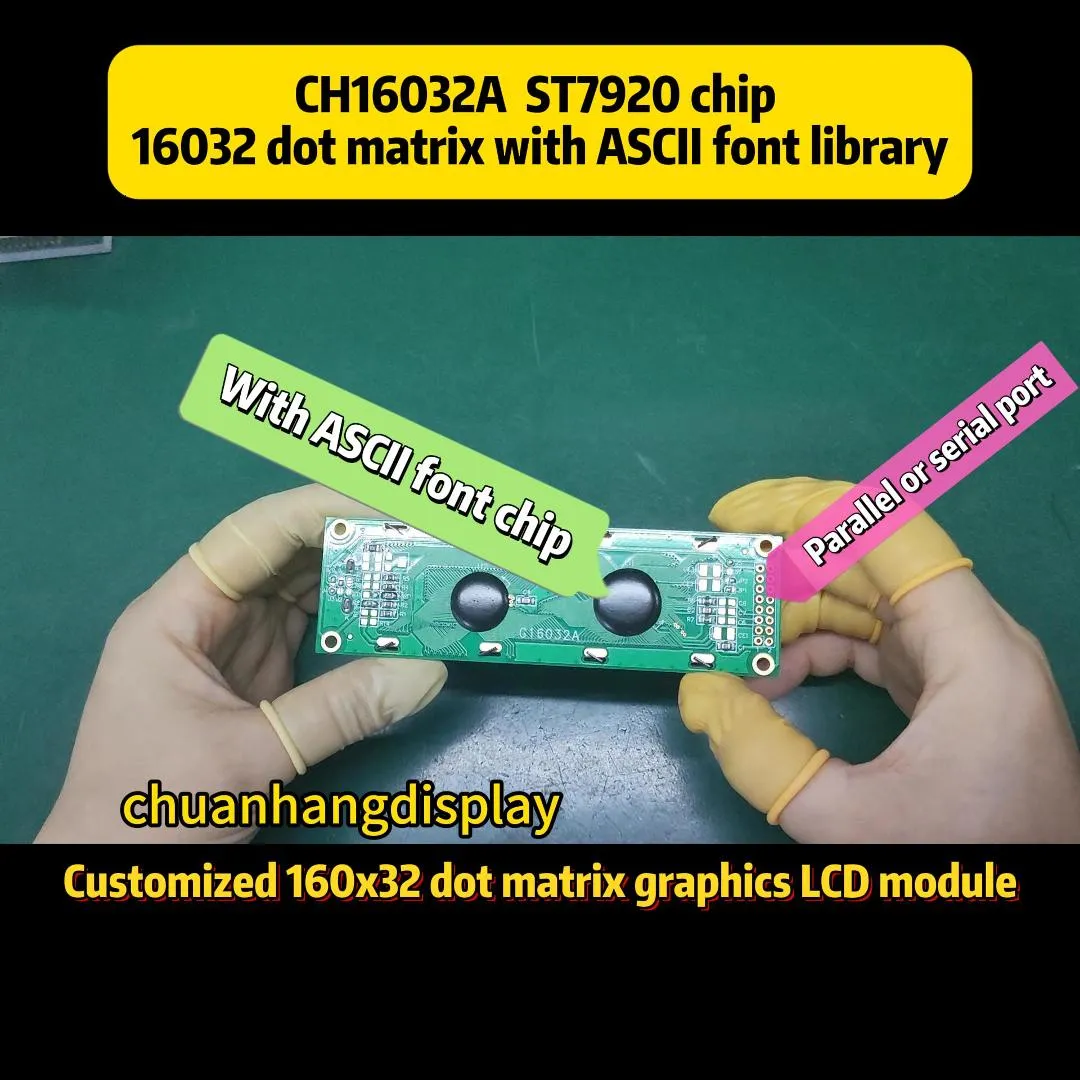
Before approaching any LCD screen supplier, engineering teams must define the display’s operating environment and functional requirements. The wrong technology choice leads to poor readability under sunlight, short lifespan in high-temperature factories, or unacceptable motion blur in video applications.
When a design requires consistent performance across production batches, these parameters must be documented in the supplier quality agreement:
Experienced procurement managers know that low sample prices often hide high field failure rates. Below are real-world pain points observed across hundreds of display sourcing projects.
A single pixel defect is acceptable for consumer electronics (ISO 9241-302 Class II), but medical or avionics displays require Class I (zero bright pixels). Many LCD screen supplier quotes do not explicitly state the defect class.
After the 2020–2023 component shortages, lead time reliability became a top KPI. A competent LCD screen supplier should provide:
Industrial and medical equipment sold in EU or North America requires full RoHS, REACH, and sometimes conflict mineral declarations. Some low-cost suppliers skip these certifications, causing customs holds or legal liability.
A structured technical audit prevents costly switching later. Use this checklist during supplier interviews.
Standard off-the-shelf modules fit many applications, but custom projects often need:
Chuanhang Display provides engineering support for customization — from schematic review to firmware tuning for touch controllers — ensuring drop-in compatibility with existing system designs.
Many B2B buyers focus on unit price but ignore:
A transparent LCD screen supplier will break down cost into LCD glass, driver IC, backlight, FPC, and assembly. This allows you to negotiate where you have alternative sources.
Different verticals impose distinct requirements. Understanding these helps you communicate your needs precisely.
With over a decade of display module engineering and manufacturing, Chuanhang Display focuses on bridging the gap between Asian LCD cell production and global B2B customers. The company maintains a consolidated inventory of commonly used driver ICs and LED backlight strips, reducing typical lead times from 8–10 weeks to 4–5 weeks for many standard SKUs.
All modules undergo 48-hour burn-in and optical inspection using automated equipment (luminance meter, AOI for pixel defects). For customers requiring medical or automotive compliance, Chuanhang Display provides full traceability from LCD glass lot number to final assembly date.
The engineering team also offers interface conversion boards (e.g., HDMI to LVDS) for prototyping, saving weeks of embedded software development.
Q1: What is the typical lifespan of an industrial TFT-LCD module from a reliable LCD screen supplier?
A1: For TFT-LCD with standard LED backlight (operated at nominal current, 25°C ambient), the backlight half-brightness lifetime is typically 30,000–50,000 hours. The LCD glass itself lasts beyond 100,000 hours if not mechanically damaged. Always request LM-80 or similar lumen maintenance data from your LCD screen supplier.
Q2: How can I verify a supplier’s claimed defect rate before placing a large order?
A2: Perform a pilot run of 500–1000 pieces. Inspect according to ISO 9241-302 defect classification. Compare the actual DPPM (defective parts per million) against the quote. Also request SPC (statistical process control) charts from their assembly line. A professional LCD screen supplier like Chuanhang Display provides sample inspection protocols upon request.
Q3: What are the cost differences between TN, VA, and IPS panels from an LCD screen supplier?
A3: TN panels are the lowest cost (least complex manufacturing) but have poor viewing angles. VA (vertical alignment) is 15–25% more expensive than TN, offering better contrast. IPS is 30–50% more than TN, delivering wide viewing angles and stable color — preferred for medical and collaborative industrial HMIs.
Q4: Can one LCD screen supplier provide both standard and custom displays for different product lines?
A4: Yes. Many suppliers maintain a portfolio of standard modules (off-the-shelf) and also support custom designs involving FPC shape, cover glass, optical bonding, or even custom LCD cell sizes. However, custom NRE fees typically start from $3,000 to $15,000 depending on complexity. Always clarify MOQ for custom vs. standard.
Q5: What documents should I request during the RFQ phase from an LCD screen supplier?
A5: Request: (1) Datasheet with absolute maximum ratings, (2) Mechanical drawing with tolerances, (3) Initial inspection report for sample batch, (4) Reliability test report (high-temp storage, thermal shock, humidity), (5) RoHS/REACH declaration, (6) Warranty policy (typically 12–24 months), and (7) Lead time for production quantities.
Q6: How does backlight type affect display longevity?
A6: Most modern LCDs use white LED backlights. Edge-lit LED design gives thinner modules but slightly lower uniformity. Direct-backlit (array of LEDs) offers better uniformity and easier repairability but higher cost and thickness. Ask your LCD screen supplier for LED driver circuit specifications — overdriving LEDs accelerates degradation.
Q7: Is it cost-effective to buy LCD modules with integrated touch from one LCD screen supplier?
A7: Generally yes. Single sourcing both display and touch reduces assembly tolerance issues (dust between layers, parallax error), lowers logistics cost, and provides single warranty responsibility. However, compare the combined price against buying display and touch separately — sometimes a specialized touch supplier offers better performance for extreme environments (e.g., glove-touch or salt-spray resistance).
Choosing the right LCD screen supplier requires technical clarity, supply chain transparency, and a partner willing to share test data — not just marketing statements. Whether you need a standard 7" industrial TFT or a fully custom optical-bonded module for outdoor kiosks, start your evaluation with a detailed RFQ that includes your operating environment, electrical interface, and mechanical constraints.
Contact Chuanhang Display for engineering consultation, sample requests, and volume pricing. Provide your target brightness, interface (LVDS/MIPI/RGB), and estimated annual quantity to receive a technical proposal within 48 hours.
Send your display specifications to our engineering team — we will reply with datasheets, reliability test reports, and a sample lead time.