The JHD162A remains one of the most widely used alphanumeric LCD modules in B2B industrial, medical, and consumer appliance designs. Its HD44780-compatible interface, simple parallel bus, and low power consumption make it a default choice for systems requiring numeric readouts, status messages, or menu-driven interfaces.
However, not all JHD162A modules are identical. Variations in controller batch, backlight color, operating temperature range, and PCB thickness affect long-term reliability. This guide dissects the technical specification of the JHD162A, maps its common applications, and provides a structured approach to qualifying suppliers – including how Chuanhang Display ensures consistency across production volumes.
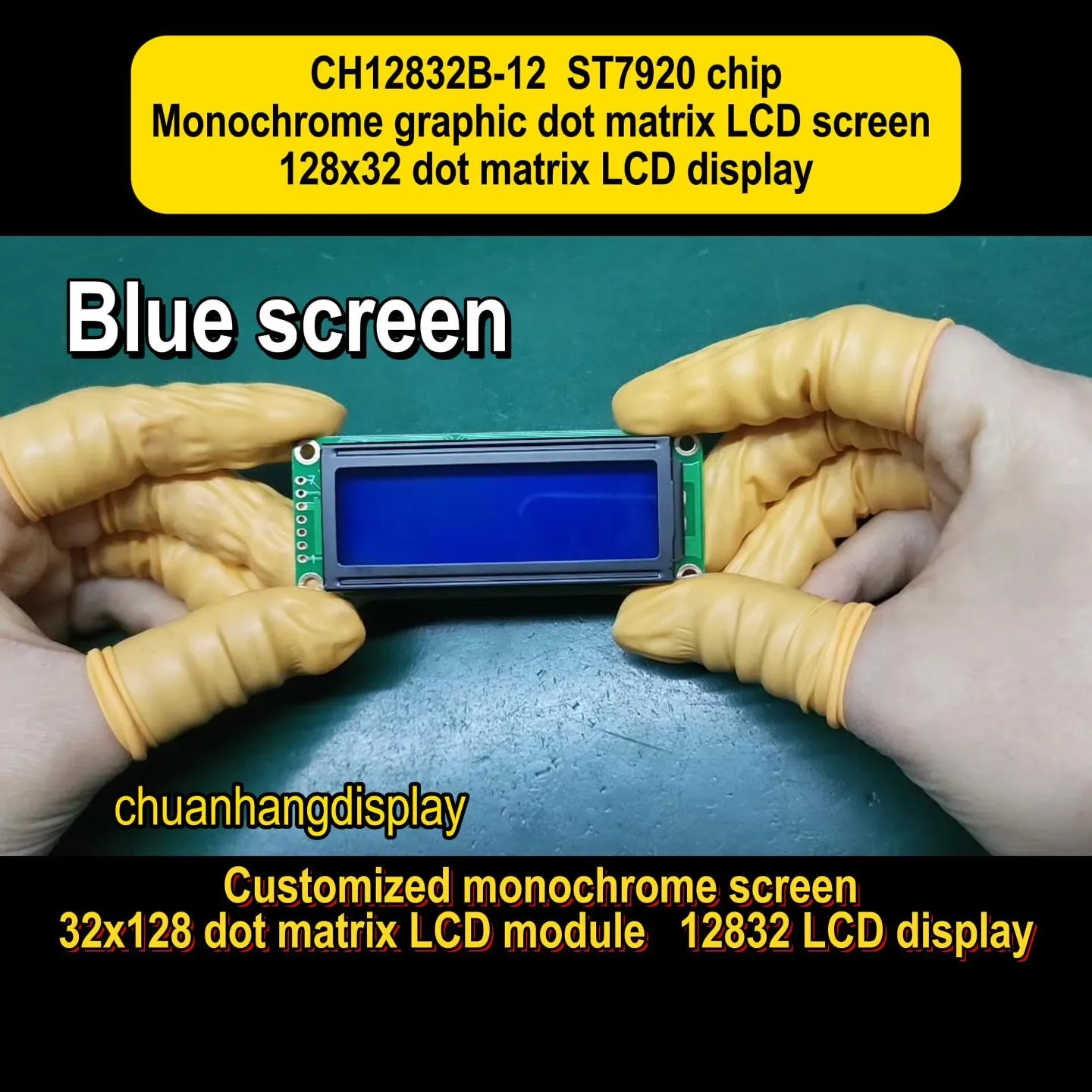
The JHD162A is a 16-character by 2-line LCD module with a standard 16-pin interface (or 14-pin in some variants). Its popularity stems from the HD44780 (or equivalent) controller, which handles display RAM, character generator ROM, and timing generation, offloading the host microcontroller from real-time refresh tasks.
A proper JHD162A datasheet must clearly define the following signal assignments (typical 16-pin layout):
| Pin | Symbol | Function |
|---|---|---|
| 1 | VSS | Ground |
| 2 | VDD | +5V power supply (4.7–5.3V) |
| 3 | V0 | Contrast adjustment voltage |
| 4 | RS | Register select (instruction/data) |
| 5 | R/W | Read/Write select (ground for write-only) |
| 6 | E | Enable signal (strobe) |
| 7–14 | DB0–DB7 | 4-bit or 8-bit data bus |
| 15 | A | Backlight anode (typically +5V via resistor) |
| 16 | K | Backlight cathode (ground) |
The onboard CGROM (character generator ROM) contains standard ASCII 5x8 dot patterns. Additionally, the CGRAM (character generator RAM) allows users to define up to 8 custom symbols (e.g., degree sign, battery icon, or arrow). This flexibility makes the JHD162A suitable for simple graphical feedback without upgrading to a more expensive graphic LCD.
V0 (pin 3) must be fed with a voltage between VDD and VSS – typically a 10kΩ potentiometer to ground. The optimal V0 varies with temperature: the liquid crystal viscosity changes, so a fixed resistor divider may cause fading at extreme temperatures. High-quality JHD162A modules specify a recommended V0 range and provide a temperature compensation guideline.
LSI terms: character LCD module, HD44780 compatible, 5x8 dot matrix, parallel interface, contrast potentiometer, V0 adjustment, backlight current, viewing angle 6 o'clock or 12 o'clock, transflective polarizer, operating voltage
Despite the proliferation of graphic TFT displays, the JHD162A continues to be specified in cost-sensitive and reliability-critical applications. Its simplicity ensures minimal firmware development time and easy field servicing.
Portable patient monitors, infusion pumps, and nebulizer controllers integrate a JHD162A for dosage settings and alarm messages. The simplicity of the parallel interface reduces the risk of firmware glitches – a factor in regulatory submissions (IEC 60601). For such applications, suppliers must provide full traceability of the LCD glass and backlight LED batches.
High-end washing machines, smart thermostats, and air purifiers use the JHD162A for user feedback without incurring the cost of a full-color screen. The reflective/transflective option allows readability in bright ambient light, reducing backlight power draw.
Handheld multimeters, oscilloscope probes, and signal generators often adopt a JHD162A as a low-cost numeric readout. The display's robustness against electrostatic discharge (ESD) – when properly integrated with series resistors – is another reason engineers stay with this classic module.
The JHD162A is a mature product, yet quality variations are significant. Experienced buyers avoid the temptation of the cheapest unit – a $0.50 difference per module can translate into a 5% field failure rate.
A low-cost JHD162A may use poor-quality LCD fluid that changes V0 threshold after 6–12 months. The symptom: a perfectly adjusted contrast at production becomes faint or dark in the field. Reliable suppliers provide accelerated aging test data (1000 hours at 60°C).
Unit price ranges from $2.50 to $6.00 depending on volume, backlight color, and temperature grade. However, total cost includes:
When comparing quotes, request a breakdown of LCD glass cost, controller IC cost, backlight assembly, and PCB. This allows you to identify which component drives the price and negotiate where you have alternative sources.
Chuanhang Display offers tiered pricing for the JHD162A with volume discounts starting at 500 units, and provides free engineering samples for approved corporate accounts. Their quality inspection includes 72-hour burn-in at 40°C to catch early backlight failures.
To avoid common pitfalls, follow these guidelines when embedding a JHD162A into your system:
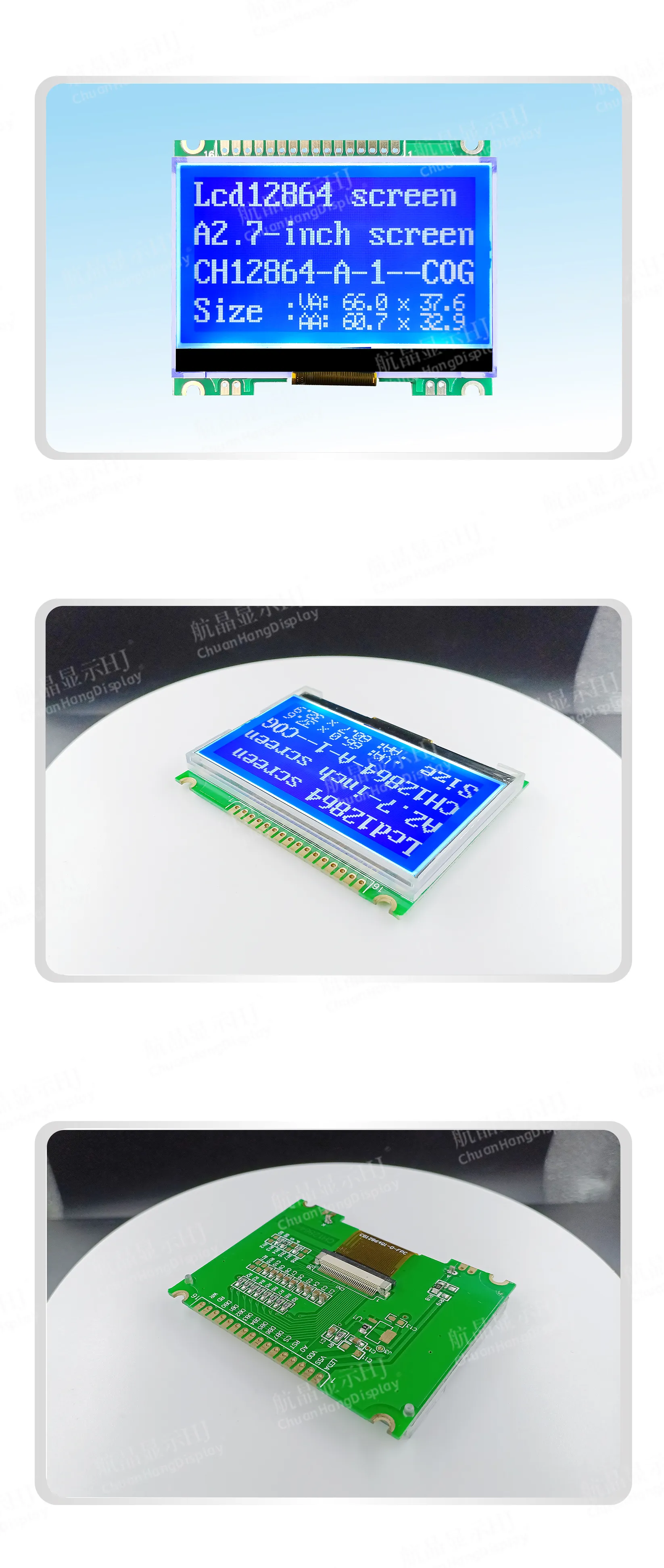
Some clones produce distorted characters due to faulty CGROM. A true JHD162A from a validated source guarantees the standard 5x8 font with correct ASCII mapping.
This is almost always caused by overcurrent or poor LED die quality. A qualified supplier pre-tests backlight at 25mA for 48 hours and sorts out early failures.
Because the JHD162A is a commodity, spot prices fluctuate. Suppliers with buffer stock – such as Chuanhang Display – maintain a 4–6 week inventory for commonly requested variants (yellow-green, blue, and white backlight) to shield customers from market volatility.
Many low-end suppliers provide only a pinout, omitting V0 vs. temperature curves, viewing angle diagrams, and recommended timing charts. Always demand a full datasheet (including mechanical outline with tolerances) before sample approval.
Q1: Is the JHD162A compatible with 3.3V microcontrollers?
A1: Directly, no – the JHD162A is specified for 5V operation. However, you can use level shifters (e.g., 74HC245) or a voltage regulator to provide 5V to the LCD while your MCU runs at 3.3V. Some suppliers offer a 3.3V variant (with built-in regulator), but the standard JHD162A requires VDD ≥ 4.7V for reliable operation.
Q2: What is the difference between the JHD162A and other 16x2 modules like the 1602A?
A2: The JHD162A is a specific model from certain manufacturers (JHD is a common prefix for Jinhuida or similar). While most 16x2 modules are pin-compatible, the JHD162A typically has a specific PCB layout, mounting holes, and backlight connector placement. Always compare mechanical drawings – the electrical interface and HD44780 command set are identical across compliant modules.
Q3: How do I select the correct contrast resistor for my JHD162A?
A3: Start with a 10kΩ trimmer pot between VDD and VSS, with the wiper connected to V0. Adjust to achieve clear characters at room temperature. For production, measure the V0 voltage and replace the pot with a fixed resistor divider. However, note that V0 drifts with temperature – for extended temperature applications, use a temperature-compensating circuit or a digital pot that adjusts dynamically.
Q4: Can the JHD162A display non-English characters?
A4: The built-in CGROM contains Japanese/Kanji or European character sets depending on the ROM version (e.g., HD44780A00 has English/Japanese). For Cyrillic or Greek, you must upload custom characters to CGRAM (up to 8) – but you cannot display a full Unicode string. For multilingual applications, consider a graphic LCD or OLED.
Q5: What is the typical lead time for ordering 1,000 pieces of JHD162A with blue backlight?
A5: From a reputable JHD162A supplier with ready inventory, lead time is 2–3 weeks for standard blue backlight. For yellow-green (most popular), it can be 1–2 weeks. Custom variants (e.g., wide temperature or custom FPC) extend lead time to 4–6 weeks. Always confirm the backlight color and temperature grade in your purchase order to avoid mismatches.
Q6: How do I verify that my JHD162A samples are genuine and not counterfeit?
A6: Check the controller marking (often a logo and date code), measure VDD current (typical 1–2 mA without backlight), and run a full character set test. Also inspect the polarizer film – genuine modules have a uniform grey or dark background. Counterfeits may show uneven background color or rough PCB edges. Request a certificate of conformance and batch test report from your JHD162A source.
Q7: Does the JHD162A support 4-bit mode with only DB4–DB7?
A7: Yes, the HD44780 controller supports both 4-bit and 8-bit modes. 4-bit mode reduces GPIO usage from 11 pins (including RS, E, R/W) to 7 pins (if R/W tied to ground). However, initialization must be done with the 4-bit sequence – refer to the datasheet for exact steps to avoid lock-up.
The JHD162A remains a workhorse in display technology – not because it is flashy, but because it is predictable, well-documented, and cost-effective. Success depends on selecting a supplier that offers consistent quality, full traceability, and responsive technical support.
Evaluate your potential partners based on sample batch uniformity, warranty terms, and availability of extended temperature versions. Request a full datasheet, an initial inspection report, and a sample for your specific backlight color.
Contact Chuanhang Display for a JHD162A sample kit and volume quotation. Provide your expected monthly consumption, operating temperature range, and backlight color – their engineering team will respond with a detailed spec match and lead time within two business days.
Submit your RFQ now – include your target price, MOQ, and delivery location to receive a formal proposal and free sample for qualified projects.