For industrial design engineers and procurement officers, selecting a reliable display is paramount to product longevity. The CH12864 dot matrix liquid crystal display (LCD) module represents a standard in monochrome display technology, offering a balance between information density and power efficiency. This graphic display module, featuring a resolution of 128 by 64 pixels, is widely integrated into systems where high readability and low power consumption are required.
As a leading manufacturer, Chuanhang Display provides structured support for these configurations, ensuring that industrial clients receive displays tailored to their precise operating environments. Understanding the underlying technology, from panel construction to interface protocols, is vital for successful integration and cost-effective volume sourcing.

To choose the correct display variant, engineers must first analyze the physical construction of the module. Graphic LCDs with a 128x64 resolution are generally manufactured using one of two primary packaging technologies: Chip-on-Board (COB) or Chip-on-Glass (COG).
┌────────────────────────────────────────────────────────┐
   │             Packaging Technology Comparison            │
   └───────────────────────────┬────────────────────────────┘
                               │
             ┌─────────────────┴─────────────────┐
             ▼                                   ▼
   ┌───────────────────┐               ┌───────────────────┐
   │  Chip-on-Board    │               │  Chip-on-Glass    │
   │  • Heavy-duty PCB │               │  • Ultra-thin LCD │
   │  • Mounting holes │               │  • Flex connection│
   │  • High profile   │               │  • Compact size   │
└───────────────────┘ └───────────────────┘In a COB configuration, the semiconductor driver integrated circuit (IC) is mounted directly onto the printed circuit board (PCB) of the display module and secured with a protective epoxy resin.
Mechanical Stability: The presence of a rigid PCB provides excellent structural strength, making COB modules highly resistant to mechanical shock and vibration.Ease of Assembly: Standard mounting holes in the PCB allow for straightforward mechanical installation within product housings.Thickness: Due to the PCB and the epoxy layer, COB modules are thicker and heavier than their COG counterparts.
The COG packaging method mounts the display driver IC directly onto the contact ledge of the glass panel.
Compact Profile: COG designs eliminate the bulky PCB behind the glass, reducing the thickness of the display portion to just a few millimeters.Cost Efficiency: By reducing the material bill (fewer PCBs and connector pins), COG displays are often more cost-effective in high-volume production.Connection Type: These displays rely on a Flexible Printed Circuit (FPC) tail for connection, which requires precise hot-bar soldering or a specialized ZIF (Zero Insertion Force) connector on the host system board.
The choice of liquid crystal material and polarizer type determines how readable the display will be under various lighting conditions and temperatures. When sourcing a module, buyers must evaluate several optoelectronic variations.
STN technology features a molecular twist angle ranging from 180 to 270 degrees. This high twist angle results in a steeper electro-optical transfer curve, allowing for high-duty multiplexing (such as 1/64 duty cycle). Yellow-green and gray STN modes are highly cost-efficient and perform well in indoor industrial equipment under standard room illumination.
This option utilizes a blue-polarizer film to create a high-contrast appearance featuring white pixels on a blue background. It is highly favored for consumer-facing appliances, medical devices, and control panels where aesthetic appeal is a secondary design factor.
FSTN displays incorporate a compensation film placed between the polarizer and the outer glass substrate. This film neutralizes the native green or blue hue of the STN liquid crystal, yielding a clean black-and-white display. FSTN panels provide higher contrast and significantly wider viewing angles, making them suitable for equipment used in demanding outdoor environments.
Reflective: Designed exclusively for outdoor use or bright ambient light settings. Reflective displays do not use a backlight; instead, they reflect ambient light back to the viewer, resulting in near-zero power consumption.Transmissive: Optimized for dark or dim environments. These displays require a continuous backlight source to be readable, which increases the overall power consumption of the host device.Transflective: The most versatile option for industrial applications. Transflective polarizers combine reflective and transmissive properties, allowing the display to remain legible under direct sunlight (using ambient reflection) and in total darkness (using the integrated LED backlight).
The choice of controller and driver IC governs how the host microcontroller unit (MCU) communicates with the graphic display. The most common driver ICs integrated into these modules include the ST7567, UC1701, and ST7565R. These chips are highly valued for their stability and low standby current.
For legacy microcontrollers and systems where write speeds are a primary bottleneck, the 8-bit parallel interface remains a popular choice. It utilizes eight dedicated data lines (D0-D7) alongside control signals such as Read (RD), Write (WR), Chip Select (CS), and Register Select (A0/RS). While this interface offers high refresh rates, it consumes a large number of general-purpose input/output (GPIO) pins on the host MCU.
SPI configurations (often available as 3-wire or 4-wire SPI) significantly reduce pin count. By using a Serial Clock (SCLK), Serial Data Input (SDA), and Chip Select (CS), developers can operate the screen using as few as three or four GPIO pins. This is particularly useful when pairing the display with low-pin-count microcontrollers or when board space for trace routing is highly restricted.
The Inter-Integrated Circuit (I2C) protocol is the most pin-efficient interface, requiring only two lines: Serial Data (SDA) and Serial Clock (SCL). Each write transaction includes an address byte, allowing the display to share the communication bus with other I2C peripherals like temperature sensors or EEPROMs. This simplifies hardware layout but yields slower rendering speeds, which is acceptable for static text but less ideal for dynamic graphic animations.
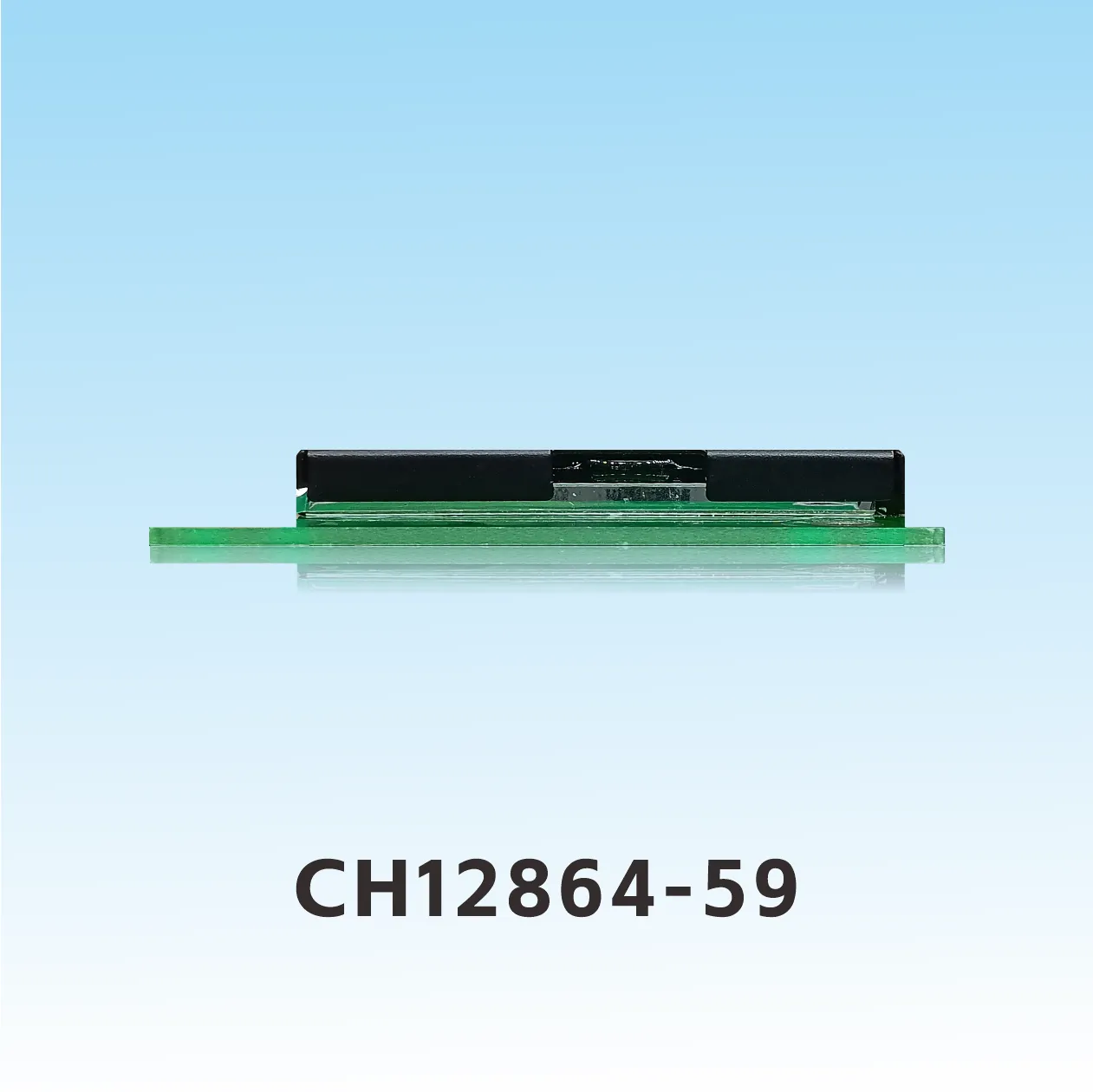
Procurement departments and engineering teams often face complex challenges when sourcing monochrome displays. Identifying these issues early in the design phase prevents costly field failures and production delays.
Unlike consumer electronics, industrial machinery and medical instruments often remain in production for a decade or longer. A primary risk is component obsolescence. If a glass substrate size or driver IC is discontinued, the host system board must undergo a complete redesign. Working with suppliers that commit to long-term lifecycle support and offer drop-in replacement options is a vital strategy.
Standard liquid crystal materials slow down drastically at low temperatures, resulting in ghosting, slow refresh rates, and low contrast. For outdoor applications or cold-storage environments, selecting a wide-temperature module (operating range of -20°C to +70°C or extended ranges of -30°C to +80°C) is required. Wide-temperature modules utilize specialized liquid crystal formulations and frequently include integrated temperature compensation circuits to adjust the contrast voltage dynamically.
The lifetime of an LCD module is often limited by the half-life of its LED backlight. A standard backlight may operate for 20,000 to 50,000 hours before its brightness drops to 50% of its initial value. Sourcing modules built with high-efficiency LEDs and managing the backlight through software (such as auto-dimming after periods of inactivity) can extend the product's operational life.
When purchasing a CH12864 module, buyers must distinguish between standard catalog items and semi-customized modules. Unit costs are highly sensitive to order volumes, material choices, and quality control standards.
To evaluate potential suppliers effectively, procurement teams should analyze the following table of technical variables:
| Technical Parameter | Standard Specification | Industrial Premium Option | Sourcing Impact |
| Glass Type | STN Yellow-Green / Blue | FSTN Black-White | FSTN increases panel cost by 15-25% |
| Connection Method | Standard Pin Header | Customized FPC | Customized FPC requires tooling fees (NRE) |
| Operating Temp | -10°C to +60°C | -30°C to +80°C | Wide-temperature crystal adds premium |
| Backlight Lifetime | 20,000 Hours | 50,000 Hours | Premium LEDs extend field reliability |
When evaluating suppliers, partnerships with established manufacturers like Chuanhang Display can streamline the customization process. For instance, modifying the FPC shape, changing the backlight color, or adding specialized electromagnetic shielding (EMI coatings) can be managed during the prototyping phase to avoid issues during mass production.
The versatility of the 128x64 layout ensures its continued use across a broad spectrum of industrial sectors.
Industrial Automation & Control Systems: Programmable Logic Controllers (PLCs), motor drives, and flow meters rely on this module to display real-time sensor data, system parameters, and error codes in harsh environments.Smart Metering and Grid Infrastructure: Electrical, water, and gas meters utilize these displays due to their ability to function with minimal power draw in standby modes.Medical Equipment: Portable diagnostic devices, infusion pumps, and pulse oximeters integrate these panels to ensure crisp, high-contrast readouts under varied clinical lighting conditions.Marine and Testing Instrumentation: Handheld multimeters, marine depth finders, and agricultural testers use transflective FSTN variations to maintain absolute legibility under harsh, direct sunlight.
Before finalizing a purchase agreement, engineers should run prototype samples through a rigorous verification process:
Electrical Compatibility Verification: Ensure the logic high/low thresholds of the driver IC (e.g., 3.3V or 5.0V) align with the host MCU's operating voltage without requiring level-shifting resistors.Backlight Current Draw Assessment: Measure the current consumption of the LED backlight at maximum brightness to confirm the system's power supply can sustain the thermal load.Contrast Ratio Stability: Verify the display maintains sufficient contrast across the full specified operating temperature range.Mechanical Tolerance Auditing: Check that the physical dimensions of the glass, bezel, and FPC tail conform to the mechanical CAD models to prevent mounting stress.
Selecting a robust display solution like the CH12864 requires careful balancing of optical performance, electrical interface requirements, and physical durability. To ensure your project meets its operational lifespan and design specifications, collaborating with an experienced manufacturer is a reliable path forward. Chuanhang Display offers comprehensive technical documentation and design-in support to assist your engineering team.
For detailed specifications, customized FPC designs, or a volume quotation, please send your project requirements to our technical sales team for a formal inquiry.
A1: The primary difference lies in the placement of the driver IC. COB (Chip-on-Board) modules mount the driver IC onto an integrated PCB backing, which provides high mechanical durability and simple mounting holes, though it results in a thicker profile. COG (Chip-on-Glass) modules place the driver IC directly on the glass panel's ledge, creating an ultra-thin and lightweight module that connects via a flexible printed circuit (FPC), which is ideal for space-constrained devices.
A2: Yes, provided that you specify a "transflective" or "reflective" polarizer configuration. Reflective and transflective models utilize ambient sunlight to illuminate the background of the screen, providing excellent visibility in direct sunlight. A "transmissive" configuration, however, will wash out and become unreadable under intense outdoor light.
A3: For modern driver ICs like the ST7567, contrast is adjusted programmatically via software by writing to the "electronic volume" register of the IC. For older modules or certain COB configurations, contrast is adjusted by applying a variable analog voltage (typically designated as V0 or Vee) via an external potentiometer connected to the power supply pins.
A4: Under standard operating conditions (usually a forward current of 15mA to 20mA at room temperature), premium LED backlights have an operating lifetime of 20,000 to 50,000 hours before the light output decays to 50% of its initial intensity. Operating the backlight at higher currents or elevated ambient temperatures will accelerate this degradation.
A5: It depends on the specific driver IC and the module's hardware layout. If the driver IC is rated for a 3.3V supply (such as the ST7565R), it can interface directly with a 3.3V microcontroller. If the module is designed strictly for 5.0V operations (common in older COB designs), you must use level shifters on the data and control lines to ensure stable communication and prevent damage to the microcontroller pins.