Are you developing a medical device, an electric utility meter, or an industrial sensor node that demands instant readouts and multi-year battery life? If so, selecting the right custom segment display manufacturer is one of the most critical decisions in your product development roadmap. Contact the engineering team at Chuanhang Display today to discuss your technical drawings, review your pinout requirements, and request a detailed prototype quote.
High-resolution full-color screens dominate consumer phones and tablets. Yet, the custom segment display remains the backbone of mission-critical electronics. Industrial systems do not need fluid video animations. They require instant boot times, sub-milliamp power consumption, direct sunlight visibility, and rock-solid mechanical stability.
Sourcing a reliable segment LCD manufacturer in 2026 requires more than comparing unit costs. As connected devices shrink and environmental extremes intensify, your chosen supplier must act as a true co-engineering partner. Below are the definitive qualities your engineering and procurement teams must evaluate before signing an NRE (Non-Recurring Engineering) agreement.
A static numeric panel may seem straightforward, but precision engineering dictates how clearly data appears in challenging environments. A top-tier segment LCD manufacturer must support every major fluid type and optical configuration. They should never force your design into an off-the-shelf compromise.
Your supplier should tailor the chemical and optical properties of the panel according to your use case:
At Chuanhang Display, our dedicated R&D team brings over 13 years of application-specific engineering expertise. We review your preliminary icon layouts, operating voltages (typically 3.0V or 5.0V), drive modes (static, 1/2 duty, 1/4 duty, up to 1/8 duty), and terminal configurations before cutting glass tooling. This diligence prevents costly redesign cycles before mass production.
Internal enclosure space is shrinking across industrial and medical hardware. Today's hardware architectures rarely have room for bulky metal frames and loose elastomer connectors. Modern procurement teams must verify that their custom monochrome LCD partner operates advanced cleanroom bonding lines.
Review the manufacturer's capabilities across three primary assembly workflows:
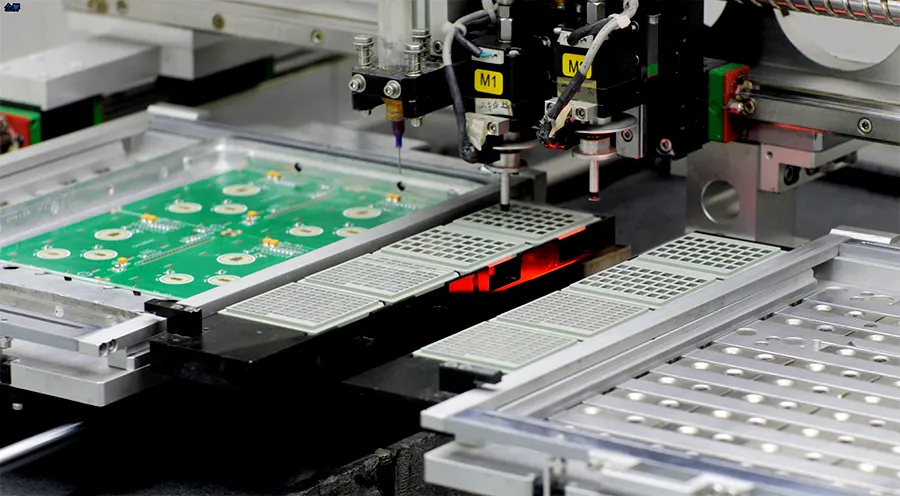
Operating out of an expansive 5,000-square-meter modern production facility, Chuanhang Display runs specialized, automated COG, FOG, and SMT lines. This multi-process infrastructure lets our clients choose between ultra-slim COG segment display profiles and ruggedized COB packages without switching vendors.
Replacing a field-deployed display in an offshore gas pipeline or a sealed medical infusion pump costs thousands of dollars per incident. A low-power segment display must operate without failure, ghosting, or contrast degradation for years on end.
Look for manufacturers that perform stress-testing in alignment with globally recognized industrial standards, such as those maintained by the International Electrotechnical Commission (IEC) for environmental testing. Inquire specifically about:
Chuanhang Display maintains strict quality control protocols across all manufacturing phases. From substrate cleaning and liquid crystal injection to polariser lamination and final electrical burn-in, our experienced operators and automated testing systems work to maintain an exceptional yield rate.
Nothing disrupts an industrial program faster than an unexpected end-of-life (EOL) notice for a custom display. In industrial equipment and medical devices, product lifecycles frequently span 7 to 15 years. Securing recertification for a modified display panel drains engineering resources and incurs substantial regulatory fees.
Before issuing a tooling deposit, verify how the supplier manages material obsolescence:
Leading display industry organizations, like the Society for Information Display (SID), routinely emphasize the value of transparent supply networks in maintaining manufacturing stability. Based in the global electronics center of Shenzhen, Chuanhang Display integrates upstream glass, polarizer, and silicon resources to safeguard our clients against sudden shortages and unpredicted obsolescence.
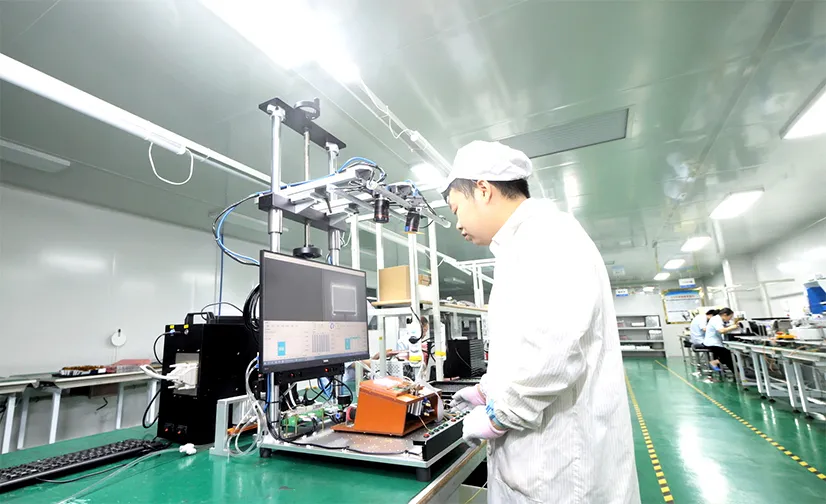
Founded in 2011, Chuanhang Display has evolved from a specialized assembly workshop into an integrated manufacturing powerhouse. Today, our 5,000-square-meter facility houses over 100 skilled production workers alongside an R&D and field application engineering staff of more than 10 specialists.
We provide original equipment manufacturers worldwide with complete display engineering services:
Our goal is straightforward: deliver industrial-grade customized LCD module solutions that lower your overall bill-of-materials while surviving the harshest field conditions.
Q1: What technical details are required to quote a custom segment display?
A1: To provide an accurate NRE tooling quote and unit pricing, we need your active area dimensions, outer glass size, fluid type (TN, STN, VA, etc.), operating voltage, drive multiplexing scheme (duty and bias), viewing direction (6:00 or 12:00), connection method (metal pins, zebra elastomer, or FPC/COG), and expected operating temperature range. Providing a 2D drawing (in DXF, DWG, or PDF format) accelerates this review.
Q2: When should I choose a COG segment display over a metal pin connection?
A2: Select a COG segment display when your mechanical housing demands a razor-thin profile, or when your host microcontroller lacks enough I/O pins to drive multiple LCD segments directly. A COG module places the driver IC directly on the glass, letting you control dozens of segments over a compact I2C or SPI interface.
Q3: What is the typical lead time for custom monochrome LCD tooling and prototypes?
A3: After the layout drawing receives final engineering approval, counter-drawing confirmation takes 2 to 3 working days. Custom glass tooling and initial functional samples typically take 15 to 20 business days. Following client approval of golden samples, mass production runs generally ship within 4 to 6 weeks.
Q4: Why choose a VA (Vertical Alignment) segment screen over standard TN?
A4: VA technology delivers an exceptionally dark, opaque background with contrast ratios frequently exceeding 1000:1, compared to roughly 30:1 for basic TN glass. When paired with high-brightness colored LED backlights, VA segment displays yield a striking, modern look ideal for automotive dashboards, premium thermostats, and high-end consumer appliances.
Q5: Can Chuanhang Display support production runs for long-lifecycle industrial products?
A5: Yes. Chuanhang Display actively supports industrial, metering, and medical clients with lifecycle continuity spanning 5, 8, and even 10+ years. We avoid using short-lived consumer ICs and provide advance notifications if critical components ever need a pin-compatible migration.
Selecting a custom segment display supplier in 2026 goes far beyond comparing upfront tooling costs. Your partner must provide sound optical engineering, modern cleanroom bonding processes, strict environmental testing, and dependable supply continuity. A misstep in display reliability can quickly compromise your product's field reputation.
Chuanhang Display brings 13+ years of dedicated manufacturing experience, an advanced 5,000 m² factory, and a client-focused engineering team ready to transform your display concepts into high-performing hardware.
Ready to elevate your interface design? Contact Chuanhang Display today to submit your 2D/3D CAD drawings, speak with an applications engineer, and receive your rapid custom segment display quote.