Hardware teams face tighter timelines and stricter quality demands than ever before. Designing a connected medical device, an off-highway vehicle cluster, or a rugged industrial controller requires a display that operates without fail for years. Sourcing that display requires more than scanning catalogs online. You need a direct manufacturing partner that understands production realities.
Working with an established lcd module factory gives engineering and procurement teams direct control over tooling, firmware, panel longevity, and unit economics. Established display specialists like Chuanhang Display help global OEMs avoid the supply chain pitfalls that often derail product launches. If you are preparing an upcoming production run, contact our engineering team today to review your display specifications.
Below are the essential capabilities you must verify when vetting a global display manufacturer for 2026 and beyond.
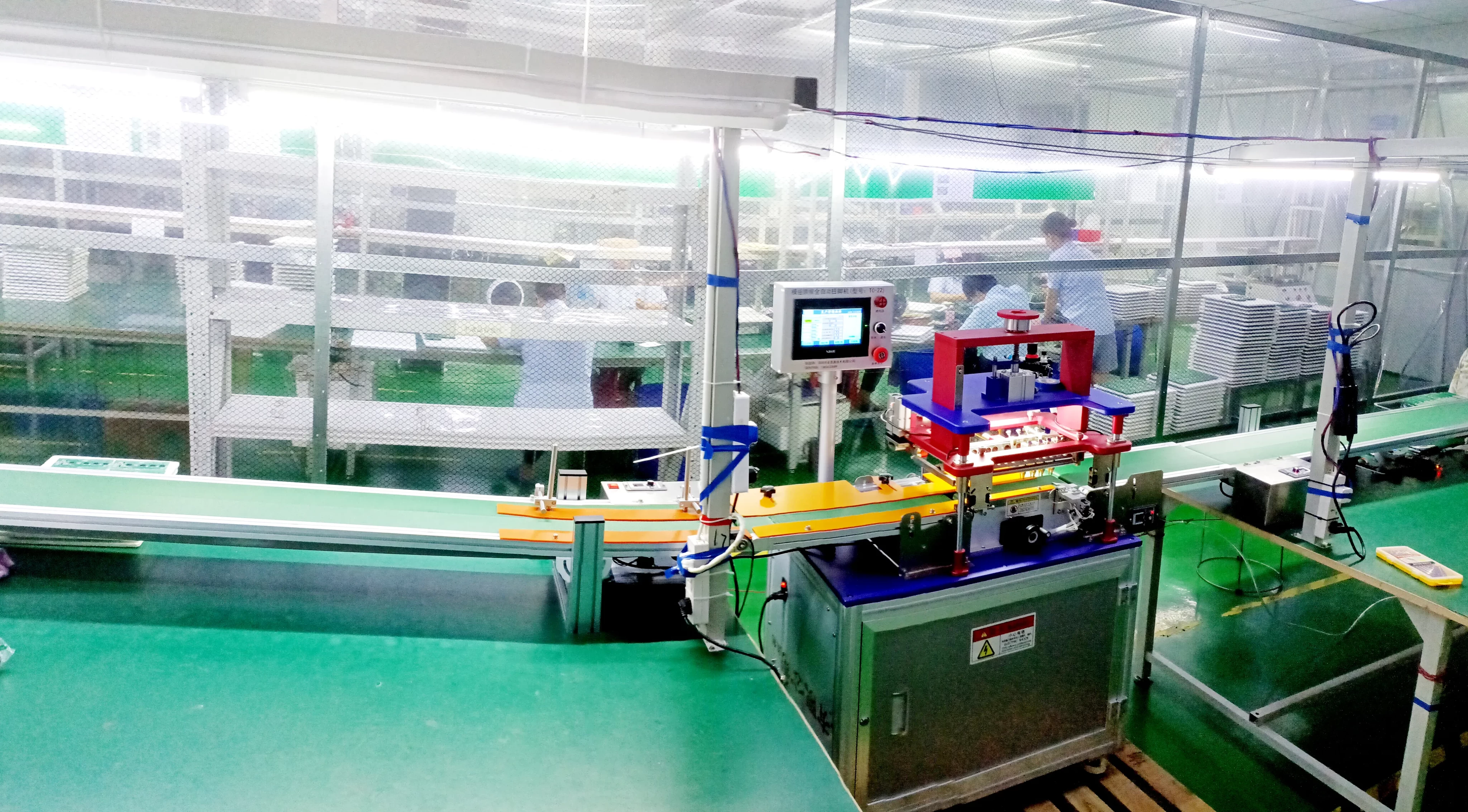
The display market contains hundreds of brokers, trading firms, and partial assemblers masquerading as full-scale factories. Outsourced manufacturing introduces hidden costs, unpredictable lead times, and zero accountability when field failures happen. A true original equipment manufacturer maintains complete ownership of every critical assembly process under one roof.
When you audit an overseas partner, review their internal machinery and line capacity. Look specifically for:
Chuanhang Display operates a modern 5,000-square-meter manufacturing facility run by over 100 skilled production workers. By housing dedicated SMT, COG, FOG, and TFT assembly lines in-house, the company eliminates subcontractor delays. This integrated setup keeps production cycles tight and guarantees traceable quality from bare glass to the final boxed module.
Product ecosystems rarely rely on a single screen type. A manufacturer of industrial charging stations might require a low-cost, high-contrast monochrome panel for an outdoor payment terminal, alongside a vibrant color touchscreen for the main user interface. Splitting these orders across multiple vendors multiplies your vendor management overhead.
A capable lcd module factory should demonstrate technical depth across the full display spectrum:
Never underestimate the value of segment and character displays. For battery-powered handhelds, utility meters, and marine electronics, monochrome displays offer instant boot times, low power consumption, and extreme temperature tolerance. Verify that the factory builds:
Modern equipment increasingly demands rich color graphics. Your chosen TFT display supplier should offer panels from compact 1.44-inch wearable formats up to large industrial formats, configured with IPS glass for wide viewing angles. They must support standard industrial interfaces such as RGB, MCU, SPI, LVDS, and MIPI to match your host processor architecture.
Industrial users expect screens to survive drops, vibrations, chemical exposure, and wet hands. A qualified OEM LCD manufacturer will laminate projected capacitive (PCAP) or resistive touch sensors directly to the display stack. They should also provide chemically strengthened cover glass featuring anti-glare (AG), anti-reflective (AR), and anti-fingerprint (AF) surface treatments tailored to your operating environment.
Consumer displays are built to last two or three years before replacement. Industrial, automotive, and medical displays must function reliably for a decade or more. A single batch of displays with high defect rates can ruin your operational margins and damage your brand reputation.
Examine the operational history of any factory you evaluate. Longevity in the display industry proves that a company can navigate supply shortages, technical transitions, and economic cycles. Founded in 2011 in Bao'an, Shenzhen, Chuanhang Display brings over 13 years of specialized display manufacturing experience to global hardware programs. That history translates into mature, standardized quality procedures.
A rigorous industrial display solution provider tracks defect rates in parts per million (PPM) through comprehensive testing protocols:
Custom display projects often stall during prototype development. If you communicate through commercial agents who lack technical training, simple mechanical revisions can drag on for weeks. You need direct access to engineers who can review your CAD files and recommend practical manufacturing adjustments.
Chuanhang Display backs its production lines with a seasoned engineering and technical sales group of over 10 specialists. This team provides detailed Design-for-Manufacturing (DFM) feedback early in the design stage. They evaluate your enclosure constraints, calculate power budgets for backlight arrays, and suggest connector pinouts that simplify your final assembly.
Look for a custom LCD module manufacturer that assists with critical engineering challenges:
Component obsolescence is a major risk when maintaining industrial equipment. When a panel maker abruptly discontinues a critical glass substrate or driver IC, redesigning the host board and recertifying the end device costs thousands of dollars. A professional lcd module factory actively manages this lifecycle risk for you.
Ask prospective vendors how they handle End-of-Life (EOL) notifications. Top-tier factories maintain strong direct partnerships with glass foundries and silicon vendors. When a component enters its sunset phase, your manufacturer must give you at least six to twelve months of advance notice.
Furthermore, an experienced display partner will propose pin-compatible alternative chips or drop-in replacement modules before the original parts disappear. They maintain safety stock of critical semiconductors and assist with Last Time Buys (LTB) to protect your production lines through extended product lifecycles.
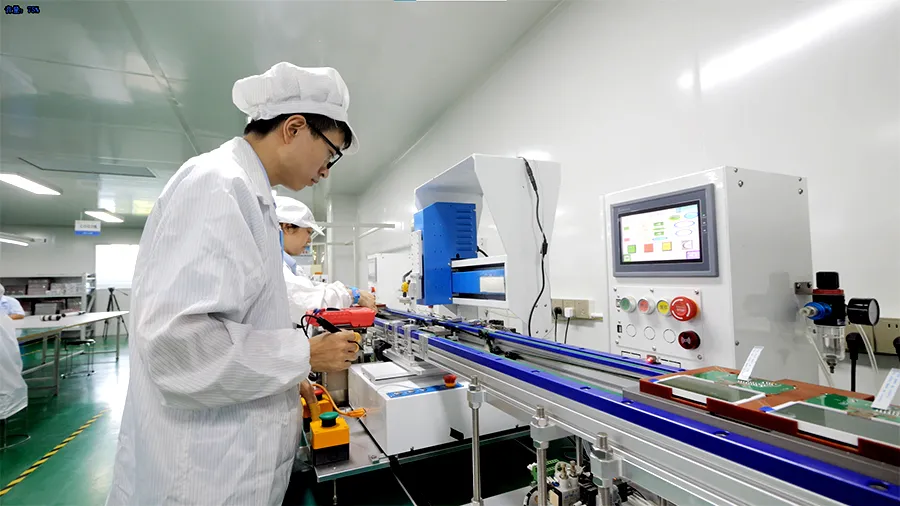
Use this reference table during vendor qualification calls to determine whether a supplier owns real manufacturing capacity:
| Assessment Criteria | Trading Company / Broker | True LCD Module Factory |
|---|---|---|
| Tooling & Molding Costs | High markups; little flexibility for modifications | At-cost NRE charges; direct mold modifications |
| Production Visibility | No live audit access; hidden subcontractor names | Open factory audits (virtual or in-person); complete line transparency |
| Engineering Support | Relays emails back and forth; slow technical answers | Direct interaction with DFM engineers and CAD designers |
| Customization Scope | Limited to catalog tweaks and standard off-the-shelf units | Full custom glass, FPC design, backlights, and cover lenses |
| Traceability | Scattered batch numbers across various third parties | Unified serial tracking from raw component to finished box |
Choosing your production partner is one of the most critical supply chain decisions you make. The right factory prevents costly assembly errors, protects your bill of materials from price shocks, and delivers consistent display quality over years of production.
Chuanhang Display brings 13+ years of manufacturing experience, advanced COG, FOG, and SMT production facilities, and a dedicated engineering support team to your project. Whether you need a custom monochrome LCD screen factory to cut power consumption in an off-grid meter or an industrial TFT display supplier for your next control terminal, our Shenzhen team is ready to assist.
Ready to review your display design with a proven manufacturer? Submit your RFQ to Chuanhang Display today. Our engineering team will evaluate your drawings, supply preliminary DFM feedback, and deliver a competitive quotation within 24 hours.
Q1: What technical information does an lcd module factory need to quote a custom project?
A1: To generate an accurate quote and DFM analysis, provide your display dimensions (active area and module outline), preferred display type (monochrome TN/STN/FSTN or color TFT), operating and storage temperature requirements, target interface (MCU, SPI, RGB, MIPI, or LVDS), brightness level (nits), operating voltage, and estimated annual usage (EAU).
Q2: What is the typical lead time for custom LCD samples versus mass production?
A2: Custom monochrome LCD samples generally take 15 to 20 business days once tooling drawings are signed off. Custom TFT modules with bespoke FPC or backlight modifications take roughly 3 to 4 weeks. After sample approval, standard mass production lead times run between 4 to 6 weeks, depending on component availability.
Q3: What is the difference between COG and COB module structures?
A3: COG (Chip-on-Glass) bonds the driver IC directly onto the extended contact edge of the LCD glass substrate, resulting in a thin, lightweight, and compact module profile. COB (Chip-on-Board) mounts the driver IC onto an integrated PCB using wire bonding covered by epoxy (black drop). COB modules are thicker and heavier but provide mounting holes and straightforward pin connections that simplify installation in legacy equipment.
Q4: How do LCD module factories ensure readability under direct sunlight?
A4: Factories improve sunlight visibility using several methods. For monochrome screens, they use transflective polarizers that bounce ambient sunlight back through the liquid crystal layer. For color TFT screens, they combine high-efficiency LED backlights (outputting 800 to 1,500+ nits) with anti-reflective/anti-glare surface treatments and optical bonding to prevent internal air-gap reflections.
Q5: Why should I work directly with a factory rather than sourcing standard panels online?
A5: Sourcing directly from an established factory guarantees component traceability, provides a direct line to DFM engineers, eliminates distributor markups, and shields your project from sudden product cancellations. A direct manufacturer works with your development schedule, provides custom firmware initialization support, and guarantees multi-year availability for industrial designs.

![Top Features to Look for in a Global LCD Module Factory [2026 Edition]](/view/pc/static/img/img-banner-news.jpg)