Selecting the wrong display manufacturer triggers hidden project costs. You might encounter late delivery dates, flickering panels in the field, or surprise redesigns when an unannounced driver IC disappears from the market.
Many vendors present glossy product catalogs and promise low unit costs. Yet behind these catalogs, brokers and trading firms often pose as genuine production plants without owning a single cleanroom line.
If you are developing medical monitors, smart meters, or rugged industrial panels, your hardware requires stable components. Before issuing a purchase order or locking in tooling fees, review your supply chain partners against clear technical benchmarks.
Need an immediate feasibility check for your custom module? Contact the engineering team at Chuanhang Display to review your mechanical drawings and electrical specifications today.
A display is the direct interface between your device and your customer. When a screen fails, users view the entire instrument as broken, even if your underlying compute board works perfectly.
Middlemen frequently quote low prices by sourcing surplus glass or cutting corners on optical bonding. When production scales, batch-to-batch color shifts appear, polarizers bubble under humidity, and backlights dim prematurely.
To shield your project against field failures and unplanned redesigns, you must inspect the actual shop floor. Evaluate five fundamental pillars when auditing any potential lcd display factory.
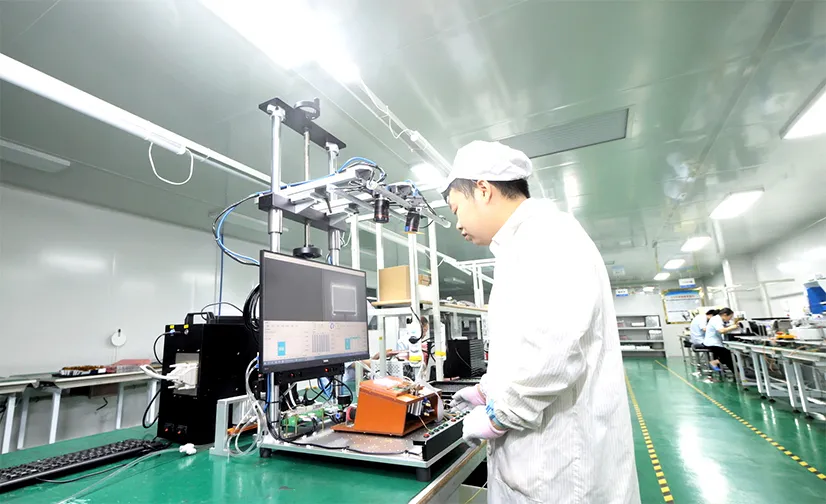
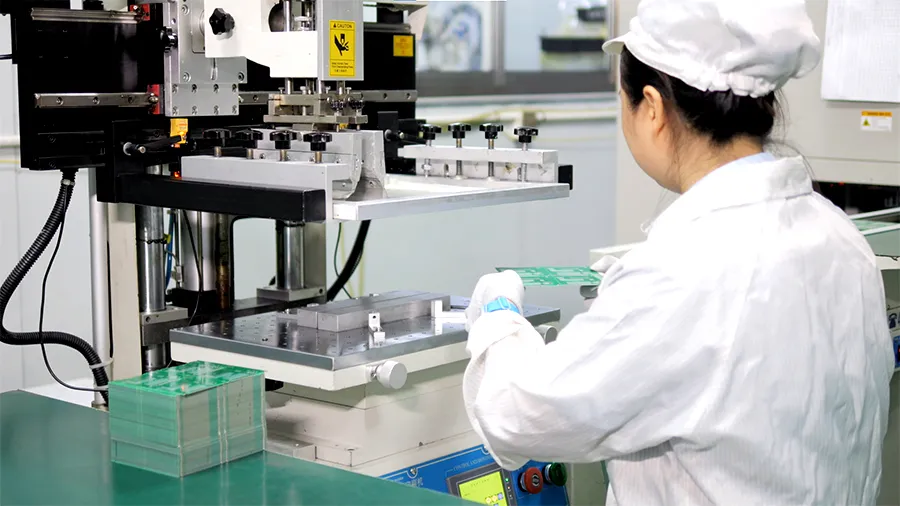
Anyone can build a sleek website, but genuine quality depends on real cleanroom capacity. A certified monochrome LCD factory or TFT module builder must control its own bonding and packaging operations.
Brokerages outsource assembly to third-tier job shops. This introduces contamination, destroys lot traceability, and leaves you vulnerable when assembly priorities shift.
Examine the facility layout and verify that the company directly owns and operates critical production equipment:
Consider the production baseline at Chuanhang Display. Backed by 13 years of manufacturing experience, the company operates a 5,000-square-meter facility with more than 100 skilled assembly workers.
Chuanhang maintains dedicated COPB lines, high-speed SMT lines, automated FOG and COG lines, and specialized TFT integration lines. Retaining these processes under one roof guarantees continuous quality monitoring and dependable lead times.
Standard off-the-shelf panels rarely fit industrial enclosures or specialized battery profiles. You will likely need customized mechanical outlines, altered connector pinouts, or modified optical properties.
A capable custom LCD display manufacturer should serve as an extension of your own engineering department. They must do more than accept CAD files; they should conduct Design for Manufacturability (DFM) reviews prior to tooling.
Verify that their engineering department can handle key customizations:
Chuanhang Display backs its production lines with an in-house engineering team of over 10 senior hardware and optical specialists. They resolve driver timing issues, optimize backlight diffusers for even luminance, and refine FPC layout before tooling begins.
Visual inspection at the packing table cannot confirm whether a panel will endure years in a factory or utility truck. High-grade displays require continuous stress testing across each production phase.
A dependable TFT LCD module supplier maintains an internal quality control system that monitors goods from raw material delivery through final packing.
Inquire how the plant verifies components across the production cycle:
Field operating conditions can be harsh. You must verify that the supplier maintains an internal environmental test lab. Ask for concrete qualification reports covering standard stress tests:
Every industrial module built by Chuanhang Display undergoes structured multi-stage testing. This data-driven quality framework eliminates leakage, preserves contrast, and guarantees stable field operation across long service lives.
Consumer devices change every year, but industrial, medical, and utility products regularly stay in service for five, seven, or ten years. The most destructive setback for an embedded product is an unannounced End-of-Life (EOL) notice on a display or driver chip.
When selecting an lcd display factory, evaluate how they manage their silicon and glass supply chains. A plant with strong supply-chain connections can forecast disruptions and secure stable wafer allocations.
Protect your product lifecycle by auditing these core factors:
Chuanhang Display provides a comprehensive product portfolio, including custom segment displays, graphic COG and COB units, and full-color TFT modules. Their supply agreements help industrial customers maintain steady production runs without forced board respins.
A supplier might build great prototype samples, but falter when you need predictable volume shipments. Conversely, giant display conglomerates often ignore mid-sized manufacturers, demanding massive Minimum Order Quantities (MOQs) that tie up critical capital.
You need a flexible manufacturing partner that can support low-volume engineering builds while scaling smoothly into high-volume delivery.
Assess operational responsiveness using practical criteria:
A collaborative LCD display factory speeds up your development cycle. Prompt engineering support keeps firmware development moving, helping your team hit release deadlines and preserve your market window.
Use this convenient scorecard when evaluating your next potential manufacturing partner:
Q1: What is the main difference between an LCD display factory and a
trading company?
A1: An LCD display factory directly owns its
cleanrooms, bonding equipment (COG, FOG, SMT), and reliability testing labs. A
trading company acts as a middleman, reselling panels sourced from external
assembly plants. Direct factories provide complete batch traceability,
straightforward technical support, lower unit pricing, and deep customization
options that trading companies cannot match.
Q2: Why is COG bonding preferred over COB for modern industrial
products?
A2: Chip-on-Glass (COG) mounts the driver IC directly onto
the display glass substrate, whereas Chip-on-Board (COB) solders the IC onto an
external PCB module connected to the display. COG modules are substantially
thinner, consume less power, and reduce total mechanical assembly weight.
However, COB designs remain a dependable choice for legacy systems that
prioritize rugged, through-hole PCB mounting.
Q3: How can we prevent premature display discontinuation for
long-lifecycle products?
A3: When vetting an LCD display factory,
require written confirmation of component lifecycles for both glass panels and
driver silicon. Partner with manufacturers that maintain strong links to major
glass foundries and IC design firms. Your contract should stipulate at least 6
to 12 months of advance EOL notice, along with formal Last Time Buy (LTB)
options and pin-compatible migration designs.
Q4: What is the typical lead time for custom monochrome vs. custom
TFT LCD modules?
A4: Custom monochrome displays (TN, STN, FSTN)
typically require 15 to 25 days for counter-drawings and physical samples,
followed by 4 to 6 weeks for mass production once samples are approved. Custom
TFT modules requiring tailored backlights, custom flex cables (FPC), and
integrated touch sensors generally take 4 to 6 weeks for prototypes and 6 to 8
weeks for volume production.
Q5: Can an LCD factory customize backlights for direct sunlight
viewability?
A5: Yes. An experienced manufacturer can customize the
backlight rail by deploying high-efficiency LEDs, improving thermal dissipation
pathways, and incorporating specialized optical diffusers or brightness
enhancement films (BEF). Luminance levels can be adjusted from standard indoor
levels (250–350 nits) up to sunlight-readable thresholds (800 to 1,500+ nits),
paired with transflective polarizers or optical bonding to maximize contrast
outdoors.
Sourcing your display components does not have to introduce supply risks. By auditing manufacturing equipment, custom engineering support, and testing workflows, you protect your company from field failures and costly revisions.
If you are looking for an experienced display manufacturer, Chuanhang Display brings 13 years of precision engineering to your supply chain. Our 5,000-square-meter facility houses modern COG, FOG, SMT, and TFT production lines operated by over 100 skilled workers.
Whether you require a custom monochrome segment panel for an energy meter or a high-brightness TFT display for an outdoor medical monitor, our engineering team is ready to assist your build.
Ready to validate your display concept? Contact the engineering team at Chuanhang Display today to discuss your project requirements, request a formal quote, or order prototype samples for laboratory evaluation.