In the landscape of digital readouts, few components have demonstrated the longevity and reliability of the 7 seven segment display. While TFT and OLED screens dominate consumer electronics, the segmented numeric indicator remains the workhorse of industrial control systems, medical devices, and high-brightness outdoor applications. This article provides a technical deep-dive into the architecture, driving methodologies, and selection criteria for these displays, emphasizing their irreplaceable role in safety-critical environments.
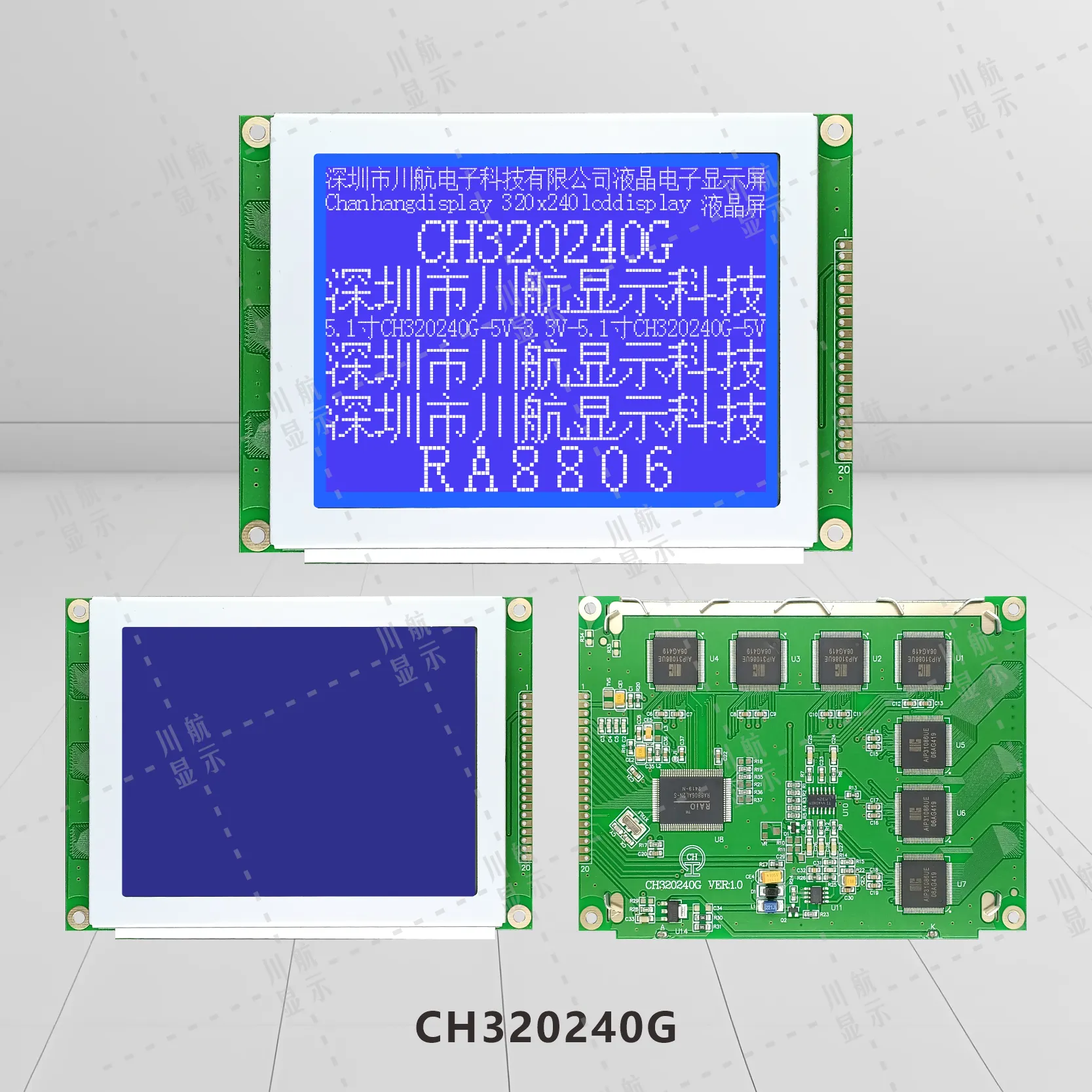
At its core, a 7 seven segment display consists of ten individual pins (typically) governing eight light-emitting segments—seven for characters and one for the decimal point (DP). The internal structure differs significantly based on technology:
LED (Light Emitting Diode) Variants: Utilize Gallium Arsenide (GaAs) or Gallium Phosphide (GaP) for red/green/yellow emissions. These operate at low forward voltage (1.8V to 2.4V per segment) but require current-limiting resistors to prevent thermal runaway.
LCD (Liquid Crystal Display) Variants: Employ twisted nematic fluid that modulates ambient light. These consume microamps rather than milliamps but require a backlight for low-light visibility and have slower response times in sub-zero temperatures.
Common Cathode vs. Common Anode: In common cathode configuration, all cathodes are tied to ground; segments illuminate when a high signal is applied to the anode. Common anode reverses this, crucial for microcontroller sinking/sourcing compatibility.
Understanding the forward voltage drop (Vf) is critical for design. For instance, a blue InGaN 7 seven segment display typically exhibits a Vf of 3.0V to 3.4V, necessitating different drive voltages compared to traditional red AlGaAs dies.
Driving a single digit is trivial, but industrial panels often require 4, 6, or 8 digits. Utilizing a dedicated I/O pin per segment becomes impractical; hence, multiplexing is employed.
In static mode, each segment has a dedicated latch or constant current source. This provides maximum brightness and eliminates flicker. It is preferred in avionics and medical life-support where visual persistence must be absolute.
Multiplexing cycles power through each digit at a frequency exceeding 60Hz (typically 100Hz+) to exploit human persistence of vision. However, this introduces "ghosting" if the dwell time per digit is too long, or "dimming" if too short. Designers must calculate the peak current carefully; if a digit is on 25% of the time, the peak current must be 4x the DC current to maintain equivalent brightness, risking die overheating if the duty cycle compensation is inaccurate.
Consumer-grade displays fail rapidly under industrial duress. When specifying a 7 seven segment display for oil rigs or factory floors, three parameters dominate: operating temperature, ingress protection, and MTBF (Mean Time Between Failures).
Extended Temperature Range: Industrial variants operate from -40°C to +85°C, compared to commercial 0°C to 70°C. This requires specialized epoxy for die attach and gold wire bonding to prevent coefficient of thermal expansion (CTE) mismatches.
Luminous Intensity (mcd): For outdoor readability, high-efficiency red (HER) or ultra-bright chips exceeding 100 mcd per segment are necessary to combat sunlight washout.
ESD Protection: Human body model (HBM) ratings of Class 2 (2000V to 4000V) are standard for ruggedized units.
Chuanhang Display specializes in these ruggedized variants, ensuring that the 7 seven segment display modules meet IEC 61000-4-2 criteria for electrostatic discharge, a common failure point in dry manufacturing environments.
While microcontrollers can directly drive segments via lookup tables, legacy industrial systems often rely on BCD-to-7-segment decoder ICs like the 74LS47 or CD4511.
Designed for common-anode displays, this TTL chip accepts 4-bit Binary Coded Decimal (BCD) input and drives the cathodes. A key feature is ripple-blanking, which suppresses leading zeros by turning off segments based on the ripple-blanking input (RBI).
Modern designs shift to software decoding, offering flexibility for custom characters (A, b, c, d, E, F) used in hexadecimal displays. Firmware must handle the timing for multiplexing without interrupting critical interrupt service routines (ISRs).
The through-hole DIP package, though still prevalent for its mechanical strength in vibration-heavy applications, is gradually giving way to Surface-Mount Device (SMD) segmented displays. These allow pick-and-place assembly, reducing manufacturing costs. Simultaneously, there is a niche demand for high-voltage (12V or 24V) segments that can be driven directly by industrial PLC outputs without additional transistor arrays, simplifying panel wiring.
Furthermore, the integration of 7 seven segment display modules with I2C backpacks (like the HT16K33 driver) is rising in retrofit projects, allowing old machinery to interface with modern IoT data loggers without replacing the entire visual stack.

When sourcing from manufacturers like Chuanhang Display, engineers should request validation reports covering:
Moisture Sensitivity Level (MSL): MSL 1 indicates unlimited floor life; MSL 3 requires baking before reflow to prevent "popcorning" (internal delamination).
High-Temperature Operating Life (HTOL): Devices run at 85°C for 1000 hours to extrapolate failure rates.
Thermal Shock: Alternating between -40°C and +85°C for 100 cycles to test bond wire integrity.
Despite the proliferation of high-resolution graphical displays, the 7 seven segment display remains unmatched in specific verticals due to its optical efficiency, low BOM cost, and readability under high ambient light. As we move toward Industry 4.0, the challenge is not replacement but integration—ensuring these legacy indicators can communicate with modern controllers. By selecting components with appropriate thermal ratings and driver compatibility, design engineers can guarantee decade-long operational lifespans for critical infrastructure.
A1: A 7 seven segment display uses seven LEDs to form numeric digits (0-9) and a limited set of letters (A-F for hex). A 16-segment display (often called a "starburst") uses 16 segments, allowing alphanumeric characters (full alphabet and punctuation) with better resolution, though at a higher pin count and cost.
A2: Use Ohm's Law: R = (V_supply - V_forward) / I_segment. For a 5V supply, a red LED with 2.0V Vf at 10mA requires (5-2)/0.01 = 300Ω. Always check the datasheet for maximum continuous current (usually 20-25mA) to avoid degrading the LED die.
A3: It can show a limited subset. Uppercase A, b, C, d, E, F are commonly used in hexadecimal displays. Lowercase "b" and "d" are possible, but letters like "K", "M", or "W" require a 16-segment or dot-matrix display.
A4: Flickering usually occurs because the refresh rate is below 50-60Hz. Ensure your scanning frequency is above 100Hz. Additionally, insufficient "dead time" between digit switching can cause ghosting, which might be perceived as flicker in high-contrast environments.
A5: It means the positive terminals (anodes) of all segments are connected together to a common pin, which is typically connected to the positive supply voltage. To light a segment, you ground (sink current from) the corresponding cathode pin. This configuration is often used with TTL logic ICs like the 74LS47, which are designed to sink current.
A6: High-quality industrial LEDs, such as those from Chuanhang Display, have an MTBF exceeding 100,000 hours (over 11 years of continuous operation) when driven at rated current. This assumes proper heat sinking and avoidance of surge currents.