The integration of visual interfaces into commercial hardware, industrial machinery, and medical diagnostics requires a rigorous understanding of optoelectronics. At the structural center of these human-machine interfaces (HMIs) sits the lcd display module. Rather than a singular electronic component, this module is a highly sophisticated, laminated optical stack driven by complex semiconductor routing.
For hardware engineers, product managers, and procurement specialists, selecting the appropriate specifications involves navigating trade-offs among luminance, power consumption, thermal limits, and unit costs. This analysis examines the technical parameters, material science, integration challenges, and strategic sourcing methodologies required to deploy active matrix display technology successfully in professional environments.

To properly evaluate optical performance, one must deconstruct the module into its foundational layers. Each layer dictates specific optical and mechanical characteristics, influencing the final output.
Liquid crystals are non-emissive; they function strictly as a light valve. The Backlight Unit is responsible for generating the photon source. Modern industrial panels utilize Light Emitting Diodes (LEDs) configured in two primary formats:
Edge-Lit: LEDs are positioned along the perimeter of the panel. A light guide plate (LGP), often etched with micro-structures, distributes the light evenly across the surface. This configuration allows for ultra-thin physical profiles.Direct-Lit (Full-Array): LEDs are placed directly behind the liquid crystal layer. While resulting in a thicker physical module, this architecture achieves significantly higher brightness levels (frequently exceeding 1500 cd/m²) and superior thermal dissipation for outdoor applications.
Advanced architectures now incorporate Quantum Dot (QD) enhancement films between the BLU and the liquid crystal layer. These nanoparticles convert the blue LED light into highly saturated red and green spectrums, dramatically expanding the color gamut to meet demanding standards like DCI-P3 or Adobe RGB.
The precise alignment of the nematic liquid crystal molecules dictates the viewing angle, contrast ratio, and response time.
Twisted Nematic (TN): The legacy standard. TN panels offer rapid response times and low manufacturing costs. However, they exhibit severe color inversion and contrast degradation when viewed from off-axis angles, rendering them unsuitable for multi-viewer medical or automotive interfaces.Vertical Alignment (VA): The liquid crystal molecules align vertically to the glass substrates when no voltage is applied, effectively blocking light transmission. This results in superior native contrast ratios (often up to 3000:1) and deep black levels, highly favored in automotive instrument clusters.In-Plane Switching (IPS) / Fringe Field Switching (FFS): Electrodes are placed on the same plane, rotating the molecules parallel to the substrate. IPS technology delivers mathematically accurate color reproduction and ultra-wide viewing angles (178° vertically and horizontally) with zero color shift, making it the strict standard for medical diagnostics and broadcast monitoring.
Transmitting high-bandwidth video data from the main processing unit to the display driver IC (DDIC) requires robust interface protocols. The selection depends on the resolution, required frame rate, and the electromagnetic noise profile of the deployment environment.
SPI / MCU: Utilized primarily for low-resolution, monochrome, or character-based modules. These interfaces require minimal processing power and are heavily utilized in smart meters and basic IoT sensors.RGB (24-bit): A parallel data interface transmitting uncompressed red, green, and blue data streams. While cost-effective for mid-resolution screens, the high pin count makes it susceptible to electromagnetic interference (EMI) over longer cable runs.LVDS (Low-Voltage Differential Signaling): The dominant standard for industrial displays. LVDS transmits data via twisted wire pairs using distinct voltage differentials, rendering it highly immune to common-mode noise generated by industrial factory equipment.MIPI DSI (Mobile Industry Processor Interface): A high-speed, serial interface designed specifically to reduce pin count and power consumption. MIPI DSI is the protocol of choice for high-resolution, compact devices such as handheld medical terminals and high-end rugged tablets.eDP (Embedded DisplayPort): engineered for massive data payloads, eDP is necessary for driving 4K and 8K resolutions, offering integrated power management and bi-directional auxiliary channels.
Standard consumer-grade screens degrade rapidly when exposed to harsh environments. B2B applications demand tailored hardware modifications.
Industrial Automation: Human-Machine Interfaces (HMIs) on factory floors are subjected to intense mechanical vibration, airborne particulates, and chemical solvents. Displays deployed here require thick chemically strengthened cover glass (such as aluminosilicate glass), conformal coating on the PCBs, and robust anti-glare (AG) surface treatments.Medical Diagnostics: Radiology panels must comply with the DICOM Part 14 standard, requiring 12-bit or 14-bit Look-Up Tables (LUTs) to guarantee accurate grayscale rendering. Additionally, these monitors utilize integrated backlight sensors to ensure luminance remains absolutely consistent over tens of thousands of operating hours.Automotive: In-vehicle displays must pass AEC-Q100 reliability testing, proving operational stability in extreme temperature fluctuations (typically -40°C to +85°C) while surviving rigorous shock and vibration profiling.
Hardware integrators frequently encounter optomechanical obstacles when deploying visual technology outdoors or in extreme environments.
When a display is exposed to direct ambient sunlight, the image typically washes out. The root cause is internal reflection. In a standard air-bonded touch panel, the refractive index mismatch between air (1.0) and glass (1.5) causes roughly 4% to 5% of ambient light to reflect at each internal boundary.
Optical Bonding eliminates this air gap by injecting Optically Clear Adhesive (OCA) or Liquid Optically Clear Resin (LOCA). This matches the refractive index across the entire stack, reducing internal reflections to near zero and boosting the perceived contrast ratio by up to 400%. Specialized manufacturers like Chuanhang Display execute rigorous in-house optical bonding, preventing the accumulation of dust and moisture condensation (fogging) within the screen assembly.
Increasing backlight luminance to 1500 or 2000 cd/m² to combat sunlight generates massive thermal loads. If a display overheats, the liquid crystals transition from a nematic phase to an isotropic fluid state, resulting in large black spots on the screen (the "clearing point").Engineering teams must source panels with high-temperature industrial liquid crystal fluids (often rated for up to 110°C isotropic limits) and design custom aluminum heat sinks or utilize thermally conductive bonding tapes to channel heat away from the LED array.
Unshielded driver electronics can radiate high-frequency noise, interfering with sensitive surrounding antennas or sensors. Conversely, nearby heavy machinery can induce noise into the display, causing flickering or phantom touch inputs. Integrating Indium Tin Oxide (ITO) mesh coatings onto the cover glass and securely grounding the metal bezel creates a Faraday cage, mitigating EMI and ensuring compliance with stringent FCC or CE regulatory standards.
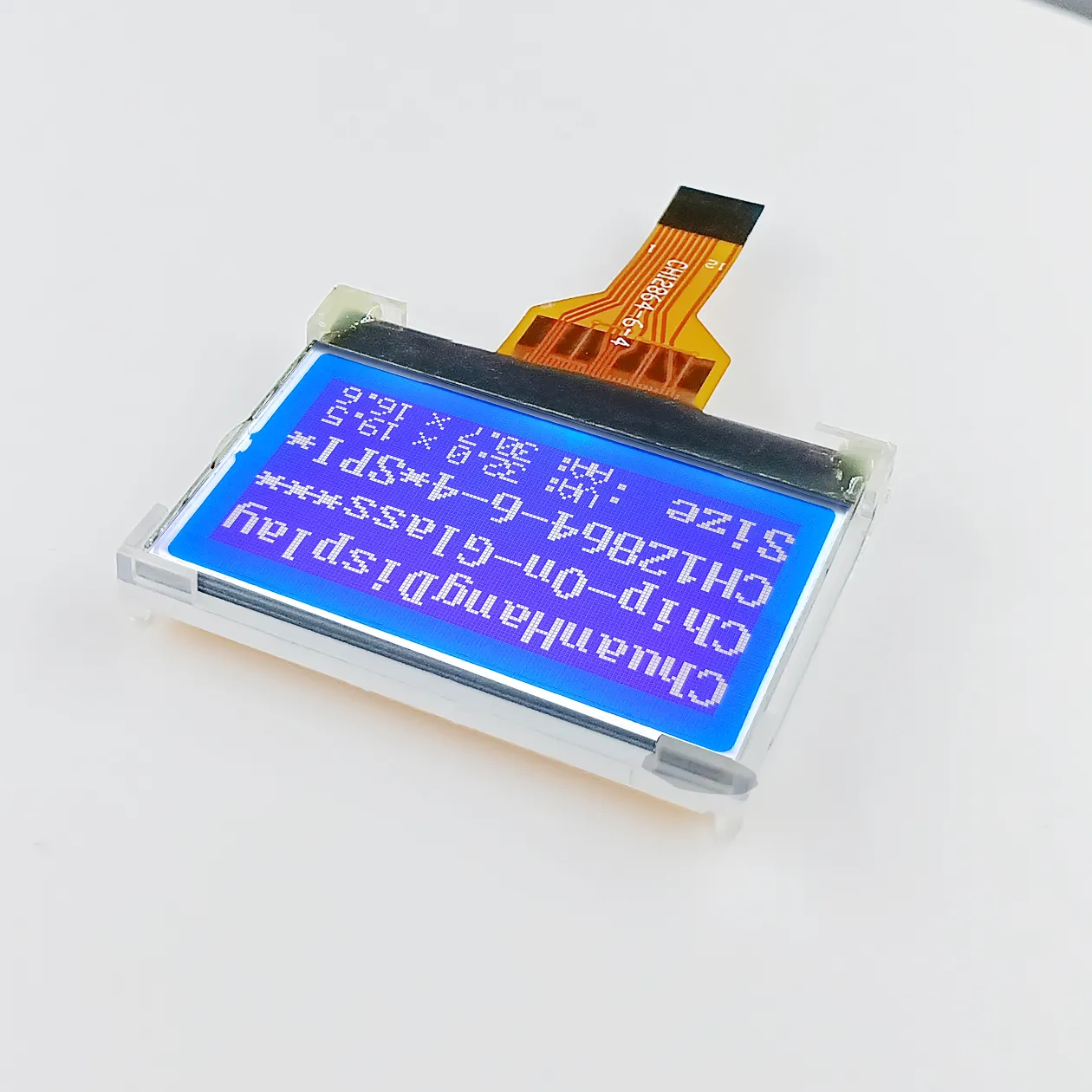
Procuring an lcd display module involves analyzing the Bill of Materials (BOM) and understanding global supply chain fluctuations. The initial unit price is only one metric; long-term availability and engineering support dictate the true cost of integration.
Glass Substrate Yields: The base cost of a panel is tied to how efficiently it can be cut from a massive mother glass sheet at the fabrication plant. Custom aspect ratios (e.g., ultra-wide bar displays) often result in wasted glass, significantly driving up the unit price compared to standard 16:9 or 4:3 formats.Driver IC (DDIC) Availability: Silicon shortages heavily impact display pricing. The packaging method—Chip on Glass (COG) versus Chip on Flex (COF)—also alters the price, with COF allowing for narrower bezels but requiring more expensive polyimide substrates.Non-Recurring Engineering (NRE) Costs: Customizing the Flexible Printed Circuit (FPC) length, designing a custom backlight chassis, or engineering a proprietary capacitive touch sensor requires upfront tooling fees.
Consumer display manufacturers constantly phase out older panels to retool for higher resolutions, often resulting in an End-of-Life (EOL) notice within 12 to 18 months. For industrial and medical hardware, redesigning a product enclosure and rewriting firmware to accommodate a new display is financially ruinous.
Partnering with an established, industry-focused supplier like Chuanhang Display ensures product longevity. These suppliers provide guaranteed availability (often 5 to 7 years), strict change control management (PCN - Product Change Notifications), and locked BOMs, ensuring that the optical and electrical characteristics remain identical from the first prototype to the final mass-production run.
The architecture of modern visual interfaces represents a profound intersection of optical physics, semiconductor design, and mechanical engineering. Evaluating an lcd display module goes far beyond checking resolution and brightness specifications; it requires a holistic analysis of liquid crystal behavior, interface bandwidth, thermal dissipation, and structural durability. By prioritizing industrial-grade materials, leveraging advanced manufacturing techniques like optical bonding, and securing a reliable, transparent supply chain partner like Chuanhang Display, engineering teams can deploy robust, data-accurate hardware solutions capable of performing flawlessly in the world's most demanding professional environments.
Q1: How is the lifespan of an industrial lcd display module calculated?
A1: Lifespan is quantified by the Mean Time Between Failures (MTBF) of the LED backlight, rather than the liquid crystal layer itself. Industrial panels are typically rated for an L70 lifespan of 50,000 to 100,000 hours. This means that after 100,000 hours of continuous operation, the backlight luminance will have degraded to 70% of its original factory specification.
Q2: Should I use an off-the-shelf display or invest in custom tooling?
A2: For rapid prototyping and low-volume production, an off-the-shelf module minimizes upfront costs. However, if your hardware requires specific mechanical dimensions, customized touch-sensor tuning (e.g., for saltwater environments), or specific FPC pinouts to match your existing PCB, investing in custom NRE tooling results in a more integrated, reliable final product at mass production volumes.
Q3: What is the difference between Projected Capacitive (PCAP) and Resistive touch integration?
A3: PCAP relies on the electrical capacitance of the human body to register touches, offering excellent optical clarity, multi-touch gestures, and high durability through thick cover glass. Resistive touch relies on physical pressure connecting two internal conductive layers. While lacking multi-touch and having slightly lower optical clarity, resistive touch is immune to electrical noise and functions perfectly with heavy industrial gloves or in environments with constant liquid exposure.
Q4: Can a standard lcd display module operate in sub-zero freezing temperatures?
A4: Standard commercial fluids become highly viscous at low temperatures, leading to extreme ghosting or a completely frozen image. For environments below -20°C, hardware engineers must specify wide-temperature nematic fluids. In extreme sub-zero cases (e.g., -40°C), an Indium Tin Oxide (ITO) heater glass layer must be laminated into the module to physically warm the liquid crystals before data is transmitted.
Q5: What is transflective display technology, and when is it used?
A5: Transflective screens utilize a semi-reflective layer positioned between the backlight and the liquid crystal array. In dark environments, it operates transmissively using the LED backlight. In direct sunlight, the semi-reflective layer bounces ambient photons back through the screen, utilizing the sun to illuminate the image. This technology provides exceptional sunlight readability while drastically reducing the power consumption associated with high-brightness backlights.