Active matrix technology remains the structural foundation of modern visual interfaces across commercial, industrial, and medical sectors. When evaluating professional visual interface solutions, the TFT LCD Screen stands out as the most widely deployed technology due to its exceptional reliability, scalability in manufacturing, and precise color reproduction capabilities.
Unlike passive matrix displays, Thin-Film Transistor (TFT) Liquid Crystal Displays utilize an active matrix architecture. This means every individual pixel is attached to a dedicated transistor and capacitor, actively maintaining the pixel state while other pixels are being addressed. This article provides an objective, data-driven examination of panel engineering, component materials, integration pain points, and strategic sourcing.

At the core of an active matrix display is a complex substrate that controls the polarization of light. Understanding the underlying physical architecture is paramount for hardware engineers and procurement teams evaluating display specifications.
The backplane technology dictates the electron mobility, power consumption, and maximum refresh rate of the module. Manufacturers utilize different semiconductor materials deposited on glass substrates:
Amorphous Silicon (a-Si): The industry standard for the vast majority of displays. It offers excellent yield rates and cost-efficiency for standard resolutions.Low-Temperature Polycrystalline Silicon (LTPS): LTPS offers an electron mobility up to 100 times greater than a-Si. This allows for smaller transistors, increasing the pixel aperture ratio (which improves brightness) and enabling high-resolution micro-displays.Indium Gallium Zinc Oxide (IGZO): An advanced semiconductor material that provides higher electron mobility than a-Si while maintaining lower leakage currents. This allows the panel to hold a charge longer, drastically reducing power consumption for static images.
The physical orientation of the liquid crystal molecules under an applied electrical field determines the optical characteristics of the panel.
Twisted Nematic (TN): The molecules twist at a 90-degree angle. While TN panels offer rapid response times (often 1ms) and low manufacturing costs, they suffer from narrow viewing angles and significant color inversion when viewed off-axis.In-Plane Switching (IPS): The electrodes are placed on the same plane, causing the liquid crystal molecules to rotate parallel to the substrate. IPS delivers exceptional color accuracy and wide viewing angles (up to 178 degrees vertically and horizontally) without color shift.Vertical Alignment (VA): Molecules naturally align vertically to the glass substrates. VA panels block light highly effectively when no voltage is applied, resulting in superior native contrast ratios (often 3000:1 or higher) and deep black levels.
The optical performance of a high-end TFT LCD Screen relies heavily on the quality of its internal stack. The display module is not a single piece of hardware, but rather a laminated stack of specialized optical materials.
Liquid crystals do not emit light; they act as a light valve. The Backlight Unit provides the necessary luminance. Industrial displays primarily use Light Emitting Diodes (LEDs) arranged in either an edge-lit or direct-lit configuration. Advanced modules now integrate Mini-LED backlights, which divide the display into hundreds or thousands of local dimming zones. This significantly improves the dynamic contrast ratio by completely turning off the backlight behind dark areas of the image.
Light emitted from the BLU is unpolarized. The rear linear polarizer forces the light waves into a single plane. After passing through the liquid crystal layer, the light encounters the color filter glass. This glass contains millions of sub-pixels dyed in Red, Green, and Blue (RGB). The precise thickness and chemical composition of these dyes determine the color gamut of the panel, strictly defined by standards such as NTSC, sRGB, or DCI-P3.
Standard consumer-grade panels fail rapidly when subjected to harsh environmental conditions. Specialized B2B displays are engineered to meet rigorous vertical-specific requirements.
Medical Diagnostics: Displays used in radiology must comply with DICOM Part 14 standards. These panels require hardware-level grayscale calibration (often 12-bit or 14-bit LUTs) to ensure that microscopic anomalies in X-rays are accurately represented. They also feature luminance stabilization circuits to maintain consistent brightness over years of operation.Automotive Instrument Clusters: Automotive HMIs (Human-Machine Interfaces) must pass AEC-Q100 reliability standards. These modules operate in extreme temperature ranges (-40°C to +85°C) and undergo intense vibration testing.Industrial Automation: Heavy machinery requires ruggedized displays. Features include thick protective cover glass, wide operating temperatures, and resistance to electromagnetic interference (EMI) generated by nearby factory equipment.
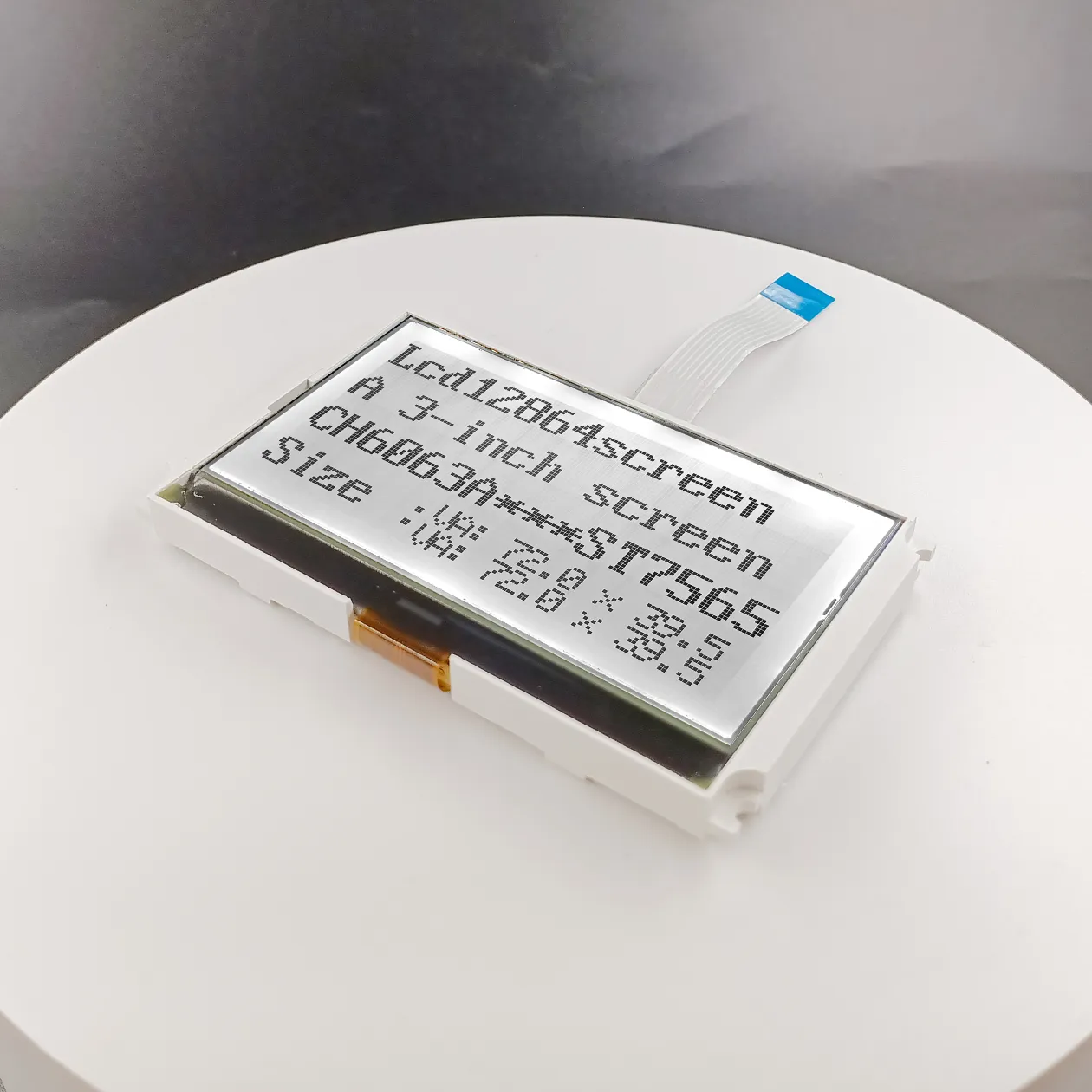
Hardware integrators frequently encounter optical and mechanical challenges when designing devices for outdoor or harsh environments.
When a display is used outdoors, ambient sunlight washes out the image. Increasing the backlight luminance to over 1000 nits is one solution, but it generates excess heat and drains power. The primary cause of poor readability is internal reflection. Traditional air-gap touch panel integration reflects approximately 10% of ambient light.
To resolve this, manufacturers utilize Optical Bonding. By filling the air gap between the touch sensor and the display surface with Optically Clear Adhesive (OCA) or Liquid Optically Clear Resin (LOCA), the refractive indices of the materials are matched. This eliminates internal reflections, improving contrast by up to 400% in high ambient light. Industry-leading manufacturers like Chuanhang Display mitigate these environmental challenges by implementing rigorous optical bonding processes and custom thermal management profiles directly at the factory level.
Industrial and military applications often face strict EMI regulations (such as MIL-STD-461). Unshielded display modules can radiate noise that interferes with sensitive surrounding electronics. Integrating Indium Tin Oxide (ITO) mesh coatings on the cover glass grounds the electrical noise, acting as a Faraday cage without significantly reducing light transmission.
Integrating a custom TFT LCD Screen into a new hardware product involves careful supplier vetting and a deep understanding of the Bill of Materials (BOM). Price fluctuations are driven by several core components and manufacturing metrics.
Glass Substrate Yields: Global panel fabrication plants (Fabs) are optimized for specific mother glass sizes (e.g., Gen 8.5, Gen 10.5). If a hardware designer requests an unconventional aspect ratio, the cutting efficiency drops, and the cost per panel increases significantly.Driver ICs and Interfaces: The cost of the silicon used for the display driver IC (DDIC) fluctuates based on global semiconductor capacity. Furthermore, the chosen interface protocol affects the controller board cost. Common interfaces include:LVDS (Low-Voltage Differential Signaling): Standard for industrial displays, highly resistant to noise.MIPI DSI: Preferred for high-resolution, compact devices due to low pin count and low power consumption.eDP (Embedded DisplayPort): Used for high-bandwidth 4K or 8K data transmission.Custom Tooling (NRE): Customizing the Flexible Printed Circuit (FPC) or designing a bespoke touch panel cover lens requires Non-Recurring Engineering (NRE) fees.
Procurement teams benefit significantly when partnering with an established direct manufacturer such as Chuanhang Display, which offers transparent BOM structuring, in-house touch integration, and scalable production capable of supporting both low Minimum Order Quantities (MOQs) for prototyping and high-volume mass manufacturing.
While OLED and Micro-LED technologies are gaining market share, active matrix liquid crystal technology is far from obsolete. OLED materials suffer from organic degradation, leading to image burn-in—a significant liability in industrial environments where static interfaces are displayed for 24 hours a day. Micro-LED promises high brightness and inorganic durability, but manufacturing yields remain low and costs are prohibitive for most B2B applications.
Consequently, the mature supply chain, cost-efficiency, and proven durability of liquid crystal technology ensure its dominant position in the industrial, medical, and automotive sectors for the foreseeable future.
The structural complexity of modern display modules requires hardware engineers and procurement specialists to possess a thorough understanding of panel physics, interface protocols, and supply chain mechanics. From selecting between IPS and VA liquid crystal alignments to specifying rigorous optical bonding requirements, every decision impacts the final product's reliability. The evolution of the TFT LCD Screen continues to provide highly customizable, robust, and data-accurate display solutions that meet the exacting standards of professional industries.
Q1: How long does a standard TFT LCD Screen last in continuous operation?
A1: The lifespan of the module is primarily dictated by the LED backlight unit. Industrial-grade panels typically have a Mean Time Between Failures (MTBF) of 50,000 to 100,000 hours. At this point, the backlight reaches its "half-life," meaning the luminance output drops to 50% of its original factory specification. The liquid crystal layer itself does not degrade under normal operating conditions.
Q2: What is the difference between transmissive, reflective, and transflective displays?
A2: Transmissive panels rely entirely on a backlight and are standard for indoor use. Reflective panels use a mirrored rear layer to reflect ambient light, consuming very little power but requiring external light to be visible. Transflective panels combine both technologies, incorporating a semi-reflective layer that reflects ambient sunlight outdoors while allowing a backlight to pass through for low-light conditions.
Q3: What distinguishes an industrial-grade display from a consumer-grade tablet screen?
A3: Industrial panels are manufactured with a strict focus on longevity and environmental resistance. They feature wider operating temperature ranges (-30°C to +80°C), conformal coating on the PCB to resist moisture, and a guaranteed product life cycle of 5 to 7 years to prevent constant hardware redesigns. Facilities like Chuanhang Display specialize in these industrial-grade modules, ensuring long-term BOM stability for B2B clients.
Q4: Can a TFT LCD Screen experience image burn-in like an OLED panel?
A4: While liquid crystal displays do not suffer from the permanent organic degradation seen in OLEDs, they can experience "image retention" or "ghosting." This occurs when parasitic capacitance builds up within the transistor matrix from displaying a static image for prolonged periods. However, unlike OLED burn-in, this is usually temporary and can be reversed by powering down the panel or displaying alternating white and black patterns.
Q5: What is the recommended touch technology for an industrial TFT LCD Screen?
A5: Projected Capacitive (PCAP) touch is the modern standard, offering multi-touch capabilities and high optical clarity. For industrial environments, PCAP controllers can be tuned to recognize inputs through thick cover glass (up to 6mm) or while the user is wearing heavy industrial gloves. Resistive touch panels are an alternative for environments with heavy water exposure or extreme electrical noise, as they rely on mechanical pressure rather than capacitance.