If you've ever glanced at a digital clock, a microwave timer, or a multimeter, you've seen a 7 segment display in action. These ubiquitous numerical indicators are a fundamental part of our digital world. Despite the rise of sleek OLEDs, the simplicity and effectiveness of the 7 segment display keep it relevant across countless industries.
This article breaks down everything you need to know. We'll explore how it works, its key advantages, and where it's used. We'll also guide you on selecting the right type and introduce custom solutions from a leading provider, Chuanhang Display.

A 7 segment display is a form of electronic display device used for showing decimal numerals and some letters. It's composed of seven light-emitting segments, arranged in a figure-eight pattern. Each segment is identified by a letter from A to G.
By illuminating specific combinations of these segments, the display can form the digits 0 through 9. Many units include an additional segment for a decimal point, making it technically an "8 segment display."
The core appeal of a 7 segment display lies in its straightforward design. It's easy to control, cost-effective to produce, and highly legible from a distance.
The principle is simple. Each of the seven segments is an independent light source, which can be an LED, LCD, or other technology. The most common type today is the LED 7 segment display.
These segments are connected internally in one of two configurations: Common Anode or Common Cathode.
In a Common Anode display, all the anodes of the LEDs are joined together and connected to a positive voltage. A segment lights up when its cathode is connected to ground.
In a Common Cathode display, all cathodes are common and connected to ground. A segment illuminates when a positive voltage is applied to its anode.
Understanding this configuration is crucial for engineers and hobbyists when designing the driving circuitry.
While both display the same pattern, the underlying technology differs.
An LED 7 segment display is bright, self-illuminating, and ideal for low-light conditions. It offers high visibility and comes in various colors like red, green, and blue. However, it can consume more power than its LCD counterpart.
An LCD 7 segment display relies on an external light source, like a backlight or reflector. It is exceptionally power-efficient, making it perfect for battery-operated devices like calculators. Its readability, however, depends heavily on the ambient lighting.
For applications demanding high brightness and visibility, LED is the winner. For ultra-low power consumption, LCD is unmatched.
The 7 segment display remains incredibly popular due to its specialized function.
You find them in consumer electronics: digital clocks, kitchen appliances, and weighing scales. In the industrial sector, they are used on control panels, instrument readouts, and counter displays.
The automotive industry uses them for gear indicators and odometers. Test and measurement equipment, such as multimeters and frequency counters, rely on their clear numerical presentation.
Their simplicity makes them a robust and reliable choice for these critical applications.
Selecting the appropriate 7 segment display involves several factors.
First, consider the technology: LED for brightness or LCD for power efficiency. Next, look at the size, which typically refers to the height of the digit. Common sizes range from 0.3 inches to over 4 inches.
Color and brightness are key for LEDs. Red is standard, but other colors are available for specific signaling. For the viewing angle, a wider angle is better for displays viewed from the side.
Don't forget the common configuration (Anode/Cathode), as it dictates your driver circuit design. For harsh environments, look at the IP rating for dust and water resistance.
Sometimes, an off-the-shelf display won't meet your unique requirements. This is where customization becomes essential.
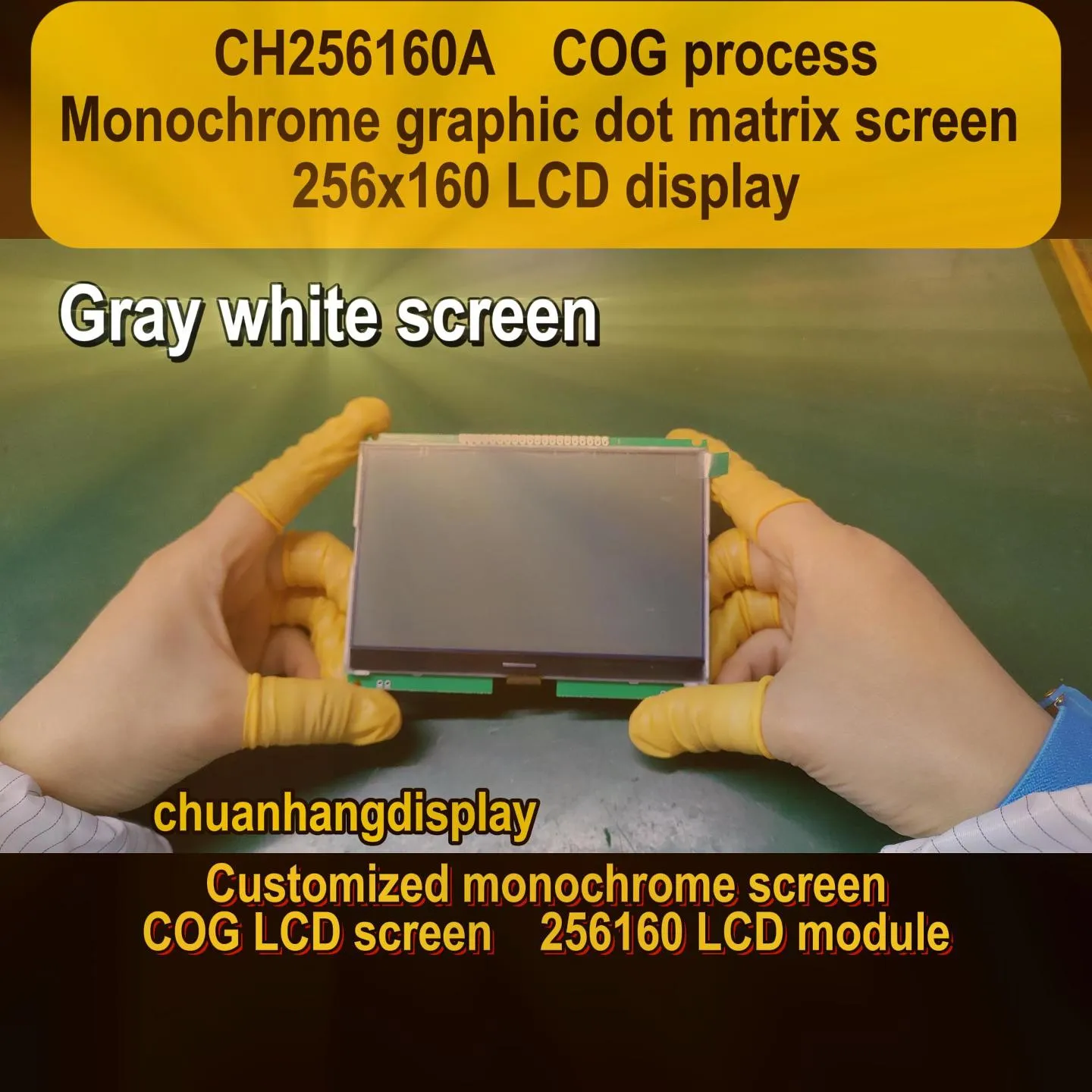
Chuanhang Display specializes in creating custom 7 segment display units. They can tailor the size, color, brightness, and viewing angle to your exact specifications. Whether you need a unique digit height for a specialized instrument or a specific shade of red for brand consistency, they can deliver.
Their expertise extends to creating multi-digit modules with integrated driver chips, simplifying your overall design. For projects with unusual form factors or environmental challenges, Chuanhang Display can provide robust, tailored solutions that standard parts cannot.
The cost of a standard 7 segment display is very low, often just a few dollars per digit. This low price is a primary reason for its enduring popularity.
Factors influencing price include the technology (LED vs. LCD), digit size, color, quantity, and special features like high-brightness or wide-temperature tolerance.
For a custom 7 segment display from a supplier like Chuanhang Display, the initial unit cost will be higher due to engineering and setup. However, for large production runs, the price becomes highly competitive. The value of a custom part that fits your design perfectly often outweighs the slight cost premium.
The Manufacturing Process and Technical Deep Dive
Producing a high-quality LED 7 segment display involves precise steps. It starts with a molded plastic substrate. Tiny LED chips are then placed (often using SMT technology) for each segment.
The segments are wire-bonded and encapsulated with an epoxy resin. This resin acts as a lens, magnifying the light and protecting the delicate internals. The color is determined by the LED chip material and the tint of the epoxy.
For multi-digit units, Chuanhang Display employs advanced processes to ensure perfect alignment and consistent brightness across all digits. Rigorous testing for electrical performance and visual uniformity guarantees that every unit meets high-reliability standards.
Q1: What is the main advantage of a 7 segment display over a full dot-matrix display?
A1: The main advantage is simplicity. A 7 segment display requires far fewer control lines and simpler driving electronics to show numbers, making it more cost-effective, power-efficient, and easier to implement for applications that only need to display numeric data.
Q2: Can a 7 segment display show letters?
A2: Yes, but in a limited capacity. It can display some uppercase letters like A, C, E, F, H, L, O, P, S, U, and others. However, the representations can be ambiguous (e.g., "S" and "5" look similar), so it is not suitable for general text.
Q3: How do I drive a 7 segment display with a microcontroller?
A3: You can drive it directly using the microcontroller's GPIO pins. For a Common Cathode display, you set the corresponding pins to a high logic state. A current-limiting resistor is needed for each segment. For multi-digit displays, a driver IC like a MAX7219 is often used to multiplex the digits and save pins.
Q4: What does "common anode" and "common cathode" mean?
A4: These terms describe the internal electrical configuration of the LED segments. In a Common Anode display, all the positive sides (anodes) of the LEDs are connected together. In a Common Cathode display, all the negative sides (cathodes) are connected together. This determines how you wire the power and control signals.
Q5: Can I get a custom-colored or unusually sized 7 segment display?
A5: Absolutely. Manufacturers like Chuanhang Display regularly produce custom 7 segment display units. They can create displays in specific colors, sizes, and shapes, and can even integrate multiple digits and drivers into a single module to meet specialized design requirements.