In industrial electronics, instrument design, and medical hardware, selecting a display interface requires balancing legibility, reliability, and cost-efficiency. While high-resolution color screens dominate consumer electronics, the alphanumeric Character LCD Module remains a primary choice for industrial control systems, utility meters, and medical equipment. This technology offers low power consumption, exceptional contrast in high-ambient lighting, and simple microcontroller integration.
For B2B design engineers and procurement managers, navigating the technical specifications of these displays is necessary to ensure long-term system stability. This comprehensive guide examines the underlying physics, electrical interfaces, materials, and sourcing parameters that define high-quality display integration.
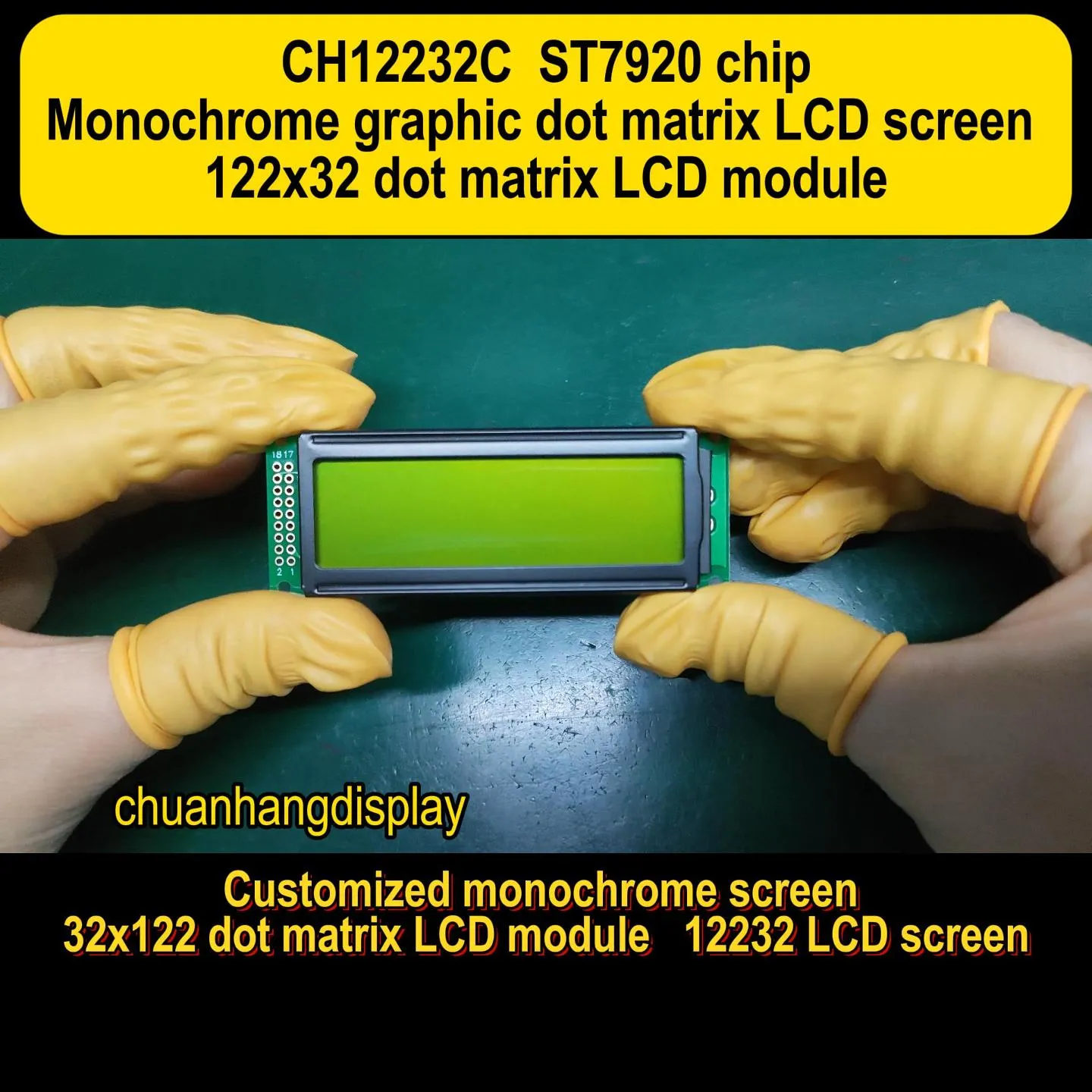
A standard Character LCD Module utilizes a dedicated onboard controller to translate alphanumeric text data sent from a host processor into visual characters. Unlike graphical displays that map every individual pixel, character displays work with predefined character grids—typically 5x8 or 5x11 dot matrices. Common configurations include 16x2 (16 characters across 2 rows), 20x4, and 8x2 layouts.
The operational core of these modules is the built-in LCD controller, traditionally based on the industry-standard Hitachi HD44780 architecture or modern equivalents such as the Sitronix ST7066U or AiP31066. This controller contains:
When choosing a Character LCD Module configuration, engineers must select between two primary physical architectures:
The visual performance of a character display is heavily dependent on the liquid crystal fluid, polarization mode, and backlight selection. Selecting the correct combination is key to achieving optimal legibility across varying environmental conditions.
The type of liquid crystal fluid directly dictates the response time, viewing angles, and contrast ratio of the display:
The rear polarizer configuration determines how the display behaves in different lighting environments:
Connecting a character display to a host microcontroller (MCU) involves selecting an interface that balances data throughput with GPIO pin conservation.
The traditional parallel interface requires a 14-pin or 16-pin connection (including backlight pins). It consists of eight data lines (DB0-DB7) and three control lines: Register Select (RS), Read/Write (R/W), and Enable (E).
For systems utilizing low-pin-count microcontrollers, parallel connections are often impractical. Modern variations of the character panel incorporate serial-to-parallel expanders or native serial controllers:
Integrating a Character LCD Module into industrial hardware introduces challenges related to thermal performance, electrostatic discharge (ESD), and electromagnetic interference (EMI).
Standard liquid crystal fluids exhibit sluggish response times at low temperatures and lose contrast (clearing point) at high temperatures. To resolve this, wide-temperature modules are designed to operate reliably from -20°C to +70°C, and extreme-temperature variants can function from -30°C to +80°C. These modules use specialized chemical formulations in the liquid crystal fluid and often incorporate automatic hardware temperature compensation circuits to adjust the driving voltage (V0) dynamically.
Industrial settings are filled with high-voltage machinery, variable frequency drives, and relays that generate severe EMI and ESD. If left unshielded, a display controller may experience register corruption, leading to garbled text or system freezes. Robust designs utilize metal bezels grounded directly to the chassis, coupled with ESD protection diodes on the data lines and decoupling capacitors near the power supply pin (VDD) to suppress electrical noise.
A primary concern for B2B procurement and engineering teams is product lifecycle. Consumer displays often have a short production lifespan of 1 to 2 years before being phased out. Industrial control panels, however, are designed to remain in service for a decade or more. Chuanhang Display provides custom font tables and connection layouts with guaranteed long-term component availability, ensuring that drop-in replacements remain accessible throughout the equipment's operational lifespan.
When selecting a supplier for character display units, focusing solely on the unit price can lead to unexpected integration and quality-control costs down the line. Procurement managers should evaluate several factors during the sourcing process.
The unit cost of a Character LCD Module is influenced by the customization level, backlighting configuration, and connector type. Understanding these variables allows for better negotiation and product lifecycle budgeting.
| Parameter | Standard Options | Premium Options | Cost Impact |
|---|---|---|---|
| Fluid Type | TN / STN Yellow-Green | FSTN Black/White | 15% to 30% increase for FSTN |
| Temperature Range | Standard (0 to +50°C) | Wide (-20 to +70°C) / Extreme | 10% to 20% increase for wide temp |
| Connector Type | Thru-hole pins / Zebra strips | Custom FPC / Molex cables | Varies based on tooling charges |
| Backlight Color | Yellow-Green / Amber | White / RGB Multi-color | Minor premium for RGB control |
For custom pinout lengths, integrated connectors, or modified mounting holes, buyers must anticipate Non-Recurring Engineering (NRE) charges. Partnering with established manufacturers like Chuanhang Display allows for low-NRE customization, facilitating standard drop-in replacements that prevent PCB redesigns.
To ensure flawless long-term field performance, development teams should adhere to specific integration rules:
The choice of display interface directly influences user experience, system cost, and long-term product durability. The character LCD module remains an industry standard due to its straightforward integration, robust hardware characteristics, and high contrast under varying light conditions.
Selecting the right partner for your display solutions ensures product quality and long-term availability. If you are developing a new industrial product, medical device, or seeking a reliable replacement option for an obsolete display module, reach out to the engineering team at Chuanhang Display for a detailed quote, technical datasheets, and custom integration support.
Q1: What is the main difference between a Character LCD Module and a graphic LCD module?
A1: A character module is designed strictly to display pre-defined alphanumeric characters and basic symbols stored in its internal ROM, utilizing a fixed grid layout. A graphic LCD module operates on a pixel-by-pixel grid, allowing the host MCU to render custom graphics, charts, complex localized fonts, and animations, though at the cost of higher processing overhead and more complex software drivers.
Q2: Can I operate a 5V character display module on a 3.3V microcontroller system?
A2: Yes, but with modifications. Running a standard 5V display directly at 3.3V will result in extremely faint characters because the liquid crystal fluid requires a higher drive voltage (V0) to align properly. To resolve this, you must either specify a 3.3V version of the display from the manufacturer, use external level shifters for control lines, or implement a negative voltage generator circuit to supply the proper contrast voltage to the V0 pin.
Q3: How do I calculate the power consumption of a character display for battery-operated devices?
A3: The overall power consumption is divided into two parts: the logic circuit and the LED backlight. The logic circuit (VDD) typically draws between 1mA and 3mA. The backlight, however, can draw anywhere from 15mA to over 100mA depending on the LED brightness and array size. For battery-constrained applications, running the display without a backlight (using a reflective polarizer) or utilizing pulse-width modulation (PWM) to dim the backlight when inactive is highly recommended.
Q4: Why does my character display occasionally render garbled text during industrial machinery operations?
A4: This issue is typically caused by electromagnetic interference (EMI) or voltage spikes on the communication lines, which corrupt the internal registers of the LCD controller. To prevent this, ensure that your data cables are as short as possible, shield the display bezel, place decoupling capacitors near the display pins, and implement a regular software routine that periodically re-initializes the display registers.
Q5: Can I display non-English characters on a standard character display?
A5: Yes. The character generator ROM (CGROM) on modern controllers contains pre-programmed font tables. Depending on the version you order (such as English/European, English/Cyrillic, or English/Japanese), you can display standard characters from those languages directly using their corresponding hex codes. For unique characters not present in the ROM, you can program up to eight custom symbols into the volatile CGRAM.