While high-resolution color screens dominate the consumer smartphone market, the industrial, medical, and automotive sectors continue to rely heavily on monochrome liquid crystal technology. Specifically, the custom segment display remains a primary choice for engineers who require high reliability, low power consumption, and cost-effective user interfaces. These displays do not use a matrix of pixels; instead, they utilize predefined shapes or "segments" to convey information, such as numeric digits, battery icons, or specific functional symbols.
For an Original Equipment Manufacturer (OEM), moving away from "off-the-shelf" components toward a tailored solution provides the freedom to optimize the layout for specific ergonomic requirements. This article provides a technical exploration into the architecture, material science, and procurement strategies involved in developing a high-performance custom segment display.
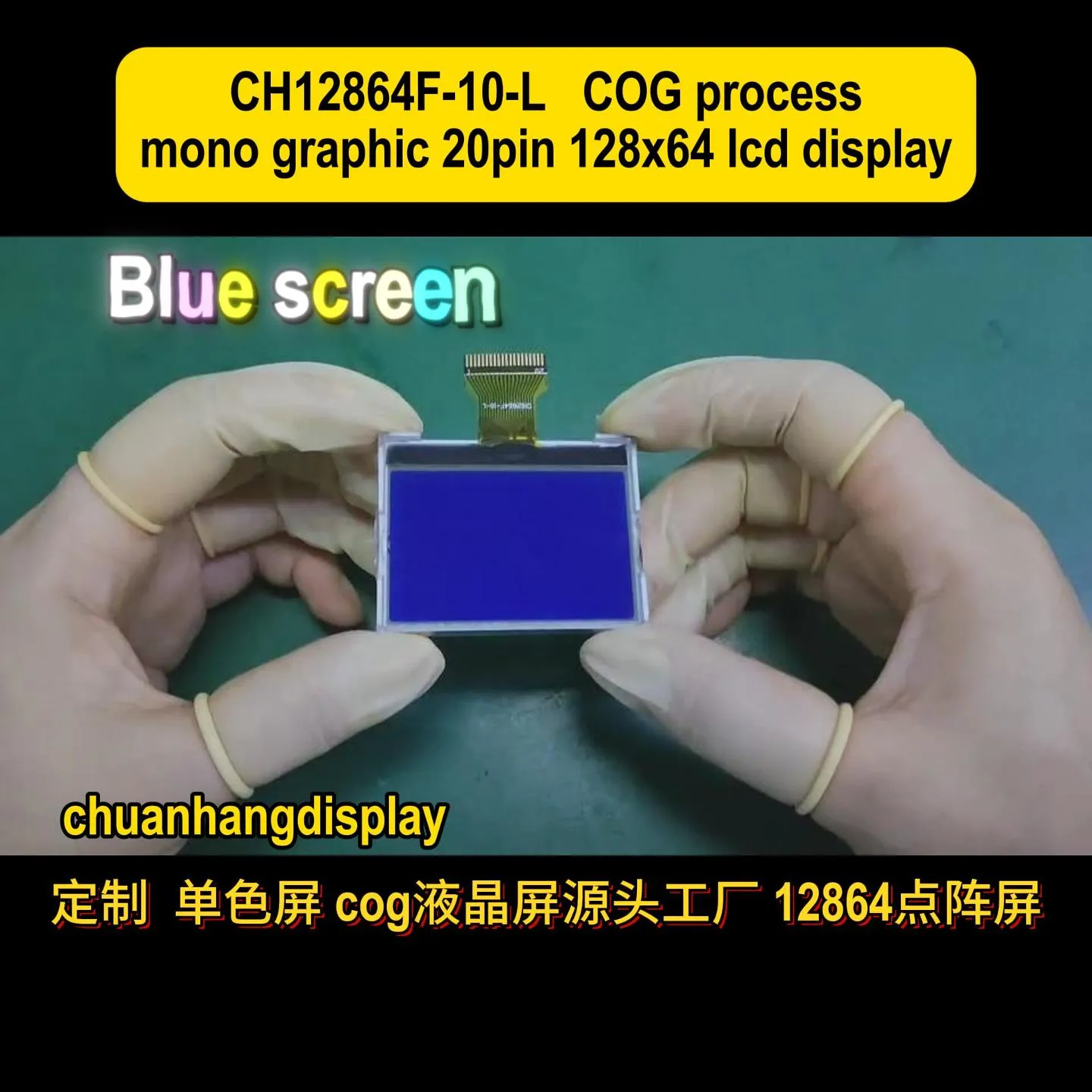
The fundamental principle of a segmented display involves the manipulation of liquid crystal molecules between two pieces of glass coated with Indium Tin Oxide (ITO). Unlike dot-matrix displays that require complex addressing, a segmented approach allows for direct or multiplexed control of specific areas.
The customization begins with the ITO layer. This transparent conductive material is etched into specific patterns based on the client’s artwork. Each segment—whether it is a bar in a seven-segment digit or a complex company logo—is connected to a lead that exits the glass. The precision of this etching determines the visual clarity and the minimum gap between active segments.
One of the most significant decisions in the design phase is the drive method.
Static Drive: Each segment has its own dedicated driver signal. This results in the highest contrast and the widest viewing angles. However, it requires a high pin count for the microcontroller or driver IC.Multiplex (Mux) Drive: Segments are organized into a grid of commons and segments (e.g., 1/4 duty, 1/3 bias). This reduces the number of pins required but places higher demands on the liquid crystal fluid's "threshold voltage" and can slightly reduce contrast if not engineered correctly.
Professional manufacturers like Chuanhang Display work closely with engineers during the schematic phase to ensure the chosen drive method aligns with the available GPIO pins on the host processor while maintaining optical performance.
The environmental conditions of the end-product dictate the choice of liquid crystal chemistry. A custom segment display can be manufactured using several different technologies, each offering unique performance characteristics.
TN is the most common and cost-effective choice. It offers excellent response times and low power consumption. It is typically used in indoor applications like handheld multimeters or home appliances where the viewing angle requirements are relatively narrow.
HTN provides a wider viewing angle and better contrast than standard TN at a slightly higher cost. It is a preferred middle-ground for industrial timers and basic medical devices.
For applications requiring high multiplex rates, STN is necessary. It features a twist angle of 180 to 270 degrees, which creates a much steeper electro-optical curve. FSTN (Film-compensated STN) adds a compensation film to eliminate the yellow-green or blue tint of standard STN, resulting in a high-contrast black-on-white appearance. This is frequently used in high-end industrial controllers.
VA technology offers a truly black background with very high contrast ratios. This is often selected for premium automotive dashboards or high-end kitchen appliances where the aesthetic "dead-front" look—where the segments are invisible until lit—is desired.
A custom segment display must be physically integrated into a housing, which introduces challenges related to space and vibration. The method used to connect the glass to the Printed Circuit Board (PCB) is a vital design choice.
Metal Pins: These are physically attached to the glass edges. They provide a robust mechanical connection and are suitable for through-hole soldering. This is the most reliable method for high-vibration environments.Zebra Connectors (Elastomeric): These are alternating layers of conductive and non-conductive silicone. They are compressed between the LCD glass and the PCB. This method is solderless and allows for very thin assemblies but requires a mechanical bezel to maintain constant pressure.Heat Seal: A flexible film is bonded to the glass using heat and pressure. This is ideal for very compact devices but is generally less durable than pins or zebra strips in extreme temperature cycles.
When designing a custom segment display, engineers often encounter technical hurdles that can affect the project's success.
Ghosting occurs when segments that should be "off" appear slightly visible. This is often a result of incorrect voltage levels in multiplexed designs or high-impedance traces in the ITO. Correcting this requires precise adjustment of the VLCD (LCD drive voltage) and careful layout of the common traces.
Liquid crystals are birefringent, meaning their appearance changes based on the observer's angle. During the design phase, the "viewing direction" must be specified—typically 6 o'clock (viewed from below) or 12 o'clock (viewed from above). Chuanhang Display utilizes specialized optical testing equipment to verify that the contrast remains within the required parameters across the specified viewing cone.
Liquid crystal viscosity changes with temperature. In cold environments, the display may become slow to refresh, while in hot environments, the contrast may wash out. To combat this, designers can incorporate a thermistor on the PCB to allow the microcontroller to adjust the drive voltage dynamically, or select "Wide Temperature" fluids that remain stable from -30°C to +80°C.
Sourcing a custom segment display differs from buying standard parts. It involves a Non-Recurring Engineering (NRE) fee, which covers the cost of creating the custom masks for the ITO etching and the master tooling.
Design Phase (1-2 weeks): The customer provides a sketch or a CAD file. The manufacturer produces a formal counter-drawing for approval.Prototyping (3-5 weeks): Once the drawing is approved and the NRE fee is paid, the manufacturer produces a small batch of samples (usually 5-10 pieces) for functional testing.Mass Production (4-8 weeks): After sample approval, the project moves to full production.
Price is typically determined by the glass size, the type of liquid crystal fluid, the number of pins, and the backlight requirements. While the NRE fee is an upfront cost, the unit price of a segmented LCD is often significantly lower than a comparable TFT or OLED, making it the most economical choice for high-volume production.
Many OEMs initially try to design their products around standard "16x2 character" or "7-segment" modules. However, these standard parts often force compromises in industrial design. A custom segment display allows the designer to:
Integrate the brand's unique font or logo directly into the display.Optimize the icon placement for better user workflow.Reduce the overall footprint of the device by removing unnecessary borders.Minimize power consumption by only activating the specific segments required for the task.
With the support of a dedicated manufacturer like [Chuanhang Display], the transition from a standard component to a bespoke solution is a manageable and highly rewarding process.
The selection of a custom segment display is a strategic decision that balances aesthetics, durability, and cost. By understanding the nuances of fluid types, drive methods, and interconnect technologies, engineers can create interfaces that stand up to the rigors of industrial use while providing a clear and intuitive user experience.
As hardware complexity increases, the simplicity and reliability of the segmented LCD remain unparalleled. It is a proven technology that continues to adapt through better material science and more efficient manufacturing techniques.
Q1: What is the typical NRE cost for a custom segment display?
A1: NRE (Non-Recurring Engineering) costs vary depending on the complexity and size of the glass, but for a standard monochrome segment LCD, the tooling fee typically ranges from $500 to $2,000. This includes the mask design and sample production.
Q2: Can I have multiple colors on a segmented LCD?
A2: Standard segment LCDs are monochrome. However, you can achieve a multi-color effect by using a multi-color LED backlight or by applying a printed silk-screen "color filter" to the front or back of the display. This allows certain icons (like a red "Warning" sign) to always appear in a specific color.
Q3: What is the minimum order quantity (MOQ) for a custom display project?
A3: MOQs depend on the manufacturer and the size of the display. For many industrial-grade projects, MOQs usually start at 500 to 1,000 units. Smaller quantities may be possible but often come with a higher unit price.
Q4: How do I choose between a TN and an FSTN display for my application?
A4: Use TN if your application is budget-sensitive and used in standard lighting conditions with a fixed viewing angle. Choose FSTN if you need high contrast, a professional black/white appearance, and a wide viewing angle, especially if the display uses a high multiplex rate (e.g., 1/8 or 1/16 duty).
Q5: Is it possible to make a custom segment display that is readable in direct sunlight?
A5: Yes. To achieve sunlight readability, you should choose a "Reflective" or "Transflective" polarizer. Reflective polarizers use ambient light to illuminate the display, making them perfectly readable in bright sun, while Transflective versions allow for both sunlight readability and backlight use in dark environments.
Are you ready to optimize your product's interface with a professional display solution? Our team at [Chuanhang Display] is specialized in translating complex engineering requirements into high-quality hardware. Contact us today to receive a detailed quote and a technical review of your custom segment display requirements.