The persistence of the 7 Segment LCD in the electronic component market serves as a testament to its efficiency and cost-effectiveness. While high-resolution interfaces continue to evolve, the demand for clear, low-power numeric data visualization remains a cornerstone of industrial design. This analysis provides a deep examination of the technical specifications, manufacturing nuances, and procurement considerations for these displays.

A 7 Segment LCD operates on the principle of light modulation rather than light emission. The "7 Segment" designation refers to the arrangement of seven bars that can be independently activated to represent numbers from 0 to 9. By adding an optional eighth segment for the decimal point (DP), these displays become the primary choice for digital instrumentation.
The internal structure consists of two layers of glass substrate, coated with a transparent conductive material, usually Indium Tin Oxide (ITO). Between these layers sits the liquid crystal fluid. When a voltage is applied via the ITO electrodes, the liquid crystal molecules align, changing the polarization of light passing through the cell. When paired with external polarizers, this creates the visible dark digits on a light background (positive mode) or light digits on a dark background (negative mode).
The choice of liquid crystal chemistry determines the operating temperature range, contrast, and response time of the display.
TN is the most common technology for a 7 Segment LCD. It offers a standard viewing angle and is highly cost-effective. It is most suitable for handheld devices and indoor equipment where extreme contrast is not a requirement.
STN displays utilize a higher twist angle (typically 180 to 270 degrees), which provides a better contrast ratio and wider viewing angles than TN. This is often used in industrial environments where the operator might view the screen from an off-center position.
For high-end instrumentation, FSTN adds a compensation film to the STN structure to eliminate the yellowish or greenish tint, resulting in a sharp black-on-white appearance. While more expensive, FSTN bridges the gap between basic segments and the visual clarity of a high-end tft display screen.
Understanding the electrical drive method is fundamental for engineers integrating these components into a PCB design.
Static Drive: Each segment has its own dedicated driver pin. This results in the highest contrast and the widest viewing angle because the segments are "on" 100% of the time. However, it requires a high pin count on the microcontroller.Multiplex Drive (Duty/Bias): To reduce the number of pins, segments are shared across common lines. For example, a 1/4 duty, 1/3 bias scheme is common for multi-digit displays. While this saves space, it slightly reduces the contrast and viewing angle compared to static driving.
In complex systems where a 7 Segment LCD is used alongside a tft display screen, the power management system must account for these different voltage requirements and refresh rates to prevent ghosting or "crosstalk" between segments.
How the display connects to the PCB influences the durability and assembly cost of the final product.
Metal Pins: The glass is fitted with rigid metal pins that can be soldered directly into through-holes on a PCB. This is the most robust method for high-vibration environments.Zebra Strips (Elastomeric Connectors): These consist of alternating layers of conductive and insulating silicone. They are sandwiched between the LCD glass and the PCB traces. This method is common in mass-produced consumer electronics due to its low cost, though it requires a mechanical bezel to maintain pressure.Heat Seal: A flexible conductive film is bonded to the glass and the PCB using heat and pressure. This is ideal for thin devices but is difficult to repair.
In the B2B procurement sector, the question often arises: should we use a segment display or a tft display screen?
A tft display screen offers full-color graphics, high resolution, and dynamic user interfaces. It is the preferred choice for medical imaging, complex control panels, and consumer tablets. However, it requires significant processing power, higher voltage, and results in much higher power consumption.
In contrast, the 7 Segment LCD is superior for "always-on" applications. For a digital thermometer, a utility meter, or a simple industrial timer, the segment display provides readability in direct sunlight and can run for years on a single coin-cell battery. Chuanhang Display specializes in optimizing these parameters to ensure that the chosen display technology matches the specific environmental demands of the application.
Industrial grade displays must withstand conditions that would cause consumer electronics to fail.
Temperature Range: Standard displays operate from 0°C to +50°C. For outdoor or industrial use, wide-temperature fluids are used, extending the range from -30°C to +80°C.Polarizer Types:Reflective: Uses ambient light. Excellent for bright sunlight.Transmissive: Requires a backlight. Best for dark environments.Transflective: A hybrid that works well in both bright light and dark conditions.
Chuanhang Display provides customized solutions in these categories, ensuring that the 7 Segment LCD remains legible whether it is installed in a cold storage facility or a desert-based solar inverter.
Sourcing a 7 Segment LCD involves more than just checking a price list. Reliability in the B2B sector depends on consistency across thousands of units.
When evaluating a manufacturer, check their cleanroom standards. Dust particles trapped during the ITO coating or liquid crystal injection phase lead to "black spots" or segment failures. Chuanhang Display maintains rigorous quality protocols to minimize these defects.
While standard displays are available, most industrial projects require custom icons (e.g., battery indicators, WiFi symbols, or specific units of measurement). The NRE (Non-Recurring Engineering) cost for a custom 7 Segment LCD is relatively low compared to customizing a tft display screen, making it accessible for mid-sized production runs.
Many procurement officers face issues with long-term availability. The lifecycle of an industrial machine can be 10 to 15 years. While a consumer-grade tft display screen might go end-of-life within 24 months, a well-sourced 7 Segment LCD should have a much longer production window.
Another common pain point is "ghosting," where inactive segments appear partially visible. This is usually caused by an incorrect drive voltage or a mismatch between the LCD fluid and the controller’s bias settings. Working with an experienced partner like Chuanhang Display helps in fine-tuning these electrical parameters during the prototyping stage.
The unit cost of a 7 Segment LCD is primarily driven by the glass size and the type of polarizer used. Because the manufacturing process is mature, the price per unit is significantly lower than any graphical display. However, the price becomes highly sensitive to volume.
For engineers transitioning from a basic numeric display to a more graphical tft display screen, it is important to calculate the total cost of ownership, including the necessary upgrades to the MCU, RAM, and power supply. For many dedicated tasks, the simplicity of the 7 segment architecture remains the most economically viable path.
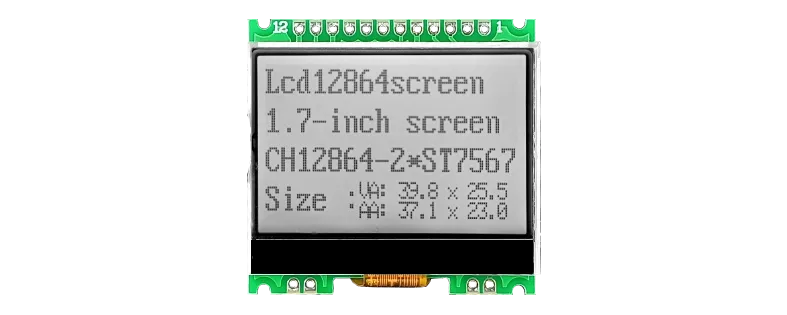
The 7 Segment LCD remains a vital component in the global electronics industry. Its ability to provide clear, reliable, and low-power data visualization makes it irreplaceable for countless industrial and medical applications. Whether you are designing a new smart meter or upgrading an existing piece of laboratory equipment, selecting the right display requires a balance of material science and electrical engineering.
If your project requires high-reliability display solutions, or if you are weighing the benefits of a segment display versus a tft display screen, our technical team is ready to assist. We provide detailed datasheets, sampling for prototyping, and long-term supply stability.
For custom specifications, volume pricing, or technical consultation regarding your display requirements, please send your inquiry to our sales department today.
Q1: Can a 7 Segment LCD be seen in total darkness?
A1: Only if it is a transmissive or transflective model equipped with a backlight (usually LED). A purely reflective LCD relies on external light and will not be visible in the dark.
Q2: What causes the "bleeding" effect in old segment displays?
A2: This is often due to a failure in the seal around the glass edges, allowing moisture to enter or the liquid crystal to degrade. High-quality manufacturing and proper edge sealing are required to prevent this over long periods.
Q3: How does the power consumption of a 7 Segment LCD compare to a tft display screen?
A3: The difference is substantial. A segment LCD can operate on micro-amps of current, whereas even a small TFT screen usually requires several milli-amps for the logic and significantly more for the backlight.
Q4: Is it possible to display letters on a 7 Segment LCD?
A4: To a limited extent. It can display letters like A, B, C, d, E, and F (hexadecimal). For full alphanumeric support, a 14-segment or 16-segment LCD is required.
Q5: What is the typical lifespan of these displays?
A5: Under normal operating conditions, a high-quality 7 Segment LCD can last over 50,000 to 100,000 hours. The backlight is usually the first component to dim, while the liquid crystal itself is very durable.