The global display market has evolved significantly beyond simple visual output. For engineers, procurement managers, and product designers, identifying a competent lcd module factory is no longer just about finding a component supplier; it is about securing a technical partnership that ensures long-term product viability. A Liquid Crystal Module (LCM) is a complex assembly comprising the LCD panel, backlight unit, driver ICs, and interconnecting circuitry. Understanding the nuances of how these components are integrated is necessary for any high-performance electronics project.
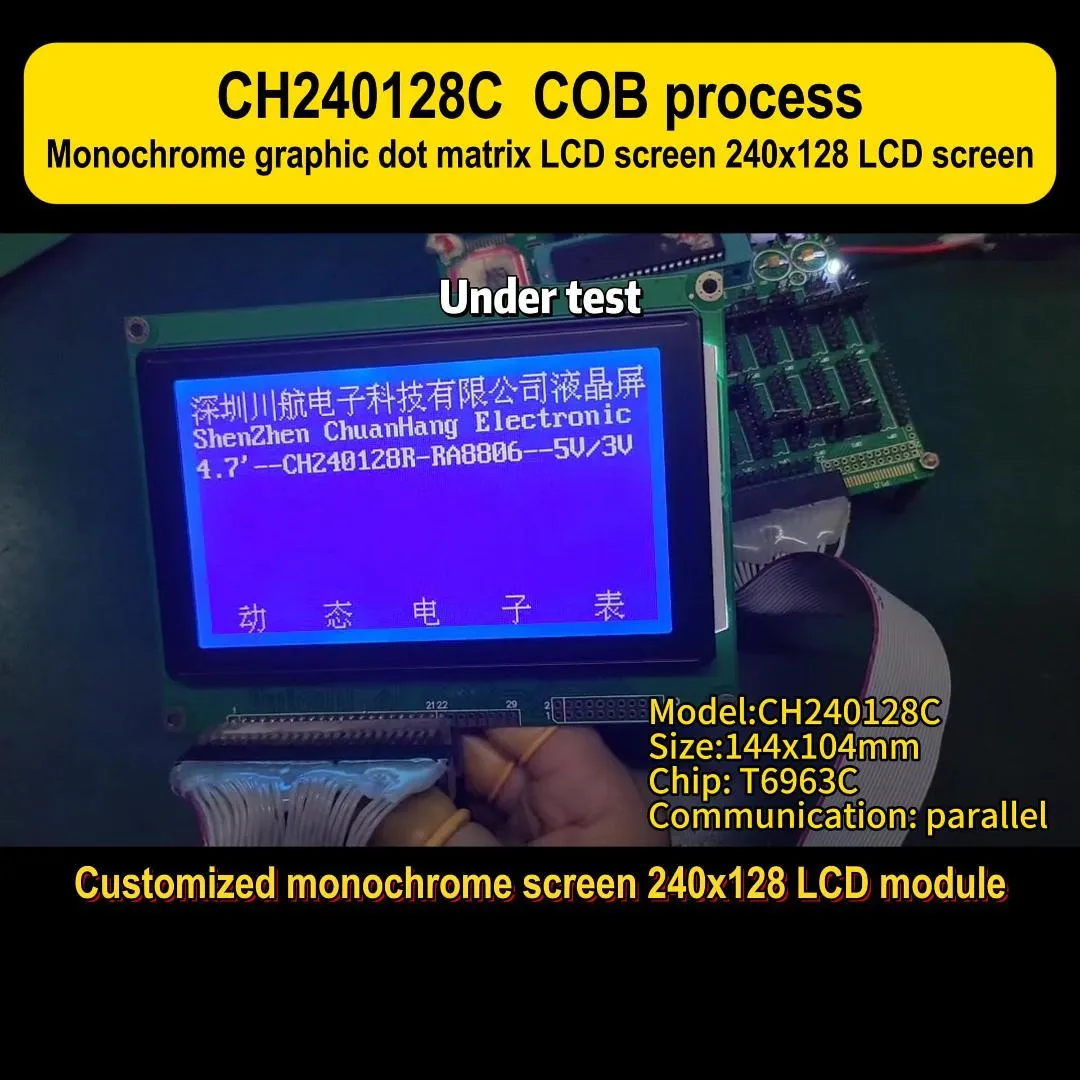
To evaluate an lcd module factory, one must first understand the sophisticated architecture of the products they produce. An LCM is not a single entity but a multi-layered system designed to manipulate light with high precision.
At the core lies the TFT (Thin Film Transistor) glass. The factory must source or manufacture high-quality substrates where liquid crystal molecules are sandwiched between two pieces of glass. The orientation of these molecules, controlled by electrical fields, determines the light transmission. Professional factories often offer different technologies such as:
TN (Twisted Nematic): Cost-effective with fast response times, though with limited viewing angles.IPS (In-Plane Switching): Superior color reproduction and wide viewing angles, favored for medical and high-end industrial monitors.VA (Vertical Alignment): High contrast ratios and deep blacks, suitable for specialized signage.
Since LCDs are non-emissive, the backlight is the primary driver of visual quality. A specialized lcd module factory will design custom BLUs consisting of LEDs, light guide plates (LGP), diffusers, and brightness enhancement films (BEF). The thermal management of these LEDs is a key factor in preventing "yellowing" or premature dimming over the product's lifespan.
The interface between the display and the host system is managed by the Driver IC. Whether using MIPI, LVDS, RGB, or SPI interfaces, the bonding process is where many factories differentiate themselves. Chuanhang Display utilizes advanced bonding equipment to ensure signal integrity and mechanical durability in high-vibration environments.
The production environment is a primary indicator of quality. An elite lcd module factory operates under strict cleanroom conditions, typically Class 100 or Class 1000, to prevent particulate contamination during the assembly of the polarizer and the glass substrate. Even a microscopic dust particle can lead to a "pixel defect" or a visual blemish that results in a rejected batch.
Two primary methods dominate the assembly line:
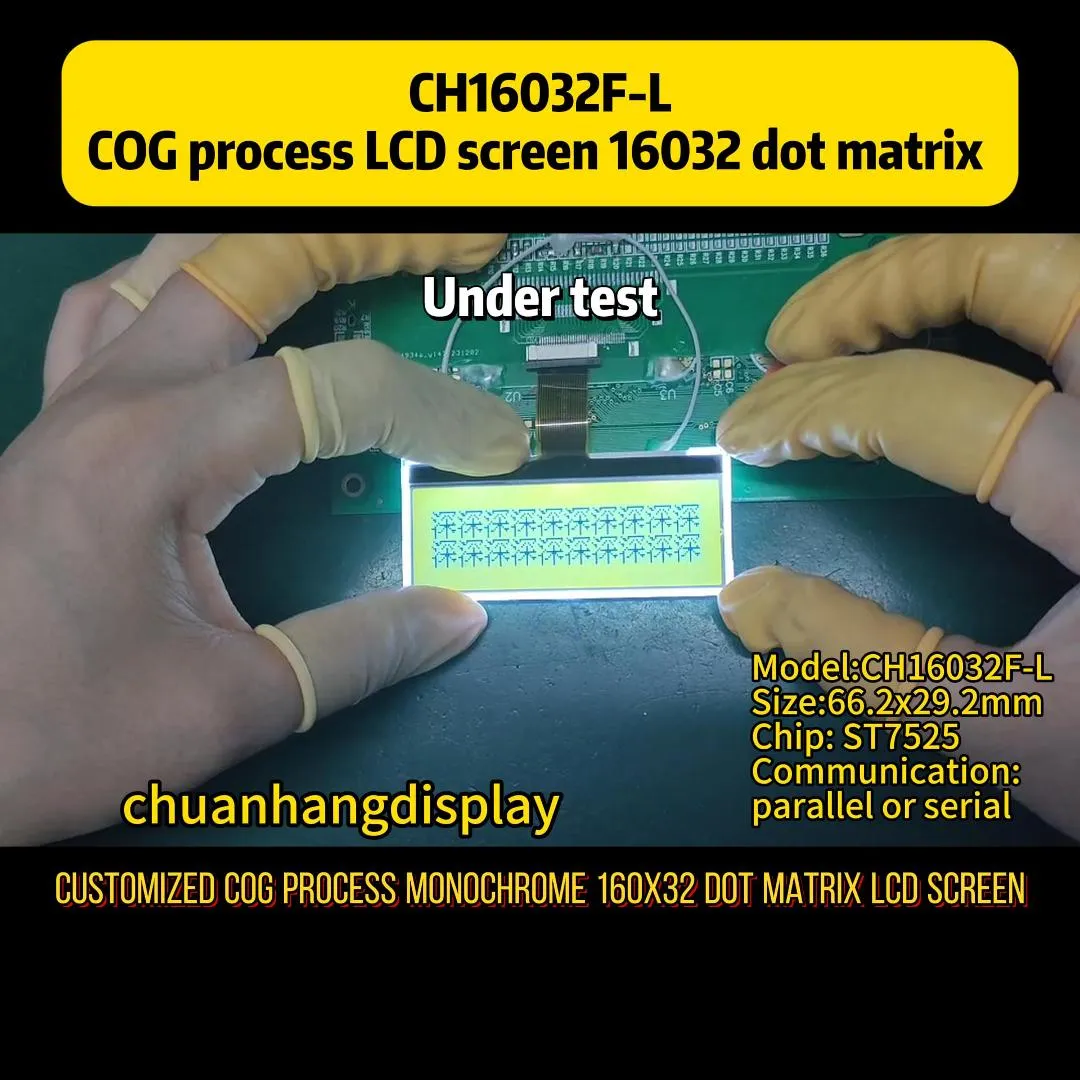
Chip-on-Glass (COG): The driver IC is bonded directly onto the glass substrate. This allows for thinner modules and higher resolutions, commonly used in smartphones and modern IoT devices.Chip-on-Board (COB): The IC is mounted on a PCB and connected via flexible wires. This is often more robust for industrial applications where physical space is less constrained but durability is paramount.
Laminating the polarizer is a high-precision step. The factory must ensure there are no air bubbles or misalignments. Different polarizers—transmissive, reflective, or transflective—are chosen based on the intended environment, such as sunlight-readable outdoor displays or low-power indoor sensors.
In the B2B sector, reliability is the most significant metric. A reputable lcd module factory does not simply test for "power on." They implement a comprehensive suite of environmental and mechanical stress tests to simulate years of field use.
High/Low-Temperature Operation: Ensuring the liquid crystal material does not freeze or "clear" (lose properties) at extreme temperatures.Humidity Cycling: Testing the integrity of seals against moisture ingress, which can cause "Mura" (clouding) or electrical shorts.Thermal Shock: Rapidly moving the module between temperature extremes to test the coefficient of thermal expansion across different materials.
Using spectrophotometers and luminance meters, the factory validates that every batch meets the agreed-upon brightness (nits), color gamut (NTSC/sRGB), and contrast ratio. This consistency is what allows a brand like Chuanhang Display to maintain long-term relationships with Tier-1 industrial clients.
Sourcing from an lcd module factory involves navigating several common industry hurdles. Recognizing these early in the procurement phase can save months of delays.
Industrial and medical products often have lifecycles exceeding 10 years. However, consumer-grade glass substrates may go End-of-Life (EOL) in 24 months. A professional factory must offer "Industrial Grade" options with guaranteed longevity or provide a clear migration path when components change.
Off-the-shelf displays rarely fit specialized enclosures perfectly. Customizations—such as FPC (Flexible Printed Circuit) redesigns, high-brightness backlights for outdoor use, or integrated touch panels—require Non-Recurring Engineering (NRE) fees. Buyers must evaluate if the factory’s engineering team can translate complex requirements into a manufacturable design without excessive trial and error.
In medical and automotive sectors, the display must not emit interference nor be susceptible to it. The factory’s ability to implement proper shielding, grounding, and EMI filtering in the FPC design is a mark of high-level expertise.
The cost of a module is not merely the sum of its parts. When negotiating with an lcd module factory, several variables influence the final quotation:
The Bill of Materials (BOM) Stability: Fluctuations in the price of raw glass and driver ICs can impact the unit price.Yield Rates: For high-resolution or ultra-small displays, the manufacturing yield might be lower, driving up the cost.Volume vs. Complexity: High-volume consumer orders benefit from economies of scale, while low-volume, high-complexity industrial orders require more manual oversight and testing.
Chuanhang Display emphasizes a transparent pricing model where the cost reflects the grade of materials used—ensuring that the client receives a product that fits their specific performance-to-price ratio.
For high-end applications, many customers now require optical bonding. This process involves filling the air gap between the LCD and the cover lens (or touch panel) with a clear adhesive (OCR or OCA). This provides several advantages:
Improved Clarity: By removing internal reflections, the contrast is significantly improved, especially in bright light.Ruggedization: The bonded assembly is more resistant to shock and vibration.Moisture Prevention: Eliminating the air gap prevents condensation from forming between the layers in humid environments.
A top-tier lcd module factory will have in-house optical bonding capabilities to ensure the cleanliness and alignment of this sensitive process.
Choosing an lcd module factory is a decision that impacts the reliability, aesthetics, and longevity of the final product. It requires a deep dive into the factory's technical capabilities, cleanroom standards, and commitment to quality control. By focusing on engineering support and long-term component availability, companies can ensure their display solutions remain functional and competitive for years to come. In the evolving B2B display sector, the strength of the manufacturing partner is the foundation of the product's success.
Q1: What is the difference between an LCD panel and an LCD module?
A1: An LCD panel consists of the liquid crystal layer and glass substrates only. An LCD module (LCM) is the complete assembly provided by an lcd module factory, including the panel, the backlight unit, driver ICs, and the interface FPC, making it ready for integration into a device.
Q2: Why do some LCD modules have a "yellowish" tint over time?
A2: This is often caused by the degradation of the LEDs in the backlight or the yellowing of the light guide plate (LGP) due to heat or UV exposure. High-quality factories use premium materials and better thermal management to prevent this discoloration.
Q3: How does an LCD module factory handle small-batch orders for industrial clients?
A3: Specialized factories often have dedicated production lines for low-volume, high-mix orders. While the unit price may be higher than consumer-grade modules, these lines offer much higher customization, specialized testing, and longer product availability.
Q4: What are NRE charges in the context of display manufacturing?
A4: NRE (Non-Recurring Engineering) refers to the one-time cost for designing custom tooling, such as a custom FPC, a specific backlight housing, or a custom cover lens mold. These are paid at the start of a project to cover the engineering and setup costs.
Q5: Can an LCD module factory assist with sunlight readability?
A5: Yes. Factories achieve sunlight readability through two main methods: increasing the backlight brightness (often to 1000 nits or more) and using optical bonding with anti-reflective (AR) coatings to reduce glare and surface reflections.
Q6: What is the significance of the "A-Grade" glass designation?
A6: Glass panels are graded based on the number of allowable pixel defects. A-Grade glass, typically used by Chuanhang Display for professional applications, ensures zero bright dots and a minimal number of dark dots, meeting the strict visual requirements of medical and industrial equipment.