In the global electronics sector, the procurement of Liquid Crystal Display (LCD) modules requires more than just comparing price sheets. For B2B buyers, the selection of a reliable lcd display factory represents a long-term commitment to product stability, brand reputation, and technical support. As display technologies evolve from simple TN (Twisted Nematics) to high-resolution IPS (In-Plane Switching) and specialized sunlight-readable screens, understanding the manufacturing complexities becomes a vital requirement for procurement officers and hardware engineers.

To evaluate an lcd display factory, one must first understand the intricate layers that constitute a modern Thin-Film Transistor (TFT) LCD module. An LCD is not a single component but an assembly of several sophisticated layers:
The Polarizers: Two sheets of polarizing material with a specific orientation to control light passage.The TFT Glass Substrate: An active matrix that contains pixels and thin-film transistors.Liquid Crystal Layer: The substance that changes orientation under an electric field to modulate light.Color Filter: A layer providing Red, Green, and Blue sub-pixels.Backlight Unit (BLU): Typically composed of LEDs, light guides, and diffusers.
A professional manufacturer, such as Chuanhang Display, ensures that each of these components is sourced from top-tier material providers like BOE, Innolux, or AUO, while maintaining a cleanroom environment for final assembly.
The environment inside an lcd display factory determines the longevity and defect rate of the final product. Even a microscopic dust particle trapped between the polarizer and the glass can result in a permanent "black spot" or line defect.
Industrial-grade displays must be assembled in environments that meet Class 1000 (ISO 6) standards or higher. This level of filtration ensures that the air quality is strictly controlled, preventing contamination during the bonding process.
The integration of the Driver IC (Integrated Circuit) is a high-precision step. Leading factories utilize COG (Chip-on-Glass) or COF (Chip-on-Film) bonding. COG involves bonding the driver IC directly onto the glass substrate, which allows for thinner borders and more robust connections—a requirement for modern handheld medical devices and industrial controllers.
One of the primary challenges for B2B buyers is the "End-of-Life" (EOL) cycle. Commercial-grade displays often have a short production lifespan of 12 to 24 months. However, an industrial lcd display factory focuses on long-term availability.
Industrial projects in the medical, automotive, or military sectors require components that remain available for 5 to 10 years. Professional manufacturers like Chuanhang Display provide EOL management strategies, ensuring that even if a specific glass panel is discontinued, a pin-to-pin compatible replacement is developed to minimize redesign costs.
For outdoor applications, standard displays often become unreadable due to glare and low brightness. A specialized lcd display factory solves this through two primary methods:
High-Brightness Backlights: Increasing the Nits (cd/m²) from a standard 300 to over 1000.Optical Bonding (OCR/OCA): Filling the air gap between the touch panel and the LCD with resin. This reduces internal reflections by up to 90% and improves physical impact resistance.
When vetting an lcd display factory, engineers should look past basic resolution and interface types. The following technical parameters distinguish a premium module from a budget one:
Contrast Ratio: High-end industrial modules should offer at least an 800:1 or 1000:1 contrast ratio to ensure deep blacks and vivid colors.Response Time: For dynamic interfaces, a response time of under 25ms is necessary to prevent ghosting.Viewing Angles: IPS technology is preferred for industrial HMI (Human-Machine Interface) because it maintains color accuracy at wide 178/178-degree angles.Interface Protocols: While SPI and I2C are common for small modules, larger high-res screens require LVDS, MIPI DSI, or eDP (Embedded DisplayPort) to handle high data throughput.
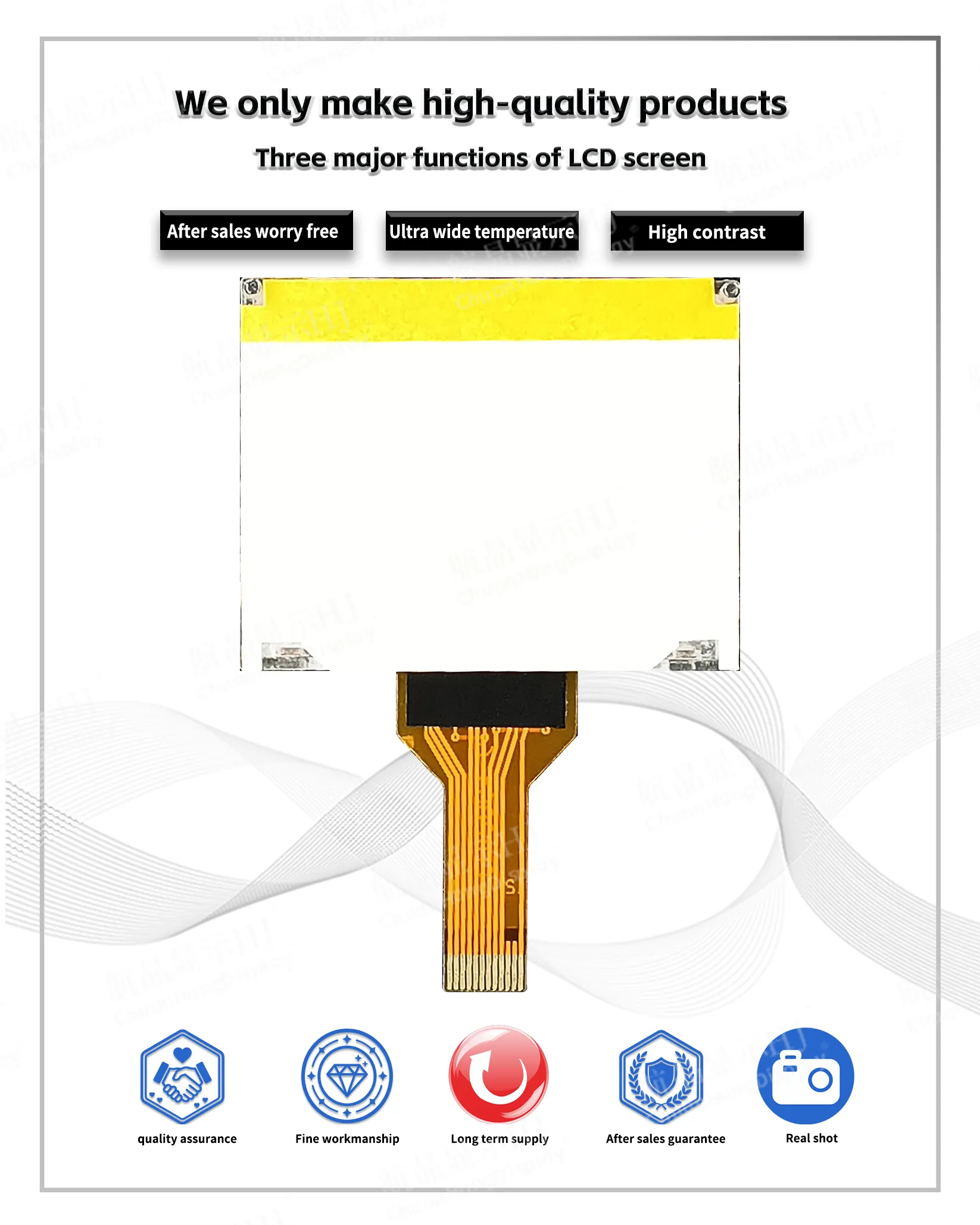
A reputable lcd display factory does not simply rely on visual inspections. They subject their modules to rigorous stress tests to simulate harsh environments.
High/Low Temperature Storage: Ensuring the liquid crystal doesn't crystallize at -30°C or degrade at +80°C.Humidity Tests: Operating the display at 90% RH (Relative Humidity) to check for delamination or oxidation of the FPC (Flexible Printed Circuit).ESD Protection: Testing the module's resilience against electrostatic discharge, which is a frequent cause of field failures in industrial settings.Vibration and Shock: Specifically for automotive and transportation sectors, ensuring the backlight and bonding remain intact under constant mechanical stress.
Understanding the cost drivers is necessary for effective B2B negotiation. The price of an LCD module is influenced by:
The Glass Market: Prices for "Open Cell" glass fluctuate based on global supply from major fabs.IC Shortages: The Driver IC is a significant cost component; supply chain stability here is a must.Customization Fees: NRE (Non-Recurring Engineering) charges apply when modifying the FPC shape, backlight brightness, or touch screen sensitivity.
By partnering with an established lcd display factory like Chuanhang Display, buyers gain transparency into these costs and can optimize their budgets through volume forecasting and strategic component selection.
The display sector is moving toward more integrated solutions. We are seeing a transition from "simple displays" to "smart modules" that include integrated controllers and wireless connectivity. Furthermore, the demand for circular and eco-friendly manufacturing is pushing factories to adopt more energy-efficient backlight designs and recyclable packaging materials.
Choosing the right lcd display factory is a strategic decision that affects the entire lifecycle of your product. By focusing on technical integrity, manufacturing environment, and long-term support, B2B companies can ensure their devices perform reliably in the most demanding conditions.
Q1: What is the typical Minimum Order Quantity (MOQ) when working with an LCD display factory?
A1: For standard modules, the MOQ can range from 100 to 500 units. However, for fully customized solutions involving unique FPC designs or high-brightness backlights, many factories require a minimum of 1,000 units to offset the setup costs of the production line.
Q2: How do I choose between a TN and an IPS panel for my industrial application?
A2: TN panels are more cost-effective and offer faster response times, but they have poor viewing angles and color shifting. IPS panels are superior for most industrial applications because they offer consistent color and clarity from almost any viewing angle, which is a requirement for safety-standard interfaces.
Q3: Can a factory customize the FPC (Flexible Printed Circuit) for my specific enclosure?
A3: Yes. A professional manufacturer can modify the length, width, and pinout of the FPC to fit your PCB layout. This usually involves a one-time NRE fee for the design and tooling of the new circuit.
Q4: What is the difference between Air Bonding and Optical Bonding?
A4: Air bonding leaves a small gap between the LCD and the touch glass, which is cheaper but prone to internal reflections and dust ingress. Optical bonding fills this gap with a clear adhesive (OCA or OCR), significantly improving outdoor readability, heat dissipation, and mechanical durability.
Q5: How does the factory ensure the longevity of the display for a 10-year project?
A5: Factories ensure longevity by selecting "Industrial Grade" glass panels from manufacturers who guarantee long-term production. They also maintain a buffer stock of key components, such as Driver ICs, and offer pin-compatible migration paths if a specific component eventually reaches EOL.