Organic Light Emitting Diode (OLED) technology has evolved from a consumer novelty into a pillar of industrial and commercial display architecture. Unlike traditional Liquid Crystal Displays (LCDs) that rely on a static backlight, OLED screens feature self-emissive pixels. Each individual pixel acts as its own light source, allowing for true black levels, infinite contrast ratios, and significantly faster response times.
In the B2B sector, selecting the right display technology is rarely about aesthetics; it is about performance, thermal management, and longevity. Chuanhang Display provides specialized OLED solutions designed to meet the rigorous demands of enterprise environments where reliability is non-negotiable.
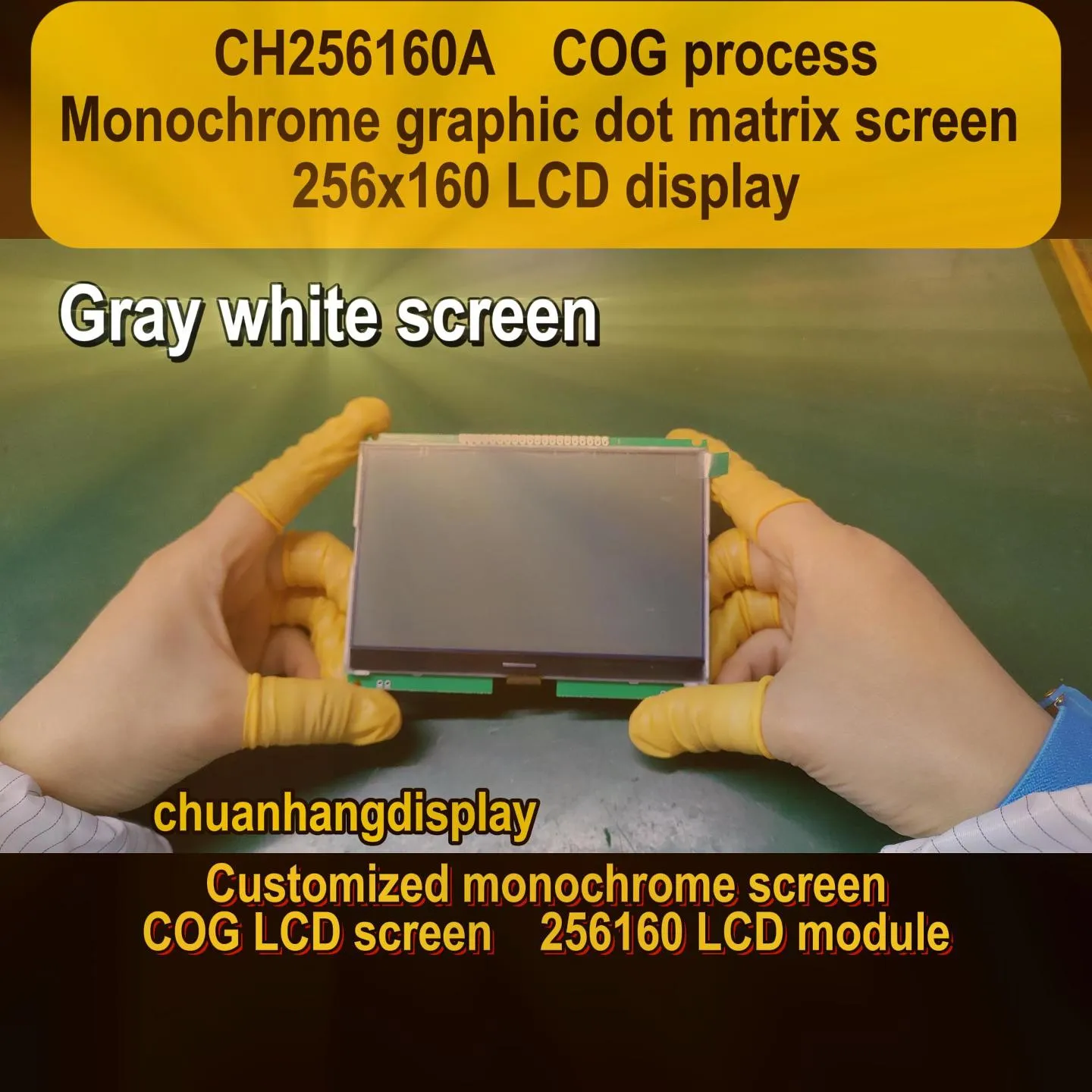
To understand why OLED screens are transforming industrial interfaces, one must look at their structural composition. An OLED panel consists of a thin film of organic molecules sandwiched between two conductors. When an electrical current is applied, these molecules emit light.
Self-Emissive Pixels: Because each pixel is self-illuminating, these screens do not require a backlight unit (BLU). This reduction in components leads to thinner form factors and lighter weight.Infinite Contrast Ratio: By completely turning off pixels to represent black, OLED screens achieve a contrast ratio that LCDs cannot match. This is vital for medical imaging, scientific instrumentation, and high-precision monitoring.Wide Viewing Angles: OLED panels maintain color accuracy and brightness consistency even when viewed from extreme off-axis angles, a requirement for public signage and multi-user control rooms.Response Time: With response times often measured in microseconds, motion blur is virtually eliminated, making these displays ideal for high-speed industrial diagnostic equipment.
The transition toward OLED technology is most visible in sectors where precision and space-saving are prioritized.
In diagnostic environments, image fidelity is the difference between an accurate diagnosis and a missed detail. OLED screens offer the deep black levels necessary for high-contrast medical imaging, such as X-rays and MRI scans, where subtle grayscale variations are important.
The automotive industry is shifting toward digital cockpits. Manufacturers prefer OLED panels for their ability to conform to curved dashboards and their superior visibility under varying lighting conditions, from bright sunlight to low-light tunnels.
For factory automation and HMI (Human Machine Interface) panels, the longevity and clarity of the display interface are vital. OLED provides the necessary clarity for complex data visualization, ensuring operators can read critical metrics without visual fatigue.

Sourcing high-quality displays involves more than just price comparisons; it requires an evaluation of supply chain stability, technical support, and customization capabilities. When seeking a supplier for OLED screens, B2B buyers should focus on several objective criteria:
Panel Life and Burn-in Mitigation: High-end industrial OLEDs employ specialized driving algorithms to prevent image persistence. Ensure your supplier provides test data regarding brightness degradation over time.Custom Form Factors: Not every project fits a standard rectangular aspect ratio. Look for partners like Chuanhang Display that offer tailored solutions, including specific resolutions and touch-interface integration.Environmental Durability: Industrial environments often involve extreme temperatures. Verify the operational temperature range of the display modules before finalizing a purchase.Supply Chain Transparency: Global supply fluctuations impact pricing and lead times. A reliable partner maintains transparent inventory levels and offers long-term availability for product lines.
One common concern for buyers is the risk of "burn-in" or differential pixel aging. While older iterations of OLED technology were susceptible to this, modern industrial-grade panels have largely mitigated these issues through improved organic material stability and sophisticated power management software.
Additionally, cost is often a barrier compared to traditional LCDs. However, when evaluating Total Cost of Ownership (TCO), the energy efficiency, reduced cooling requirements, and enhanced user experience offered by OLED screens often justify the initial investment, particularly in high-value enterprise applications.
Q1: How do OLED screens differ from AMOLED in a B2B context?
A1: AMOLED (Active Matrix OLED) is a type of OLED display that uses an active matrix drive scheme. In industrial settings, AMOLED is preferred for larger panels as it provides better control over individual pixels, resulting in better power efficiency and faster refresh rates compared to passive matrix OLEDs.
Q2: What is the average lifespan of an industrial OLED display?
A2: Modern industrial OLED screens are engineered for long-term usage, typically ranging from 30,000 to 50,000 hours of operation before reaching half-brightness, depending on the intensity of usage and thermal environment.
Q3: Can OLED screens be used in outdoor public signage?
A3: While OLED offers superior visibility, outdoor usage requires high-brightness modes and specialized heat dissipation. Chuanhang Display recommends consulting with a technical representative to ensure the display has the necessary peak luminance and heat-shielding for direct sunlight exposure.
Q4: How does OLED technology handle rapid temperature fluctuations?
A4: Industrial OLEDs are built with specialized substrates that withstand a broader thermal range than consumer-grade panels. However, they are sensitive to extreme humidity, so the enclosure design must prioritize environmental sealing.
Q5: Is it possible to customize the touch layer on an OLED module?
A5: Yes. Most suppliers offer integration of Projected Capacitive (PCAP) touch sensors directly onto the OLED stack. This enables thin, durable, and highly responsive touch interfaces for industrial control consoles.
Selecting the optimal display technology for your next project requires expert guidance. Whether you are seeking specific technical specifications or volume pricing for enterprise deployment, our team is ready to assist.