

An OLED LCD module is a ready-to-use display assembly, not a bare panel. It usually includes the display, driver IC, flexible PCB, connector, and mechanical frame; some versions add a touch panel or cover glass.
The phrase mixes two technologies. OLED is self-emissive; LCD needs a backlight. Both can be supplied as a module, and both can be customized for an industrial product.
This guide is for hardware teams specifying a module before tooling. It covers the eight specifications that decide whether the display fits, reads clearly, and survives the product lifecycle.
ChuanHang Display, operated by Shenzhen Chuanhang Electronic Technology Co., Ltd., builds custom LCD and OLED modules for industrial, medical, and consumer devices. If you are starting a display project, send the size, interface, and environment early. A short brief gets you a module recommendation and a quotation instead of a generic catalog.
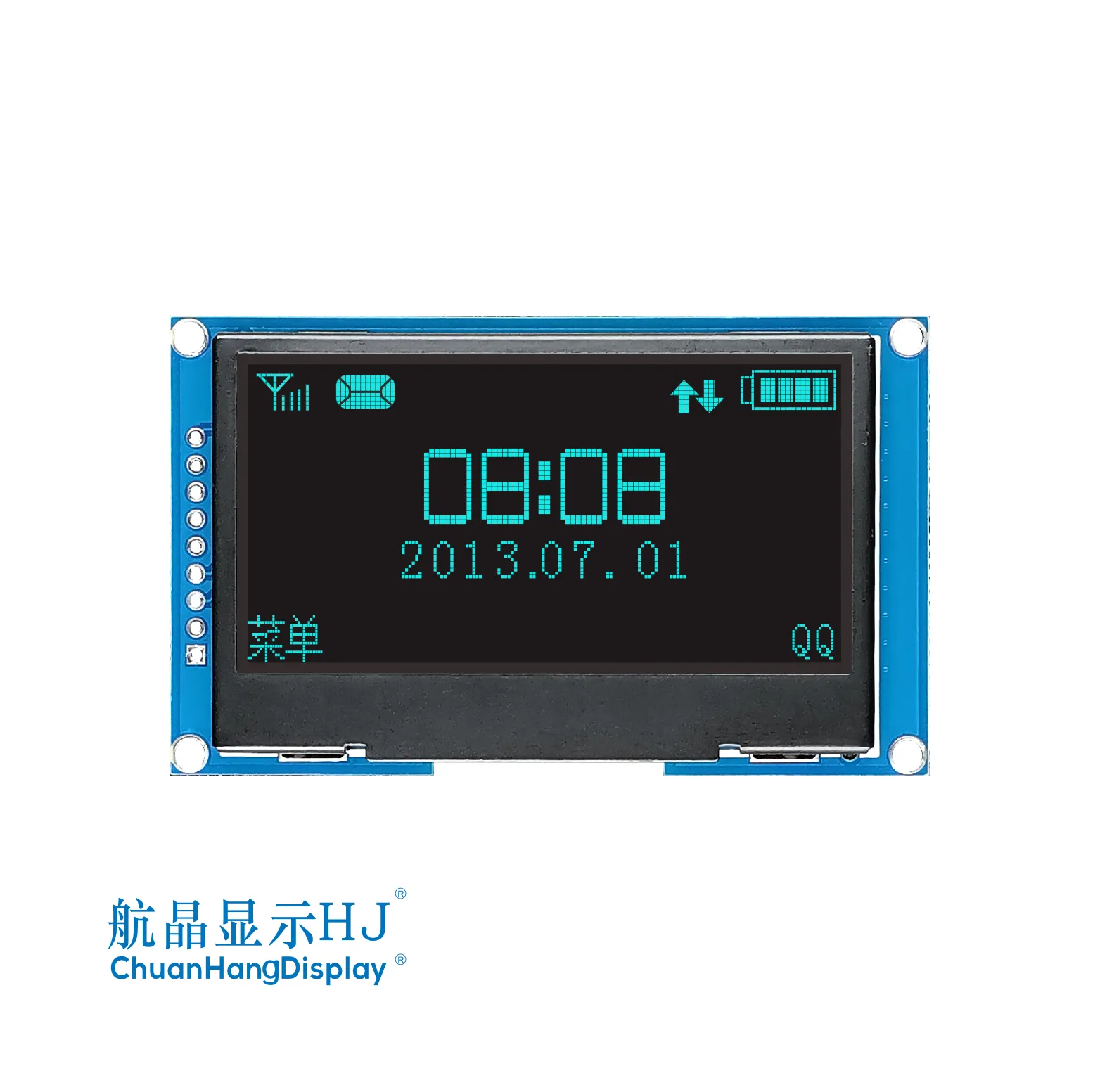
What an oled lcd module actually contains
A module is the display plus the electronics and mechanics needed to connect it. That integration is what makes it easier to design into an enclosure than a bare panel.
- Display panel: OLED, TN, IPS, or another LCD type, depending on contrast and viewing angle.
- Driver IC: the controller that handles pixel addressing and the host interface.
- Flexible PCB: the FPC that carries power, data, and control signals.
- Backlight: required for LCD versions; OLED does not need one.
- Frame and mounting: the mechanical structure that holds the stack and fits the enclosure.
- Optional layers: touch sensor, cover glass, anti-glare film, or a decorative bezel.
The technical overview of OLED explains the emissive structure and why it behaves differently from an LCD.
OLED vs. LCD module: a practical comparison
The right choice depends on the product, not on which technology sounds newer. An oled lcd module can be built around either technology, and the table below summarizes the main trade-offs.
| Attribute | OLED module | LCD module |
|---|---|---|
| Light source | Self-emissive; no backlight | Requires backlight |
| Contrast | Very high; true black | Depends on backlight and dimming |
| Viewing angle | Wide | Wide on IPS; narrower on TN |
| Power | Lower for dark content | Backlight dominates |
| Lifetime risk | Burn-in and brightness decay | Backlight and polarizer aging |
OLED wins on contrast and thinness. LCD wins on mature supply, long static-image use, and cost at larger sizes. Choose the technology after the use case is clear.
Oled lcd module specifications to lock before tooling
These eight specifications should be fixed before the enclosure, FPC, or firmware is frozen.
1. Size, resolution, and active area
Define the diagonal, resolution, active area, and outline dimensions. Check the bezel and the mounting holes against the enclosure. A module that fits the opening may still collide with a rib or a screw boss.
2. Interface and controller
Choose SPI, I2C, parallel, RGB, MIPI, or another interface based on the host and the refresh requirement. Confirm the controller, the initialization sequence, and the available documentation.
A module with the wrong controller can cost weeks of firmware work. Ask for the command set and a sample initialization code before the design is locked.
3. Brightness, contrast, and sunlight readability
Specify the required luminance, contrast ratio, and reflection behavior. Indoor products and outdoor instruments need different targets.
Sunlight readability is a system property, not only a brightness number. NIST research on OLED fluorescence and sunlight-readability reflection measurements shows how reflection measurements can be scaled to sunlight levels for display qualification.
4. Viewing angle and color
Define the viewing cone, color gamut, white point, and uniformity. A display that looks good on axis can wash out at the mounting angle used by the operator.
ISO 9241-303 provides requirements for electronic visual displays and is a useful reference for readability and ergonomics.
5. Operating and storage temperature
Industrial, automotive, and outdoor products need a wider range than a consumer device. Specify the operating temperature, storage temperature, and humidity range.
Ask for the module's temperature compensation behavior. OLED brightness and LCD response can change at temperature extremes.
6. Lifetime and burn-in
OLED lifetime depends on brightness, content, and temperature. A static logo or a bright status bar can create image sticking.
Ask for the lifetime test condition, the expected brightness decay, and the recommended mitigation: pixel shift, dimming, screensaver, or content rotation.
7. Power and EMI
Define the supply voltage, current budget, and sleep current. Check the inrush and the EMI profile against the host product.
A display that meets the electrical spec can still fail EMC if the FPC is routed poorly. Include the cable and grounding in the review.
8. Mechanical, FPC, touch, and cover glass
Lock the FPC length, bend radius, connector type, and mounting orientation. If the module includes touch or cover glass, define the bonding method, surface treatment, and impact requirement.
These details are hard to change after tooling. A small mechanical change can force a new FPC, a new frame, or a new enclosure.
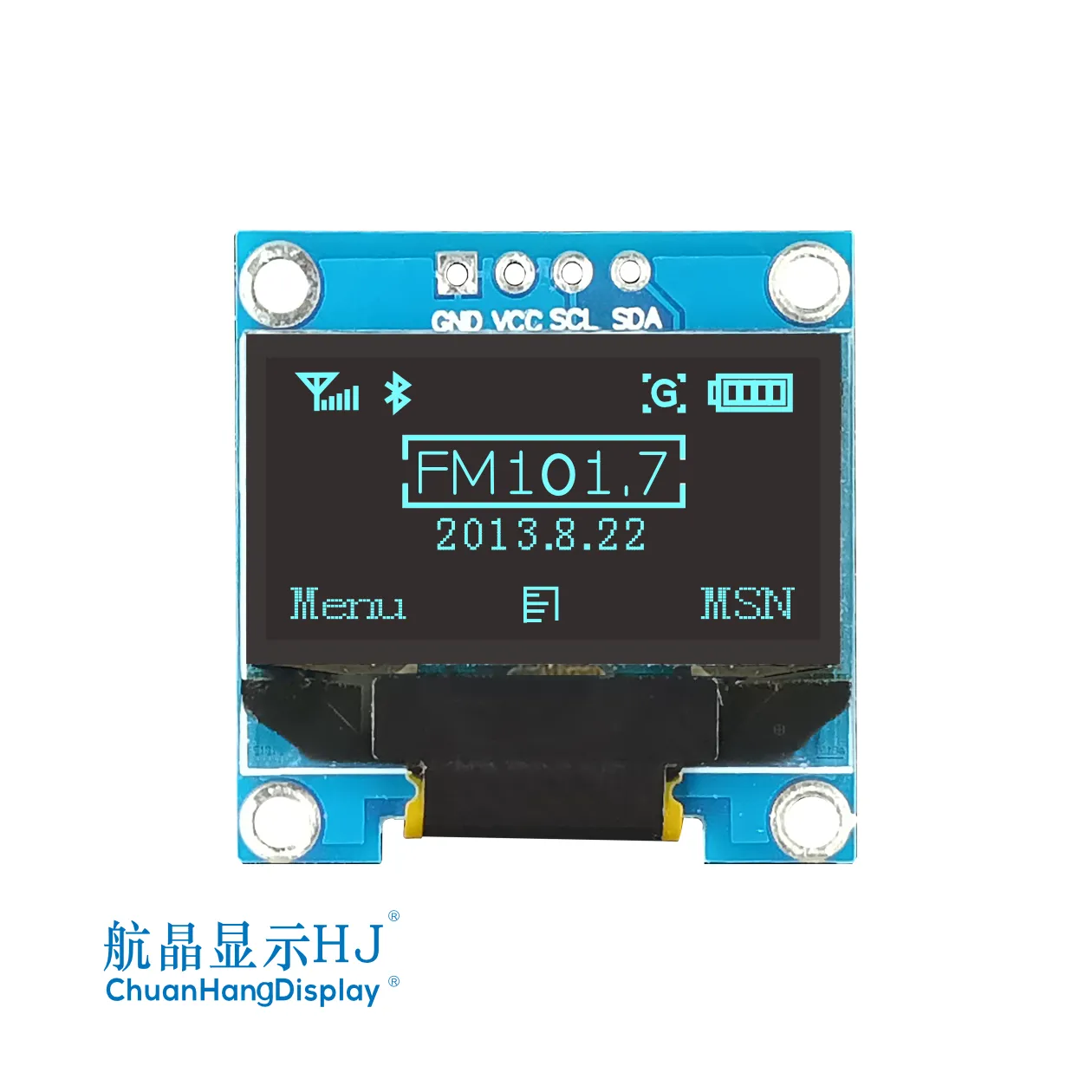
Oled lcd module recommendations by application
Different applications prioritize different specs. These profiles help narrow the module.
Industrial control and HMI
Industrial panels need wide temperature range, stable brightness, and a clear interface. A high-contrast OLED can work well for status and menu screens; an IPS LCD may be better for long static images.
Check the viewing angle at the operator's position and the readability under factory lighting.
Medical and diagnostic devices
Medical devices need consistent color, clear grayscale, and a defined cleaning protocol. Confirm the cover glass, the surface compatibility, and the display's behavior under the device's sterilization or wipe-down routine.
Do not assume a consumer module is suitable for a medical enclosure. The mechanical and documentation requirements are different.
Fire, security, and safety equipment
These products often run in dark rooms or outdoors. High contrast helps, but sunlight readability and temperature range still need to be specified.
Check the brightness at the installed angle and the response time at low temperature.
Power, energy, and utility instruments
Utility devices may need a wide temperature range, long service life, and a clear display under bright ambient light. An LCD with a strong backlight may be more practical than OLED for static data.
Define the lifetime target and the maintenance model before choosing the technology.
Financial and consumer terminals
Consumer-facing terminals prioritize thinness, contrast, and cost. OLED can give a premium look; LCD can be more cost-effective at larger sizes.
Check the burn-in risk if the screen shows a static logo or a fixed menu for hours.
Portable and battery-powered devices
Power budget matters. OLED can be efficient for dark interfaces; LCD may be better for bright, mostly white screens.
Measure the average power at the actual content, not only the datasheet typical value.
Custom module process
A custom display project moves through a sequence. Each step reduces a different risk.
- Requirement brief: size, resolution, interface, environment, and lifetime.
- Module selection: standard module, modified standard, or full custom.
- Mechanical review: outline, active area, FPC, connector, and mounting.
- Prototype: sample with the intended controller and firmware.
- Validation: readability, temperature, lifetime, EMC, and mechanical fit.
- Pilot: small production run with the final tooling and test plan.
- Mass production: batch inspection and change control.
The earlier the interface and mechanical details are fixed, the fewer surprises at the pilot stage.
Where ChuanHang Display fits
ChuanHang Display, operated by Shenzhen Chuanhang Electronic Technology Co., Ltd., develops and supplies custom LCD and OLED modules. The company reports more than 10 years of technical experience, over 200 product types, and cooperation with customers in more than 30 countries.
- Module types: COG, COB, TFT, IPS, and OLED displays.
- Customization: FPC, backlight, touch, cover glass, frame, and interface.
- Applications: industrial control, medical, fire and security, power, instrumentation, and consumer terminals.
Ask about the module outline, controller, interface, brightness, temperature range, lifetime test, and tooling requirement. Those details decide whether the module fits the product. The company's display manufacturing background is worth reviewing before you shortlist.
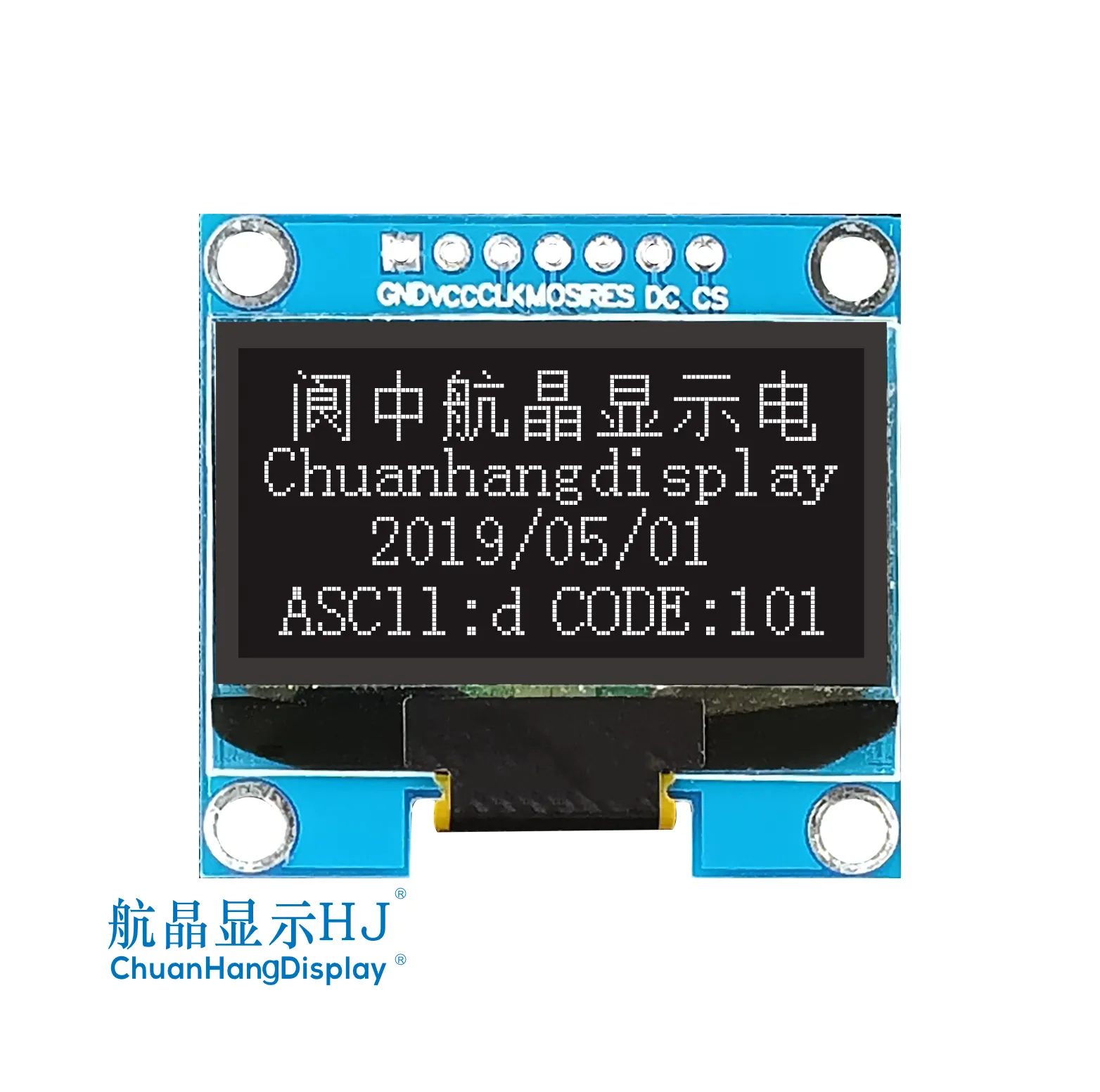
Common mistakes
Most display projects lose time on details that could have been fixed in the brief.
- Choosing the panel before the interface. The controller and host interface decide the firmware work.
- Ignoring the FPC bend radius. A tight bend can crack traces or fail in vibration.
- Specifying brightness without reflection. Sunlight readability depends on both.
- Forgetting burn-in. Static content can leave a ghost image on OLED.
- Testing only at room temperature. The product may operate in heat, cold, or humidity.
- No mechanical mock-up. A 2D drawing can hide a collision with the enclosure.
- Changing the module after tooling. A small change can force a new FPC or frame.
A requirement brief, a mechanical mock-up, and a prototype test prevent most of these problems.
Frequently asked questions
Q1: What is an oled lcd module?
A1: It is a display assembly that includes the panel, driver, FPC, and mechanical frame. The term is used for both OLED modules and LCD modules; the light source and driving method are different.
Q2: Is OLED always better than LCD?
A2: No. OLED offers high contrast and thinness, but LCD can be better for long static images, large sizes, and mature supply. Choose based on the application and lifetime target.
Q3: What brightness do I need for outdoor use?
A3: It depends on the ambient light, the cover glass, and the reflection. Specify the sunlight readability target and test the module in the intended enclosure, not only on a bench.
Q4: How do I prevent OLED burn-in?
A4: Reduce static bright elements, use pixel shift or dimming, rotate content, and specify a lifetime test that matches the actual screen content.
Q5: Can ChuanHang customize the FPC and interface?
A5: Ask about the FPC length, connector, pin assignment, controller, and interface options. Confirm the tooling and validation plan before the design is frozen.
Request an oled lcd module recommendation
A useful inquiry includes more than a request for a price. Tell the team what the display must do and how it will be used.
- Size, resolution, and active area.
- Interface and host platform.
- Brightness, contrast, and sunlight-readability target.
- Operating temperature, humidity, and lifetime target.
- Touch, cover glass, FPC, and mechanical requirements.
- Estimated annual volume, prototype timing, destination, and certification needs.
Send those details to ChuanHang Display and ask for a module recommendation and a sample plan. The right oled lcd module is the one that fits the enclosure, the interface, and the operating environment, not the one with the highest resolution.
Sources and further reading
- Wikipedia: OLED — a technical overview of organic light-emitting diode structure and operation.
- NIST: Scalability of OLED Fluorescence in Consideration of Sunlight-Readability Reflection Measurements — a display metrology paper on sunlight-readability testing.
- ISO 9241-303:2011: Ergonomics of human-system interaction — Requirements for electronic visual displays — display readability and ergonomics requirements.