In today's connected world, the LCD display module is a critical component in countless devices. From industrial control panels to consumer gadgets, the right display makes all the difference. Selecting the perfect module involves understanding technology, suppliers, and cost.
This guide cuts through the complexity. We'll explore different types of LCD display modules, their applications, and key selection criteria. We will also highlight how partners like Chuanhang Display provide reliable and custom LCD display module solutions.

An LCD display module is a self-contained unit that includes the LCD panel and its essential driving electronics. It's more than just the glass. The module integrates the controller, connectors, and often a backlight. This makes it ready for engineers to interface with a main system or PCB.
The core component is the Liquid Crystal Display itself. Liquid crystals manipulate light to create images without emitting light directly. A backlight system, typically LED-based, provides the illumination.
Choosing the right LCD display module affects your product's performance, user experience, and cost.
Not all displays are created equal. The technology behind the LCD display module defines its strengths.
TN (Twisted Nematic) Panels
TN panels are known for their fast response times and low cost. They are a common choice for applications where speed is critical. However, they suffer from limited viewing angles and poorer color reproduction.
Best for: Basic industrial instruments, simple consumer electronics where cost is the primary driver.
IPS (In-Plane Switching) Panels
IPS technology offers superior color accuracy and wide viewing angles. This makes it the preferred choice for applications where image quality is paramount. Modern IPS panels have improved response times significantly.
Best for: Medical devices, high-end consumer products, point-of-sale systems, and professional photography equipment.
VA (Vertical Alignment) Panels
VA panels strike a balance between TN and IPS. They provide better contrast ratios and color reproduction than TN, with deeper blacks. Their viewing angles are better than TN but not quite as good as IPS.
Best for: Automotive dashboards, home appliance displays, and general instrument panels.
OLED vs. LCD Display Modules
OLED displays are emissive, meaning each pixel produces its own light. This allows for perfect blacks, high contrast, and faster response. However, they are generally more expensive and can be susceptible to burn-in. For many industrial and cost-sensitive applications, a high-quality LCD display module remains the most practical and reliable choice.
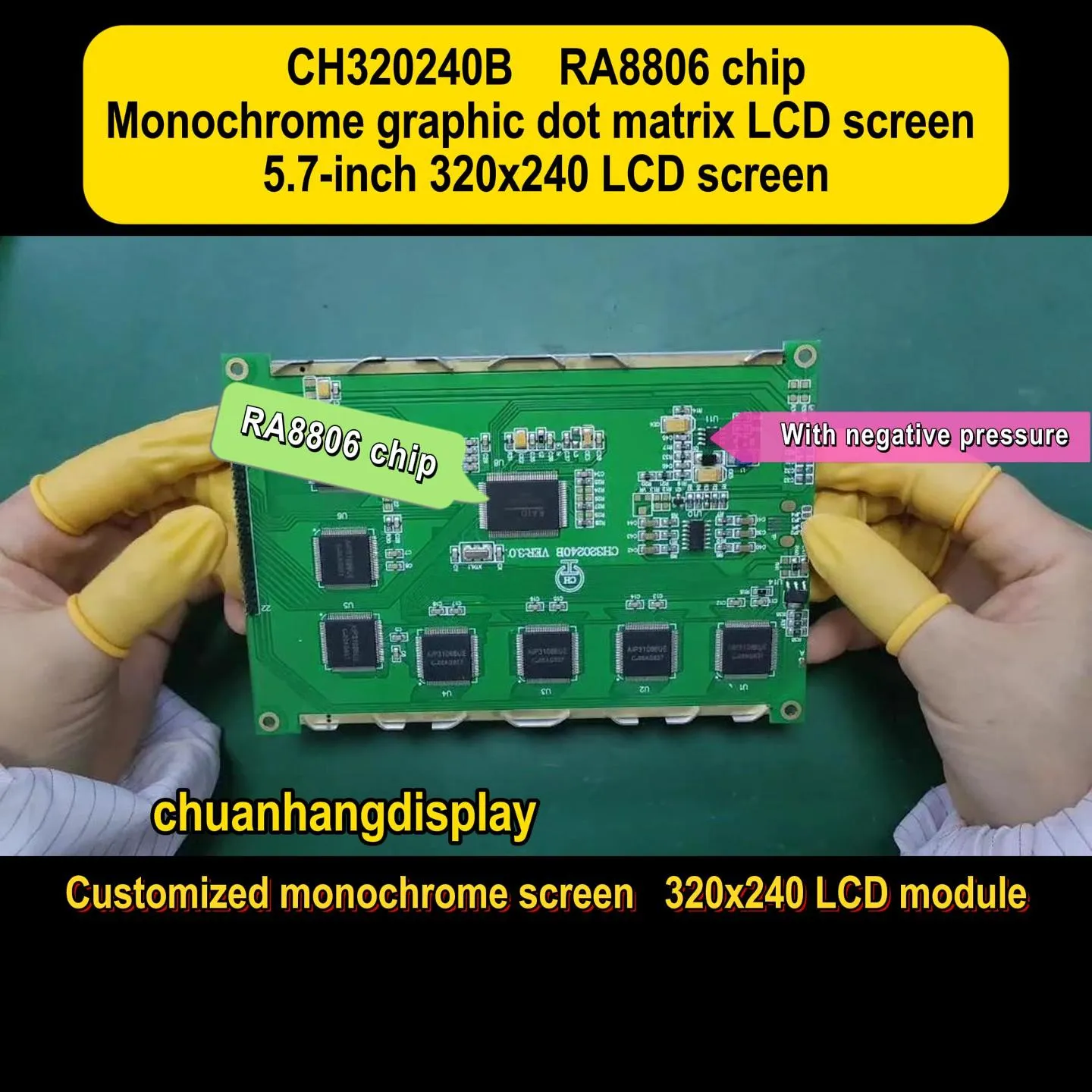
Making the right choice requires evaluating several technical and commercial factors.
Size and Resolution
Match the physical size and pixel density to your user interface needs. Higher resolution provides sharper images but may require a more powerful processor.
Brightness and Readability
For outdoor or high-ambient-light environments, a high-brightness LCD display module is essential. Look for modules with at least 500 nits, and up to 1000+ nits for sunlight readability.
Touchscreen Capability
Resistive touch is a low-cost option. Capacitive touch, now the standard for smartphones, offers multi-touch support and better clarity. Consider the intended user interaction.
Interface and Connectivity
Common interfaces include LVDS, MIPI, and RGB. Your choice must be compatible with your main board's output to avoid complex signal conversion.
Environmental Durability
Operating temperature range, resistance to humidity, and shock/vibration tolerance are critical for automotive, military, and industrial uses.
Sometimes, a standard off-the-shelf unit won't suffice. This is where a custom LCD display module becomes invaluable.
A specialist supplier like Chuanhang Display can tailor a module to your exact needs. Customization can include:
Unique shapes and cutouts.
Specific optical bonding to reduce glare.
Integrated touch panels with custom coatings.
Tailored firmware and controller boards.
Optimizations for wide temperature ranges.
Investing in a custom solution can enhance your product's differentiation and performance.
Navigating Cost and Price Factors for LCD Modules
Technology and Performance
IPS panels command a higher price than TN. High resolution, wide temperature ranges, and high brightness levels all add cost.
Screen Size and Aspect Ratio
Larger screens are more expensive. Non-standard sizes or aspect ratios can also increase price due to lower manufacturing volumes.
Order Volume and Supplier Relationship
Unit cost drops significantly with higher order quantities. Building a long-term partnership with a manufacturer like Chuanhang Display can lead to better pricing and priority support.
Choosing the right supplier is as important as choosing the right technology.
Look for a partner with proven experience, not just a distributor. A manufacturer like Chuanhang Display with in-house engineering support can provide invaluable assistance.
Evaluate their quality control processes, lead times, and communication. A supplier that offers both standard and custom LCD display module services provides greater flexibility for your projects.
Request samples to test quality firsthand before committing to a large order.
Chuanhang Display has established itself as a trusted name in the display industry. We focus on delivering high-quality, reliable LCD display modules for a global clientele.
Our expertise spans standard and fully custom LCD solutions. Our engineering team works closely with clients to overcome design challenges and optimize performance.
We understand that a display is the face of your product. Partnering with us ensures you get a module that meets your technical specifications, budget, and timeline.
Q1: What is the typical lifespan of an industrial-grade LCD display module?
A1: A high-quality industrial-grade LCD display module, like those from Chuanhang Display, typically has a lifespan of 50,000 hours or more. This is largely dependent on the backlight LEDs. Operating at high brightness levels or in elevated temperatures can reduce this lifespan.
Q2: Can you integrate a capacitive touchscreen into a custom LCD module?
A2: Yes, absolutely. We regularly integrate projected capacitive (PCAP) touchscreens into our custom LCD display module designs. This allows for multi-touch gestures, excellent clarity, and a durable user interface solution.
Q3: What is the main difference between an LCD module and an OLED module?
A3: The core difference is how they produce light. An LCD display module requires a separate backlight. Its pixels act as shutters to block or allow this light. An OLED module is emissive; each pixel generates its own light, allowing for perfect blacks and higher contrast, but often at a higher cost and with potential burn-in risk.
Q4: How do I determine the right brightness level for my application?
A4: For indoor office use, 250-350 nits is usually sufficient. For point-of-sale kiosks or under bright lights, 400-600 nits is better. For outdoor use in direct sunlight, you will need a high-brightness LCD display module rated at 1000 nits or more.
Q5: What support does Chuanhang Display offer for prototyping?
A5: We fully support the prototyping phase. We can provide samples of standard modules for evaluation. For custom LCD display module projects, we work with you to define specifications and produce functional prototypes for your testing and validation before mass production begins.