Procuring custom displays in 2026 requires more than comparing price sheets. Global hardware brands face volatile glass substrate pricing, shifting component lead times, and tighter environmental mandates. A single line stoppage caused by a defective display batch can cost an OEM hundreds of thousands of dollars.
Hardware engineering directors and procurement heads need manufacturing partners who mitigate risk. Experienced providers like Chuanhang Display build their operations around traceability, long product lifecycles, and direct material access. Use this 10-point checklist to audit any prospective LCD display factory before issuing your next Request for Quote (RFQ).
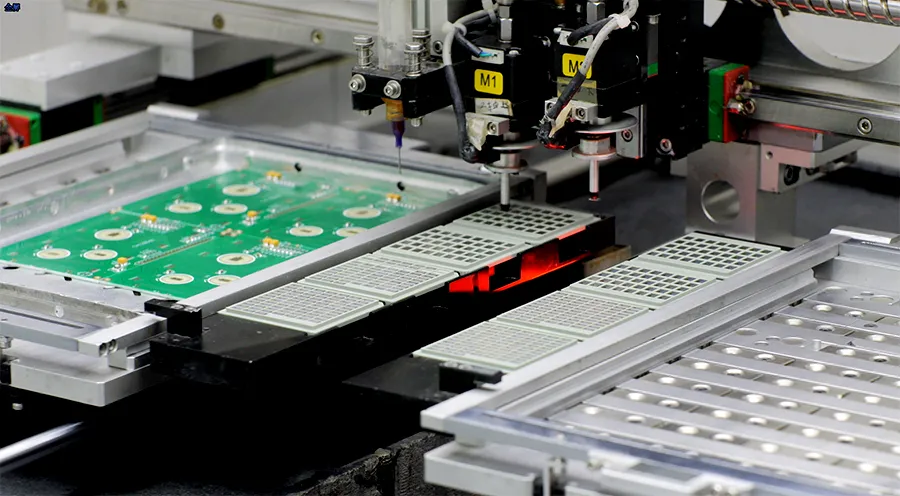
Yield rate and optical clarity depend directly on ambient air quality during the display module assembly (LCM) process. Dust particles trapped between the polarizer, glass, or backlight create irreversible visual defects that ruin touch sensitivity and optical performance.
Do not settle for generic cleanroom claims. Ask for specific zone ratings:
Backlight assembly and final inspection: Minimum Class 10,000 (ISO 7).
COG (Chip-on-Glass) and FOG (Film-on-Glass) bonding: Must be Class 1,000 (ISO 6) or better.
Polarizer attachment: Needs localized Class 100 laminar flow benches.
Examine their equipment roster. High-tier facilities utilize fully automated COG/FOG bonding lines from Japanese or Korean brands like Toray or Ohashi. Fully automated lines eliminate human handling error, apply consistent thermal compression, and maintain microscopic alignment tolerances for high-resolution displays.
Most facilities claiming to be a display manufacturer are simple assembly shops. They buy pre-cut open cells from large panel foundries and paste backlights on them. If panel supplies tighten, these shops lose allocation first.
True supply security comes from an LCD display factory with in-house glass processing capabilities:
Direct partnerships: Direct glass procurement agreements with tier-1 panel makers such as BOE, AUO, and Innolux.
Custom scribing and cutting: In-house precision wheel scribing or laser cutting lines to resize mother-glass into custom form factors.
Grade-A glass prioritization: Guaranteed usage of 100% Grade-A panel stock, avoiding downgraded or reclaimed cell glass often dumped on spot markets.
When your supplier cuts and polarizes their own cells, you gain immunity against market shortages and price gouging.
If your end product operates outdoors, in bright operating rooms, or inside industrial cockpits, air bonding will not suffice. Air gaps create internal reflections, trap condensation, and weaken mechanical impact resistance. Your chosen LCD display factory must specialize in optical bonding (full lamination).
Verify whether the factory supports both major optical bonding chemistries:
OCA (Optically Clear Adhesive): Ideal for flat panels, smartphones, and handhelds under 15.6 inches. It requires automated roller laminators and high-pressure autoclaves to remove microbubbles.
OCR / LOCA (Liquid Optically Clear Resin): Best for large screens, curved displays, or irregular surface profiles. It demands precise automated dispensing robots to prevent liquid overflow into the bezel.
Ask if they handle surface treatments in-house. Top factories control their own Anti-Glare (AG), Anti-Reflective (AR), and Anti-Fingerprint (AF) application lines. Outsourcing these coatings adds transit time, exposes panels to dust, and increases defect rates.
Off-the-shelf displays rarely fit bespoke industrial enclosures. You need an engineering-driven TFT display supplier that modifies base designs without demanding impossible minimum order quantities (MOQs).
Audit their custom engineering capabilities across three areas:
FPC Redesign: Can their engineers reroute flexible printed circuits, add electromagnetic interference (EMI) shielding, or integrate specific ZIF connectors to match your mechanical housing?
Backlight Engineering: Can they boost brightness to 1,000–2,500 nits for direct sunlight readability using high-efficiency LED arrays while adding thermal heatsinks to prevent heat damage?
Wide-Temperature Formulations: Can they source specialized liquid crystal fluid and polarizers to achieve operating profiles from -30°C to +80°C for automotive and marine setups?
A capable LCD display factory should return initial technical feasibility assessments, pinout configurations, and DFM (Design for Manufacturability) notes within 48 hours of receiving your spec sheet.
Never rely on a factory that outsources environmental testing. Third-party testing slows down your development cycle and indicates that the factory does not run continuous quality audits on running production batches.
A qualified custom LCD manufacturer must house an on-site reliability laboratory equipped with:
Thermal Shock Chambers: Rapid cycling between -40°C and +85°C to test solder joints and material expansion rates.
Constant Temperature and Humidity Chambers: Sustained testing at 60°C and 90% RH for 500 to 1,000 hours to check for moisture ingress.
Vibration and Drop Testers: Multi-axis vibration tables simulating rough transport and drop impact resistance.
ESD Immunity Testers: Electrostatic discharge guns testing air and contact discharge up to ±15kV.
Optical Darkrooms: Spectroradiometers and luminance meters to map color uniformity, contrast ratios, and viewing angles across the panel surface.
Consumer electronics turn over every twelve months, but industrial, medical, and defense equipment often require production lifespans of five to ten years. Redesigning a medical device just because a display driver IC went obsolete costs months of recertification and heavy engineering expense.
Reputable manufacturing companies like Chuanhang Display safeguard long-term programs by enforcing strict product change policies:
Guaranteed Lifecycles: Written commitments to maintain form, fit, and function continuity for 3 to 7 years.
PCN (Product Change Notification): A formal policy guaranteeing a minimum of 6 to 12 months advance notice prior to any component modification.
Drop-in Replacement Engineering: In-house firmware and hardware teams ready to engineer pin-compatible driver board replacements if a specific IC manufacturer discontinues a silicon chip.
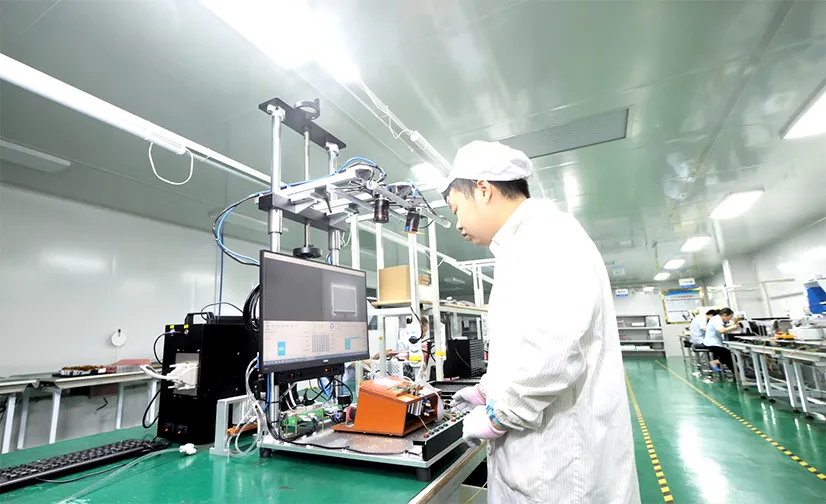
Do not accept standard ISO 9001 as proof of capability. It is a baseline quality management standard, not an industry endorsement. Your target vertical dictates which credentials your LCD display factory must hold.
| Industry Vertical | Required Factory Certification | Critical Process Focus |
|---|---|---|
| Automotive / Transportation | IATF 16949 | Defect prevention, variation reduction, APQP, PPAP documentation |
| Medical Equipment | ISO 13485 | Comprehensive risk management, bio-compatibility, audit trails |
| Industrial Automation | ISO 9001 / IPC-A-610 Class 2/3 | Solder joint integrity, structural reliability, process repeatability |
| Global Export Compliance | RoHS, REACH, CE, FCC | Hazardous material elimination, electromagnetic compliance |
Unclear development contracts cause procurement headaches. When commissioning custom glass, backlights, or cover lenses, you will pay Non-Recurring Engineering (NRE) fees. You must establish upfront who owns the resulting designs.
Clarify these contractual terms before signing any development agreement:
Tooling Ownership: Ensure the tooling, optical masks, and injection molds remain your exclusive intellectual property upon payment of the NRE.
Prototyping Allocation: Confirm that the factory provides an initial batch (typically 5 to 20 units) of functional engineering prototypes for your firmware and fit validation.
Pilot Run Support: Look for an LCD display factory that supports low-to-medium volume pilot runs (e.g., 500 to 1,000 units) before demanding full container-load production MOQs.
When a field failure happens, containment speed saves brand reputation. If an operator reports a display failure on a critical mining monitor, your factory must be able to trace that individual display back to its raw components within minutes.
A modern LCD display factory uses laser-etched 2D data matrix codes or high-durability QR labels on every panel frame and FPC. This code links to their Manufacturing Execution System (MES), allowing procurement engineers to trace:
The exact production shift, machine ID, and operator responsible for bonding.
The incoming raw material lot numbers for the liquid crystal fluid, polarizer roll, and driver ICs.
Real-time automated optical inspection (AOI) test values captured during production.
Environmental, Social, and Governance (ESG) criteria are no longer optional. European and American import laws increasingly require brands to audit the carbon footprint and labor practices of their supply chains.
Evaluate your LCD display factory across these newer operational requirements:
Environmental Approvals: Active ISO 14001 certification demonstrating chemical recovery systems for etching acids and solvents.
Eco-friendly Packaging: High-density, anti-static recyclable packaging designed to maximize freight density and minimize single-use plastics.
Redundant Manufacturing Sites: Dual-facility production strategies or multi-region footprint options that prevent localized power grid cutbacks, weather events, or regional shutdowns from stopping your production lines.
Sales decks look polished, but walking the production floor reveals the truth. When conducting an on-site audit of an LCD display factory, look closely at everyday worker habits and workspace controls:
ESD Protection: Check that visitors and operators wear conductive heel straps and antistatic smocks. Verify that ESD wrist straps plug into active continuous monitoring boxes rather than passive ground snaps.
Floor Grounding: Look for conductive epoxy or ESD-tiled flooring. Measure static charge levels with a field meter if your team carries audit gear.
Environmental Gauges: Inspect real-time digital hygrometer displays in the cleanroom. Humidity must stay strictly between 45% and 65% RH. Lower levels trigger static discharge; higher levels introduce moisture under polarizers.
RMA Segregation: Look for their Return Material Authorization (RMA) hold area. Discarded displays should be isolated in locked, labeled bins, never mixed with work-in-progress inventory.
A1: Custom monochrome segments or character LCDs typically cost between $1,500 and $4,000 for tooling, with samples delivered in 4 to 6 weeks. Custom TFT display module assembly tooling (custom FPC, high-bright backlight frame, cover lens) ranges from $3,000 to $15,000+ depending on optical bonding requirements, taking 6 to 8 weeks for pilot samples.
A2: Tape bonding leaves an air pocket between the display and the protective glass. This gap causes light refraction, degrading readability in bright conditions. It also allows internal condensation under thermal shock and weakens the screen against front-panel impacts. Optical bonding fills this void with cured optical resin, boosting contrast, shatter resistance, and heat dissipation.
A3: Grade-A panels guarantee zero dead or stuck bright pixels in the central zone and conform to strict sub-millimeter allowances for minor edge inclusions. A reliable LCD display factory provides clear cosmetic criteria sheets and guarantees incoming A-grade binning directly through panel foundry delivery manifests.
A4: While consumer displays demand runs of 50,000+ units, dedicated industrial display manufacturers like Chuanhang Display typically provide flexible production tiers. Expect MOQs around 500 to 1,000 units for fully customized modules, with lower batch sizes supported during your initial engineering prototyping and pilot run stages.
A5: COG (Chip-on-Glass) mounts the display driver IC directly onto the extended glass ledge of the LCD cell. It is the most robust and cost-effective approach for rugged products. COF (Chip-on-Film) mounts the IC onto a flexible tape substrate, allowing you to fold the driver behind the screen. This achieves ultra-narrow bezels, though tooling and component costs run slightly higher.
Sourcing displays should never put your hardware product schedules at risk. The right manufacturing partner balances cleanroom precision, design flexibility, and reliable lifecycle planning.
Whether you need a sunlight-readable marine display, a rugged industrial HMI, or a certified medical user interface, Chuanhang Display brings the engineering depth and cleanroom infrastructure your product demands. Contact our engineering team today to submit your specifications, request technical drawings, and receive a comprehensive DFM analysis within 48 hours.