An industrial graphic LCD display module represents the premier human-machine interface (HMI) solution for hardware architects seeking the optimal balance between visual flexibility and ultra-low power consumption. Unlike rigid segment displays or power-hungry full-color displays, a graphic LCD enables the rendering of dynamic curves, multi-lingual font sets, and complex telemetry dashboards while consuming microamp-level drive currents. Successfully integrating a graphic LCD into mission-critical medical, energy metering, and automotive designs requires precise coordination between host MCU memory budgets, display data RAM (DDRAM) page slicing, and wide-temperature fluid formulations. Founded in 2011, Shenzhen Chuanhang Electronic Technology Co., Ltd. (Chuanhang Display) operates a modern 5,000-square-meter manufacturing plant with over 100 skilled technicians and 10+ R&D specialists. We engineer and manufacture custom graphic LCD modules across automated COG, FOG, COB, and SMT production lines, providing guaranteed 5-to-7+ year component availability.
Selecting an industrial graphic LCD display module requires matching target resolution (128x64 to 320x240 dots) to four physical parameters: controller firmware protocols (ST7565R, ST7920, RA6963, UC1608), physical packaging architecture (slim Chip-on-Glass COG under 2.0 mm vs. ruggedized Chip-on-Board COB with metal bezels), optical polarizer mode (FSTN transflective for uncompromised sunlight readability), and operating temperature ranges (-30°C to +80°C). Chuanhang Display manufactures direct-from-factory graphic display solutions inside its 5,000 m² Shenzhen cleanroom facility, providing custom FPC pinouts, wide-temp fluid, and guaranteed long-term anti-EOL supply security.
Dedicated on-chip display memory maps directly to X-Y pixels, offloading continuous refresh burdens from the host MCU.
Fully automated ultrasonic COB wire bonding and precision COG thermocompression operating within ±0.015 mm pitch accuracy.
Film-compensated liquid crystals harness ambient sunlight for high-contrast outdoor reading with near-zero backlight power draw.
Direct Tier-1 semiconductor partnerships guarantee active silicon roadmaps and pin-compatible drop-in replacement support.
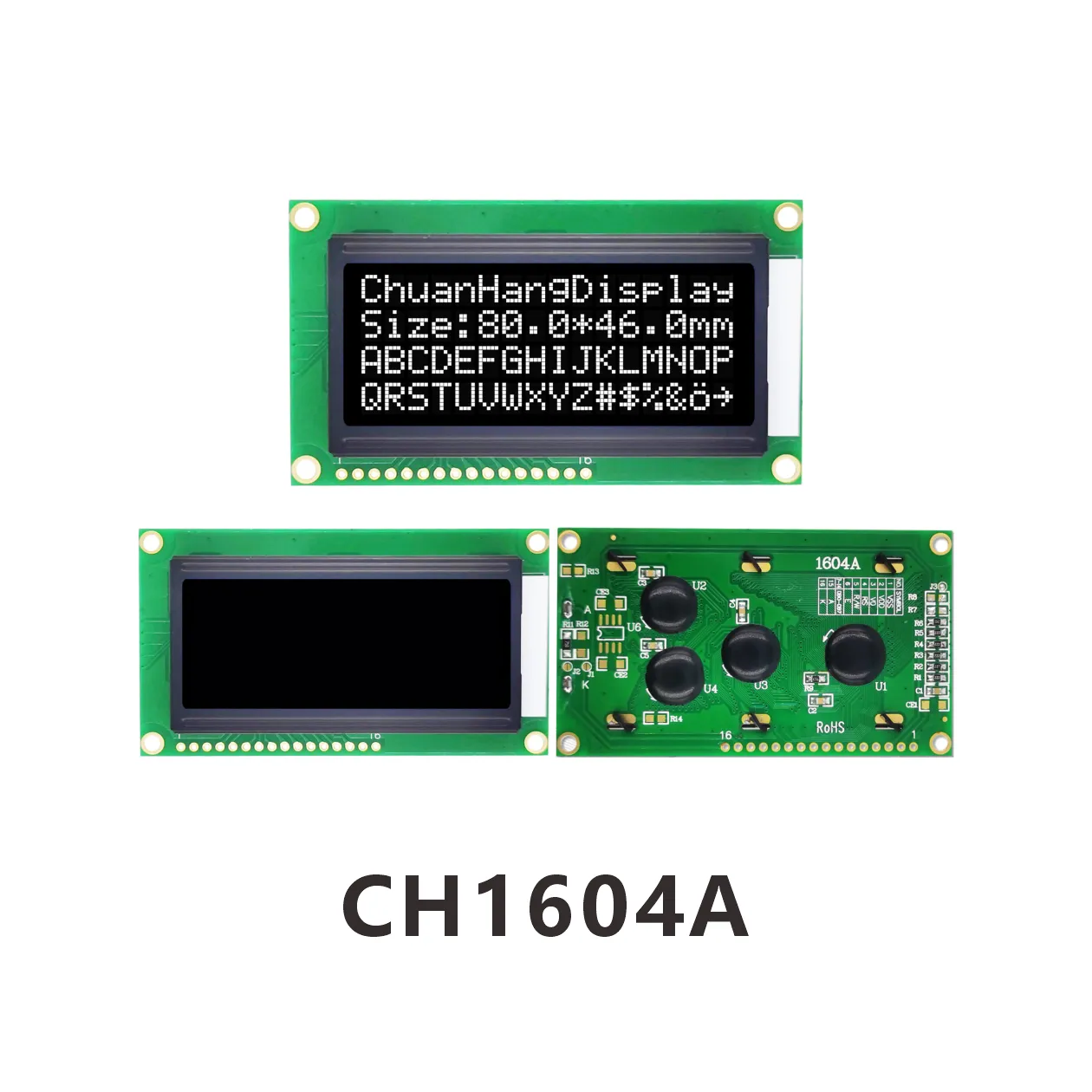
In graphic LCD engineering, Display Data RAM (DDRAM) acts as an internal bit-mapped memory bank. Each bit in memory maps directly to a single physical liquid crystal pixel on the display panel (1 = on/dark, 0 = off/clear). Calculating microcontroller memory requirements and transmission bandwidth is vital to preventing frame tearing and refresh stutter.
For an embedded host MCU (such as an ARM Cortex-M0+, ESP32, or STM32), calculating frame buffer RAM is derived from total pixel resolution divided by 8 bits per byte:
Frame Buffer (Bytes) = [Horizontal Dots x Vertical Dots] / 8
Example: 128 x 64 = 8,192 Pixels / 8 = 1,024 Bytes (1 KB)
When updating screens over a 4-wire serial peripheral interface (SPI) operating at a cycle time ($t_{CYC}$) of 250 ns (4 MHz), transferring a full 1 KB frame buffer takes roughly 2.05 milliseconds. This leaves over 95% of the host MCU's processing bandwidth available for system calculations. Adhering to standards specified by the Society for Information Display (SID) and electro-optical test criteria under IEC 61747 liquid crystal specifications, Chuanhang Display integrates high-speed bus transceivers that support read/write cycle times down to 200 ns.
Organizes 64 rows into 8 horizontal pages. Supports high-speed SPI with automatic address auto-incrementing, ideal for compact battery devices requiring low pin counts.
Integrates hardware font generation for 8,192 Chinese characters and 128 ASCII characters alongside a 64x256 bit GDRAM space, drastically reducing host storage overhead.
Supports simultaneous graphical waveform and text overlay screens in internal memory, enabling real-time oscilloscope grids and parameter labeling without software merging.
In outdoor industrial environments, liquid crystal optical birefringence ($\Delta n$) and viscosity drift significantly with temperature changes. As ambient temperatures drop toward -30°C, the fluid's rotational viscosity rises, causing slow optical transitions. Concurrently, the operational threshold voltage ($V_{th}$) shifts upward; if drive voltage remains static, the display turns faint and unreadable.
Conversely, when temperatures rise to +70°C or +80°C, $V_{th}$ decreases. Unselected pixels begin to experience root-mean-square voltages exceeding the off-state threshold, causing severe "ghosting" (crosstalk). To resolve this fundamental optical challenge, Chuanhang Display’s engineering team integrates negative temperature coefficient (NTC) thermistor feedback networks directly onto the module carrier board.
Chuanhang Display’s hardware architecture pairs an internal DC-DC charge pump with an external NTC sensor. The circuit continuously monitors ambient temperature and modulates the liquid crystal drive voltage ($V_{LCD}$) dynamically—automatically boosting $V_{LCD}$ from 9.0V at 25°C up to 10.5V at -20°C, and pulling it down to 8.2V at +60°C. This guarantees razor-sharp contrast and instantaneous optical switching across extreme outdoor thermal envelopes without manual user potentiometer adjustment.
Direct ownership of automated assembly machinery defines a premier graphic LCD module factory. Founded in 2011, Chuanhang Display operates fully owned COG (Chip-on-Glass), FOG (Film-on-Glass), COB (Chip-on-Board), COPB, and SMT production lines within its 5,000 m² modern manufacturing hub in Shenzhen.
A critical failure point in high-density graphic modules is micro-pitch interconnect breakdown. Driving a 128x64 or 240x128 display requires dozens of closely spaced conductive traces. If an intermediary outsources bonding to secondary manual shops, Anisotropic Conductive Film (ACF) particles are inadequately compressed, leading to row/column line dropouts under industrial machine vibration.
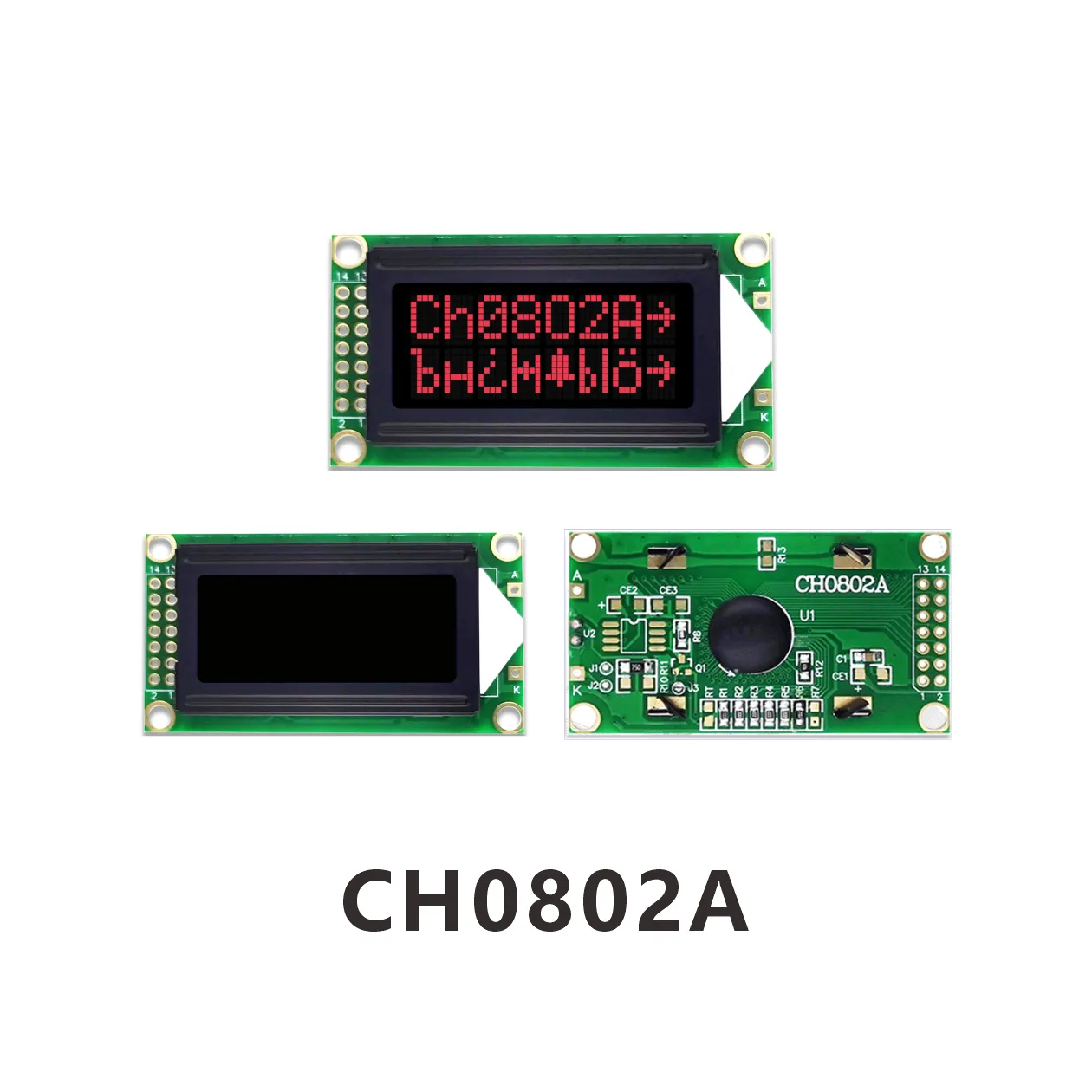
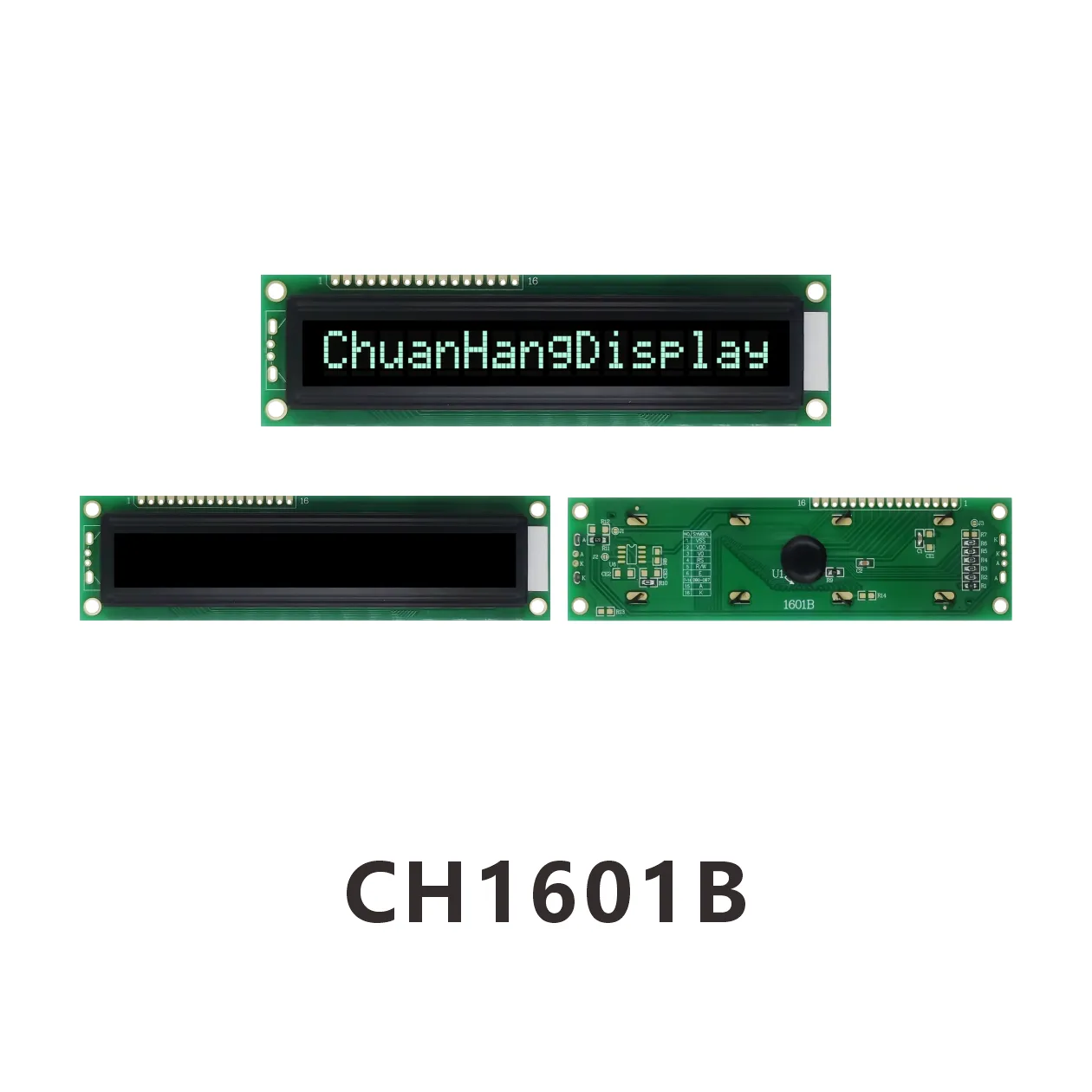
Drawing upon 13 years of specialized display manufacturing, Chuanhang Display executes an exhaustive 6-stage qualification loop on every production lot of graphic LCD modules, validating electrical open/short integrity, optical contrast, and mechanical durability.
100% optical and electrical probing of bare ITO glass cells to eliminate open-line shorts and micro-cracks.
Automated optical ACF thermocompression inside ISO Class 4 cleanrooms with pitch tolerances under ±0.015 mm.
Spectroradiometric calibration confirming contrast ratio (>15:1), response speed, and background chromaticity.
168+ hours at +60°C / 90% RH humidity alongside rapid thermal shock cycling (-30°C to +80°C).
Calibrated photometer mapping aligned with NIST optical measurement protocols, confirming >85% luminance uniformity across all active pixels.
High-voltage ESD protection verification and vacuum heat sealing in antistatic conductive trays with lot barcoding.
A1: Backed by 13+ years of specialized manufacturing, Chuanhang Display provides turnkey FPC redesigns. Operating our own automated COG and SMT lines, we can customize tail length, bend radii, connector pin assignments (ZIF/Hirose), and integrate dedicated EMI ground shielding, enabling our display to drop directly into your motherboard without host PCB re-spins.
A2: Choose ST7565R for ultra-low power handheld devices requiring a thin COG profile and serial SPI/I2C communication. Choose ST7920 if your UI requires Chinese/English character display alongside graphics to offload host MCU processing. Choose RA6963 for medium-to-large industrial consoles requiring simultaneous graphic waveform and text layer overlays.
A3: We partner directly with Tier-1 foundries (Sitronix, Ilitek, Solomon Systech) committed to 5 to 7+ year industrial lifecycles. If an upstream silicon revision becomes unavoidable, our 10+ member R&D engineering team provides pin-compatible and timing-compatible drop-in replacements, guaranteeing zero mechanical chassis or host code modifications for your product line.
A4: Color TFT and OLED displays require intense backlights to combat bright sunlight, generating thermal heat and rapidly draining battery reserves. A transflective FSTN graphic LCD module features an internal optical layer that harnesses ambient sunlight to illuminate displayed pixels. The brighter the sun, the sharper the contrast becomes—while consuming less than 1% of the power of an equivalent color screen.
A5: Standard catalog graphic display samples ship within 3 to 5 business days for engineering evaluation with zero MOQ restrictions. Custom OEM/ODM tooling projects (custom glass dimensions, custom FPC tails, or modified backlights) deliver working first-article prototypes within 2 to 3 weeks, supported by mass-production MOQs starting flexibly from 500 to 1,000 units.
A6: Yes. We engineer both 4-wire analog resistive touch panels (RTP) for low-cost glove operation and Projected Capacitive (PCAP) multi-touch panels with customized I2C controller firmware, laminated directly onto the module bezel with full cleanroom optical alignment.
Bypass trading brokers and engineer your display sub-assembly directly with Chuanhang Display. We provide 24-hour CAD counter-drawings, in-house optical bonding, and working prototype delivery within 2 to 3 weeks.