The evolution of visual interface technology has positioned the lcd display module as a cornerstone of modern industrial, medical, and automotive instrumentation. Unlike consumer-grade screens, industrial display solutions require a sophisticated balance of optical performance, thermal resilience, and long-term availability. For engineers and procurement specialists, understanding the underlying physics and assembly logic of these components is necessary for ensuring product reliability and cost-efficiency.

An integrated lcd display module is far more than a simple glass panel. It is a complex multi-layered system designed to manipulate light with extreme precision. At its core lies the Liquid Crystal cell, sandwiched between two glass substrates.
The "active matrix" of a modern module relies on the TFT array. Each pixel is controlled by a dedicated transistor, typically fabricated using Amorphous Silicon (a-Si) or Low-Temperature Polycrystalline Silicon (LTPS). LTPS offers higher electron mobility, allowing for higher resolutions and lower power consumption, which is particularly beneficial for high-density handheld devices.
The orientation of liquid crystal molecules determines the optical characteristics of the screen:
Twisted Nematic (TN): Known for fast response times and low production costs, though viewing angles are limited.In-Plane Switching (IPS): The preferred choice for medical and high-end industrial monitors due to superior color accuracy and wide 178-degree viewing angles.Vertical Alignment (VA): Offers high contrast ratios and deep blacks, filling the gap between TN and IPS performance.
The backlight is the primary consumer of power within the module. Modern industrial designs utilize White LED (WLED) arrays. To achieve sunlight readability, these units must output high luminance, often exceeding 1000 nits. This requires advanced thermal management to prevent LED degradation over time. Chuanhang Display specializes in optimizing these backlight configurations to provide consistent brightness while maintaining a slim mechanical profile.
Selecting the correct electrical interface is a vital decision during the hardware design phase. The choice impacts the PCB complexity, EMI (Electromagnetic Interference) levels, and the maximum resolution supported.
For low-resolution applications or microcontrollers with limited processing power, the MCU (8080/6800) interface is common. It includes an internal frame buffer within the display driver IC (DDIC). For medium resolutions, the TTL/RGB interface is used, requiring the host processor to constantly refresh the display data.
LVDS is the industry standard for larger panels (7 inches and above) and higher resolutions like 1024x600 or 1280x800. By using differential signaling, it minimizes EMI and allows for longer cable runs between the mainboard and the lcd display module, which is a key requirement in automotive and digital signage environments.
As mobile processors have migrated into the industrial space, the MIPI DSI protocol has become prevalent. It offers high bandwidth with very few pins, facilitating high-resolution video transmission with minimal power consumption. However, the high-speed nature of MIPI signals requires precise impedance matching on the carrier board to avoid data corruption.
In harsh environments, the physical durability of the screen is just as important as the image quality. There are two primary methods for attaching a touch sensor or cover lens to the display:
Air Bonding (Frame Bonding): The components are attached via double-sided adhesive along the edges. This creates an air gap that can lead to internal reflections and moisture condensation.Optical Bonding (OCR/LOCA): A transparent resin (Liquid Optically Clear Adhesive) fills the gap between the layers. This eliminates the air-to-glass interface, significantly reducing glare and improving shock resistance.
Furthermore, surface treatments such as Anti-Glare (AG), Anti-Reflection (AR), and Anti-Fingerprint (AF) coatings are applied to the top glass. These treatments ensure that the user interface remains legible under direct sunlight or harsh overhead lighting in factory settings.
The B2B procurement of display components involves more than just comparing price per unit. Product longevity and revision control are fundamental. Industrial projects often have lifecycles of 5 to 10 years, whereas consumer panels may go EOL (End-of-Life) within 18 months.
Chuanhang Display addresses this industry pain point by offering stable supply cycles and proactive EOL management. When a specific driver IC or glass substrate is discontinued, professional manufacturers provide "Form, Fit, and Function" compatible alternatives to ensure that the client's production line remains uninterrupted.
The price of an lcd display module is influenced by several variables:
Panel Grade: A-grade panels (zero bright dots) command a premium over B-grade panels.Customization: Custom FPC (Flexible Printed Circuit) lengths, high-brightness backlights, and integrated touch panels increase the NRE (Non-Recurring Engineering) costs.Volume: Economies of scale significantly impact the unit price, especially for custom glass cutting.
To meet the rigorous demands of sectors like aerospace or rail signaling, the lcd display module must undergo extensive environmental testing.
Thermal Cycling: Testing operation from -30°C to +80°C to ensure the liquid crystal chemistry does not freeze or clear (reach its isotropic point).Vibration and Shock: Simulating the mechanical stress of industrial machinery.ESD Protection: Ensuring the display and its touch interface can withstand high-voltage discharges common in dry, industrial environments.
By adhering to ISO 9001 and IATF 16949 standards, manufacturers like Chuanhang Display ensure that every module delivered meets the strict failure-rate requirements of the professional market.
One of the most frequent challenges for B2B buyers is the "Ghosting" effect or "Mura" (non-uniformity). These issues are often the result of poor quality control during the assembly of the cell or uneven pressure from the bezel. A high-quality lcd display module undergoes rigorous AOI (Automated Optical Inspection) to detect these defects before they reach the customer.
Another vital concern is the compatibility between the display and the Touch Panel (TP). Electromagnetic noise from the LCD can interfere with the capacitive touch sensors. Solving this requires deep expertise in firmware tuning and shielding techniques, ensuring a seamless user experience even when the operator is wearing gloves or the screen is wet.
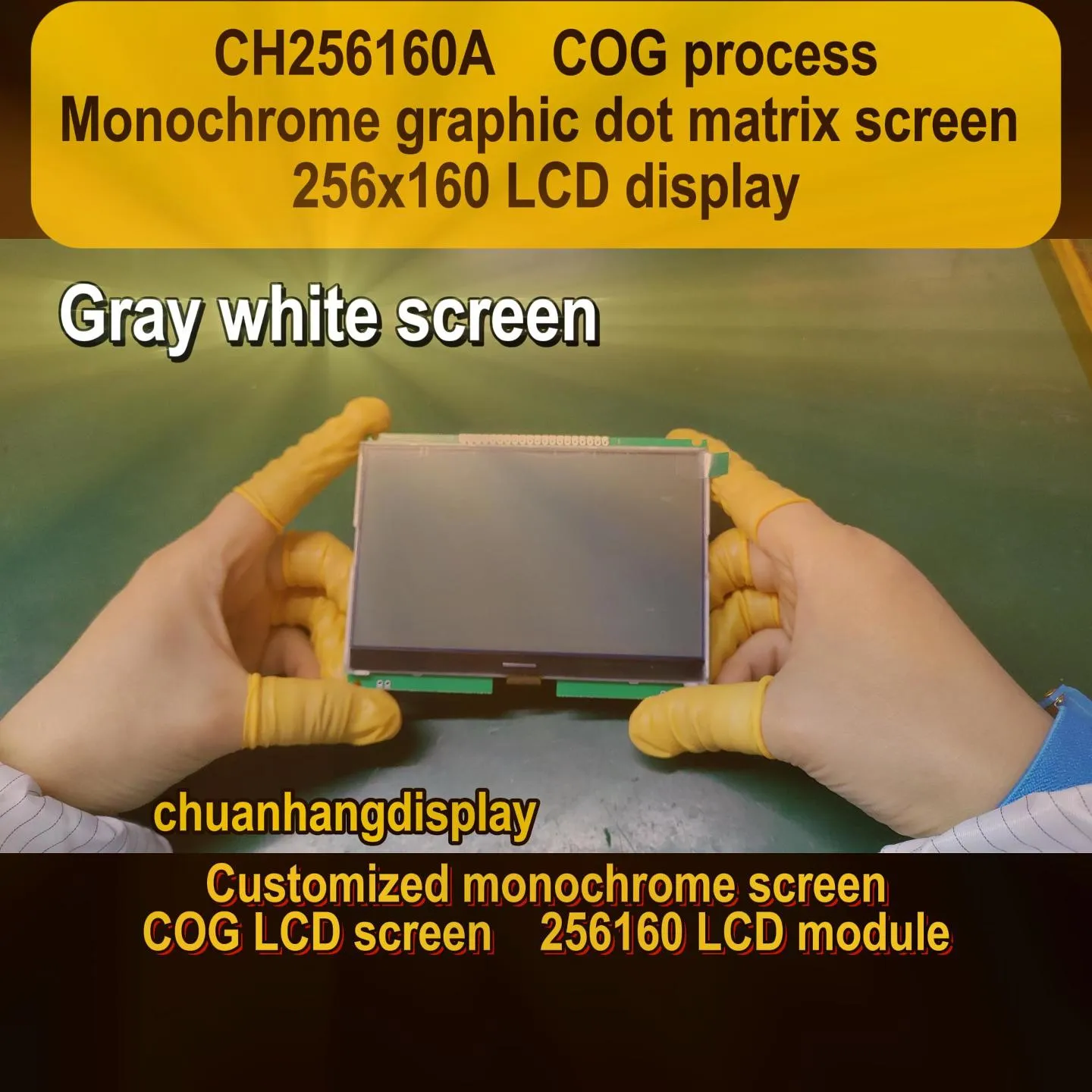
While OLED is gaining ground in the consumer sector, LCD technology continues to dominate the B2B market due to its superior lifespan and cost-effectiveness. Innovations such as Mini-LED backlighting are allowing the lcd display module to achieve contrast ratios that rival OLED, without the risk of "burn-in" or organic degradation. Furthermore, the development of quantum dot films is expanding the color gamut of industrial displays, enabling more vivid and accurate color representation for specialized medical imaging.
When choosing a vendor, the technical support capability is just as significant as the manufacturing capacity. A reliable partner should provide:
Detailed datasheets and initialization codes.Mechanical 3D models for enclosure integration.Direct access to field application engineers (FAE).
The role of a specialized manufacturer is to bridge the gap between raw panel production and the specific needs of the end application. Whether it is sunlight readability for an outdoor EV charging station or high-definition clarity for a surgical monitor, the right lcd display module serves as the primary touchpoint between the machine and the human operator.
Q1: What is the difference between a raw LCD panel and an LCD module?
A1: A raw panel is just the glass containing the liquid crystals and transistors. An lcd display module is a complete assembly that includes the panel, the backlight unit, the driver ICs, and the interface FPC. In many cases, it also includes a capacitive or resistive touch screen and a protective cover lens.
Q2: How can I ensure my display is readable in direct sunlight?
A2: Sunlight readability is achieved through two main methods: increasing the backlight brightness (typically to 800-1000 nits or more) and using optical bonding with anti-reflective coatings. These methods minimize the reflection of ambient light, allowing the internal light source to remain visible.
Q3: What does "EOL" mean in the display industry, and how do I manage it?
A3: EOL stands for End-of-Life, meaning the manufacturer is stopping production of that specific part. To manage this, you should partner with a supplier like Chuanhang Display that offers long-term support and can provide drop-in replacements or early notifications to allow for "last time buys."
Q4: Can I operate a standard LCD module in sub-zero temperatures?
A4: Standard modules are usually rated for 0°C to 50°C. However, wide-temperature modules are available that function from -30°C to +80°C. In extremely cold environments, an integrated heater can be added to the module to ensure the liquid crystals maintain their switching speed.
Q5: Which interface is best for a high-resolution display?
A5: For resolutions above 1280x800, LVDS or MIPI DSI are the most common choices. MIPI is generally preferred for compact, power-sensitive devices, while LVDS is more robust for systems with longer cable requirements and larger screen sizes.
Choosing the right visual solution is a key step in your product's development cycle. At Chuanhang Display, we provide technical expertise and manufacturing precision to bring your interface concepts to life. Our team is ready to assist with custom configurations, long-term supply stability, and rigorous quality control tailored to your specific application.