In the hierarchy of visual interface technologies, the 7 segment lcd display remains a standard for reliability, power efficiency, and legibility in industrial environments. While high-resolution graphical interfaces are common in consumer electronics, the segmented approach provides a focused, high-contrast method for displaying numerical data and basic status indicators. This article examines the technical architecture, material sciences, and procurement logistics associated with these components to assist engineers and procurement professionals in making informed hardware decisions.
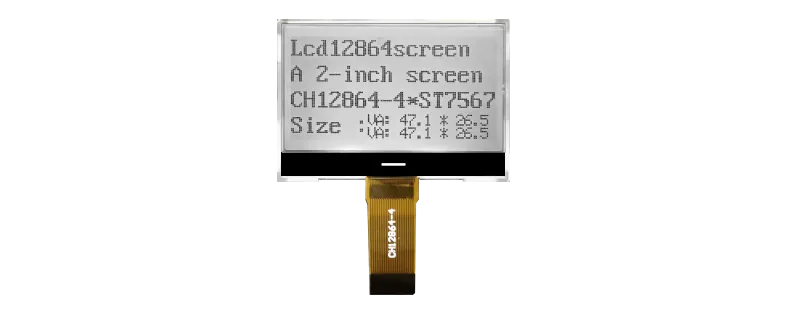
The core of a 7 segment lcd display is its arrangement of seven individual bars (segments) labeled 'a' through 'g'. By activating different combinations of these segments, the display can represent digits from 0 to 9. Beyond the primary digits, most modules include a decimal point (DP) and sometimes a colon for timekeeping applications.
Technically, these segments are Indium Tin Oxide (ITO) electrodes etched onto glass substrates. When a voltage is applied between the top and bottom electrodes, the liquid crystal molecules align to block or allow light passage, creating the visible character. The simplicity of this design is its greatest strength, as it requires significantly less processing power than a dot-matrix or TFT panel.
Selecting the driving method is a fundamental decision that impacts both the complexity of the Printed Circuit Board (PCB) and the visual quality of the output.
In a static drive configuration, every segment has a dedicated connection pin. This results in the highest possible contrast ratio and the widest viewing angles because each segment is receiving a constant, non-modulated signal. However, for a 4-digit display, this would require 29 pins (7 segments x 4 digits + 1 common). This high pin count often leads to increased assembly costs and requires a Microcontroller Unit (MCU) with extensive I/O capabilities.
Multiplexing reduces the pin count by sharing connections between segments. By using multiple "Common" (COM) pins, the controller cycles through the digits at a high frequency, invisible to the human eye.
Duty Cycle: This refers to the fraction of time each segment is active (e.g., 1/4 duty for a 4-digit display).Bias: This is the voltage level used to maintain the non-active segments in an "off" state. Common configurations include 1/3 bias or 1/2 bias.
While multiplexing saves space and reduces cost, it inherently reduces the contrast ratio compared to static driving. Professional manufacturers like Chuanhang Display work with engineers to optimize the bias and duty settings to ensure the best possible visibility for the specific hardware environment.
The choice of liquid crystal fluid determines the environmental resilience and aesthetic appearance of the 7 segment lcd display.
Twisted Nematic (TN): The most cost-effective solution. It offers a standard contrast ratio and is widely used in indoor applications like digital scales or simple thermometers.High-Twist Nematic (HTN): A step up from TN, providing better contrast and a wider viewing angle, making it suitable for handheld industrial tools.Super-Twisted Nematic (STN): Utilizes a higher twist angle (up to 270 degrees), which significantly sharpens the contrast and allows for higher multiplexing rates. It is often available in Yellow-Green, Gray, or Blue modes.Film-Compensated STN (FSTN): Adds a compensation film to the STN panel to provide a true black-on-white appearance. This is preferred for medical devices or high-end measuring instruments where clarity is a priority.
The durability of a display is largely dependent on the quality of its passive components.
Most segmented displays use soda-lime glass. The thickness is typically 0.7mm or 1.1mm. Thinner glass allows for lighter modules, but thicker glass provides better mechanical strength for heavy-duty industrial equipment. The ITO coating resistivity is another factor; lower resistivity allows for faster response times but increases material costs.
The polarizer determines how the display interacts with ambient light:
Reflective: Uses a mirror-like layer on the back. It relies entirely on ambient light, making it exceptionally power-efficient for outdoor daylight use.Transmissive: Requires a backlight to be visible. It is used in dark environments or where high-intensity LED illumination is required.Transflective: The most versatile option, combining reflective and transmissive properties. It is readable in direct sunlight and visible in the dark when the backlight is active.
One of the primary challenges in 7 segment lcd display integration is "ghosting"—where inactive segments appear partially visible. This is usually caused by a voltage mismatch or improper bias settings in the driver. To mitigate this, engineers must ensure the LCD drive voltage (Vlcd) is precisely matched to the liquid crystal fluid's threshold voltage.
Another challenge is environmental temperature. Standard LCDs struggle in extreme cold (liquid crystals become sluggish) or extreme heat (the background turns dark). For outdoor applications, specifying "Wide Temperature" fluid (-30°C to +80°C) is mandatory. Chuanhang Display utilizes specialized chemical formulations to ensure that the transition times remain consistent even in sub-zero conditions, preventing the "slow refresh" effect common in lower-quality panels.
How the 7 segment lcd display connects to the PCB affects both the manufacturing process and the long-term reliability of the device.
Metal Pins: The most robust method. Pins are soldered directly into the PCB. This is the preferred choice for high-vibration environments, such as automotive dashboards or industrial machinery.Elastomeric Connectors (Zebra Strips): These consist of alternating conductive and insulating layers of silicone. They are held in place by mechanical pressure between the LCD glass and the PCB. They are ideal for thin profiles and avoid the need for soldering on the glass side.Heat Seal Connector (HSC): A flexible ribbon cable bonded to the glass using heat-sensitive adhesive. It allows for more flexible placement of the display relative to the PCB.

While the liquid crystal itself does not emit light, the backlight unit (BLU) is a significant part of the display's power budget. Most modern segmented displays use LED backlighting. The design of the light guide plate (LGP) is vital for ensuring uniform brightness across all digits. Without a properly engineered LGP, the center of the display may appear brighter than the edges, a phenomenon known as "hot-spotting."
For low-power applications, Electro-Luminescent (EL) backlights were once popular due to their thinness, but their short half-life and the requirement for a high-voltage AC inverter have made LEDs the dominant choice for most new designs.
When sourcing a 7 segment lcd display, the unit price is often less important than the Total Cost of Ownership (TCO). A lower-cost component that fails prematurely in the field can result in expensive recalls and brand damage.
An authoritative supplier should provide:
Detailed Datasheets: Including V-op (Operating Voltage) curves and viewing cone diagrams.NRE Transparency: Non-Recurring Engineering fees should be clearly defined, covering the cost of custom ITO masks and tooling.Reliability Testing: Data on High-Temperature/High-Humidity (HTHH) testing and Thermal Shock cycles.
Working with a specialized manufacturer like Chuanhang Display allows for customization that off-the-shelf components cannot provide, such as unique icons, specific pinout configurations, and optimized optical performance for specific viewing angles (e.g., 12 o'clock for overhead displays or 6 o'clock for handheld devices).
The pricing for a 7 segment lcd display is driven by three main factors:
Size of the Glass: Larger glass consumes more raw material and reduces the number of pieces that can be cut from a single "mother glass."Display Mode: FSTN is significantly more expensive than TN due to the additional compensation films.Volume: Because the setup time for LCD production lines is significant, unit costs drop sharply as volumes increase from 1,000 units to 50,000 units.
For most industrial projects, an initial investment in a custom tool is justified because it allows the display to fit the mechanical housing perfectly, rather than forcing the housing design to accommodate a standard display.
Q1: What is the difference between a 7-segment display and a 14-segment display?
A1: A 7-segment display is primarily for numbers and a few basic letters (A, b, C, d, E, F). A 14-segment display, often called an "Alphanumeric" or "Union Jack" display, adds diagonal and vertical segments to the center of the digit, allowing for the clear representation of all 26 letters of the English alphabet and various symbols.
Q2: Can I drive a 7 segment lcd display directly from a standard MCU?
A2: It depends on the drive mode. If it is a static display and your MCU has enough I/O pins, you can drive it using an AC signal (square wave) to prevent DC polarization, which damages the liquid crystal. If the display is multiplexed, you typically need an MCU with a dedicated LCD controller peripheral or an external LCD driver IC.
Q3: Why is my display fading when viewed from an angle?
A3: This is a limitation of the "Viewing Angle." LCDs are optimized for a specific direction (usually 6 o'clock or 12 o'clock). If you view the display from outside its specified "viewing cone," the contrast drops. Choosing an STN or FSTN fluid can help widen this cone, as can increasing the drive voltage slightly.
Q4: Is it possible to have multiple colors in a single segmented LCD?
A4: Yes, this can be achieved in two ways. You can use "Silk-screen printing" on the front polarizer to give specific segments permanent colors. Alternatively, you can use a "Negative" display mode (where segments are transparent and the background is black) and use multi-color LEDs in the backlight to illuminate different zones in different colors.
Q5: What is the lifespan of a typical 7 segment lcd display?
A5: Under standard operating conditions (25°C, 50% humidity), a high-quality display from a manufacturer like Chuanhang Display can last over 50,000 to 100,000 hours. The primary failure point is usually the backlight LED or the polarizer degrading under heavy UV exposure, rather than the liquid crystal itself.
Q6: How do I prevent moisture from entering the display in outdoor applications?
A6: While the glass itself is waterproof, the edges and the connection points are vulnerable. Using a "Wide Temp" polarizer with a high-durability adhesive and applying a conformal coating to the PCB/LCD interface is the industry-standard method for preventing moisture ingress and subsequent "black spot" formation.