The integration of a tft display touch screen involves complex engineering decisions that influence both the performance and the longevity of a device. For B2B procurement managers and hardware engineers, understanding the intersection of Thin Film Transistor (TFT) liquid crystal displays and capacitive or resistive touch sensors is necessary for project success. As industries shift toward more interactive human-machine interfaces (HMI), the demand for high-reliability display solutions has never been higher.
This article examines the technical nuances of the tft display touch screen, from substrate materials to optical performance, providing a roadmap for sourcing high-quality components from manufacturers like [Chuanhang Display].

The foundation of any high-performance display is the TFT backplane. The "Thin Film Transistor" serves as an active matrix, controlling each individual pixel to ensure sharp images and fast refresh rates.
Most standard industrial displays utilize Amorphous Silicon (a-Si) due to its mature manufacturing process and cost-effectiveness. However, for applications requiring higher resolution or lower power consumption, Low-Temperature Poly-Silicon (LTPS) or Indium Gallium Zinc Oxide (IGZO) may be preferred. LTPS offers higher electron mobility, allowing for smaller transistors and thinner borders, while IGZO provides excellent transparency and low-power "still image" driving.
When choosing a tft display touch screen, the liquid crystal alignment mode is a significant factor.
Twisted Nematic (TN): Cost-effective but suffers from limited viewing angles and color shifting.In-Plane Switching (IPS): Provides 178-degree viewing angles and superior color accuracy. For professional medical or industrial equipment where multiple operators view the screen from various angles, IPS is the industry standard.
Selecting the right touch technology depends entirely on the operational environment. A tft display touch screen typically utilizes one of two primary architectures:
PCAP is the standard for modern interfaces. It supports multi-touch (up to 10 points) and features a durable glass surface. Within PCAP, there are two main types:
Self-Capacitance: Best for single-touch and simple gestures, often used in low-power devices.Mutual Capacitance: The preferred choice for professional applications, allowing for complex gestures and better palm rejection.
For environments where operators wear heavy gloves or where water droplets may interfere with the signal, advanced touch ICs (Integrated Circuits) from providers like Ilitek or FocalTech must be tuned to handle specific noise profiles.
While older, 4-wire or 5-wire resistive touch screens remain relevant in heavy industrial settings. They respond to physical pressure rather than electrical conductivity, making them immune to electromagnetic interference (EMI) and functional with any pointing device or thick protective gear.
The bridge between the LCD panel and the touch sensor—known as the bonding process—defines the visual clarity and mechanical ruggedness of the assembly.
In air bonding, the touch panel is attached to the TFT cell using double-sided adhesive along the perimeter. This creates an air gap. While cost-effective and easier to repair, the air gap causes internal reflections, reducing contrast and making the screen harder to read under direct sunlight.
Optical bonding fills the air gap with a clear adhesive, such as Optical Clear Resin (OCR) or Optical Clear Adhesive (OCA). This process eliminates the refractive index mismatch between layers.
Increased Contrast: By removing internal reflections, the perceived contrast ratio increases significantly.Durability: The solid bond prevents moisture ingress and fogging, while also improving impact resistance.Improved Thermal Dissipation: The adhesive helps conduct heat away from the LCD panel to the outer cover glass.
For high-end projects, [Chuanhang Display] recommends optical bonding to ensure the highest level of optical performance and environmental protection.
The cover lens is the first point of contact for the user and must be engineered for specific conditions. Standard soda-lime glass is common, but chemically strengthened aluminosilicate glass (similar to Gorilla Glass) is often required for impact resistance (IK ratings).
Beyond the material, several surface treatments are available to enhance the tft display touch screen experience:
Anti-Glare (AG): A chemical etch or spray coating that diffuses reflections. This is pivotal for outdoor kiosks or bright factory floors.Anti-Reflection (AR): A vacuum-deposited thin film that cancels out reflected light waves, maximizing light transmission from the display.Anti-Fingerprint (AF/Oleophobic): A coating that reduces the visibility of skin oils and makes the surface easier to clean.
High-resolution displays require robust data transmission protocols. Common interfaces for the LCD portion include:
TTL/CMOS: Used for smaller, lower-resolution screens.LVDS (Low-Voltage Differential Signaling): The workhorse of the industrial world, capable of transmitting data over longer distances with high noise immunity.MIPI DSI: Common in mobile-influenced designs and smaller high-definition displays.
The touch sensor typically communicates via I2C or USB. In professional environments, EMI is a frequent challenge. Proper grounding of the FPC (Flexible Printed Circuit) and the use of shielded cables are mandatory to prevent "ghost touches" caused by nearby motors or high-frequency power supplies.
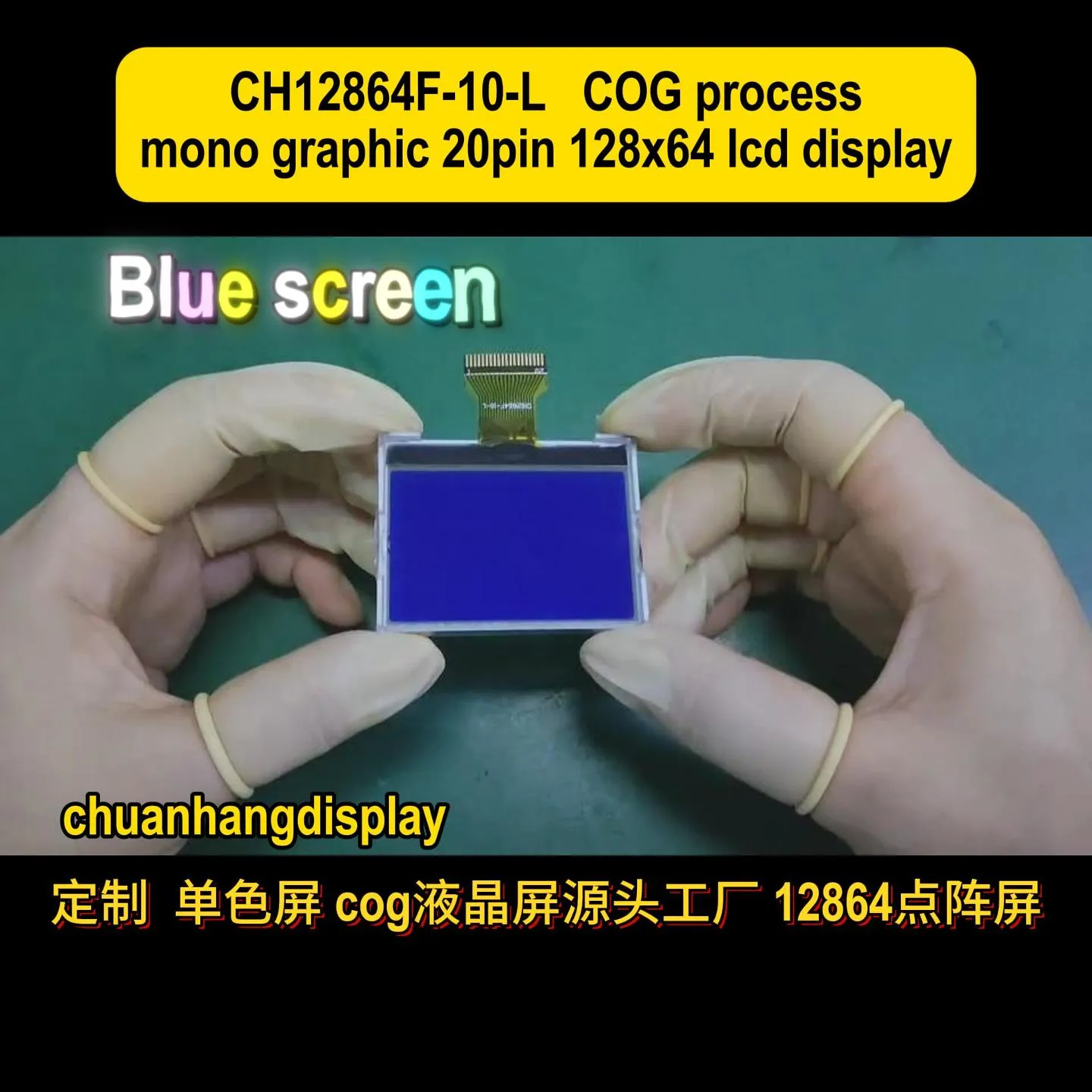
When evaluating a tft display touch screen supplier, technical support for integration is as vital as the hardware itself.
B2B products often have life cycles of 5 to 10 years. Unlike consumer electronics, industrial displays cannot change specifications every six months. A reputable manufacturer like [Chuanhang Display] ensures BOM (Bill of Materials) stability, providing EOL (End of Life) notifications and drop-in replacements to avoid costly redesigns.
Standard indoor displays offer 250 to 300 nits of brightness. For outdoor readability, a "sunlight-readable" display requires 800 to 1,500 nits. High-brightness backlights generate significant heat, which can degrade the liquid crystals (causing "clearing point" issues). Advanced thermal management, including high-efficiency LED drivers and heat-dissipating substrates, must be implemented.
The purchase price of a tft display touch screen is only one component of the total cost. Engineers must also consider:
Failure Rates: Low-quality sensors may fail in humid or high-vibration environments, leading to expensive field repairs.Integration Time: A supplier that provides pre-tuned touch controllers and comprehensive driver documentation reduces time-to-market.Customization Fees (NRE): While off-the-shelf solutions are cheaper, custom cover lenses with brand logos or specific mounting holes often provide a more professional final product.
[Chuanhang Display] focuses on balancing these factors to provide high-reliability solutions that minimize long-term maintenance costs for industrial and medical clients.
The future of tft display touch screen technology lies in greater integration and smarter sensors. As we move toward more intuitive interfaces, the demand for optical clarity, touch precision, and environmental durability will continue to grow. By focusing on the technical details—from LTPS substrates to optical bonding and surface treatments—OEMs can ensure their products remain functional and competitive for years to come. Choosing a partner that understands the rigorous demands of the B2B sector is the final, most significant step in the procurement process.
Q1: What is the difference between a tft display touch screen and a standard OLED?
A1: While OLED offers better contrast and thinner profiles, TFT (LCD) remains the preferred choice for industrial use due to its significantly longer lifespan, lack of "burn-in" issues, and lower cost-per-inch. TFTs are also much easier to read in high-ambient light when paired with a high-nit backlight.
Q2: Can I operate a capacitive touch screen while wearing gloves?
A2: Yes, but it requires a specialized touch controller and specific firmware tuning. Modern PCAP controllers can be programmed to detect signals through glass up to 6mm thick or through various types of industrial gloves.
Q3: Why is optical bonding more expensive than air bonding?
A3: Optical bonding requires specialized cleanroom environments, expensive adhesives (OCA or OCR), and high-precision vacuum or UV curing equipment. Additionally, the yield rate is lower because if a defect occurs during bonding, both the LCD and the touch panel are often lost.
Q4: What does "Sunlight Readable" actually mean in technical terms?
A4: Sunlight readability is achieved through two methods: increasing the backlight brightness (usually to 1,000+ nits) and reducing reflectivity through AR/AG coatings and optical bonding. Without reducing reflections, even a bright screen can become washed out.
Q5: How do I choose between I2C and USB interfaces for the touch screen?
A5: I2C is typically used for embedded systems (like ARM-based boards) and is ideal for shorter distances and lower power consumption. USB is standard for x86-based systems (Windows/Linux PCs) and offers "plug-and-play" functionality without the need for complex driver integration.