When engineers need to present complex data visually, a graphic lcd display module often becomes the go‑to solution. Unlike simple character displays, these units can show charts, waveforms, and custom fonts. At Chuanhang Display, we have witnessed how these modules evolve to meet industrial and consumer demands. The right graphic lcd display module can differentiate your product in a crowded market.
Modern graphic lcd display modules integrate driver ICs, backlight options, and wide‑viewing technologies. They are available in sizes from small 128×64 pixels up to 320×240 resolutions. Designers appreciate the balance between cost and functionality that a graphic lcd display module offers. This article explores seven essential aspects you should consider before specifying one.
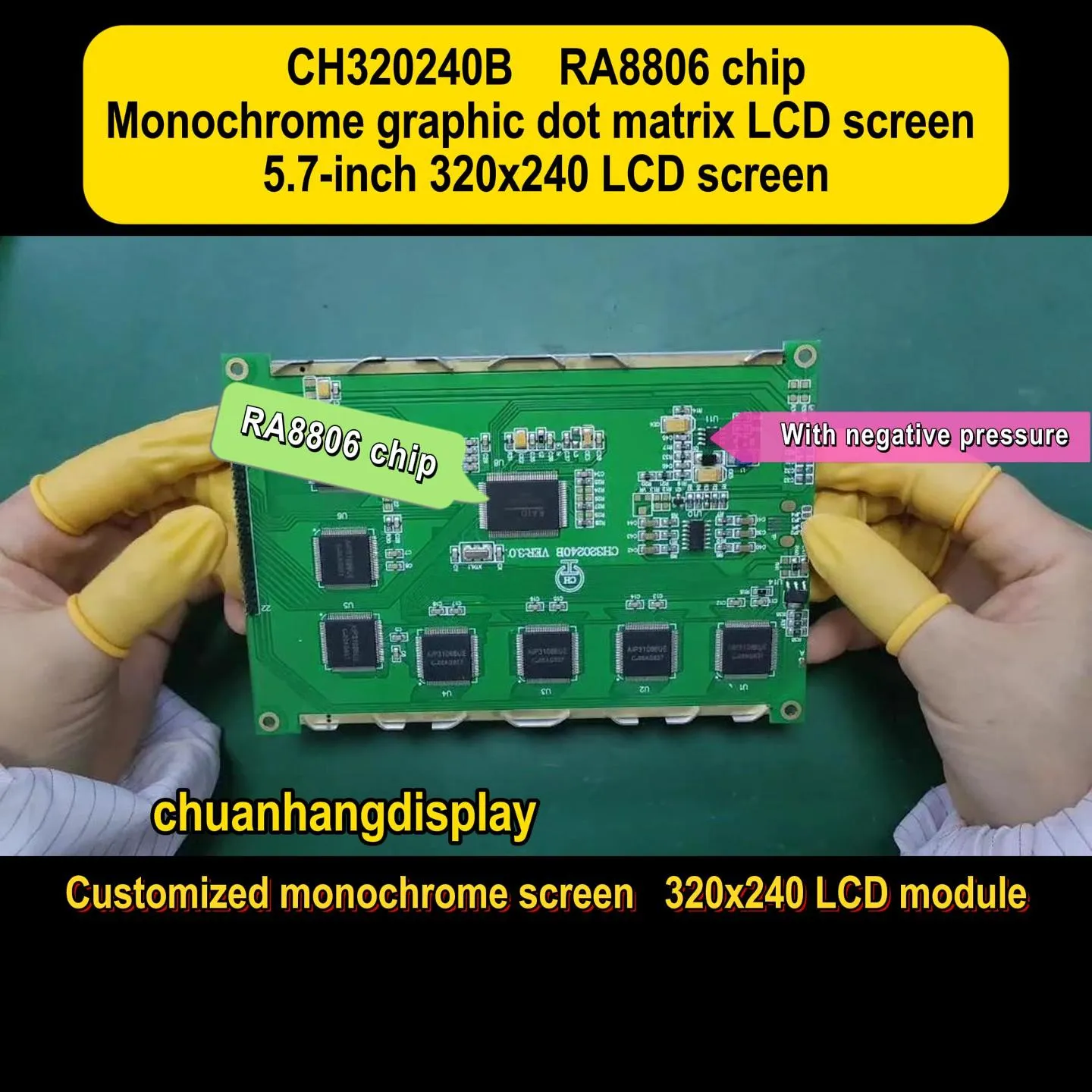
A graphic lcd display module lets you control every pixel. You can create custom icons, bar graphs, or even simple animations. This flexibility is vital for medical devices and point‑of‑sale terminals.
Many portable instruments rely on a graphic lcd display module because it draws very little current. Reflective and transflective versions eliminate the need for a backlight in well‑lit environments, extending battery life significantly.
Outdoor equipment such as parking meters and marine electronics require displays that remain visible under direct sun. A graphic lcd display module with a transflective polarizer offers excellent readability without excessive power.
Interfacing a graphic lcd display module with your microcontroller is straightforward thanks to standard protocols. Here are the most popular options:
Parallel interface (6800/8080): Offers high speed for large screens, common in industrial panels.
Serial peripheral interface (SPI): Reduces pin count; ideal for compact designs using a graphic lcd display module.
I²C: Used in smaller graphic lcd display modules where simplicity and low wiring are priorities.
RS‑232/UART: Found in older equipment or when long cable runs are necessary.
From factory floors to medical labs, the graphic lcd display module appears everywhere. Below are key industries that rely on this technology:
Medical devices: Patient monitors, infusion pumps – a graphic lcd display module shows waveforms and alarms clearly.
Test & measurement: Oscilloscopes and multimeters use these modules to present waveforms and numeric data.
Automotive: Dashboard clusters and climate controls often embed a graphic lcd display module for custom icons.
Retail & payment: POS terminals with a graphic lcd display module allow signature capture and price display.
Industrial automation: HMI panels with graphic lcd display modules replace bulky switches and lights.
Telecom: Office phones and network equipment use these displays for status and configuration menus.
Choosing a graphic lcd display module involves several technical trade‑offs. Consider the following checklist during your selection:
Resolution & dot size: More pixels allow finer details, but increase controller complexity.
Viewing angle & contrast: STN, FSTN, or VA technologies affect how your graphic lcd display module looks from the side.
Backlight type: LED, CCFL, or no backlight? Edge‑lit LED is common for today’s graphic lcd display module designs.
Temperature range: Industrial applications often require a graphic lcd display module rated from -20°C to +70°C.
Mechanical outline: Ensure the module fits your enclosure; many graphic lcd display modules come with mounting tabs.
Driver/controller availability: Popular controllers like ST7920, KS0108, or SSD1306 simplify software development.
With over a decade of experience, Chuanhang Display has supplied thousands of graphic lcd display modules worldwide. Our factory uses automated assembly lines to ensure consistent quality. Every graphic lcd display module undergoes strict optical and electrical testing. We also offer customization of polarizers, backlight colours, and even COB/chip‑on‑glass processes. When you partner with Chuanhang Display, you get more than a component – you get engineering support from prototype to mass production.
A well‑designed graphic lcd display module can operate for over 50,000 hours. Factors that influence lifespan include humidity, temperature cycling, and backlight degradation. Using a graphic lcd display module with LED backlight ensures consistent brightness for years. Storage conditions also matter: keep the module away from direct sunlight and extreme temperatures when not in use. Periodic cleaning with a soft, dry cloth maintains the polarizer’s clarity.

Even as OLED and TFT gain ground, the graphic lcd display module remains relevant due to its low cost and durability. New developments include ultra‑wide temperature versions for automotive, and chip‑on‑flex (COF) designs that reduce thickness. Some manufacturers now integrate capacitive touch directly on a graphic lcd display module. Chuanhang Display is actively working on higher‑contrast black‑mode FSTN modules that rival active displays in readability.
In summary, the graphic lcd display module continues to be a smart choice for applications requiring custom graphics at a reasonable price. Whether you are designing a medical monitor or an industrial controller, this technology offers proven reliability. For more information or to discuss your specific requirements, contact Chuanhang Display – your trusted partner in display solutions.
Q1: What is the difference between a graphic LCD display module and a character LCD module?
A1: A character LCD module is limited to pre‑defined alphanumeric characters (usually 5×8 or 5×11 dots), while a graphic lcd display module allows you to turn on/off any individual pixel. This enables you to draw custom shapes, charts, and even simple pictures.
Q2: Can I use a graphic lcd display module outdoors?
A2: Yes, many graphic lcd display modules are available with transflective polarizers that reflect ambient light, making them readable in direct sunlight. Adding an LED backlight helps in darker conditions, but the transflective type remains the best choice for bright environments.
Q3: What are the typical power requirements for a graphic lcd display module?
A3: Most small to medium graphic lcd display modules operate at 3.3V or 5V, drawing only a few milliamps without backlight. With the backlight on, current can range from 20 mA to 100 mA depending on size and LED configuration. Always check the datasheet for exact values.
Q4: How do I drive a graphic lcd display module with a microcontroller?
A4: You need to match the interface (parallel, SPI, I²C) of the module to your MCU. Many modules use built‑in controllers like ST7920 or KS0108, and libraries are available for Arduino, STM32, and other platforms. Chuanhang Display provides sample code and wiring diagrams upon request.
Q5: Does Chuanhang Display offer custom graphic lcd display modules?
A5: Absolutely. Chuanhang Display provides customization services including glass layout, backlight colour, voltage, and even temperature compensation. Our engineers work with you to create a graphic lcd display module that fits your exact mechanical and electrical needs.
Q6: What is the typical lifespan of an LED backlight in a graphic lcd display module?
A6: High‑quality LED backlights used in Chuanhang Display modules are rated for 50,000 hours or more. This translates to over five years of continuous operation. Lifespan can be extended by using PWM dimming to reduce average current.
Q7: Are graphic lcd display modules resistant to vibration and shock?
A7: Yes, most graphic lcd display modules are built with robust connections – either elastomeric connectors or metal pins. For extreme environments, Chuanhang Display offers modules with enhanced mounting and optional cover lenses to withstand heavy vibration.
* All product references are trademarks of their respective owners. Chuanhang Display is a leading manufacturer of LCD modules, including the graphic lcd display module series mentioned above.