The cog module (Chip-On-Glass) has become a cornerstone in the display industry, particularly for portable and compact devices. By mounting the driver IC directly onto the glass substrate, this packaging method reduces size and enhances performance. This article explores five primary benefits that make the cog module a preferred choice for engineers and product designers.
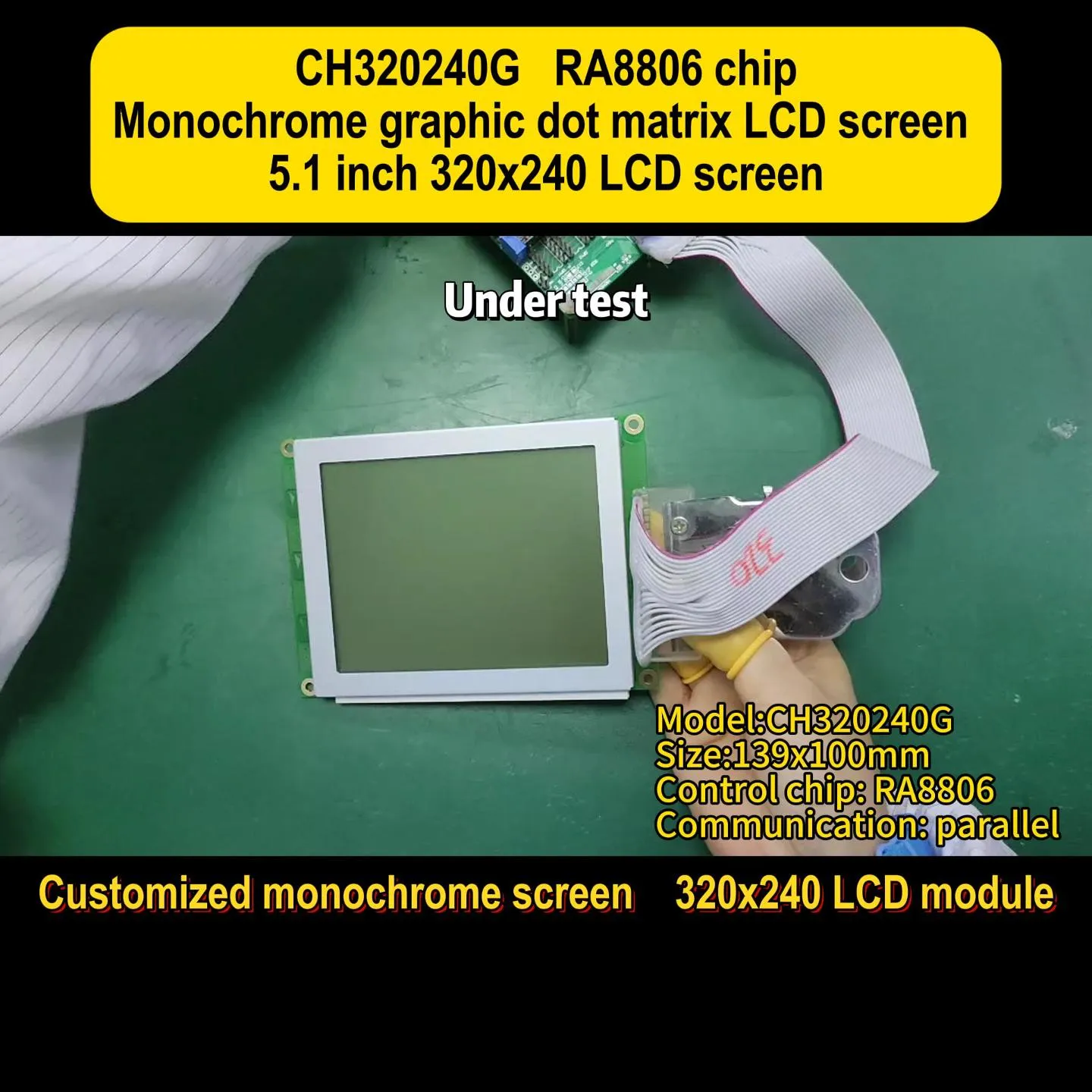
Traditional display modules use a chip-on-board (COB) construction where the driver IC sits on a separate PCB. The cog module eliminates that extra board by bonding the IC directly to the glass.
Thinner profile: Without a PCB, the overall module thickness decreases significantly.
Narrower borders: The absence of a separate PCB allows for a smaller bezel around the active area.
Ideal for wearables: Smartwatches and fitness bands rely on the compactness of the cog module to fit tight enclosures.
This space efficiency also simplifies mechanical integration, giving designers more freedom in industrial design.
Chip-on-Film (COF) and Tape Automated Bonding (TAB) offer some flexibility, but the cog module provides the smallest footprint. The driver IC sits flush with the glass, reducing the number of interconnects and the risk of mechanical damage.
Reliability is critical in automotive, medical, and industrial applications. The cog module construction improves robustness in several ways.
Fewer solder joints: Direct bonding eliminates many potential failure points found in traditional modules.
Better shock resistance: The rigid glass‑IC bond withstands vibration better than a separate PCB connected by flex cables.
Corrosion protection: The chip is often coated with epoxy, shielding it from humidity and contaminants.
Manufacturers like Chuanhang Display subject every cog module to temperature cycling and high‑humidity tests to guarantee long‑term performance.
Because the driver IC is directly on the glass, heat dissipates more efficiently than through a separate PCB. This characteristic helps maintain stable operation of the cog module in high‑temperature environments.
For medium to large production runs, the cog module offers economic benefits that outweigh the initial tooling costs.
Fewer components: No separate PCB, fewer connectors, and less assembly labor.
Automated bonding: Chip‑on‑glass assembly is highly automated, reducing per‑unit labor costs.
Material savings: Smaller overall size means less packaging material and lower shipping costs.
Even though the cog module requires precise alignment equipment, the economies of scale make it very competitive for volumes above 10k units.
Customizing a cog module with specific glass shapes or IC placements is feasible without redesigning an entire PCB. This flexibility allows brands to differentiate their products while keeping costs under control.
Placing the driver IC on the glass itself can improve optical characteristics compared to conventional packaging.
Higher aperture ratio: Less circuitry in the viewing area means more light transmission.
Better contrast: Direct bonding reduces reflections caused by extra interposers.
Uniform backlighting: The thinner stack allows the backlight to be closer to the liquid crystal layer, improving uniformity.
These optical benefits make the cog module suitable for high‑end consumer devices where display quality is paramount.
VA (Vertical Alignment) and IPS (In‑Plane Switching) technologies can be implemented in a cog module without sacrificing performance. The fine pitch achievable with chip‑on‑glass supports high‑resolution displays even in small sizes.

The versatility of the cog module spans numerous industries. Below are key sectors where this technology is prevalent.
Smartwatches, fitness trackers, and smart glasses require ultra‑thin displays. The cog module meets these demands while keeping power consumption low.
Dashboard clusters, center stacks, and rear‑seat entertainment systems use cog modules for their vibration resistance and wide temperature tolerance. Many automotive displays from Chuanhang Display are built around this technology.
Pulse oximeters, glucose meters, and portable ultrasound machines rely on compact, reliable displays. A cog module can be designed to meet stringent medical safety standards.
Human‑machine interfaces (HMIs) in factories often use cog modules because they can be made resistant to dust, oil, and mechanical stress.
Thermostats, smart locks, and kitchen appliances integrate small graphic or character displays. The cog module offers an attractive balance of cost and readability.
When integrating a cog module into your product, partner selection is critical. Look for a manufacturer with proven experience in glass‑IC bonding and a robust quality system.
Technical expertise: Does the supplier offer design assistance for custom glass layouts?
Quality certifications: ISO 9001, IATF 16949, and ISO 13485 indicate process maturity.
Supply chain stability: Ensure they source ICs and glass from reputable foundries.
After‑sales support: Fast response to technical queries and failure analysis is essential.
Chuanhang Display has delivered millions of cog modules worldwide, serving customers in automotive, medical, and industrial sectors. Their engineering team helps optimize the module for your specific application.
In conclusion, the cog module continues to gain traction due to its compact size, reliability, cost advantages, optical quality, and broad applicability. Whether you are designing a next‑generation wearable or an industrial HMI, this packaging technology deserves serious consideration. With the right manufacturing partner like Chuanhang Display, you can bring a high‑performance display to market efficiently.
Q1: What does COG stand for in a display module?
A1: COG stands for Chip‑On‑Glass. It refers to a cog module where the driver IC is directly mounted onto the glass substrate of the LCD, eliminating the need for a separate printed circuit board.
Q2: Is a COG module more expensive than a traditional COB module?
A2: For low volumes, the tooling cost for a cog module can be higher. However, in medium to high volumes (above 10,000 units), the reduced bill of materials and automated assembly often make the cog module more cost‑effective.
Q3: Can a COG module be used in outdoor applications?
A3: Yes, many cog modules are available with transflective polarizers that work well in direct sunlight. Additionally, the direct bonding enhances durability against temperature swings and humidity.
Q4: What is the typical lifespan of a COG module?
A4: With proper design and within specified operating conditions, a cog module can last over 50,000 hours. The LED backlight is usually the life‑limiting component, but it can be replaced separately in some designs.
Q5: Does Chuanhang Display offer custom COG modules?
A5: Absolutely. Chuanhang Display provides full customization for cog modules, including glass shape, IC selection, resolution, backlight color, and optional touch panels. Their engineers assist from prototype to mass production.
Q6: How do I interface a COG module with my microcontroller?
A6: Most cog modules use standard parallel or serial interfaces (I2C, SPI) similar to other LCD modules. The datasheet provided by the manufacturer includes initialization sequences and command tables. For complex modules, a ready‑to‑use driver library is often available.
Q7: Are COG modules available with touch functionality?
A7: Yes, many suppliers integrate capacitive or resistive touch panels directly onto the cog module. This combination is common in smartphones, tablets, and smart home devices.
For more technical resources and product examples, visit Chuanhang Display’s website and explore their extensive range of cog modules.