You are designing a compact, reliable electronic product. Display selection is critical. The COG LCD module often becomes the optimal choice.
COG stands for "Chip-On-Glass." This technology directly mounts the driver IC onto the glass substrate. It eliminates the need for a separate PCB connector.
This results in a thinner, more robust, and space-saving display unit. It is a dominant solution for battery-powered and portable devices.
This article explains its core benefits, how to choose one, and what to expect from a dependable supplier.
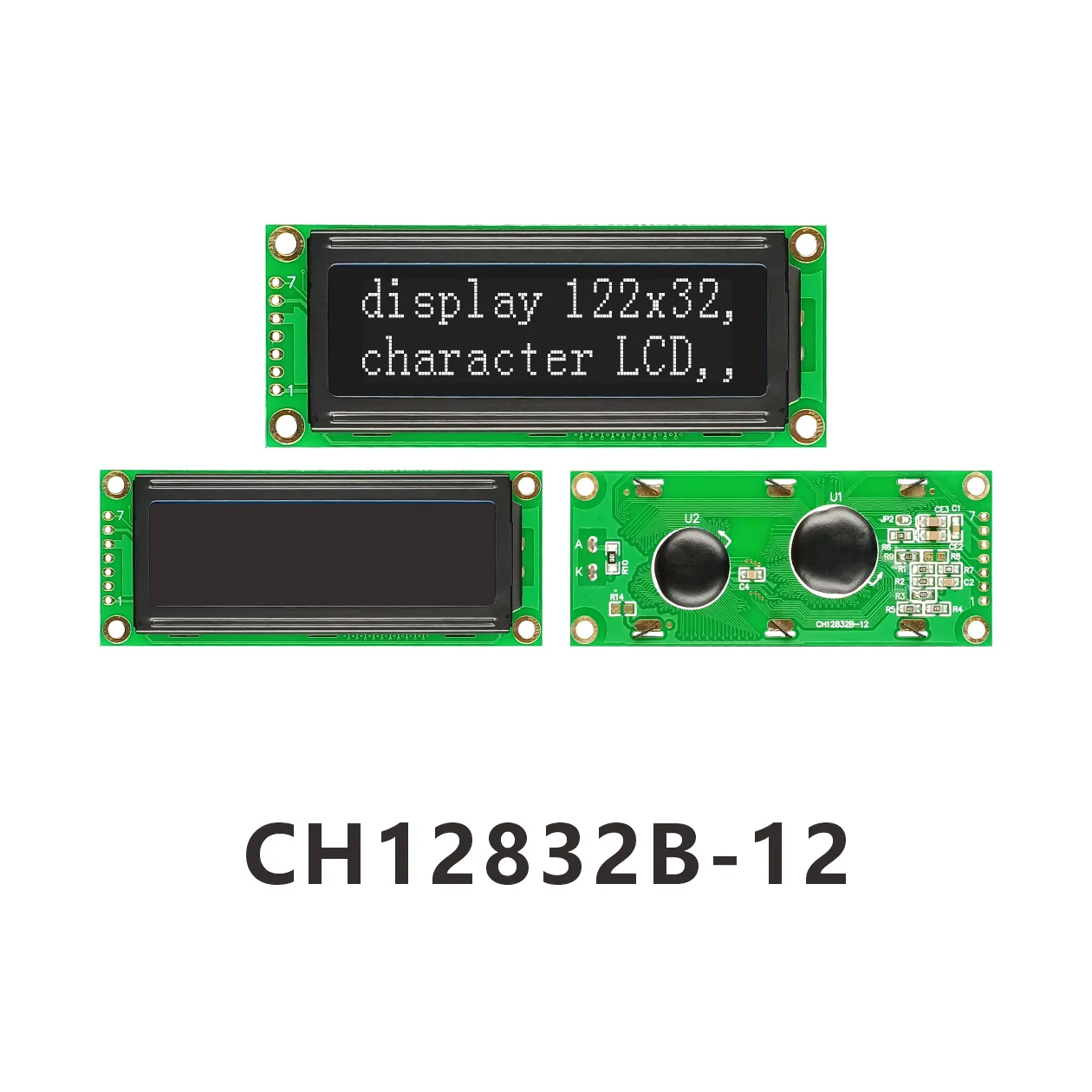
A COG LCD module is an integrated display assembly. In standard designs, the driver chip sits on a flexible or rigid PCB connected to the glass via pins or tape.
In the COG construction, the silicon die is bonded directly onto the glass's conductive traces. Anisotropic Conductive Film (ACF) creates the electrical connection.
This direct attachment removes the traditional connector (like a pin header or ZIF FPC). The module's outline becomes significantly smaller.
The result is a display with a minimal footprint, higher reliability due to fewer connections, and reduced overall thickness. It is a true integrated circuit on the display itself.
Understanding competing packaging methods clarifies why COG is often specified.
COG (Chip-On-Glass): The IC is on the glass. This offers the slimmest profile and excellent reliability for the module itself. Interfacing it to your main PCB still requires a connection (like zebra strip contacts or solder pins on the glass edge).
COF (Chip-On-Film): The IC is mounted on a flexible printed circuit (FPC). The FPC then bonds to the glass. This allows the controller to be placed away from the display area, offering more design flexibility for complex layouts.
COB (Chip-On-Board): The IC is mounted directly onto your product's main PCB, separate from the display. The display glass connects via a standard FPC. This centralizes components but increases the overall thickness.
For maximizing space inside a slim device, a COG LCD module is typically the preferred route.
This technology is not a niche. It is everywhere you need a small, durable screen.
Choosing one requires attention to specific details beyond resolution.
1. Interface and Connection: How will it connect to your host PCB? Common methods include:
2. Viewing Mode and Optical Bonding: Standard TN (Twisted Nematic) modes are common. Consider HTN or STN for wider viewing angles. For sunlight readability, discuss optical bonding services with your supplier. This laminates a cover glass directly to the COG LCD, reducing glare and improving contrast outdoors.
3. Temperature Range and Reliability: Verify the operating and storage temperature specs match your product's environment. A well-made COG LCD module excels in thermal cycling tests due to its reduced material interfaces.
4. Supplier Customization Capability: Can they deliver a custom COG LCD module? This includes:
A partner like Chuanhang Display typically offers these engineering services for mid-to-high volume projects.

The cost is influenced by volume, complexity, and the level of customization.
NRE (Non-Recurring Engineering) costs are significant for custom LCD module designs. This covers the glass mask tooling, FPC layout, and testing jig development. For standard modules, these costs are amortized.
Unit price depends on:
Always request a full quotation breakdown. The lowest unit price may hide higher integration costs or reliability risks.
The core of COG reliability lies in the bonding process.
After the glass is cut and patterned, ACF is precisely placed. The driver IC is then aligned onto the glass bond pads under a microscope.
A thermode applies precise heat and pressure. The conductive particles in the ACF collapse, forming electrical connections only in the vertical axis, preventing shorts.
This bond is mechanically strong and resistant to thermal stress. Quality is ensured through 100% electrical testing and sampling for severe environmental stress screening.
For mission-critical applications, suppliers like Chuanhang Display provide batch-level reliability reports, giving designers confidence.
Sourcing a COG LCD module is a technical partnership. You need more than a distributor.
Look for a supplier with in-house engineering support. They should ask detailed questions about your host PCB layout, MCU compatibility, and environmental needs.
A good partner will help you avoid pitfalls. For example, they might recommend a specific FPC tail length or stiffener placement for your assembly line.
Chuanhang Display operates with this model. They provide application notes, reference schematics, and often pre-programmed initialization code for their custom COG LCD modules. This reduces development time and risk.
Their value is in transforming a standard display component into a fully integrated, problem-free part of your bill of materials.
Prototype early. Order evaluation samples and test them under real-world conditions. Check brightness, viewing angles, and response time in your housing.
Confirm the long-term availability of the driver IC. Discuss minimum order quantities and lead times for production.
Document your exact requirements in a detailed specification sheet. This document is the foundation for getting accurate quotes and ensuring the supplied COG LCD module matches your expectations.
Q1: Is a COG LCD module more reliable than a standard connector-type module?
A1: Generally, yes. By eliminating the separable connector (a common failure point for corrosion or fretting), the COG LCD module offers superior resistance to vibration, shock, and moisture ingress. The direct ACF bond is very robust when manufactured correctly.
Q2: Can I get a COG module with a capacitive touchscreen?
A2: Absolutely. This is a common custom LCD module request. A capacitive touch sensor film (typically ITO-coated glass or film) can be laminated onto the cover glass or the LCD itself. The touch controller FPC is often integrated into the module's tail for a single connection point to your host PCB.
Q3: What are the lead times for a custom COG design?
A3: Lead times vary significantly. For a new custom COG LCD module, expect 8-12 weeks for initial prototypes after finalizing design and masks. This includes glass fabrication, FPC production, and assembly. For standard modules from stock, it can be 2-4 weeks. Suppliers like Chuanhang Display can provide detailed project timelines.
Q4: How do I interface with a COG module; do I need a special controller?
A4: No, you typically do not. The driver IC on the glass is usually a standard controller (like an ST7567, SSD1305, etc.). You communicate with it via SPI or I2C, just like any other display module. The main difference is the physical connection method (hot-bar, zebra strip, etc.) to your MCU's pins.
Q5: Are there limitations to the size or resolution of COG modules?
A5: There are practical limits. The technique is ideal for small to medium-sized displays, typically up to about 3.5 inches diagonally. Beyond this, the number of required bond pads for the driver IC becomes very high, and the single chip may be insufficient, leading to multi-chip designs which are more complex. For larger, high-resolution displays, COF or other technologies are more suitable.