Despite the proliferation of TFT and OLED displays, the 7 Segment LCD remains the workhorse of industrial, medical, and instrumentation applications. Its unique combination of ultra-low power consumption, excellent sunlight readability, and cost-effectiveness for simple numeric readouts ensures its enduring relevance. This deep technical analysis, informed by decades of engineering experience at Chuanhang Display, provides B2B specifiers with the critical parameters to select, customize, and integrate these components for maximum reliability and performance.
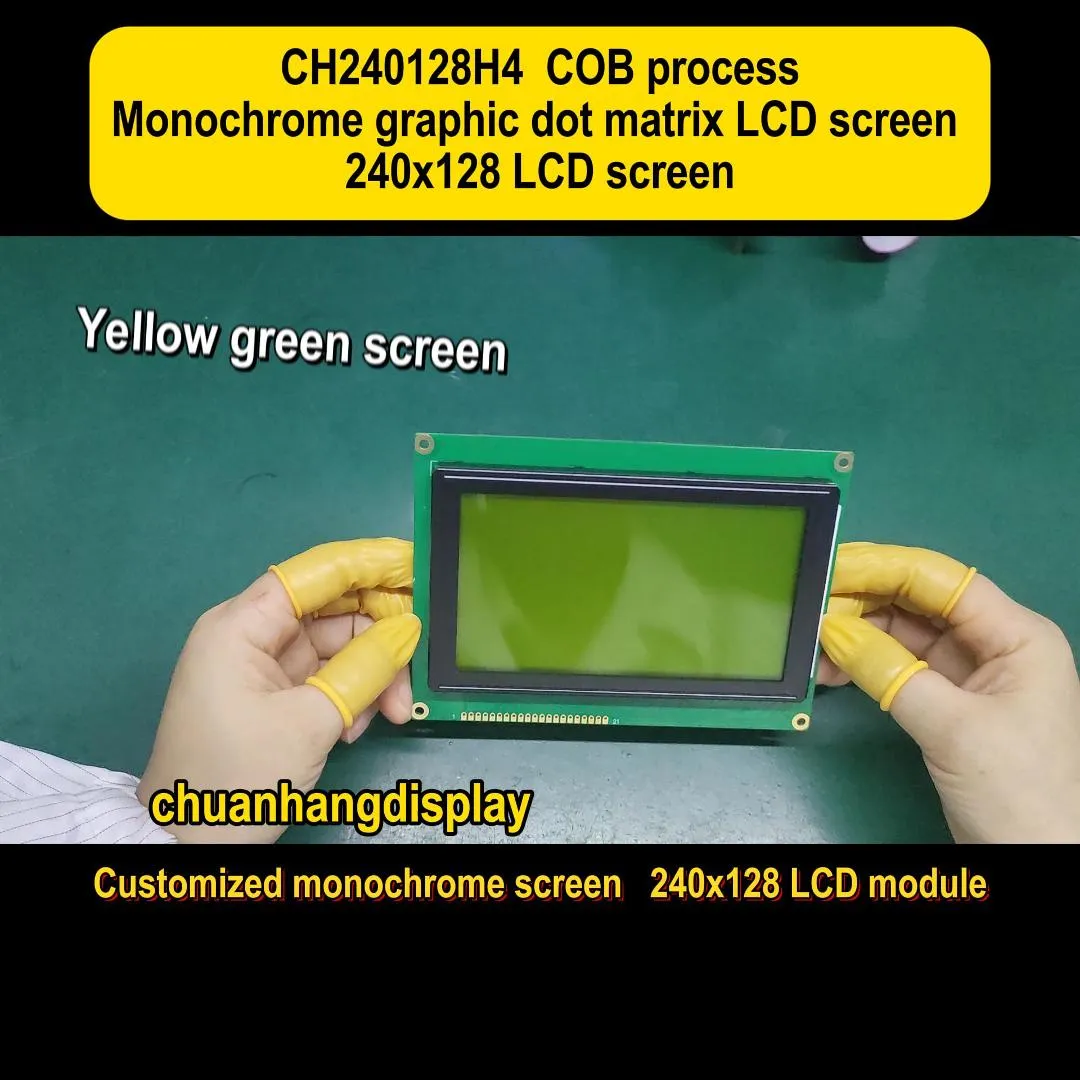
The fundamental principle of a 7 Segment LCD relies on the electro-optical properties of liquid crystals. In a Twisted Nematic (TN) or Super Twisted Nematic (STN) cell, an applied electric field reorients the crystal molecules, altering light polarization and creating a visible segment. This technology persists for several compelling reasons:
Power Economy: Unlike light-emitting technologies, an LCD modulates ambient or backlight. A static-driven segment consumes mere microwatts, making it indispensable for battery-powered devices like thermostats, gas meters, and portable medical monitors.
Optical Clarity in High Ambient Light: Reflective and transflective modes leverage ambient light, meaning readability improves as sunlight intensifies—a direct advantage over emissive displays that wash out.
Design Flexibility: Beyond digits, manufacturers like Chuanhang Display offer custom glass etching for annunciators, battery symbols, and unit indicators, creating a consolidated, branded display face.
Market data indicates that the segment LCD market, while mature, maintains steady demand in flow meters, point-of-sale terminals, and automotive aftermarket clusters, with a projected CAGR of 2.5% through 2030, driven by infrastructure upgrades in smart utilities.
Selecting a 7 Segment LCD requires moving beyond basic digit count and size. Here are the granular specifications that define performance:
The choice between reflective, transmissive, and transflective directly impacts application success:
Reflective: Utilizes a mirror-like rear polarizer. Ideal for calculators and outdoor instruments with abundant ambient light. Power consumption is absolute minimum as no backlight is used.
Transmissive: Requires a backlight for visibility. Suitable for indoor environments like laboratory equipment. Contrast ratio depends heavily on backlight intensity and diffuser quality.
Transflective (semi-transparent): The gold standard for handheld industrial terminals. A partial reflector allows both backlight use and ambient light reflection, ensuring readability from pitch dark to full sunlight.
Standard commercial LCDs operate from 0°C to 50°C. For outdoor or harsh environments, industrial-grade liquid crystal mixtures are mandatory. Key considerations include:
Wide-Temperature Fluids: Enable operation from -30°C to +85°C. At low temperatures, viscosity increases, slowing response time; at high temperatures, clearing point (Tc) must not be exceeded to prevent permanent damage. Chuanhang Display offers characterized data for response times across the full temperature range.
Heater Integration: For extreme cold (below -40°C), integrated ITO heater layers can be etched onto the glass to precondition the LCD, a common solution in military or arctic instrumentation.
The electrical driving method defines pin count and contrast stability:
Static Drive: Each segment has a dedicated backplane pin. Provides the highest contrast and widest viewing angle as each segment is independently driven. Preferred for displays with few digits.
Multiplex Drive (e.g., 1/2, 1/3, 1/4 duty): Reduces pin count by time-multiplexing common backplanes. Requires careful selection of bias ratio and LCD voltage (Vop) to avoid crosstalk (ghosting). Our engineers at Chuanhang Display provide precise Vop matching to your driver IC.
Integrating a 7 Segment LCD is rarely plug-and-play. Here are frequent technical hurdles and their engineering resolutions:
Challenge: In a fuel dispenser or medical pump, operators view the display from different angles. Standard TN displays may show contrast inversion or fading at off-angles.
Solution: Specify a wide-viewing angle grade, often using negative LC fluids with vertical alignment. Optimizing the rubbing direction during glass alignment and employing compensation films can broaden the usable cone. For critical applications, Chuanhang Display offers custom tooling to align the viewing cone with the primary operator position.
Challenge: Outdoor terminals (e.g., EV charging stations) face UV radiation, humidity, and thermal cycling, which can degrade polarizers and cause edge seal failure.
Solution: Specify UV-resistant polarizers and robust edge sealing materials (epoxy or laser glass frit). Accelerated life testing per IEC 60068-2-78 (damp heat) and -2-2 (dry heat) is essential. Data from Chuanhang Display shows that proper material selection yields less than 5% contrast degradation after 1000 hours at 85°C/85% RH.
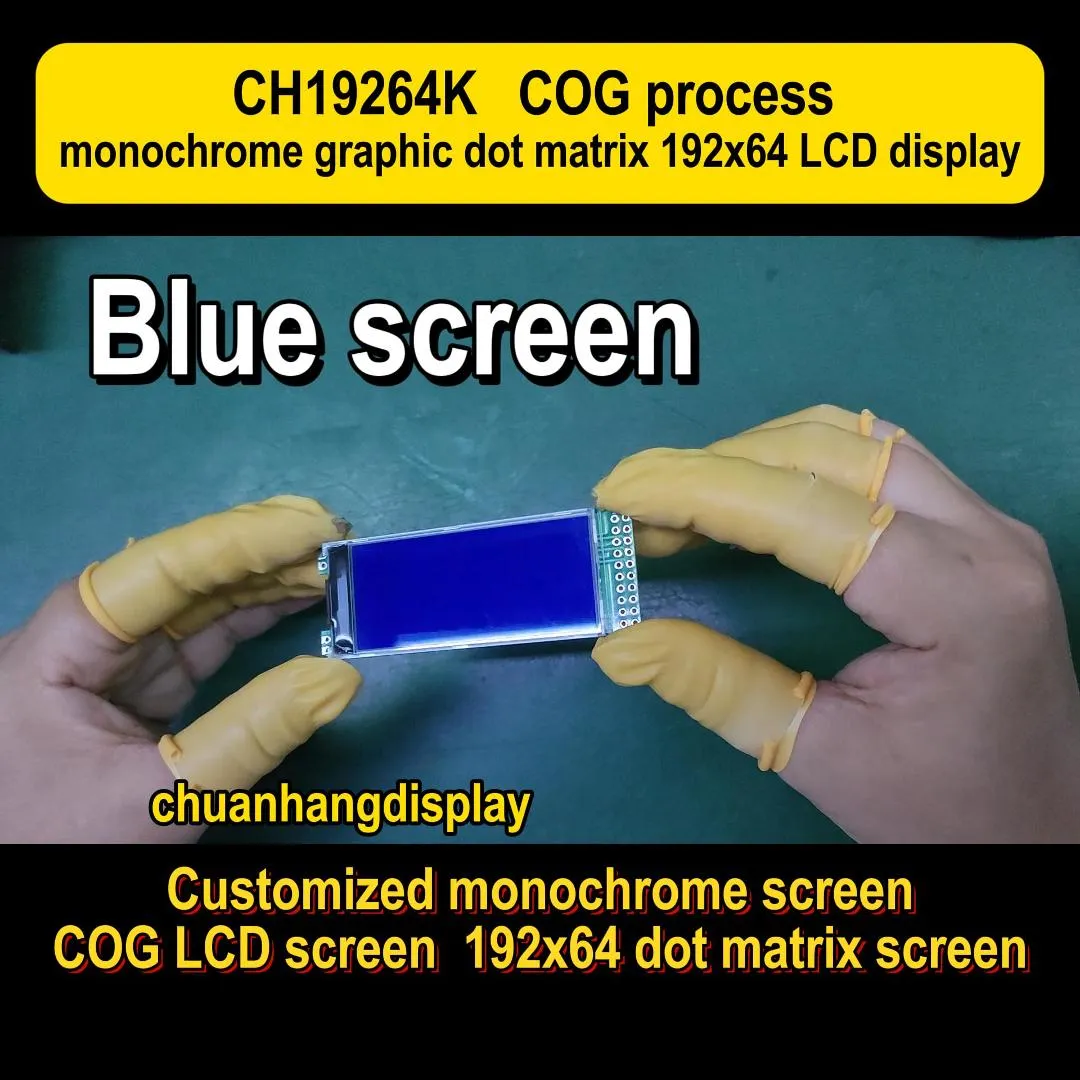
Modern microcontrollers and dedicated driver ICs simplify interfacing, but careful attention to interface design prevents field failures.
Direct Drive: For minimal displays, MCU GPIO pins can directly drive segments using square waves (no DC component). This consumes firmware resources and pins.
Segment Driver ICs: Chips like the HT1621 (for up to 32x4 segments) or PCF8576 (I2C-bus) handle multiplexing and DC-balancing automatically, reducing MCU overhead. Ensure the driver's bias levels and Vop range match your LCD's specification sheet.
Connection Methods: Zebra (elastomeric) connectors are cost-effective but require precise alignment and pressure. For vibration-prone environments, FPC (Flexible Printed Circuit) or pin-out (heat seal) terminations provide superior mechanical integrity.
For transmissive or transflective modes, backlight design is critical:
LED Color and Wavelength: Yellow-green LEDs are most efficient and often match the eye's peak sensitivity. Blue and white require higher voltage but can offer aesthetic differentiation. Phosphor-based white LEDs have longer-term color temperature drift considerations.
Light Guide Plates (LGP): Edge-lit designs require precision micro-optics to extract light uniformly. Uneven backlighting creates "hot spots" and "dim ends," which can mislead operators in critical readings.
Successfully deploying a 7 Segment LCD in a commercial product transcends component purchasing. It requires a partnership with a manufacturer that understands the interplay of materials, tolerances, and end-use conditions. Chuanhang Display distinguishes itself through:
Deep Customization: From glass thickness (0.55mm to 1.1mm) and ITO pattern design to connector type and fluid selection, every parameter is configurable.
Stringent Quality Assurance: Our facilities adhere to ISO 9001 standards, with 100% optical and electrical inspection. Materials are RoHS and REACH compliant.
Engineering Collaboration: We provide comprehensive support, including DFM feedback, initial mask tooling, and golden sample validation, ensuring your display integrates seamlessly with your chosen driver IC and mechanical housing.
The humble 7 Segment LCD remains a high-tech component that demands careful specification. By understanding the nuances of viewing modes, temperature fluids, driving schemes, and interconnection, B2B buyers can ensure their products deliver reliable, clear information for years. Leverage the expertise of a dedicated partner like Chuanhang Display to navigate these complexities and achieve an optimal price-performance ratio for your application.
Q1: What is the typical lifespan of a 7 Segment LCD?
A1: Under proper driving conditions (AC waveform, no DC component), the LCD glass itself can last over 100,000 hours. The limiting factor is often the backlight or polarizer, especially in UV exposure. Chuanhang Display uses high-grade materials to ensure longevity.
Q2: Can I display letters or custom symbols on a 7 Segment LCD?
A2: Yes, 7 Segment LCDs can be customized to include additional segments for letters (like A, b, C, d, E, F) and special icons (battery status, units). The segment electrodes are defined during the mask design.
Q3: What is the difference between a 7 Segment LCD and a 7 Segment LED display?
A3: LCDs modulate light and consume very little power (µA range), making them ideal for battery-powered devices. They are also readable in direct sunlight. LEDs emit light, are brighter for dark environments but consume more power (mA range).
Q4: How do I choose between reflective, transmissive, and transflective LCDs?
A4: Reflective relies on ambient light, best for calculators/watches. Transmissive requires a backlight, ideal for indoor dark environments. Transflective works in both, with a partial reflector, suitable for outdoor handheld devices.
Q5: What driving voltage is required for a typical 7 Segment LCD?
A5: Standard LCDs operate at 3V to 5V, matching common logic levels. However, specific materials can be formulated for lower voltages (2.5V) or higher voltages (10V) for special applications.
Q6: Can I get a 7 Segment LCD with a wide operating temperature range?
A6: Absolutely. Industrial-grade LCDs use specialized liquid crystal mixtures that operate from -40°C to +85°C or wider. Chuanhang Display offers various temperature grades based on application requirements.