A 12864 lcd refers to a monochrome graphic display module with a resolution of 128 pixels horizontally by 64 pixels vertically. This compact screen is a fundamental component in countless electronic devices, offering a reliable and cost-effective solution for displaying text, symbols, and basic graphics.
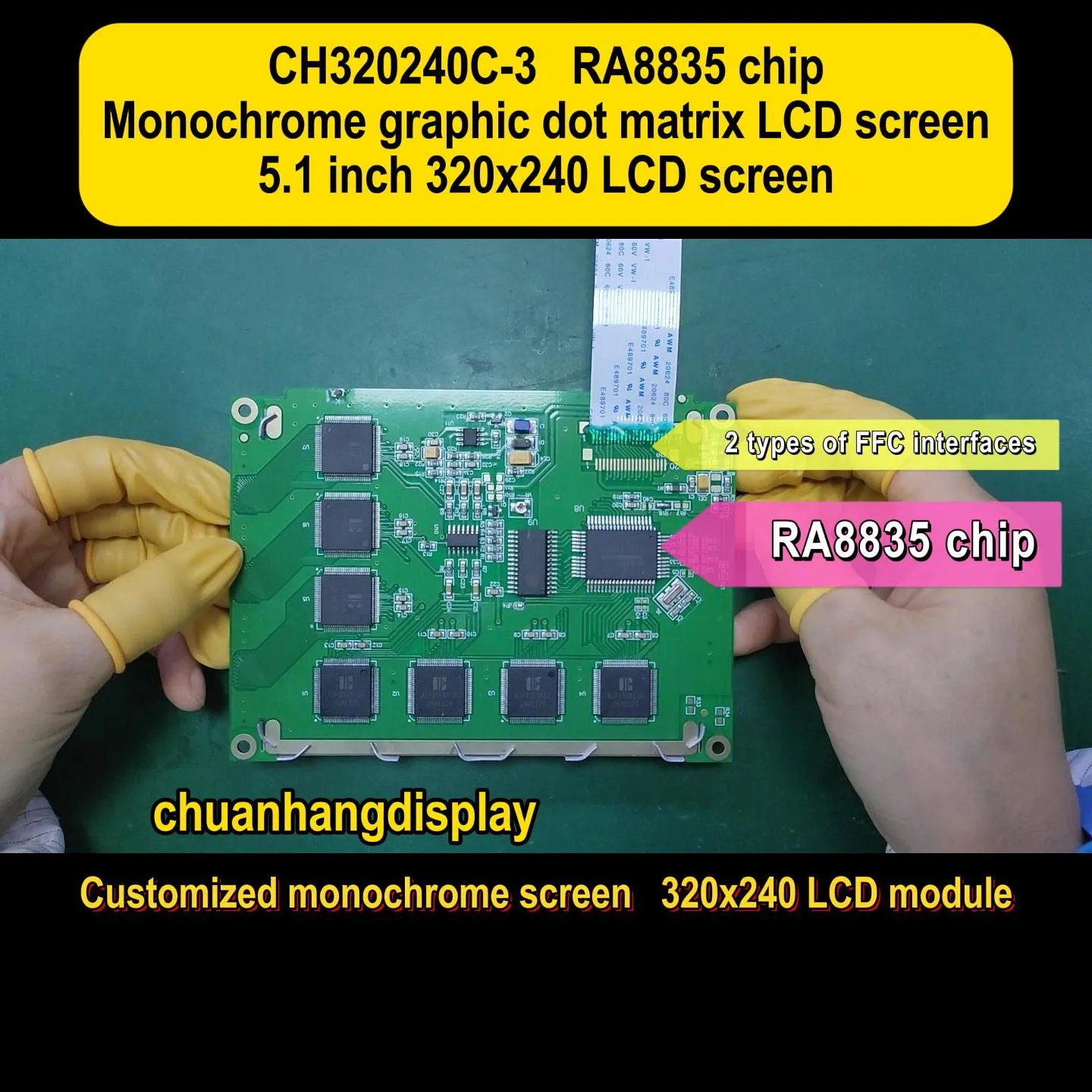
The "128x64" designation precisely defines its pixel grid. This resolution provides sufficient space for multiple lines of text or detailed icons.
Typical characteristics include:
Display Area: Physical size often ranges from 2.7 to 3.2 inches diagonally.
Pixel Configuration: Each pixel is individually controllable for graphic freedom.
Viewing Mode: Commonly available in positive (dark on light) or negative (light on dark) modes.
Backlight: Usually equipped with LED side-lit or bottom-lit backlighting in colors like blue, yellow, or green.
Most modules integrate a built-in controller like the ST7920, KS0108, or UC1701. This chip handles communication and manages the display memory.
The controller's internal RAM buffers the displayed image. This allows the main microcontroller to update the display efficiently without constant refreshing.
A key selection factor for a 12864 lcd is its communication interface. The choice impacts connection complexity and required microcontroller resources.
This is a traditional and fast interface method. It uses multiple data lines to transmit information.
8-Bit: Uses eight data lines (DB0-DB7). It offers the fastest data transfer.
4-Bit: Uses only four data lines (DB4-DB7). It saves I/O pins on the microcontroller.
Parallel interfaces often require additional pins for control signals like RS, RW, and E.
Serial interfaces have become highly popular due to their pin efficiency.
SPI (Serial Peripheral Interface): Offers high-speed communication using typically 3 or 4 wires (SCLK, SID, CS, and sometimes RS). It is widely supported and fast for graphical updates.
I2C (Inter-Integrated Circuit): Uses only two wires (SDA and SCL). It is excellent for saving I/O pins and allows multiple devices on the same bus, though it is generally slower than SPI.
The versatility and reliability of the 12864 lcd make it suitable for a wide range of industries. Its ability to function in various environmental conditions is a major advantage.
These displays are ubiquitous on factory floors and in measurement tools.
Machine operator panels
Parameter setting screens for PLCs
Readouts for power supplies and sensor data
Test and measurement equipment displays
Their clear visibility and stable performance under temperature variations are critical here.
Many portable and bench-top medical devices utilize this display format.
Common uses include:
Patient monitor parameter displays
Diagnostic equipment interfaces
Infusion pump status screens
Laboratory analyzer readouts
From commercial products to DIY creations, these displays are immensely popular.
You can find them in:
Point-of-Sale (POS) systems
Fitness equipment consoles
Arduino and Raspberry Pi projects
3D printer control panels
When selecting a display, engineers often compare traditional LCDs with OLED alternatives. Each technology has distinct pros and cons.
Cost-Effective: Generally lower in price than comparable sized OLEDs.
Sunlight Readability: Reflective or transmissive models can be very readable in bright light, especially with a strong backlight.
Mature Technology: Highly reliable with long-term supply chain stability.
No Risk of Burn-in: Unlike OLEDs, LCDs do not suffer from permanent image retention.
OLEDs offer superior contrast and viewing angles because each pixel emits its own light. They are thinner and can be more power-efficient when displaying dark content. However, they are typically more expensive and can be susceptible to burn-in with static images.
Choosing a specific 12864 lcd requires careful consideration of several parameters beyond just resolution.
Make a checklist based on your project's needs:
Interface: Does your microcontroller support Parallel, SPI, or I2C best?
Viewing Mode: Positive or negative display? What is the lighting condition?
Backlight Color and Voltage: Standard colors are blue, yellow, green. Check the required drive voltage (often 3.3V or 5V).
Operating Temperature Range: Industrial applications require a wider range (e.g., -20°C to +70°C).
Built-in Controller: Ensure the controller (e.g., ST7920) has a readily available driver library for your platform.

Partnering with a knowledgeable manufacturer ensures quality and long-term availability. Chuanhang Display provides a range of robust 12864 LCD modules suitable for diverse applications.
Look for a supplier that offers:
Clear datasheets and pinout diagrams
Technical support for integration issues
Options for customization (like FPC connectors or specific viewing angles)
Consistent quality and reliable lead times
Successfully integrating a 12864 LCD involves both hardware connections and software initialization.
Always start with the module's datasheet. General steps include:
Providing stable power (VCC and GND).
Connecting the contrast adjust pin (VO) to a potentiometer for display clarity adjustment.
Wiring the backlight pins (LED+/LED-) through a current-limiting resistor.
Connecting the data and control pins according to the chosen interface (Parallel, SPI, I2C).
Every controller requires a specific initialization command sequence sent before displaying content. This typically sets:
Display ON/OFF control
Entry mode (cursor direction)
Function set (interface mode, basic/ extended instruction)
Using a well-tested library for your development platform (Arduino, STM32, etc.) can greatly simplify this process.
The 12864 lcd remains a cornerstone in embedded display technology due to its simplicity, reliability, and cost-effectiveness. Understanding its specifications, interface options, and ideal applications allows engineers to effectively integrate it into their designs. For projects requiring a clear, durable, and affordable monochrome display, the 12864 LCD module continues to be an excellent choice. Suppliers like Chuanhang Display ensure these essential components are available to support innovation across industries.
Q1: What is the main difference between a 12864 LCD with an ST7920 controller and one with a KS0108 controller?
A1: The ST7920 controller often supports both parallel and serial (SPI) interfaces and has a built-in Chinese font library. The KS0108 typically only supports a parallel interface and requires external font data. The ST7920 is generally easier to use in SPI mode to save microcontroller pins.
Q2: Can I use a 5V 12864 LCD module with a 3.3V microcontroller like an ESP32?
A2: It depends on the module's logic voltage tolerance. Some 5V modules can accept 3.3V logic inputs. However, to be safe, use a logic level shifter for the data and control lines. Always check the module's datasheet for VIH (Input High Voltage) specifications.
Q3: My 12864 LCD display is blank but the backlight works. What could be wrong?
A3: The most common cause is incorrect contrast voltage. Adjust the potentiometer connected to the VO pin. Other causes include improper initialization code, wrong wiring, or insufficient power supply. Ensure all connections and the software command sequence are correct.
Q4: Are there color 12864 LCD modules?
A4: Standard "12864 LCD" refers to monochrome displays. However, TFT color displays with 128x64 resolution do exist, but they are fundamentally different in technology, cost, and driver requirements. They would typically be specified as a "128x64 TFT" rather than a standard 12864 lcd.
Q5: Can Chuanhang Display customize aspects of a standard 12864 LCD module?
A5: Yes, manufacturers like Chuanhang Display often offer customization options. This can include modifications to the connector type (FPC or pin header), the default viewing mode, backlight color and brightness, the cover glass, or the addition of a resistive touch panel. Minimum order quantities usually apply for customizations.