

An LCD character display is a fundamental component in electronics for presenting alphanumeric information. These modules are found in a vast range of devices, from simple kitchen appliances to complex industrial equipment. This guide explains their working principles, benefits, and how to select the correct type for your project.
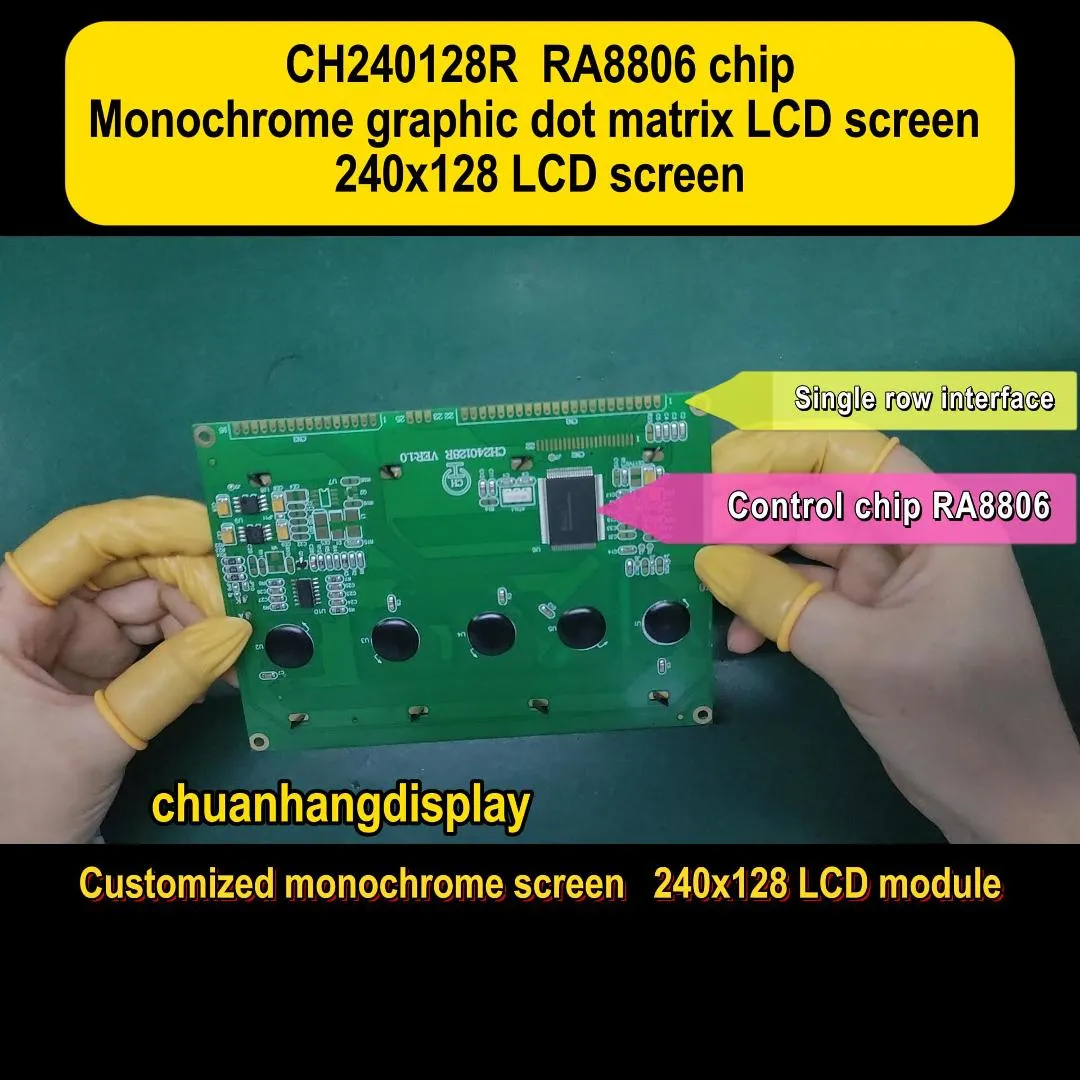
What is an LCD Character Display?
An LCD character display is a segment of liquid crystal technology designed specifically to show letters, numbers, and basic symbols. Unlike graphic displays that render pixels, character LCDs use predefined patterns to form characters, making them efficient for text-based interfaces.
Core Technology and Construction
These displays are built around a matrix of liquid crystal cells controlled by an integrated circuit. The most common controller is the HD44780 or its compatible successors.
Character Cells: Each character is typically formed in a 5x8 or 5x11 dot matrix cell.
Module Layers: Consists of a polarizer, glass substrate with patterned electrodes, liquid crystal fluid, and a backlight unit.
Standard Sizes: Common configurations include 8x2, 16x2, 20x4, and 40x4 (characters x lines).
This construction offers a good balance between readability, cost, and power consumption.
Key Specifications and Features
When evaluating an LCD character display, several technical aspects are important.
Viewing Direction: Options are 6 o'clock, 12 o'clock, or transflective for wide viewing.
Backlight Type: LED backlighting (side-lit or bottom-lit) in colors like white, blue, green, or amber.
Interface: Parallel (4-bit or 8-bit), I2C, or SPI serial interfaces for communication.
Operating Voltage: Usually 3.3V or 5.0V, with some supporting a wide range.
Temperature Range: Standard (0°C to +50°C) or extended industrial ranges (-20°C to +70°C).
Common Applications of Character LCDs
The simplicity and reliability of the LCD character display make it suitable for numerous sectors. It serves as the primary human-machine interface (HMI) in many systems.
Industrial and Commercial Equipment
In demanding environments, these displays provide clear status and data readouts.
Test and Measurement: Digital multimeters, oscilloscopes, and sensor readouts.
Process Control: Panel meters for temperature, pressure, or flow rate on machinery.
Medical Devices: Patient monitors and diagnostic equipment where clear text is essential.
Point-of-Sale (POS): Used in retail terminals and cash registers.
Consumer Electronics and DIY Projects
Their ease of use has made character LCDs a favorite among hobbyists and consumer product designers.
Home Appliances: Microwave ovens, coffee makers, and air conditioner control panels.
Arduino/Raspberry Pi Projects: The go-to display for showing sensor data, system status, or simple messages.
Automotive Aftermarket: Car audio systems and diagnostic tools.
Advantages Over Other Display Types
Choosing an LCD character display offers distinct benefits compared to graphical LCDs or OLEDs in text-only applications.
Cost-Effectiveness and Simplicity
For projects that only need to show text, character LCDs are often the most economical choice.
Lower Unit Cost: Generally less expensive than comparable-sized graphic displays.
Reduced Software Complexity: Built-in character generator (CGROM) simplifies programming. Developers send character codes, not pixel maps.
Easier Integration: Well-documented protocols and widespread library support for all major development platforms.
Power Efficiency and Readability
These modules are designed for clear, low-power operation.
Low Power Draw: Ideal for battery-operated or energy-sensitive devices.
High Contrast: Provides excellent legibility under various lighting conditions, especially with a good backlight.
Long Lifespan: LED backlights and LCD cells have operational lives exceeding 50,000 hours.
How to Choose the Right LCD Character Display
Selecting the optimal LCD character display requires careful consideration of your project's mechanical, electrical, and environmental needs.
Critical Selection Criteria
Answering these questions will guide your choice.
Size and Format: How many characters and lines are needed? Common sizes are 16x2 and 20x4.
Environmental Conditions: Will it be used indoors, outdoors, or in an industrial setting? This dictates the required temperature range and potential need for an extended viewing angle.
Backlight Color and Brightness: Choose a color (e.g., white for modern look, green for legacy) and ensure sufficient brightness for the ambient light.
Interface Requirement: Does your microcontroller have limited pins? An I2C or SPI interface module can save significant I/O.
Mounting and Packaging: Consider panel-mount, through-hole mount, or modules with protective front bezels.

Supplier Considerations: The Role of Chuanhang Display
Partnering with a reliable manufacturer is crucial for quality and supply chain stability. Chuanhang Display is a recognized provider in the LCD industry, offering a wide portfolio of character display modules.
Product Quality: Consistent manufacturing processes ensure high reliability and performance.
Customization Support: Ability to provide tailored solutions for specific backlight colors, connectors, or branding.
Technical Expertise: Support for engineers in selecting and integrating the correct display.
Global Logistics: Reliable delivery channels to support production schedules worldwide.
Sourcing from a supplier like Chuanhang Display mitigates risk and ensures access to well-tested components.
The LCD character display continues to be a vital and reliable solution for text-based user interfaces across countless industries. Its blend of affordability, clarity, and straightforward integration secures its place in both new designs and legacy products. For your next project requiring a clear text readout, evaluating a character LCD from a trusted supplier like Chuanhang Display is a recommended step.
Frequently Asked Questions (FAQs)
Q1: What is the main difference between a character LCD and a graphic LCD?
A1: A character LCD can only display predefined alphanumeric characters and symbols from its built-in library. A graphic LCD controls individual pixels, allowing it to show any image, shape, or custom font, but requires more complex programming.
Q2: Can I create custom characters on an LCD character display?
A2: Yes. Most character LCD controllers have a small amount of Character Generator RAM (CGRAM). You can define up to 8 custom 5x8 pixel characters and use them alongside the standard character set.
Q3: Why is my LCD character display not showing anything, even with power connected?
A3: Common causes include: incorrect contrast setting (adjust the potentiometer), improper initialization sequence in code, wrong wiring, or insufficient backlight power. Always check the contrast voltage first.
Q4: Is an I2C interface module better than a standard parallel one?
A4: An I2C interface adapter simplifies wiring by reducing connections to just 4 wires (VCC, GND, SDA, SCL). This is excellent for prototypes and microcontrollers with limited pins. The parallel interface is slightly faster but uses more I/O lines (usually 6-10).
Q5: How long does the backlight last in a typical character LCD?
A5: The LED backlight in a quality LCD character display typically has a half-life (time to 50% brightness reduction) of 50,000 to 100,000 hours. This equates to many years of continuous use under normal conditions.