Choosing the right LCD factory is a critical decision for any B2B buyer in the display industry. Whether you are sourcing panels for industrial control systems, medical monitors, automotive clusters, or consumer electronics, the factory’s process control, material traceability, and quality assurance directly impact your end product’s performance and reliability. This article provides a structured, technical evaluation framework based on two decades of industry practice.
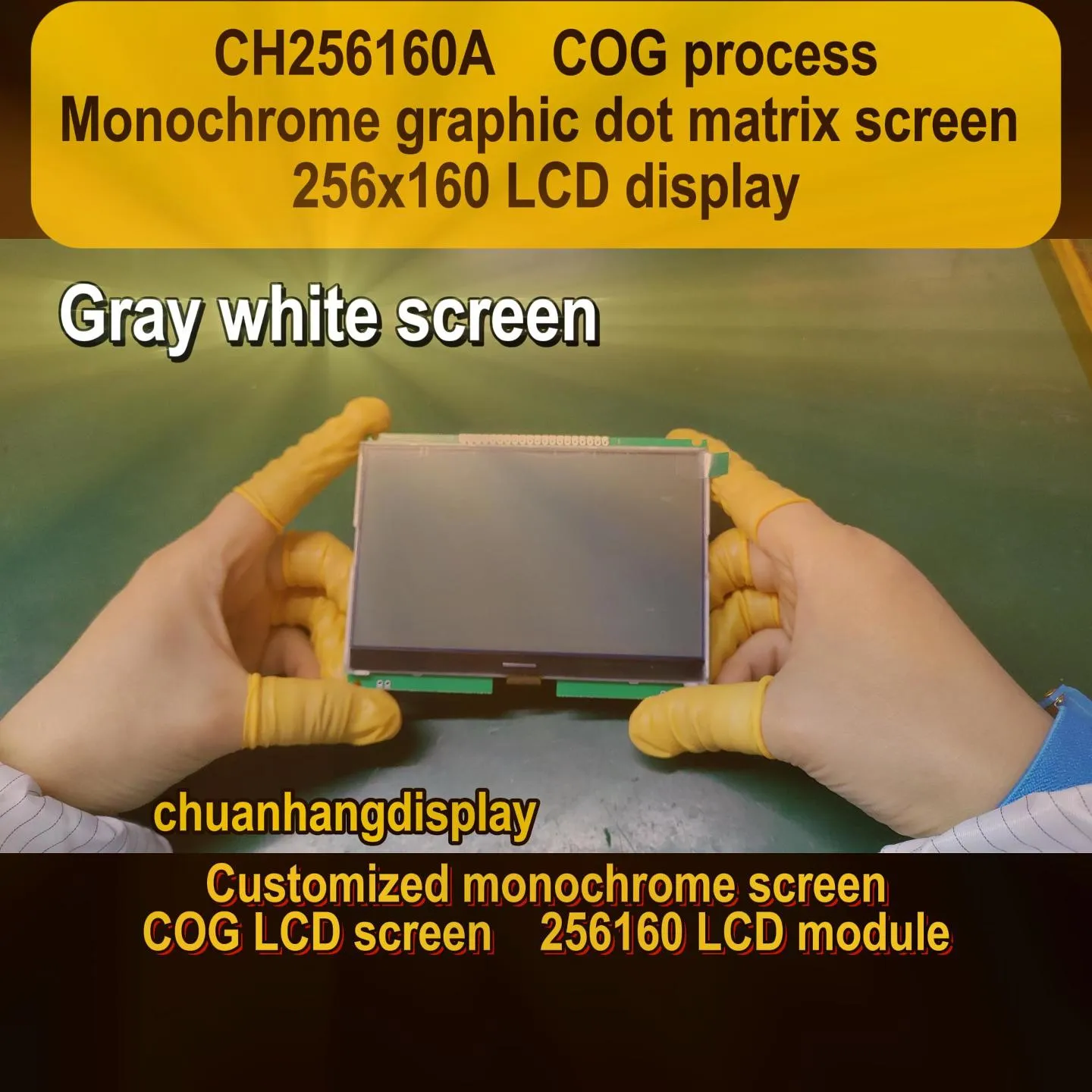
A professional LCD factory operates through a tightly controlled sequence of photolithography, etching, alignment, cell assembly, and module bonding. The deviation tolerance in these steps is measured in microns (or even sub-microns). Below are the key stages every buyer should understand:
A competent LCD factory documents each process step with real-time SPC (Statistical Process Control) data. Requesting these records is a legitimate due diligence step.
Most buyers focus only on resolution and brightness, but professional evaluation goes deeper. When you visit or qualify an LCD factory, demand the following metrics:
Professional buyers use ISO 13406-2 or manufacturer-specific standards for pixel defects:
Ask the LCD factory for their outgoing defect sampling plan (AQL level, typically 0.65 for major defects, 1.5 for minor). Also request mura evaluation under 127-level grayscale – a poorly controlled factory will show non-uniformity at low gray levels.
Reputable factories publish these test reports upon request. If the LCD factory hesitates, consider it a red flag.
The output quality of any LCD factory is fundamentally limited by its incoming materials. Here is what to audit:
Chuanhang Display, as an integrated supplier, maintains long-term agreements with Tier-1 material vendors – this directly reduces customer risk of premature field failures. When evaluating a new LCD factory, always ask for material certificates of origin.
Pricing transparency is rare in display manufacturing. However, understanding the cost structure helps you negotiate fairly.
| Panel Type | Size | Resolution | MOQ (pcs) | Unit Price (FOB) |
|---|---|---|---|---|
| Monochrome | 2.4” | 240×160 | 1000 | 2.50–2.50–4.00 |
| TFT (TN) | 3.5” | 320×240 | 2000 | 6.00–6.00–9.50 |
| TFT (IPS) | 7.0” | 1024×600 | 1000 | 12.00–12.00–18.00 |
| Industrial | 10.1” | 1280×800 | 500 | 28.00–28.00–42.00 |
*Note: Actual prices depend on backlight brightness, touch panel lamination, and operating temperature range (-30°C to +85°C adds 15–30% premium).*
Do not simply chase the lowest quote. A US0.50savingperunitmaycostyouUS0.50savingperunitmaycostyouUS50 in field returns if the LCD factory uses inferior polarizers or mismatched LC.
Chuanhang Display operates a dedicated LCD factory focused on industrial and automotive-grade panels. Rather than competing on ultra-low cost, the company emphasizes three differentiated capabilities:
For buyers needing a reliable LCD factory that balances cost with controlled process quality, Chuanhang Display provides full test data per batch – including luminance uniformity maps and high-temperature stress reports.
Advances in AI-based defect classification and automated array testers have raised the bar. A modern LCD factory now uses:
Buyers should favor factories that have upgraded to at least Gen 5 equipment for small-to-mid panels – this reflects reinvestment capability. However, older Gen 3.5 lines can still produce excellent quality if properly maintained.
Selecting an LCD factory is not a commodity purchase. The difference between a mediocre and an excellent supplier appears after 6–12 months of field use, when backlights dim, polarizers delaminate, or driver ICs fail due to poor bonding. Use the technical criteria outlined above – process audits, material traceability, reliability testing, and transparent pricing models – to shortlist candidates. For mission-critical applications, request sample batches with full test logs. And consider partners like Chuanhang Display that offer documented process control along with engineering collaboration.
Q1: What is the typical lead time for a custom LCD order from an LCD factory?
A1: For a standard TFT module with modification (e.g., different backlight color or FPC shape), engineering samples require 8–10 weeks after design freeze. Mass production (after sample approval) takes 4–6 weeks. Full custom cell design (new mask set) adds 12–14 weeks.
Q2: How can I verify an LCD factory’s claimed yield rate before placing a large order?
A2: Request their weekly yield summary for the last three months, broken down by defect category (array, cell, module). Cross-check by ordering a pilot batch of 500–1000 units and performing your own 100% visual and electrical inspection. Reputable factories accept this as standard due diligence.
Q3: What is the difference between open-cell and full module supply from an LCD factory?
A3: Open-cell means you receive the TFT glass with polarizers but no backlight, driver PCB, or touch. You then integrate your own backlight and electronics. Full module includes bonded backlight, driver ICs, and often touch. Open-cell lowers per-unit cost but increases your assembly complexity. Most B2B buyers choose full module for industrial use.
Q4: Do LCD factories offer industrial temperature range (-30°C to +85°C) as standard?
A4: No. Only factories that use special LC materials (low viscosity at cold, high resistivity at hot) and heating backlight designs can guarantee industrial temperature. Expect 20–40% price premium compared to commercial-grade (0°C to 50°C). Always ask for temperature cycling test reports.
Q5: How do I handle a situation where the LCD factory ships panels with unacceptable mura?
A5: First, verify your incoming inspection method matches the factory’s agreed standard (e.g., viewing distance 30cm, 127 grayscale pattern). If confirmed, invoke the quality agreement – most factories will replace defective units if mura density exceeds 5% of the batch. For chronic cases, require a third-party inspection (e.g., SGS or TÜV) at the factory’s cost before shipment.