Selecting the right components for your hardware project often feels like a balancing act between performance and budget. When your product requires a visual interface, your choice of an lcd display supplier becomes one of the most critical decisions in your procurement cycle. A high-quality screen defines the user experience, while a poor choice can lead to high failure rates and costly returns.
At Chuanhang Display, we understand that professional buyers are looking for more than just a component; they are looking for a long-term manufacturing partner. This article breaks down how to evaluate vendors, understand the technical nuances of the display industry, and ensure your project stays on track.
The display industry is concentrated in specific geographic hubs, with China being the primary center for both innovation and mass production. When searching for a reliable lcd display supplier, you will find a mix of large-scale panel manufacturers and specialized module integrators.
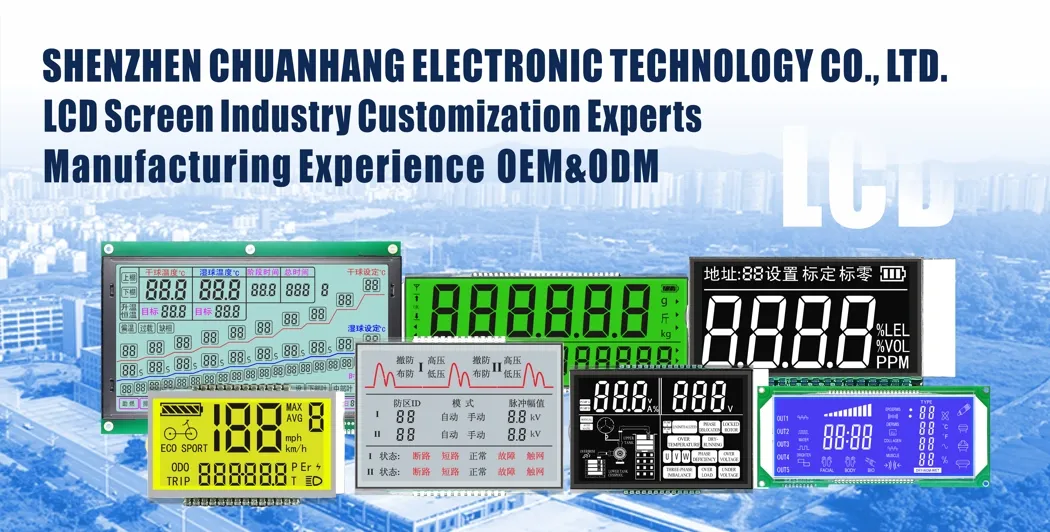
Module integrators, like Chuanhang Display, offer a level of flexibility that massive panel makers cannot match. We focus on the assembly of the panel, the backlight unit, the driver IC, and the touch interface. This specialization allows for customization in brightness, interface types, and ruggedness—features that are often essential for industrial and medical applications.
Working with a specialized vendor ensures that you receive personalized engineering support. This is particularly important when you are moving from a prototype phase to full-scale production.
Not all suppliers are created equal. To avoid the pitfalls of low-quality batches, you must look beyond the initial price quote. The first thing to verify is the supplier’s manufacturing environment. LCDs are incredibly sensitive to dust; therefore, a high-standard cleanroom (Class 1000 or better) is a non-negotiable requirement.
Certification is the next pillar of reliability. An established lcd display supplier should hold ISO 9001 certifications. For those serving the automotive or medical sectors, look for IATF 16949 or ISO 13485. These certifications prove that the factory has standardized processes to maintain consistency over thousands of units.
Communication is the third pillar. A supplier that responds quickly with detailed technical datasheets is more likely to support you effectively during the troubleshooting phase of your product development.
A professional lcd display supplier will help you navigate the sea of technical jargon. You need to decide between TN (Twisted Nematic), VA (Vertical Alignment), and IPS (In-Plane Switching) technologies.
TN panels are cost-effective and offer fast response times but suffer from poor viewing angles. If your device is a hand-held industrial tool used at various angles, IPS is the standard choice because of its superior color accuracy and 178-degree viewing angles.
At Chuanhang Display, we often advise clients on the backlight requirements. If your product is used outdoors, you need a high-brightness display (typically over 800 nits) and perhaps optical bonding to reduce glare. A knowledgeable supplier will ask about your end-use environment before providing a quote.
Many buyers start their search looking for a standard module to save on costs. However, a "standard" display in the industry can sometimes be discontinued without much notice. This is why finding a proactive lcd display supplier is vital for long-term projects.
Customization doesn't always mean a completely new design. It can involve small but significant changes, such as a longer FPC (Flexible Printed Circuit) cable, a higher brightness backlight, or a custom cover glass with your brand's logo.
Chuanhang Display specializes in these semi-custom solutions. We help bridge the gap between expensive fully custom designs and the risks of using "market-stock" panels that might disappear from the market in six months.
Price is always a factor, but the cheapest unit price rarely leads to the lowest total cost. When you evaluate an lcd display supplier, consider the "Hidden Costs" of procurement. These include shipping fees, import duties, and, most importantly, the defect rate.
A 2% failure rate in the field can wipe out any savings you gained from a cheaper purchase price. High-quality suppliers conduct rigorous testing, including high/low temperature operation, humidity tests, and vibration tests, to ensure the screens survive real-world usage.
Furthermore, consider the longevity of the supply. In the industrial sector, products often have a lifecycle of 5 to 10 years. You need a partner like Chuanhang Display that offers an EOL (End-of-Life) management policy, providing you with ample notice and "last time buy" options if a specific panel is being retired by the glass manufacturer.
One of the most common technical hurdles in display integration is the interface. Whether your system uses MCU, RGB, LVDS, MIPI, or HDMI, your lcd display supplier must provide the correct bridge chips and driver support.
Modern high-resolution displays often utilize MIPI DSI interfaces to save power and space. However, many industrial motherboards still rely on LVDS for its robustness over longer cable runs. A versatile supplier will offer conversion boards or customized FPC designs to ensure the display communicates perfectly with your existing hardware.
Chuanhang Display engineers work directly with your team to verify the initialization codes. This prevents the "black screen" issues that often plague developers during the early stages of integration.
The manufacturing process of a liquid crystal display is a feat of precision engineering. A top-tier lcd display supplier implements multiple stages of inspection. It starts with Incoming Quality Control (IQC), where the raw glass and ICs are tested.
During the assembly, Automatic Optical Inspection (AOI) machines check for pixel defects and dust particles. Finally, an Outgoing Quality Control (OQC) check ensures that the final brightness, contrast, and touch sensitivity meet the agreed-upon specifications.
Transparency in these processes is what separates a world-class factory from a small assembly shop. When you visit or audit a supplier, ask to see their aging test racks, where displays are run for 24 to 48 hours to catch any early-life failures.
The logistics of shipping fragile glass components across the globe require expertise. A professional lcd display supplier knows how to package goods using anti-static materials and reinforced crating to prevent transit damage.
Chuanhang Display has built a reputation for combining Chinese manufacturing efficiency with international service standards. We focus on clear documentation, English-language technical support, and a deep understanding of international trade compliance.
By choosing a partner that understands the global market, you reduce the risk of delays caused by customs issues or misunderstandings in technical requirements. Our goal is to make the procurement of complex display modules as seamless as possible.
The display industry is moving toward higher pixel densities and integrated touch solutions. Incell and Oncell touch technologies are becoming more common, allowing for thinner and lighter modules. As an innovative lcd display supplier, we stay ahead of these trends to offer our clients the latest advancements.
We are also seeing an increased demand for "Smart Displays" that have integrated controller boards, allowing the host CPU to send simple commands rather than managing every pixel. This simplifies the software development side for our customers and speeds up time-to-market.
Regardless of where the technology goes, the fundamentals of a good supplier remain the same: quality, reliability, and technical support.
In conclusion, finding a reliable lcd display supplier is a journey that requires due diligence and technical clarity. By focusing on manufacturing standards, customization capabilities, and long-term support, you can protect your project from unnecessary risks.
Chuanhang Display remains committed to providing high-performance display solutions tailored to the unique needs of our global partners. Whether you are developing a new medical device, an industrial controller, or a high-end consumer product, your choice of display partner will be a cornerstone of your success.
Prioritize value over the lowest price, and seek a supplier that views your success as their own. With the right partnership, the visual interface of your product will become its greatest strength.
A1: Lead times vary based on the complexity of the order. For standard modules that are in stock, shipping can happen within 1-2 weeks. However, for customized solutions or large-scale production runs, the lead time typically ranges from 4 to 8 weeks, depending on the availability of the raw LCD glass and the customization requirements.
A2: Most suppliers follow the ISO 13406-2 standard, which defines acceptable classes of pixel defects. A professional lcd display supplier like Chuanhang Display will discuss these standards with you during the specification phase. For high-end applications, we can offer "Zero Dead Pixel" (Grade A) sorting, though this usually comes at a premium price.
A3: While traditional LCD glass is rectangular, it is possible to get custom shapes or circular displays. However, this requires a significant investment in "masking" and tooling costs. Most small to medium-sized projects find it more cost-effective to use a square display and use a custom-shaped cover glass to create the desired visual effect.
A4: To provide an accurate quote, your lcd display supplier will need the screen size, resolution, interface type (e.g., RGB, LVDS), brightness requirements (in nits), and whether you need a capacitive or resistive touch panel. Providing details about the operating temperature and the end-use environment is also highly beneficial.
A5: Industrial-grade displays are designed for 24/7 operation and have a longer "backlight half-life" (often 50,000 hours or more). They also support a wider temperature range (typically -20°C to +70°C) compared to consumer-grade screens, which are designed for typical room temperatures and shorter daily usage.
A6: We perform optical bonding or perimeter bonding in a dust-free environment to ensure there is no debris between the LCD and the touch panel. Each integrated module undergoes a full functional test to ensure touch sensitivity and gesture recognition are accurate across the entire surface.