The global demand for high-contrast, reliable display interfaces has led to significant evolution within the passive matrix LCD market. While full-color TFT-LCDs and OLEDs dominate the consumer smartphone market, specific industrial, medical, and automotive sectors require the robustness and clarity offered by specialized monochrome technologies. Among these, SINDA has emerged as a prominent architecture for achieving superior optical performance in environments where legibility and power efficiency are paramount. This analysis examines the technical nuances, material science, and strategic procurement factors that define this segment of the optoelectronics industry.

At its core, the SINDA display represents a sophisticated iteration of Twisted Nematic (TN) or Super-Twisted Nematic (STN) principles, optimized for high contrast and wider viewing angles. Unlike standard monochrome panels that may suffer from "graying" backgrounds or limited visibility under harsh lighting, these modules utilize a specific molecular alignment of liquid crystal fluids to ensure deep black backgrounds and sharp segment definition.
The performance of a SINDA panel is dictated by the birefringence of the liquid crystal material and the precision of the cell gap. In manufacturing, the distance between the two layers of Indium Tin Oxide (ITO) coated glass must be maintained with sub-micron accuracy. Even a minor deviation in cell gap can lead to chromatic shifts or reduced contrast ratios. Leading manufacturers like Chuanhang Display utilize high-precision spacers and advanced vacuum injection processes to ensure uniformity across the entire viewing area.
The optical stack of a high-end monochrome module involves several specialized layers:
High-Quality Polarizers: The choice between transmissive, reflective, and transflective polarizers determines how the display interacts with ambient light. For SINDA applications, circular polarizers or high-compensation linear polarizers are often employed to minimize light leakage in the "off" state.ITO Glass Substrates: The conductivity of the ITO layer affects the response time and the driving voltage requirements. Low-resistance ITO is preferred for larger panels to prevent voltage drops across the segments.Liquid Crystal Fluid: Advanced fluids with a wide temperature range (typically -30°C to +80°C) are utilized to prevent the "slow motion" effect in cold environments or clearing at high temperatures.Backlight Units (BLU): Since these displays are often used in negative mode (light characters on a dark background), the uniformity of the LED backlight is a significant factor in perceived quality.
Engineers often face challenges when integrating monochrome displays into complex systems. One primary concern is "ghosting," where inactive segments appear faintly visible due to electrical leakage or poor multiplexing. Addressing this requires a deep understanding of the Duty and Bias settings of the driver IC.
Another significant issue is the viewing angle. Standard TN panels offer limited visibility if viewed from the side or from an acute vertical angle. The SINDA approach mitigates this by optimizing the twist angle of the liquid crystal molecules. This ensures that the contrast remains stable whether the device is viewed from the 6 o'clock or 12 o'clock position, which is a requirement for medical bedside monitors and automotive dashboard clocks.
Reliability in harsh environments is a third pain point. Industrial equipment often operates in high-humidity or high-vibration settings. The bonding technology—whether it is Chip-on-Glass (COG) or Chip-on-Board (COB)—must be robust. Chuanhang Display emphasizes the use of high-grade UV-curable adhesives and protective coatings to shield the driver circuitry from oxidation and mechanical stress.
The versatility of SINDA technology allows it to be used in various high-stakes sectors.
In medical devices such as blood glucose monitors, ventilators, and infusion pumps, clarity is a safety requirement. The high-contrast nature of these displays ensures that readings are legible under the bright fluorescent lights of a hospital or in the dim environment of a patient's home. The low power consumption also extends the battery life of portable diagnostic tools.
Modern vehicle interiors utilize secondary displays for odometers, climate control, and clock modules. These components must withstand extreme temperature fluctuations and intense sunlight. The SINDA architecture provides the necessary thermal stability and sunlight readability without the heat generation or high cost associated with large TFT screens.
For smart electricity meters and factory controllers, longevity is the priority. These devices often remain in service for over a decade. The inorganic nature of the liquid crystal materials used in SINDA modules ensures that they do not suffer from the "burn-in" or organic degradation seen in OLED panels.
When sourcing monochrome display solutions, B2B buyers must balance the Unit Price with the Non-Recurring Engineering (NRE) costs. Because most SINDA modules are custom-designed for specific segment layouts or icons, the initial tooling phase is a vital step in the procurement process.
Several factors influence the final cost of a module:
Dimensions and Resolution: Larger glass sizes increase the cost of raw materials and decrease the yield per mother-glass sheet.IC Selection: The availability and pin-count of the driver IC significantly impact the BOM (Bill of Materials).Connection Method: Zebra strips (elastomeric connectors) are generally more cost-effective but may be less reliable in high-vibration environments compared to Heat Seal Connectors or FPC (Flexible Printed Circuit) bonding.Backlight Customization: High-brightness LEDs or custom light guides for uniform distribution will add to the unit cost.
Working with an experienced partner like Chuanhang Display allows procurement teams to optimize these variables during the design phase. By selecting the appropriate liquid crystal fluid and polarizer combination, it is possible to achieve SINDA levels of performance while remaining within a strict budget.
A robust manufacturing process is what separates a standard display from a high-performance SINDA module. Quality control begins at the cleanroom level (typically Class 1000 or higher) where the glass is cleaned and the alignment layer is rubbed. Any dust particle trapped during the rubbing process will result in a visual defect that is magnified when the backlight is applied.
Electrical testing is equally vital. Each panel must undergo a "flicker" test and a current consumption check. High current consumption often indicates a short circuit in the ITO traces or a contamination in the liquid crystal fluid, both of which will lead to premature failure in the field. Reliability testing, including thermal cycling and "damp heat" (85/85) tests, ensures that the SINDA display can withstand years of operation in tropical or industrial environments.
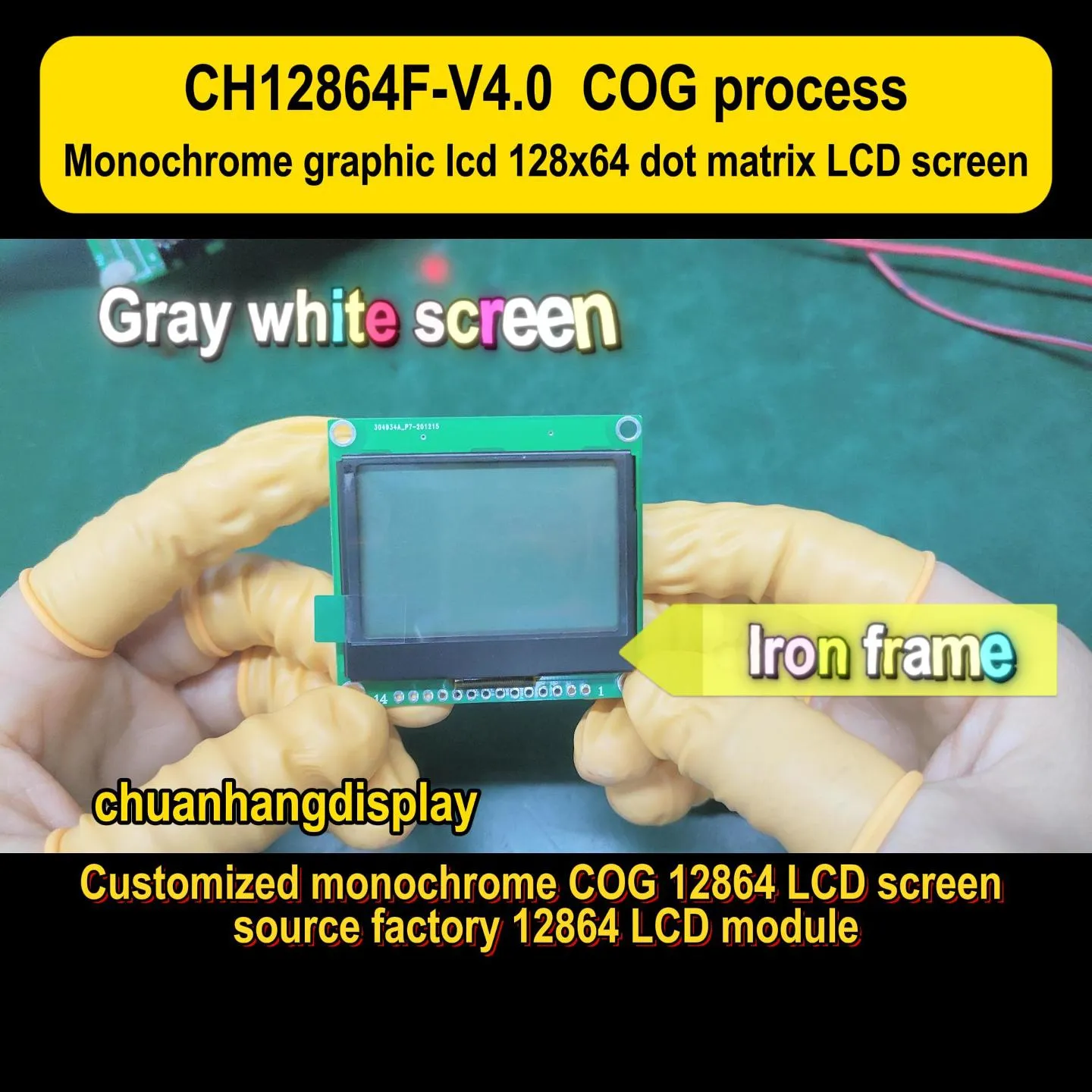
Despite the rise of color screens, the monochrome sector continues to innovate. We are seeing a trend toward integrating touch functionality directly onto the monochrome glass. Capacitive touch overlays can be bonded to a SINDA panel, providing a modern user interface without the complexity of a full operating system required for high-resolution graphics.
Furthermore, the drive toward "Green Electronics" favors the SINDA display due to its low carbon footprint. The manufacturing process uses fewer rare-earth elements compared to complex color displays, and the energy efficiency helps end-products meet stringent energy-saving certifications.
The selection of a display technology is a foundational decision in product development. For applications requiring high contrast, wide operating temperatures, and long-term reliability, SINDA remains a superior choice. Its ability to provide a premium visual experience at a fraction of the power and cost of active-matrix displays makes it an indispensable tool for engineers. By partnering with established specialists like Chuanhang Display, companies can ensure that their human-machine interface meets the highest standards of the international market.
As we look forward, the refinement of liquid crystal chemistry and the precision of the SINDA manufacturing process will continue to serve the needs of the industrial B2B community, proving that monochrome technology is far from obsolete.
Q1: What is the primary difference between a standard STN display and a SINDA display?
A1: The main difference lies in the contrast ratio and background aesthetics. While standard STN displays often have a yellowish or bluish tint, a SINDA display is engineered for a true black background with high-opacity segments. This is achieved through specialized liquid crystal fluid and polarizer compensation, resulting in a much sharper and more professional look suitable for high-end equipment.
Q2: Can these displays be used in outdoor environments with direct sunlight?
A2: Yes, when configured with a transflective or reflective polarizer, these modules perform exceptionally well in direct sunlight. Unlike emissive displays (like OLED) that struggle to compete with ambient light, a SINDA panel uses the sun's reflection to enhance the visibility of the segments, making it ideal for outdoor metering and marine applications.
Q3: What is the typical lead time for a custom SINDA module design?
A3: For a custom design, the process usually involves 1-2 weeks for the initial drawing and technical specification approval. Once the design is finalized, tooling and sample production take approximately 3-5 weeks. After sample approval, mass production typically ranges from 4 to 8 weeks depending on the component availability and the complexity of the module.
Q4: How does temperature affect the performance of the display?
A4: Liquid crystal materials are temperature-sensitive; they become more viscous at low temperatures (slowing down response times) and can lose their orientation at very high temperatures (clearing point). However, by using wide-temperature liquid crystal fluids, a SINDA display can maintain its functionality and contrast from as low as -30°C to as high as +80°C.
Q5: Is it possible to have multiple colors on a monochrome SINDA panel?
A5: While the technology is natively monochrome, multiple colors can be achieved through two methods: using a multi-color LED backlight or applying a silk-screen color filter to the backlight or the front of the glass. This allows for specific icons (like a red "Warning" or a green "Power" sign) to be displayed while the rest of the text remains white or another base color.
Q6: What are the typical driving requirements for these displays?
A6: Most SINDA modules are driven by standard LCD controller/driver ICs using a multiplexing (Mux) rate ranging from 1/1 (static) up to 1/16 or 1/32. The driving voltage (Vlcd) usually falls between 3V and 5V, making them compatible with common microcontrollers used in B2B hardware design.