In the highly competitive field of electronic components, design engineers and procurement managers constantly evaluate display technologies based on power consumption, readability, and unit cost. While high-resolution active-matrix interfaces dominate consumer electronics, monochromatic numeric panels retain a dominant market share in industrial, medical, and utility applications.
The architecture of a 7 Segment LCD relies on precisely etched transparent electrodes to form the figure-eight pattern, allowing for the display of decimal numerals from zero to nine, along with specific alphabetical characters. By utilizing the optical properties of liquid crystal molecules under applied electric fields, this technology delivers high-contrast data readouts with minimal power draw. This article provides a deeply technical analysis of the materials, driving mechanisms, and supply chain dynamics surrounding monochromatic segment displays.

Selecting the correct optical mode directly dictates the viewing angle, contrast ratio, and cost of the final product. Display engineers typically categorize these panels into four primary fluid alignments:
Twisted Nematic (TN): The baseline standard. TN panels twist light by 90 degrees. They offer rapid response times and the lowest manufacturing costs. However, their viewing cone is relatively narrow, making them suitable only for devices viewed from a fixed, direct angle. Super Twisted Nematic (STN): By increasing the twist angle of the nematic fluid to between 180 and 270 degrees, STN technology drastically improves the multiplexing capability and widens the viewing angle. The trade-off is a slight yellow or green optical background tint. Film-Compensated STN (FSTN): To correct the coloration inherent in standard STN panels, FSTN incorporates an optical retardation film on the polarizer. This creates a true black-and-white display with excellent contrast, heavily favored in high-end measuring instruments. Vertical Alignment (VATN): The liquid crystal molecules align perpendicular to the glass substrates when no voltage is applied, creating a deep black background. When driven, the segments turn bright (typically illuminated by an LED backlight). VATN provides exceptionally high contrast ratios and wide viewing angles, making it a preferred choice for automotive dashboards and premium audio equipment.
A segmented display is a complex optical sandwich. Understanding the raw materials provides clarity on the panel's performance limits and environmental durability.
The foundation of the panel is the ITO glass. Indium Tin Oxide is a transparent conductive material sputtered onto the glass substrate. Through photolithography, the specific segment patterns are etched into this coating. The resistance of the ITO layer—typically measured in ohms per square (Ω/□)must be carefully specified based on the panel size and driving voltage to ensure uniform contrast across all digits.
Polarizers manage the entry and exit of light through the glass sandwich. The selection of the bottom polarizer determines the display's reflective mode:
Reflective: Features a solid mirror backing. It relies entirely on ambient light, requiring zero backlight power. Transmissive: Requires a continuous backlight to be visible, as the bottom polarizer lets light pass directly from the rear. Transflective: A hybrid approach using a semi-reflective backing. It reflects ambient light in bright environments and allows backlight transmission in dark environments, optimizing battery life.
For outdoor applications, engineers must specify UV-resistant polarizers (often dye-based rather than standard iodine-based) to prevent the display from degrading or turning brown under prolonged solar exposure.
The formulation of the nematic fluid dictates the operating temperature range and response time. Standard commercial fluids operate between 0°C and 50°C. For industrial environments, wide-temperature fluids are deployed, pushing the operational limits to -40°C up to 85°C. At extremely low temperatures, the fluid viscosity increases, slowing down response times; engineers must account for this latency in their firmware design.
Despite the proliferation of full-color screens, segmented panels remain indispensable in specific hardware sectors due to their unmatched reliability and sub-microampere power consumption.
Water, gas, and electricity meters require displays that function continuously for 10 to 15 years on a single non-rechargeable battery. A static-driven segmented display draws minimal current, making it the only viable technology for this application. High-contrast FSTN panels ensure utility workers can accurately read usage data in varying lighting conditions.
Portable diagnostic equipment, such as digital thermometers, blood glucose meters, and pulse oximeters, rely heavily on numerical outputs. These devices demand absolute clarity. The segment format prevents the pixelation errors that can occasionally occur in low-resolution dot-matrix displays, ensuring medical professionals never misinterpret vital health data.
Digital calipers, weighing scales, and thermostat controllers operate in environments subjected to vibration, dust, and temperature fluctuations. The solid-state nature of segmented glass panels, combined with robust elastomeric connectors (Zebra strips) or soldered metallic pins, provides the mechanical durability required for factory floors.
Integrating a display requires careful coordination between hardware design and component limitations. A common pain point in segmented panels is "ghosting" or crosstalk—where segments that should be "off" appear slightly visible. This phenomenon is closely tied to the driving method.
Static Drive (Direct Drive): Every individual segment has its own dedicated connection pin to the microcontroller. The duty cycle is 1/1, meaning the segment is continuously driven. This provides the highest possible contrast and completely eliminates ghosting. However, a multi-digit display requires a large number of pins, complicating PCB layout and requiring larger controller ICs. Multiplexed Drive (MUX): To reduce pin count, segments are grouped into matrices using shared common (COM) and segment (SEG) lines. This introduces duty cycles (e.g., 1/4 duty) and bias voltages (e.g., 1/3 bias). If the bias voltage is improperly calibrated in the firmware, the root-mean-square (RMS) voltage across an "off" segment might exceed the fluid's threshold voltage, causing ghosting. Hardware engineers must precisely match the LCD controller's output parameters to the panel's electro-optical specifications.
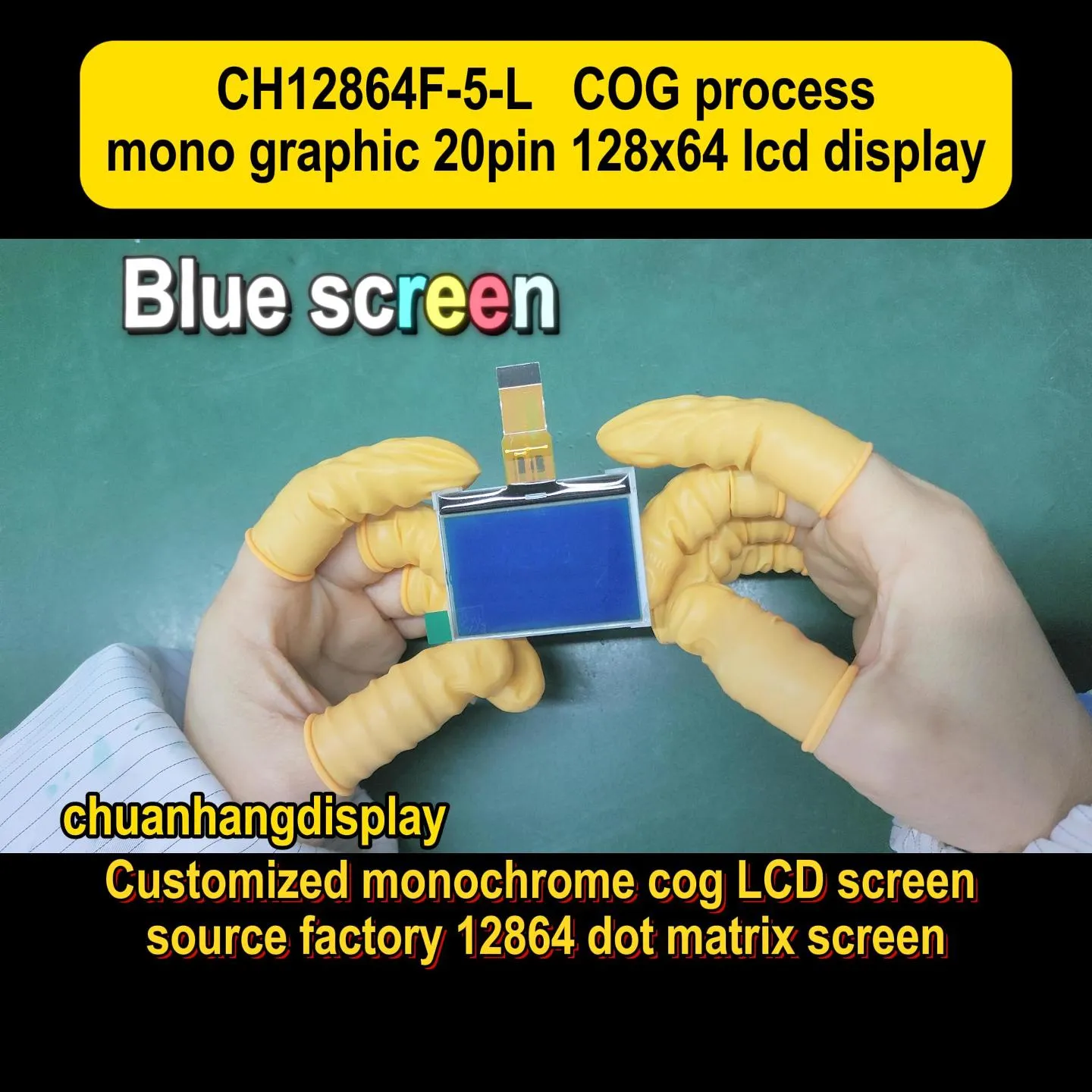
When procuring a custom 7 Segment LCD, hardware engineers and buyers must evaluate suppliers based on manufacturing capabilities, quality control, and tooling costs. Partnering with a reliable factory is a strategic business decision.
Non-Recurring Engineering (NRE) Costs: Unlike standardized TFT modules, segment panels are frequently custom-designed for specific product housings. The NRE covers the creation of photolithography masks for the ITO glass and custom tooling for the metal pins or FPC (Flexible Printed Circuit) tails. For basic monochromatic panels, this tooling cost is generally quite low, often ranging between $500 and $1,500, making customization highly accessible. Unit Pricing: Unit costs are heavily dependent on glass size, polarizer type, and order volume. A standard TN reflective panel may cost mere cents in high volumes, whereas a custom VATN panel with an integrated LED backlight and custom FPC will command a higher premium.
Working with established manufacturers like [Chuanhang Display] ensures access to engineering support during the drafting of the LCD specification sheet. A proficient supplier should provide detailed optical performance graphs, pinout diagrams, and mechanical tolerances prior to cutting any glass. Buyers should verify that the supplier implements strict environmental testing chambers to stress-test prototypes against extreme humidity, thermal shock, and UV exposure.
Furthermore, lead times are a pivotal metric. A capable manufacturer typically requires 2 to 3 weeks for counter-drawings and prototype delivery, followed by 4 to 6 weeks for mass production. Transparency in these timelines prevents assembly bottlenecks.
The hardware integration of numerical display technology requires a balanced understanding of optical physics, electrical engineering, and supply chain logistics. By carefully specifying fluid types, polarizer configurations, and driving parameters, engineers can achieve superior display performance while adhering to strict power and budget constraints. As industries continue to demand robust, low-power, and cost-effective data readouts, the relevance of the 7 Segment LCD remains firmly intact. Partnering with specialists such as [Chuanhang Display] guarantees that procurement teams receive not just raw components, but engineered solutions optimized for their specific application environments.
Q1: What is the functional difference between TN and FSTN optical modes?
A1: Twisted Nematic (TN) is the most basic liquid crystal alignment, offering low production costs and fast response times, but restricted viewing angles. Film-Compensated Super Twisted Nematic (FSTN) incorporates an added optical retardation film that eliminates background coloration, resulting in a true black-and-white image with significantly wider viewing angles and higher contrast ratios, ideal for complex or premium devices.
Q2: How long is the operational lifespan of a monochromatic segmented panel?
A2: Assuming the panel is kept within its specified temperature and humidity parameters, the liquid crystal fluid and ITO glass do not functionally degrade. The typical lifespan exceeds 50,000 to 100,000 hours. The primary limiting factor is usually the LED backlight (if equipped) or prolonged exposure to direct UV light which can slowly degrade the polarizer films over a span of many years.
Q3: Why would a hardware engineer choose a static drive over a multiplexed drive?
A3: An engineer selects a static (direct) drive when maximum display contrast and zero crosstalk (ghosting) are required. Static driving continuously applies voltage to active segments, whereas multiplexed driving pulses the voltage. Static driving is preferred for outdoor applications and low-temperature environments, provided the microcontroller has enough I/O pins to support the 1:1 segment-to-pin ratio.
Q4: Can a 7 Segment LCD be viewed effectively in direct sunlight?
A4: Yes, provided the panel is manufactured with the correct polarizer. Reflective and transflective polarizers are specifically designed to bounce ambient light back through the glass to the user's eyes. In fact, a purely reflective segmented panel becomes clearer and easier to read as ambient sunlight gets brighter, which is why they are the standard for outdoor utility meters and gas station pumps.
Q5: What technical details are required to request a custom panel prototype?
A5: To initiate a custom design, buyers need to provide the physical outer dimensions of the glass, the desired viewing angle (e.g., 6 o'clock or 12 o'clock), the operating temperature range, the drive method (duty cycle and bias), the connector type (pins, zebra rubber, or FPC), and the preferred optical mode. Procurement teams and engineers often consult with technical teams at [Chuanhang Display] to finalize these parameters and generate the initial CAD drawings.