In the specialized field of industrial human-machine interfaces (HMI), the monochrome graphic display remains a cornerstone of reliability and functional clarity. Among the most ubiquitous configurations is the 12864 LCD display, a resolution standard consisting of 128 horizontal pixels and 64 vertical pixels. While high-resolution OLEDs and TFTs dominate consumer electronics, the 128x64 dot matrix format continues to be the preferred choice for medical instrumentation, industrial controllers, and energy management systems due to its exceptional longevity, low power consumption, and superior readability in diverse lighting conditions.
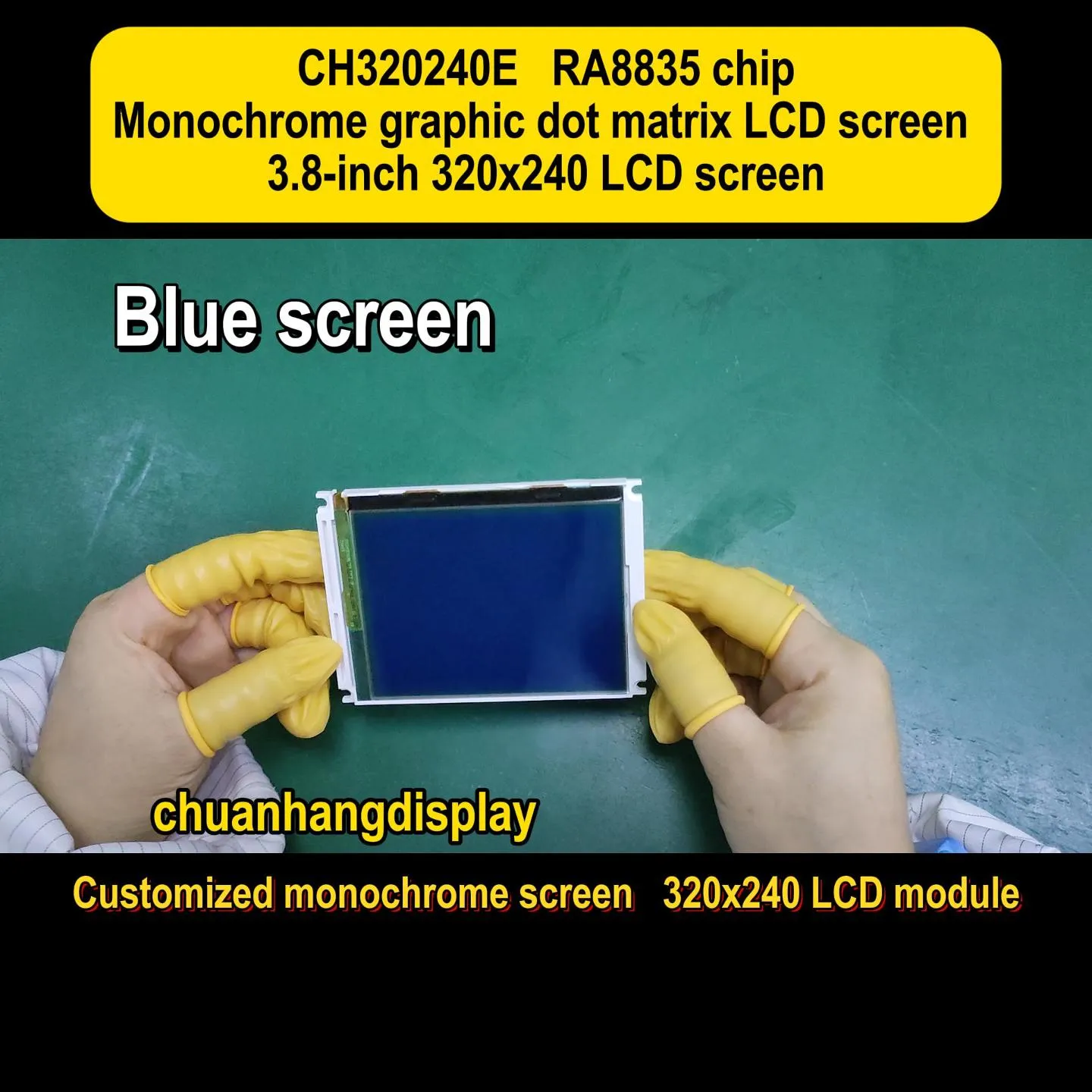
To understand the enduring relevance of the 12864 LCD display, one must examine its underlying architecture. At its core, this module is a graphic liquid crystal display that allows for the rendering of both complex text (including multi-language character sets) and simplified bitmaps.
Unlike segmented displays that are hard-coded for specific icons, the dot-matrix nature of this resolution provides engineers with a blank canvas. The physical construction typically involves a Chip-on-Board (COB) or Chip-on-Glass (COG) assembly. In a COB configuration, the driver circuitry is mounted on a PCB attached to the back of the LCD panel, offering mechanical robustness that is highly valued in heavy-duty industrial environments. Chuanhang Display specializes in optimizing these configurations to ensure that the mechanical footprint remains compatible with legacy systems while improving the internal component quality.
The performance of the display is dictated largely by the controller Integrated Circuit (IC). The two most prominent controllers in the market are:
ST7920: Widely utilized for its built-in Chinese character ROM. It supports both serial and parallel interfaces, making it highly versatile for microcontrollers with limited I/O pins.KS0108: A classic controller that requires external character generation. While it demands more from the host MCU’s memory, it offers granular control over every pixel, which is often necessary for custom graphical user interfaces (GUIs).
The visual quality of a 12864 LCD display is not merely a function of its resolution but of the liquid crystal chemistry and the polarization layers applied to the glass.
Most standard 12864 modules utilize Super-Twisted Nematic (STN) technology. STN provides a higher twist angle than traditional TN panels, resulting in better contrast and wider viewing angles. However, for high-end medical or outdoor applications, Film-compensated STN (FSTN) is the industry standard. FSTN adds a compensation film that eliminates the yellow-green or blue tint inherent in STN, providing a sharp black-on-white or white-on-black appearance. This high-contrast ratio is vital for ensuring that data is readable at a glance in critical environments.
The choice of polarizer determines how the display interacts with ambient light:
Reflective: Best for outdoor use under direct sunlight; it requires no backlight, minimizing power draw.Transmissive: Requires a continuous backlight. It offers the highest brightness and is ideal for low-light indoor environments.Transflective: The "hybrid" choice. It reflects ambient light while allowing the backlight to pass through, ensuring readability in both pitch-black and high-glare settings.
Integrating a 12864 LCD display into a modern embedded system requires a strategic choice of communication protocol. The most common interfaces include:
8-bit Parallel (6800/8080): This is the fastest method for data transfer, essential for applications requiring rapid screen refreshes or animations. However, it consumes a significant number of GPIO pins.4-bit Parallel: A compromise that saves pins while maintaining reasonable throughput.SPI (Serial Peripheral Interface): Increasingly popular for IoT devices. SPI reduces the connection count to just a few wires, allowing for smaller PCBs and simpler routing, though it may result in slower frame rates for complex graphics.
In the B2B sector, the primary "pain point" is not initial cost, but the cost of failure. Chuanhang Display addresses these concerns by implementing rigorous stress-testing protocols that go beyond standard consumer requirements.
Industrial equipment is often deployed in unconditioned environments. A standard commercial LCD might fail at 0°C or leak at 50°C. Industrial-grade 12864 modules are engineered for "Wide Temperature" ranges, typically -20°C to +70°C, or "Extra-Wide" ranges of -30°C to +80°C. Achieving this requires specialized liquid crystal fluids that maintain a consistent viscosity across the thermal spectrum, preventing "ghosting" at low temperatures or "clearing" at high temperatures.
In a factory setting with high-voltage machinery, EMI can wreak havoc on display signals. Professional 12864 designs incorporate ground planes on the PCB and metal bezels to shield the sensitive driver ICs. Proper decoupling capacitors are essential to filter out noise from the power supply, ensuring the display does not flicker or reset during motor startup cycles.
While full-color displays are attractive, the 12864 LCD display remains dominant in several key niches:
Precision Laboratory Equipment: For oscilloscopes and signal generators, the monochrome graphic display provides a distraction-free interface with high refresh consistency.Smart Grid Infrastructure: Smart meters and solar inverters require displays that can survive 10 to 15 years of continuous operation. The solid-state reliability of the 12864 format is unmatched here.3D Printing Controllers: Many desktop and industrial 3D printers use the 12864 resolution to display progress bars, XYZ coordinates, and temperature curves, benefiting from the ease of integration with Marlin or RepRap firmware.Medical Diagnostic Tools: Handheld blood analyzers and pulse oximeters use these displays for their low electromagnetic footprint and clear data visualization.

For procurement managers, sourcing the 12864 LCD display involves balancing unit price with supply chain security.
The price of a 128x64 module is influenced by several variables:
Backlight Quality: High-nit LEDs with a half-life of 50,000 hours command a premium over standard 20,000-hour LEDs.IC Sourcing: Original controllers from reputable fabs (like Sitronix) ensure timing stability, whereas "compatible" clones may exhibit timing drift or higher defect rates.COB vs. COG: COB is generally more expensive due to the extra PCB and assembly steps but offers easier mounting and better durability.
When vetting a manufacturer, it is essential to look for ISO 9001 certification and RoHS compliance. A reliable partner like Chuanhang Display provides comprehensive technical documentation, including initialization codes and mechanical 3D files (STEP/IGES), which significantly accelerates the R&D phase for the buyer. Avoid vendors who cannot provide long-term "End of Life" (EOL) notifications, as industrial products often have lifecycles exceeding a decade.
The market for monochrome displays is not shrinking; it is maturing. We are seeing a trend toward the integration of PCAP (Projected Capacitive) touch screens with the 12864 LCD display. This allows for a modern smartphone-like user experience while retaining the rugged, low-power characteristics of the underlying LCD technology. Furthermore, the shift toward VA (Vertical Alignment) monochrome panels is providing even deeper blacks and 170-degree viewing angles, bridging the aesthetic gap between traditional LCDs and high-end OLEDs.
The 12864 LCD display continues to be an indispensable tool for engineers who prioritize functionality and reliability over cosmetic flair. From the intricacies of the ST7920 controller to the material advantages of FSTN glass, this display format represents a perfected technology. By selecting high-quality modules from established authorities like Chuanhang Display, OEMs can ensure that their products remain operational in the field for decades, providing clear, consistent communication between the machine and the user.
Q1: Can I display my company logo on a 12864 LCD display?
A1: Yes. Since it is a graphic dot-matrix display, you can convert any monochrome BMP or JPEG image into a hexadecimal array using software tools and then write that data to the display's GDDRAM (Graphic Display Data RAM).
Q2: What is the power consumption of a typical 12864 module?
A2: The LCD panel itself consumes very little power (often in the micro-ampere range). The primary power draw comes from the LED backlight, which typically requires 15mA to 60mA depending on the desired brightness. In battery-operated devices, the backlight can be PWM-controlled to save energy.
Q3: Why is my display showing "ghost" images at low temperatures?
A3: This is a common issue with standard-range liquid crystals. As temperature drops, the fluid becomes more viscous, and the response time slows down. To fix this, you should source a "Wide Temperature" module that uses specialized fluid and potentially an integrated heater or temperature compensation circuit.
Q4: Is the 12864 LCD display compatible with Arduino and Raspberry Pi?
A4: Absolutely. There are extensive open-source libraries, such as u8g2, which support almost all 12864 controller ICs (ST7920, KS0108, etc.) for Arduino, ESP32, and Raspberry Pi platforms.
Q5: What is the difference between Yellow-Green and Blue mode LCDs?
A5: This refers to the STN mode. Yellow-Green mode usually has a positive image (dark pixels on a light background) and is very readable without a backlight. Blue mode is typically negative (white/light pixels on a blue background) and requires a backlight to be readable, often chosen for its modern aesthetic in indoor equipment.
Q6: Does Chuanhang Display offer custom FPC or cable lengths for these modules?
A6: Yes. For B2B orders meeting minimum volume requirements, customizations including cable length, connector types, and even custom backlight colors are available to fit specific mechanical enclosures.