In the precision-driven world of industrial electronics, the choice of a user interface often dictates the long-term reliability and power efficiency of the entire system. While high-resolution color screens attract much attention, the custom segment lcd display remains the backbone of the global metering, medical, and automotive industries. These displays, characterized by fixed icons and alphanumeric characters, provide a level of clarity, durability, and cost-effectiveness that advanced graphical panels cannot always match.
Specifying a custom segment lcd display requires more than just selecting a size. It involves a deep understanding of liquid crystal chemistry, driving waveforms, and mechanical integration. For B2B procurement professionals and lead engineers, the goal is to balance visual performance with the economic realities of mass production.
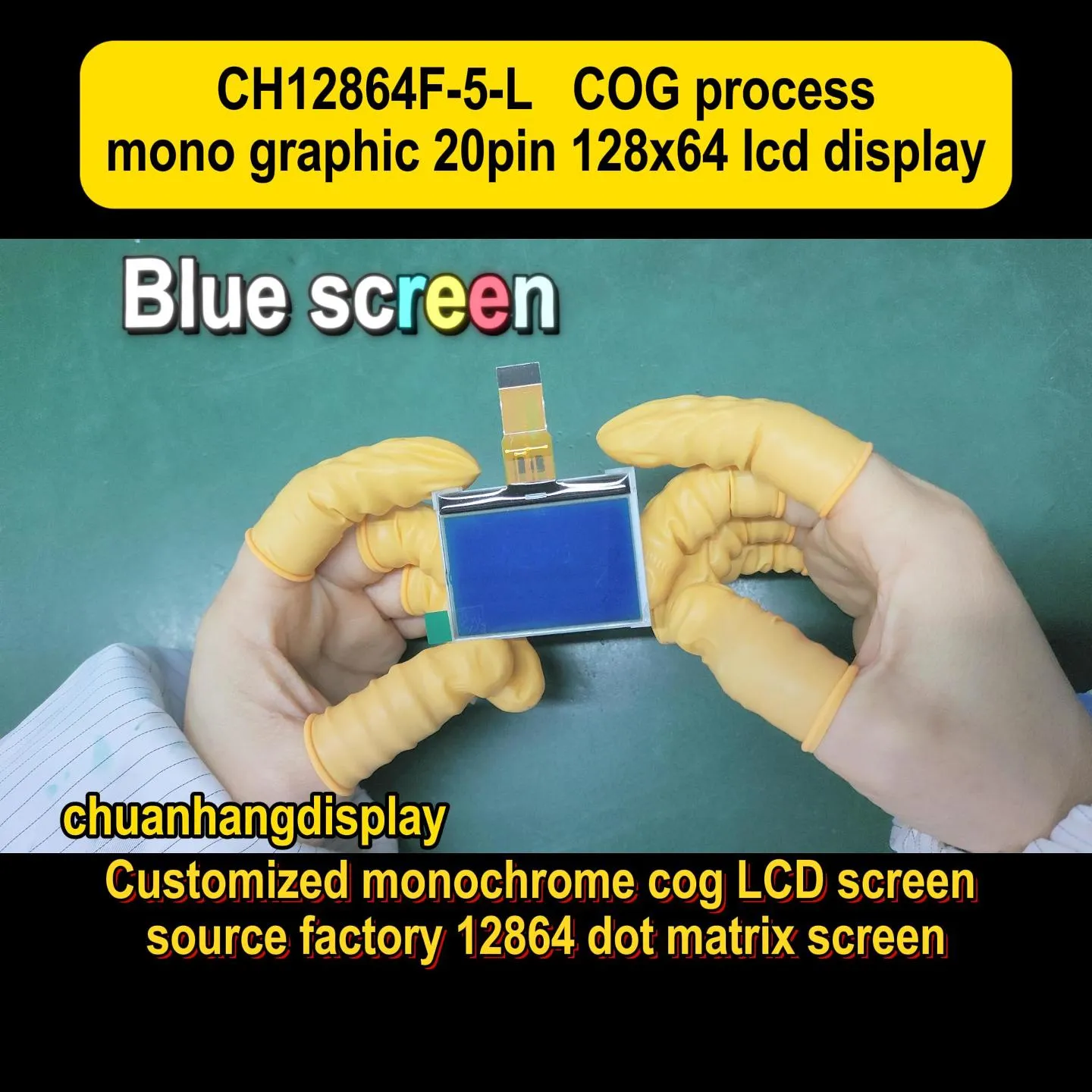
The performance of a custom segment lcd display starts with the choice of liquid crystal material. The fluid determines the viewing angle, contrast ratio, and response time.
TN (Twisted Nematic): The most common and cost-effective choice. TN displays offer a 90-degree twist of liquid crystal molecules. They are ideal for battery-operated devices due to their low operating voltage. However, their viewing angles are relatively narrow compared to higher-end options.HTN (High Twisted Nematic): This provides a twist angle between 100 and 120 degrees, offering better contrast and wider viewing angles than standard TN at a marginal price increase.STN (Super-Twisted Nematic): Utilizing a twist of 180 to 270 degrees, STN fluids provide significantly higher contrast. This is the preferred choice for complex displays with many segments, as it handles multiplexing much better than TN.FSTN (Film-compensated STN): By adding a compensation film, the yellow-green or blue tint of STN is neutralized, resulting in a sharp black-and-white display. This is a premium choice for medical devices where readability is a safety requirement.VA (Vertical Alignment): Often called "true black" displays, VA technology aligns molecules vertically. This results in an incredibly high contrast ratio and a deep black background, making it perfect for high-end consumer appliances and automotive interiors.
The way a display is electrically driven affects both the complexity of the PCB and the optical quality of the screen.
In a static drive configuration, each segment is connected to an individual driver pin. This results in the highest possible contrast and the widest viewing angles because each segment receives a 100% duty cycle. This architecture is common in simple clocks or digital thermometers. However, for a custom segment lcd display with many icons, static driving leads to an unmanageable number of pins.
Multiplexing allows multiple segments to share the same pins by using "Commons" (COM) and "Segments" (SEG). This is defined by the Duty (1/N) and the Bias (1/B). While multiplexing reduces the pin count, it also reduces the effective voltage seen by the segments, which can decrease contrast. Engineering a high-performance display requires finding the "sweet spot" where the pin count is minimized without sacrificing the legibility of the characters.
The visual appearance of a custom segment lcd display is heavily influenced by the polarizer type selected during the design phase.
Reflective Polarizers: These use ambient light to illuminate the display. They are excellent for outdoor use and offer the lowest power consumption, as no backlight is required.Transmissive Polarizers: These require a backlight to be visible. They are ideal for dark environments or equipment that remains plugged into a power source, such as laboratory equipment.Transflective Polarizers: This is a hybrid solution. It reflects ambient light in bright conditions and allows a backlight to shine through in dark conditions. This versatility makes it the standard for portable industrial handhelds.
When working with a manufacturer like Chuanhang Display, engineers can specify the exact color and intensity of the LED backlight unit (BLU) to ensure the interface remains visible across all operating conditions.
The method used to connect the glass to the PCB is a major factor in the assembly cost and the device's resilience to vibration.
Metal Pins: The glass is fitted with rigid metal pins that are soldered directly into the PCB. This is the most robust connection method for high-vibration industrial environments.Zebra Strips (Elastomeric Connectors): These are alternating layers of conductive and non-conductive silicone. They are sandwiched between the glass and the PCB. While they are cost-effective and easy to replace, they require a mechanical bezel or housing to maintain constant pressure.Heat Seal (HSC): A flexible ribbon cable is "glued" to the glass using heat-sensitive conductive adhesive. This allows for a very thin profile and is common in consumer electronics.
Industrial and automotive applications often subject displays to extreme temperatures. Standard liquid crystals may freeze at -10°C or lose contrast (turn "black") at +60°C.
To solve this, a custom segment lcd display can be engineered with wide-temperature fluids that operate from -40°C to +85°C. Furthermore, for outdoor kiosks, UV-blocking polarizers are integrated to prevent the "browning" effect caused by long-term exposure to direct sunlight. Moisture resistance is also achieved through high-quality epoxy seals around the perimeter of the glass substrate.
Unlike off-the-shelf modules, a custom segment lcd display involves a Non-Recurring Engineering (NRE) fee. This fee covers the creation of the photomasks and the CAD design work.
The workflow typically follows these steps:
Requirement Analysis: The buyer provides a sketch or a list of icons (e.g., battery bars, Wi-Fi symbols, 7-segment digits).Counter-Drawing: The manufacturer, such as Chuanhang Display, produces a technical CAD drawing within 3-5 days. This drawing specifies the exact dimensions, pinout, and viewing angle.Tooling/Sampling: Once the drawing is approved, the tooling is created, and physical samples are produced—usually within 15-20 days.Mass Production: After the samples are validated in the final product, the project moves to mass production.

In the B2B sector, reliability is non-negotiable. A high-quality custom segment lcd display must undergo rigorous testing before it reaches the assembly line. This includes:
High Temperature/Humidity Storage: Testing for 240+ hours at 60°C/90% RH.Thermal Shock: Rapid cycling between -40°C and +85°C.Vibration Testing: Ensuring the connection (Pins or Zebra) remains stable under mechanical stress.ESD Testing: Ensuring the display can withstand electrostatic discharge without permanent damage to the driver IC or the liquid crystal alignment.
Manufacturers like Chuanhang Display maintain certifications such as ISO 9001, RoHS, and REACH to ensure their components meet global environmental and safety standards.
Price optimization for a custom segment lcd display is driven by glass area and volume. Since the glass sheets used in production are large, the number of displays that can be "nested" on a single mother-glass determines the unit cost.
To reduce costs, buyers should consider:
Standardizing Glass Sizes: Using a size that fits well on common mother-glass sheets.Minimizing COM Pins: Keeping the design within the limits of standard, high-volume driver ICs.Long-Term Supply Agreements: Given the long lifecycles of industrial products (often 7-10 years), it is vital to partner with a supplier that guarantees the availability of the specific liquid crystal fluid and tooling for the duration of the product's life.
The decision to implement a custom segment lcd display is a strategic move for brands that value power efficiency and specialized aesthetics. By tailoring the display to the exact needs of the application, engineers can eliminate unnecessary peripheral components and focus on a clean, intuitive user experience.
Whether the application is a smart water meter, a sophisticated medical monitor, or an automotive instrument cluster, the technical details discussed here provide a framework for successful integration. By partnering with established experts like Chuanhang Display, procurement teams can ensure they receive a product that is not only visually superior but also engineered for a decade of flawless operation.
Q1: What is the typical NRE cost for a custom segment LCD?
A1: NRE costs vary based on the size and complexity of the glass. Generally, for a standard TN or STN display, the tooling fee ranges from $500 to $1,500. This is a one-time fee that covers the CAD design and the physical masks used in production.
Q2: Can I get a custom segment lcd display with a touch panel?
A2: Yes. While segment LCDs are usually "display-only," it is possible to integrate a Resistive or Capacitive touch panel over the glass. However, this increases the total module thickness and cost. Most industrial users prefer physical buttons to maintain the low-cost profile of segment displays.
Q3: How many segments can I put on one display?
A3: This depends on the driving method. For static drive, the number of segments is limited by the number of pins you can physically fit on the glass. For multiplexed displays, you can have hundreds of segments. Common configurations include 1/4 duty (4 COM pins) or 1/8 duty (8 COM pins).
Q4: Is it possible to have multiple colors on a segment LCD?
A4: Traditional segment LCDs are monochrome. However, "multi-color" effects can be achieved in two ways: using a multi-color LED backlight or by applying a silk-screen print (color filter) on the front of the display or the backlight diffuser to give specific icons fixed colors.
Q5: What is the lead time for custom samples?
A5: After the CAD drawing is finalized and approved, the standard lead time for physical samples of a custom segment lcd display is approximately 2 to 3 weeks. Mass production usually follows 4 to 6 weeks after sample approval.
Q6: What causes "ghosting" in segment displays and how do I fix it?
A6: Ghosting occurs when segments that should be "off" are partially visible. This is usually caused by an incorrect bias voltage or an improper duty cycle setting in the firmware. Adjusting the contrast voltage (VLCD) in your software or refining the bias ratio often resolves this issue.
Q7: Why choose [Chuanhang Display] for my project?
A7: Chuanhang Display specializes in industrial-grade display solutions, providing end-to-end support from initial design to long-term mass production. Their expertise in wide-temperature fluids and high-reliability connection methods makes them a strong partner for B2B applications where failure is not an option.