While full-color touchscreens dominate the consumer electronics market, a vast segment of the industrial, medical, and telecommunications sectors relies on a much simpler, highly durable display technology. For applications requiring straightforward alphanumeric readouts—such as UPS power supplies, CNC control panels, and laboratory instruments—a standard Character LCD Module remains the preferred choice.
These displays provide engineers with a robust, low-power, and easily programmable interface. By utilizing standardized controller ICs and proven nematic liquid crystal technology, hardware development teams can bypass complex graphical programming and focus on system stability. This article provides a deep technical analysis of the architecture, panel materials, interface protocols, and supply chain dynamics involved in procuring alphanumeric display modules for B2B applications.
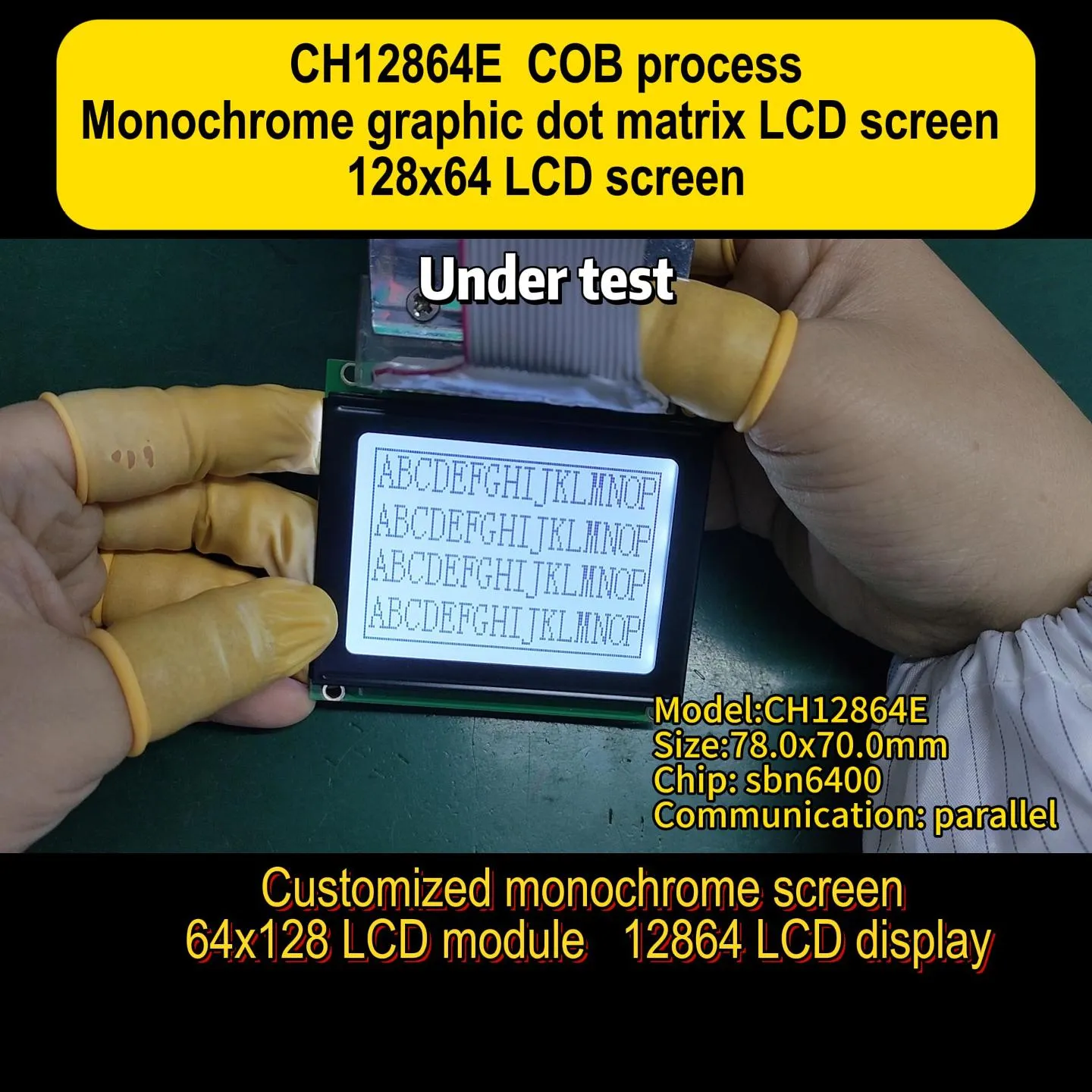
Understanding the structural engineering of an alphanumeric display is the first step in selecting the right component for your hardware project. Unlike graphic dot matrix displays that allow pixel-by-pixel manipulation across the entire screen, these modules are divided into fixed character blocks.
A standard Character LCD Module is categorized by its character layout, typically expressed as columns by rows.
Common Formats: The most widely adopted configurations are 16x2 (16 characters across 2 lines) and 20x4. However, industrial applications also frequently utilize 8x1, 16x4, 24x2, and 40x4 formats.Dot Matrix Structure: Each individual character is formed by a specific dot matrix, most commonly 5x8 or 5x11 pixels. A small gap, typically one pixel wide and one pixel high, separates each character block to ensure readability. The 5x8 matrix is standard for English and European alphanumeric characters, while the 5x11 matrix allows for the inclusion of cursors or specific sub-surface characters.
The longevity and universal adoption of the alphanumeric display module are largely due to the Hitachi HD44780 controller IC (and its modern equivalents like the ST7066 or SPLC780D). This internal controller manages the complex multiplexing required to drive the liquid crystal segments, allowing the host microcontroller to send simple ASCII data.
CGROM (Character Generator ROM): This read-only memory contains the pre-programmed font set. Buyers must specify the required font table (e.g., English/Japanese, English/Cyrillic, or English/European) during the procurement phase.CGRAM (Character Generator RAM): This allows developers to create custom characters or symbols. Typically, the HD44780 architecture supports up to eight custom 5x8 characters, which are useful for displaying battery icons, custom arrows, or specific measurement symbols.
The visual performance, contrast ratio, and background color of the display are entirely dictated by the chemical makeup of the liquid crystal fluid and the orientation of the polarizers.
Engineers must specify the fluid type based on the target price point and the required optical clarity.
TN (Twisted Nematic): The most cost-effective option. It offers fast response times but has a narrower viewing angle. It is suitable for basic equipment where the user looks directly at the screen.STN (Super Twisted Nematic): The industry standard for character modules. The higher twist angle (typically 180 to 270 degrees) significantly improves the viewing cone and contrast. STN displays generally exhibit a distinct background color due to birefringence—most commonly a yellow-green background with dark blue pixels, or a dark blue background with white/yellow pixels.FSTN (Film Compensated STN): By laminating an optical retardation film over the STN glass, the inherent coloration is neutralized. This produces a sharp, high-contrast black-and-white image. FSTN is heavily utilized in high-end medical devices and precision measuring tools.
The rear polarizer determines how the display utilizes light, directly impacting the backlight requirements and overall power consumption.
Reflective: Features a solid mirror-like rear layer. It uses zero backlight power and relies 100% on ambient light. It is highly effective for outdoor devices but completely unreadable in the dark.Transmissive: Requires a constant LED backlight to be visible. The liquid crystal acts as a shutter blocking the light. This mode is excellent for dark environments or server room racks.Transflective: The most versatile option. It reflects ambient light in bright environments and allows a backlight to pass through in dark conditions. This is the optimal choice for portable, battery-operated equipment used both indoors and outdoors.
Hardware engineers frequently turn to alphanumeric modules to solve specific environmental and mechanical challenges that high-resolution TFTs cannot easily overcome.
Standard commercial screens often freeze or become sluggish below 0°C. However, a specialized Character LCD Module can be formulated with wide-temperature fluid. Industrial-grade modules confidently operate from -20°C to +70°C, and ultra-wide temperature variants can withstand -40°C to +85°C. This makes them highly suitable for outdoor gas pumps, telecom tower equipment, and automotive diagnostics tools. Furthermore, temperature compensation circuits can be added to the PCB to adjust the V0 (contrast) voltage automatically as the ambient temperature fluctuates.
Industrial machinery, such as CNC routers and injection molding machines, generates significant vibration. The standard construction of a character module—specifically the COB (Chip-on-Board) architecture—is incredibly robust. The controller IC is wire-bonded directly to a rigid FR4 PCB and sealed under a protective epoxy dome. A sturdy metal bezel clamps the ITO glass to the PCB via elastomeric zebra strips. This rigid, unified block resists mechanical shock far better than displays relying on delicate ribbon cables and external controller boards.
The physical and electrical integration of the display into the host system dictates the manufacturing workflow. Buyers must choose the right interface protocol and packaging method.
Parallel Interface (4-bit / 8-bit): The standard method utilizing 16 pins (including power and backlight). The 4-bit mode is commonly used to save GPIO pins on the host microcontroller, sending data in two nibbles. It offers high-speed data transfer suitable for rapid screen updates.I2C / SPI Interfaces: To further reduce pin counts, many engineers use modules equipped with an I2C backpack (often utilizing the PCF8574 I/O expander). This reduces the connection down to just four wires (VCC, GND, SDA, SCL), drastically simplifying PCB routing and cable management in tight enclosures.
COB (Chip-on-Board): As mentioned, the IC is on the PCB behind the glass. This results in a thicker module but provides mounting holes and a highly durable structure.COG (Chip-on-Glass): The controller IC is bonded directly onto the ledge of the LCD glass. This eliminates the bulky PCB, resulting in an ultra-thin profile ideal for compact, portable instrumentation. COG modules typically connect to the mainboard via an FPC (Flexible Printed Circuit) or metal pins.

Procurement teams must carefully analyze the Bill of Materials (BOM) and the manufacturing capabilities of their suppliers to ensure long-term availability and quality.
The unit cost of an alphanumeric module is primarily driven by:
Glass Size and Resolution: A 40x4 display uses significantly more ITO glass and requires a larger backlight than a standard 16x2.Fluid Type: STN is slightly more expensive than TN, while FSTN commands the highest premium due to the added compensation film.Backlight Configuration: Standard yellow-green edge-lit LEDs are highly economical. Custom RGB backlights or specialized pure-white LEDs with diffusers will increase the cost.
When integrating these displays into devices designed to last ten years or more, supply chain stability is paramount. Sourcing from a reputable manufacturer like Chuanhang Display ensures that the exact BOM (including the specific IC revision, polarizer brand, and LED binning) remains consistent across production batches. Consistent BOM management prevents unexpected contrast shifts or firmware incompatibilities in future manufacturing runs. Furthermore, an experienced supplier will provide thorough optical testing, burn-in processes, and environmental stress testing before shipment.
Selecting the appropriate Character LCD Module requires a balanced understanding of optical physics, electrical interfaces, and mechanical engineering. While it may appear to be a legacy technology, the alphanumeric display remains an indispensable component for B2B hardware requiring unwavering reliability, low power consumption, and straightforward data presentation. By meticulously specifying the fluid type, temperature range, and controller IC, engineering teams can build resilient products capable of surviving the harshest industrial environments. Partnering with an established manufacturer like Chuanhang Display guarantees that these strict technical specifications are met with precision and consistency, ensuring the long-term success of your electronic devices.
Q1: What is the difference between a 16x2 and a 20x4 LCD module?
A1: The numbers dictate the character capacity of the display. A 16x2 module can display 16 characters per line across 2 distinct lines (totaling 32 characters). A 20x4 module displays 20 characters per line across 4 lines (totaling 80 characters). The physical dimensions, PCB size, and memory addressing in the controller IC also differ between the two formats.
Q2: How do I adjust the contrast on a standard alphanumeric display?
A2: Contrast is controlled via the V0 (or VEE) pin, typically Pin 3 on the standard 16-pin header. Engineers usually connect a 10k ohm potentiometer between VCC (5V or 3.3V) and Ground, with the wiper connected to the V0 pin. Adjusting the voltage at this pin alters the bias voltage applied to the liquid crystals, thereby lightening or darkening the characters.
Q3: Can a character display show custom symbols or logos?
A3: Yes, but with limitations. The HD44780 controller features a Character Generator RAM (CGRAM) that allows you to define up to eight custom 5x8 pixel characters at runtime. You can program these memory addresses to create custom icons, such as a battery level indicator, an antenna signal bar, or a specific mathematical symbol.
Q4: What is the typical lifespan of the LED backlight in these modules?
A4: Industrial-grade LED backlights used by reputable manufacturers like Chuanhang Display typically have a half-life of 50,000 to 100,000 hours under normal operating conditions. This means it will take that many hours of continuous operation for the backlight brightness to drop to 50% of its original luminosity. Running the LED at a lower forward current can further extend this lifespan.
Q5: Why is my display only showing a row of solid black boxes when I power it on?
A5: A single row of solid dark blocks (often on the first row of a 16x2 display) typically indicates that the module is receiving power but has not been properly initialized by the microcontroller. You need to verify your data lines, ensure your initialization code sends the correct sequence of instructions (with appropriate delays as per the HD44780 datasheet), and check that the contrast voltage on the V0 pin is not set too high.