In the world of electronics interfaces, trends come and go. Touchscreens get larger, OLEDs get brighter, and resolutions climb higher. Yet, in workshops, factories, and countless devices, a simpler technology quietly and reliably does its job. The humble LCD character display remains a cornerstone of embedded system design. Its persistence isn't about nostalgia; it's about delivering exactly what many applications need: clear, low-power, and highly legible text-based communication.
For engineers and product developers, choosing an interface is a balance of cost, complexity, and requirement. When your device needs to show status messages, sensor readings, or simple menus, a full graphic display can be overkill. This is where the LCD character display shines. Manufacturers like Chuanhang Display have spent decades refining these modules, making them more robust and versatile than ever. Let's look at the practical reasons behind their enduring role.

Not every device needs a graphical user interface. Many industrial and commercial products have a straightforward purpose: convey specific information. A temperature reading, a step count, an error code like "ERR 05," or a menu option like "Start Cycle."
A character LCD is purpose-built for this. It presents pre-defined alphanumeric characters and symbols. This limitation is actually its strength. The information is presented in a familiar, instantly readable format without visual clutter.
For the end-user, this means no confusing icons or tiny graphics. The message is direct. For the developer, it means simpler code, less memory usage, and faster implementation compared to driving a pixel-based graphical display.
A major factor in the success of the character LCD is the near-universal adoption of the HD44780 controller standard (or compatible chips). This created a common "language" for microcontrollers to talk to these displays.
Because of this standard, software libraries are available for every popular platform—Arduino, Raspberry Pi, PIC, AVR, ARM. An engineer can often take code written for one project and use it directly in another with a different microcontroller, as long as it drives an HD44780-compatible display.
This universality drastically reduces development time and risk. It also means a vast pool of community knowledge, tutorials, and sample code exists. For companies like Chuanhang Display, it allows them to produce modules that are guaranteed to work with a huge array of existing systems and designs.
Fancy screens can be fragile. A LCD character display, especially one built for industrial use, is designed to endure. The typical module features a robust plastic or metal frame that protects the glass LCD panel.
They operate across a wide temperature range, often from -20°C to +70°C. This makes them suitable for environments where a smartphone would fail—next to industrial machinery, inside automotive diagnostic tools, or in outdoor monitoring equipment.
The transflective nature of many character LCDs is a key feature. In bright sunlight or well-lit rooms, they use ambient light to become perfectly readable, often more so than a backlit screen fighting glare. The LED backlight, usually in blue, green, or white, only activates for low-light conditions. This dual-mode operation ensures reliability in any setting.
Budget is a primary constraint in most product designs, especially for high-volume manufacturing. The total cost of an interface includes the component itself, the power system to run it, the microcontroller resources to drive it, and the engineering time to develop its software.
Character LCDs excel on all these fronts. The module cost is low. Their power consumption is minimal, often requiring just a few milliamps for the logic and slightly more for the backlight. They don't require powerful processors or significant RAM/ROM to function.
When you only need to display text, opting for a more complex graphical display introduces unnecessary cost at every stage of the product lifecycle. The character LCD provides the required functionality at the lowest possible system-level cost.
While the 16x2 (16 characters, 2 lines) display is the most iconic, the family is diverse. Sizes range from 8x1 and 16x1 single-line displays to 20x4 and even 40x4 large-format modules. This allows designers to pick the exact amount of real estate needed.
Beyond size, customization is a significant offering from experienced suppliers. Chuanhang Display, for instance, works with clients on several levels. Standard customization includes changing the bezel color, the LCD viewing mode (positive or negative), and the backlight LED color.
For larger projects, they can integrate custom fonts, language sets, or even simple bitmap icons into the character ROM. Full custom glass with branded logos or specific symbology is also possible. This allows companies to make the display look and feel like an integral part of their unique product, not an off-the-shelf part.
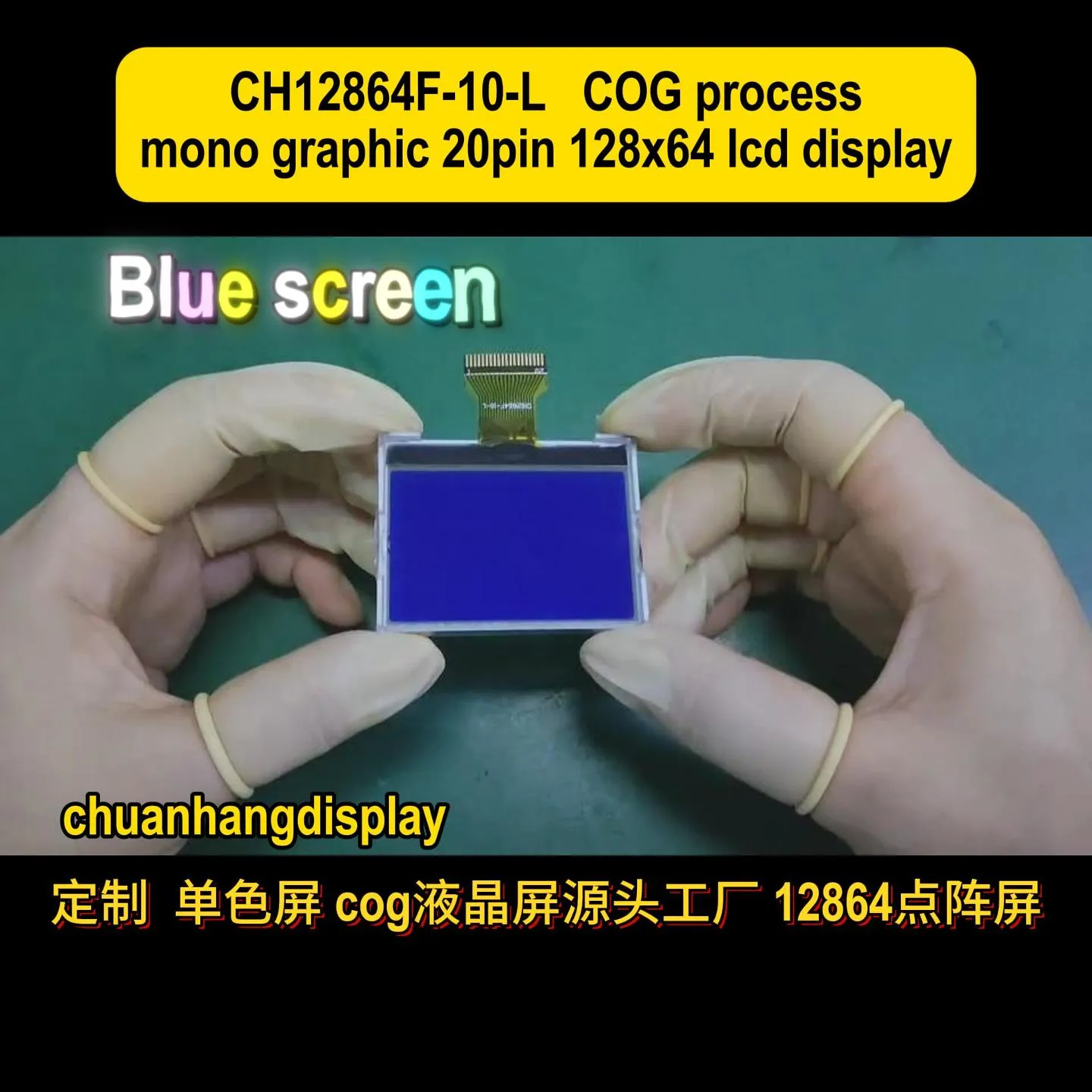
Choosing a component is also about choosing a partner. A reliable supplier ensures consistency, quality, and availability over the often long lifespan of an industrial product.
Companies like Chuanhang Display don't just sell modules; they provide technical support for integration. Their engineers understand the nuances of voltage levels, timing, and interfacing (parallel, I2C, SPI). This support can be crucial when troubleshooting or adapting a design.
Their manufacturing focus on rigorous quality control prevents issues like dead pixels, weak backlights, or poor solder joints. In an industry where a 1% failure rate can mean thousands of field returns, this reliability is non-negotiable.
The LCD character display is a testament to the principle that the best tool is often the simplest one that gets the job done. It hasn't been replaced by flashier technologies; it has been affirmed by them. Its specific niche—clear, reliable, low-cost text output—remains vast and critical.
From medical devices and test equipment to point-of-sale systems and DIY projects, its presence is a sign of thoughtful, efficient design. As long as machines need to talk to people in plain language, the character LCD, as refined by manufacturers like Chuanhang Display, will have a vital role to play.
Q1: What is the difference between a character LCD and a graphical LCD?
A1: A character LCD can only display a fixed set of alphanumeric characters and symbols from its built-in memory. A graphical LCD controls individual pixels, allowing you to draw any shape, image, or custom font. Character LCDs are for text; graphical LCDs are for graphics and complex interfaces.
Q2: My character display has a "negative" option. What does that mean?
A2: "Negative" refers to the display mode. A positive display shows dark characters on a light (often green or blue-gray) background. A negative display shows light characters (illuminated by the backlight) on a dark background. Negative mode often offers higher contrast in indoor or low-light settings.
Q3: Can I change the language or add special symbols to a character LCD?
A3: Standard modules come with a ROM that includes English characters, Japanese katakana, and some common symbols. You can define up to 8 custom characters (5x8 pixels each) in the display's RAM at runtime. For permanent, large-scale custom fonts or symbols, you need to discuss a custom ROM design with your supplier like Chuanhang Display.
Q4: Why would I choose a parallel interface over an I2C/SPI one, or vice versa?
A4: Parallel (HD44780) is the direct, traditional method. It's slightly faster but uses many microcontroller pins (6-11). I2C or SPI interfaces use an adapter board and communicate over 2 or 4 wires, saving precious pins on your microcontroller. I2C/SPI is almost always the better choice for modern designs due to pin efficiency.
Q5: How long do the backlights in these displays typically last?
A5: The LED backlights in quality modules are rated for a very long lifespan, often 50,000 hours or more. This means they can run continuously for over 5 years before dimming. To extend this even further, many designs allow software control to turn the backlight off when not needed.